3.1 PERIODIC TABLE
No description yet. This curated deck is ready for daily study.
Card preview (16)
Describe the arrangement of the periodic table
• By increasing atomic (proton) number • In periods showing repeating trends in physical and chemical properties • In groups with similar chemical properties
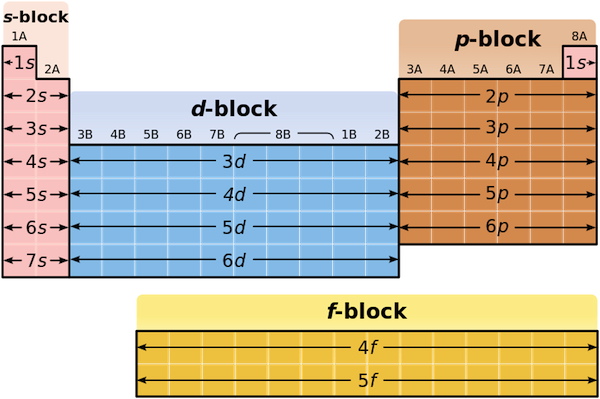
Lable the periodic table in S-, P- and D- block
Define first ionisation energy
• The energy required to remove 1 electron from 1 mole of gaseous atoms to form 1 mole of gaseous 1+ ions
State the three factors affecting ionisation energy
1) Atomic radius 2) Nuclear charge 3) Electron shell sheilding
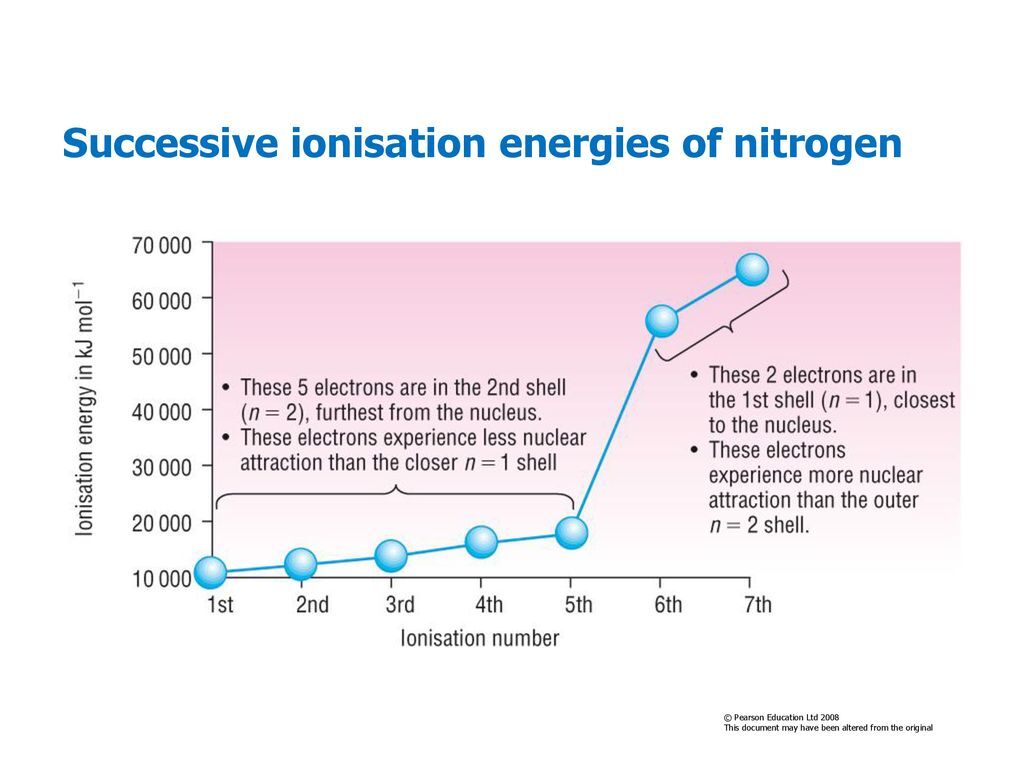
Explain why each successive ionisation energy is higher than the one before
Because: - As each electron is removed there is less repulsion between remaining electrons and each shell will be drawn slightly closer to the nucleus - The positive nuclear charge will outweigh the negative charge after every electron removal - As the distance of each electron from the nucleus decreases slightly, the nuclear attraction increases - Therefore, more energy is needed to remove each succesive electron
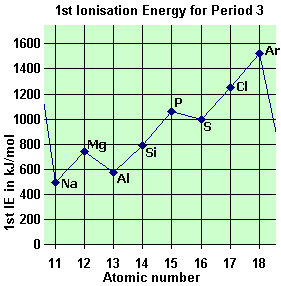
State the GENERAL trend in first ionisation energy going across periods
• First ionisation energy generally increases across periods
Explain the general trend in first ionisation energy going across periods
• First ionisation energy generally increases across periods • This is because the proton number increases while electron sheilding remains the same and more electrons are added to the same shell so the shell is drawn closer to the nucleus • Therefore, the overall attraction is greater • Thus, ionisation energy increases
Explain the decrease in first ionisation energy between group 2-13
• Because group 13 elements have their outermost electron in a p-orbital whereas group 2 elements have their outermost electron in a s-orbital • P-orbitals have a higher energy so are further from the nucleus and thus easier to remove
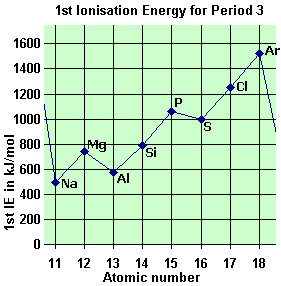
Explain the decrease in first ionisation energy between group 15-16
• Both have outermost electrons in a p-orbital • However, in group 15 all p-orbital electrons are single whereas in group 16 the p-orbital electrons are now spin paired • Therefore the electron repulsion makes it easier to remove
State the trend in first ionisation energy going down groups
• First ionisation energy generally decreases down groups
Explain the trend in first ionisation energy going down groups
• First ionisation energy generally decreases down groups • Because the number of shells increases so the distance between nucleus and outermost electrons increases • There is also more electron sheilding • Thus, there is a weaker force of attraction between outermost electron and nucleus • So, the outermost electron is easier to remove
Define metallic bond
• The electrostatic attraction between fixed metal cation and a sea of delocalised electrons
Describe the structure of a metallic lattice
• Positive metal cations are fixed in the lattice and their outershell electrons are delocalised and shared between all the atoms in the metallic lattice
State and explain the three properties of giant metallic lattices
1) High mp/bp - strong metallic bonding in all directions that require lots of energy to overcome 2) Electical conductivity - Great electrical conductors because of delocalised, free electrons even as a solid 3) Malleable - Cation layers can slide past each other so can be hammered into shape 4) Ductility - Can be drawn out/stretched into wires
State and explain the trend in melting point going across periods from group 1-14
• Melting point increases • Because these elements have giant metallic structures with strong metallic bonds between atoms • (However, carbon has a giant covalent structure with strong covoalent bonds)
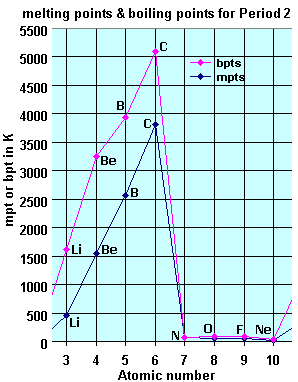
State and explain the trend in melting point going across periods from group 15 onwards
• A **sharp