5 Electrolysis
暂无描述。系统推荐的高质量记忆内容,适合每天坚持背诵学习。
卡片预览 (24 张)
How can you test and show that a substance is an electrolyte?
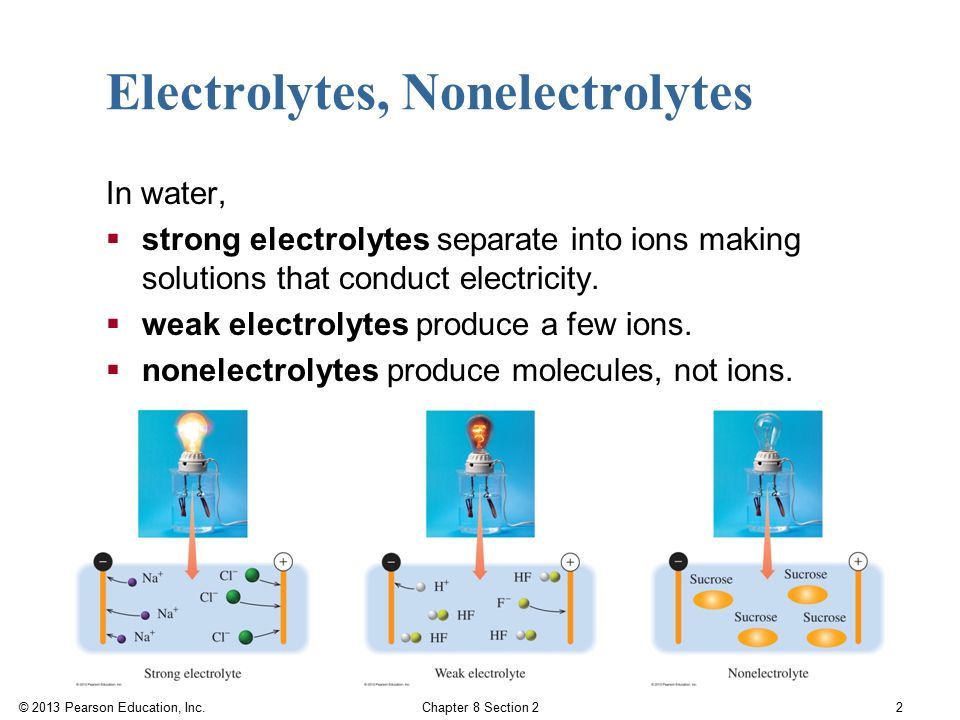
Use a circuit with a cell, lamp, wires and two graphite electrodes. Place the two electrodes into the solution. If the bulb lights then the solution is an electrolyte.
State why the electrodes used in electrolysis are usually made from an inert material.
So that they do not take part in the reactions that occur during electrolysis.
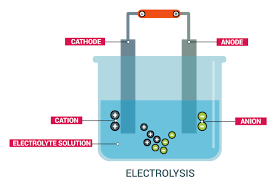
During electrolysis, anions move towards the….
ANODE or postively charged electrode.
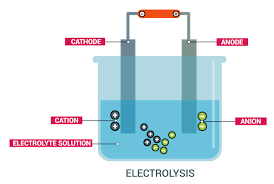
During electrolysis, cations move towards the….
CATHODE or negatively charge electrode.
What are the products of electrolysis of magnesium chloride solution?
CATHODE - No Copper, silver, gold - therefore hydrogen forms ANODE- Halide present! Chlorine forms
What are the products of electrolysis of a copper sulphate solution?
CATHODE - Copper, silver, gold present - therefore copper forms ANODE- No halide present- oxygen forms
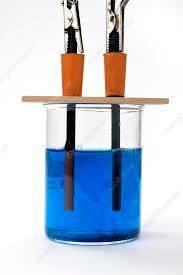
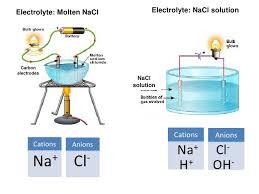
What are the products of the electrolysis of a sodium chloride solution?
CATHODE - No copper, silver, gold present - therefore hydrogen forms ANODE- halide present- chlorine forms
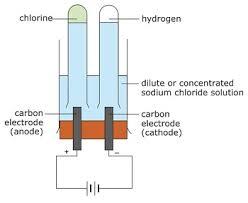
What are the products of electrolysis of potassium sulphate solution?
CATHODE - No copper, silver, gold present - therefore hydrogen forms ANODE- No halide present- therefore oxygen forms
Describe the movement of ions in an electrolytic cell.
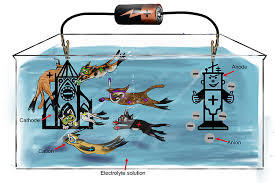
Cations/positive ions move towards the cathode/negative electrode Anions/negative ions move towards the anode/postive electrode
In the electrolysis of molten lead iodide, iodine gas forms at the anode. The I- ion is attracted to the anode. iodide ion is oxidised/ loses an electron 2I- –> I2 + 2e- Predict the reduction processes that occurs at the cathode.
CATHODE- attracts the cation - lead ion to form lead Pb2+ + 2e- –> Pb Lead ion is reduced- gains two electrons
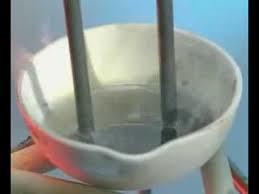
In the electrolysis of molten sodium bromide, sodium metal forms at the cathode. The Na+ ion is attracted to the cathode. Sodium ion is reduced/ gains an electron Na+ + e- –> Na0 Predict the oxidation processes that occurs at the anode.
ANODE- attracts the anion - bromide ion to form bromine gas 2Br- –> Br2 + 2e- Bromide ion is oxidised- loses electrons
Electrolysis was carried out on an aqueous solution of X Product at CATHODE- hydrogen gas Product at ANODE- oxygen gas Suggest the identity of compound X
Any soluble salt which is not a copper, silver or gold salt AND not a halide salt. Such as sodium sulfate OR potassium nitrate OR ammonium sulphate
Define electrolysis
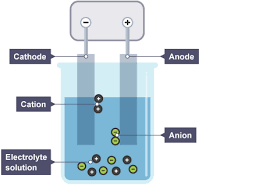
The breaking down of a substance using electricity. An electric current is passes through an electrolyte, causing it to decompose.
How do you know if a substance is reduced during electrolysis
OIL RIG Reduction is gain of electrons. Therefore, a cation is reduced when it gains electrons
How do you know if a substance is oxidised during electrolysis
Oxidation is loss of electrons. Therefore, an anion is oxidised when it loses electrons
Which of the following compounds can be used as an electrolyte? A - solid ionic compound B- solid simple covalent compoound C- soluble ionic compound in water D- molten ionic compound
C and D only both have ions which can move freely and carry charge
Half reactions show how electrons are transferred during reactions. They are really useful for showing what happens at each electrode during electrolysis. Write the half reaction for O2- at the ANODE
2O2- –> O2 + 4e-
Half reactions show how electrons are transferred during reactions. They are really useful for showing what happens at each electrode during electrolysis. Write the half reaction for Cl- at the ANODE
2Cl- –> Cl2 + 2e-
Half reactions show how electrons are transferred during reactions. They are really useful for showing what happens at each electrode during electrolysis. Write the half reaction for Br- at the ANODE
2Br- –> Br2 + 2e-
Half reactions show how electrons are transferred during reactions. They are really useful for showing what happens at each electrode during electrolysis. Write the half reaction for H+ at the CATHODE
2H+ + 2e- –> H2
Half reactions show how electrons are transferred during reactions. They are really useful for showing what happens at each electrode during electrolysis. Write the half reaction for Cu2+ at the CATHODE
Cu2+ + 2e- –> Cu0
Half reactions show how electrons are transferred during reactions. They are really useful for showing what happens at each electrode during electrolysis. Write the half reaction for Pb2+ at the CATHODE
Pb2+ + 2e- –> Pb0
Half reactions show how electrons are transferred during reactions. They are really useful for showing what happens at each electrode during electrolysis. Write the half reaction for Na+ at the CATHODE
Na+ + e- –> Na0
Why is it more difficult to predict what products you get when you electrolyse SOLUTION substances?
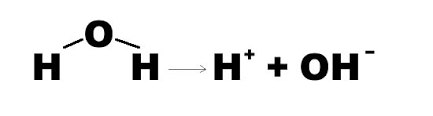
SOLUTION substances have two possible CATIONS and two possible ANION to choose from. NOTE: Water provides two other ions (H+ and OH-) CATHODE- if the electrolyte contains copper, silver or gold, it forms, if not hydrogen gas forms ANODE- if the the electrolyte contains a halide- halogen forms, if not oxygen forms.