Interstellar Medium (ISM)
No description yet. This curated deck is ready for daily study.
Card preview (16)
Interstellar Dust - extinction (reddening)
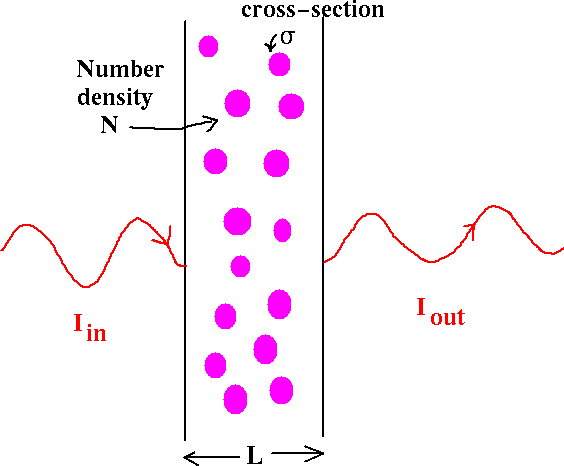
The process of extinction, or reddening is caused by the presence of dust between the stars. This dust has the effect of attenuating starlight by scattering. Since red light suffers less than blue light (c.f.the blue sky on the earth) it has the effect of making stars appear redder - hence the use of the word reddening.
Interstellar Absorption
AbsorptionMathsMore Maths Website
Attenuation of Starlight
The brightness of a star at 3000 ly is reduced to 40%, at 6000 ly to only 16% of its original brilliance. The total extinction to the galactic centre is equivalent to an attenuation of a factor of 1010 (i.e. essentially a brick wall!).
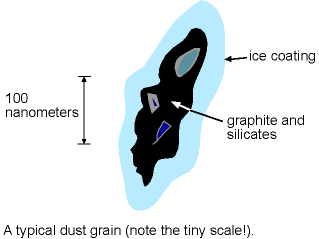
Dust grain
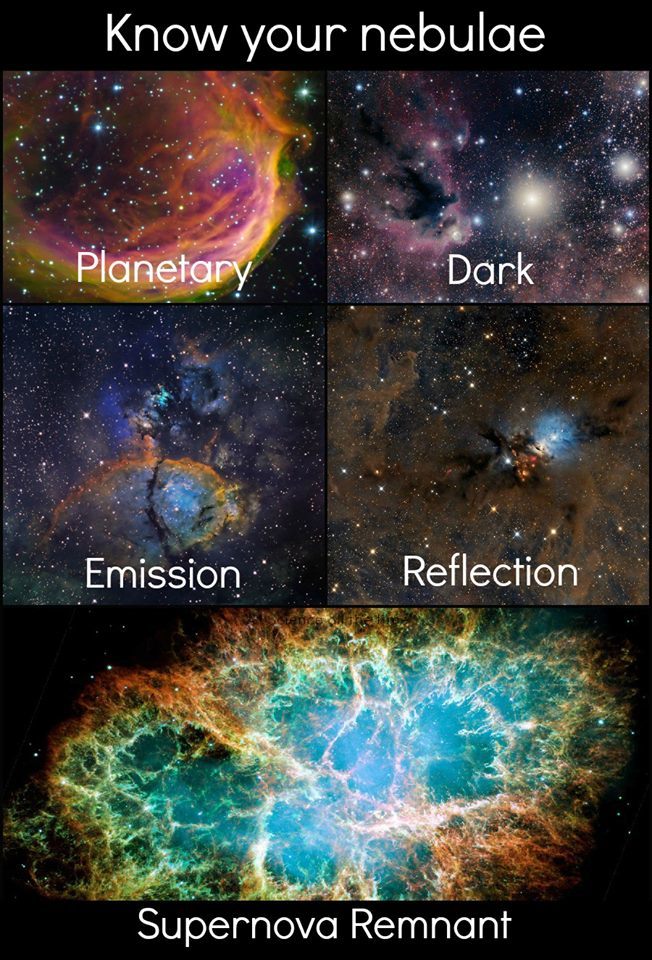
Different kinds of nebulae that arise from dust
Dark Nebula
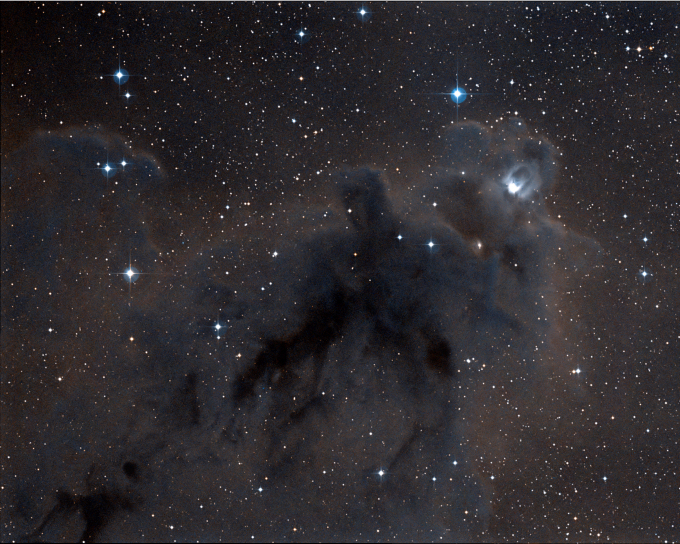
Dark nebulae are opaque dense concentrations of dust which effectively absorb all star light.
Reflection Nebula
Reflection nebula are not excited systems, but are seen by reflected starlight. The scattered light tends to be very blue (Rayleigh scattering). This is a picture of part of NGC6726.
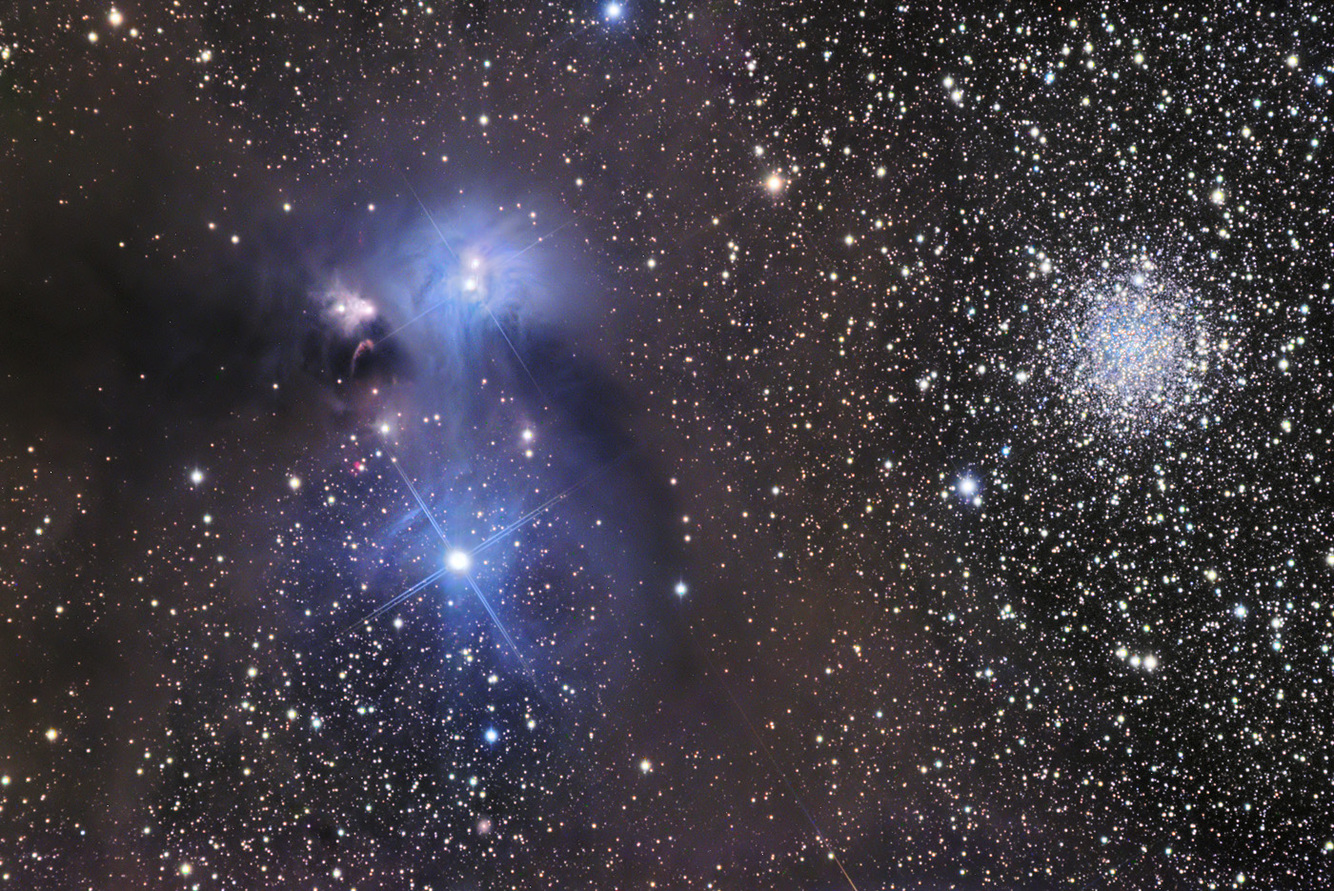
What is more affected by reddening? A closer nebula or distant nebula?
Distant nebula (nebula on left)
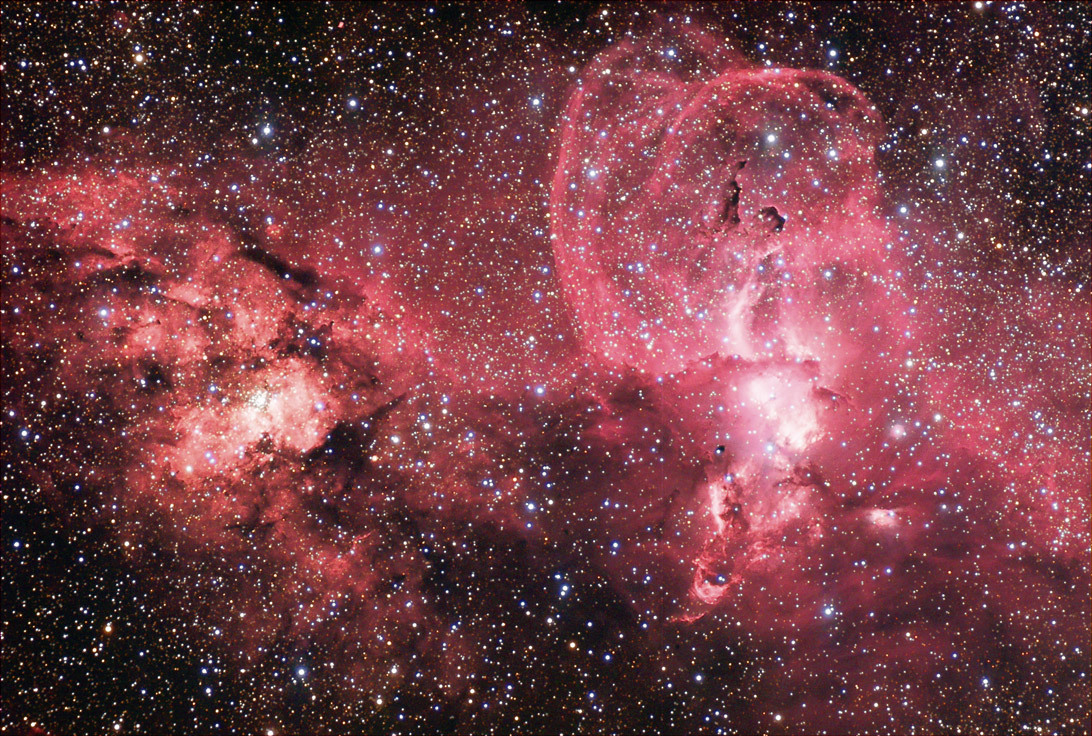
Stellar Classification
So stars can appear red either because they are older stars, or because they are more distant – or both! • So this makes it a little tricky identifying star types if you don’t know how far away they are. So if we measure the (B-V) colour of a star, we will be measuring a redder colour than the true B-V colour (usually called (B-V)0). We define the reddening as: E(B-V) = (B-V) - (B-V)0 Now it seems reasonable to expect that the more extinction there is, the more reddening there will be. In fact, studies have shown that the magnitudes of extinction, AV, and reddening are empirically related by: AV=3.2E(B-V)
Reasons why chemical bonds are difficult in space
Space between the stars is mostly empty except for approx one H atom per cubic-metre. Put another way, if each atom was the size of a person they would be separated by the Sun-Jupiter distance The H atoms are heated by stellar UV radiation and are moving fast (~1000m/s). Hence bonding between atoms is hard, and when it does happen the UV radiation tends to disrupt it pretty quickly.
Place where chemical bonds can occur
They are the largest inhabitants of galaxies and contain the raw material for stars and planets. Giant molecular clouds last for 10 to 100 million years before they naturally dissipate. The Eagle nebula (M16) has giant molecular clouds containing huge, light-years long, columns of gas and dust.
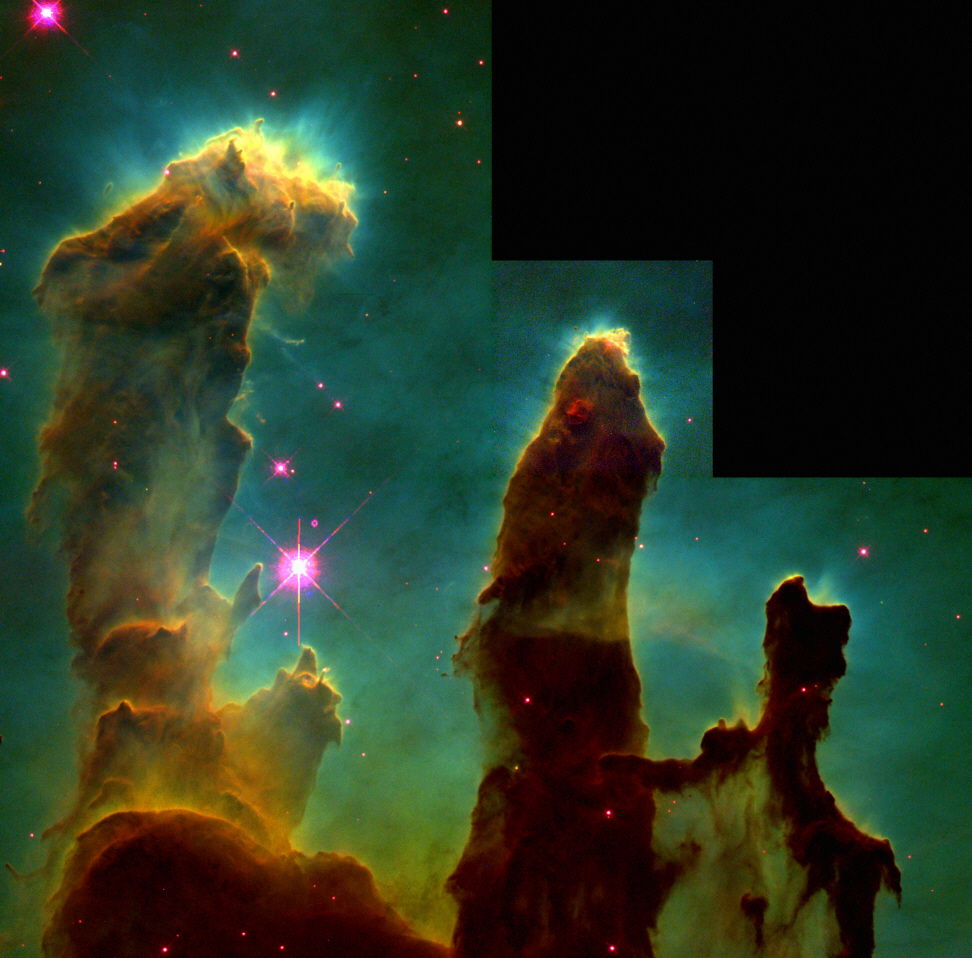
Inside Giant Molecular Clouds (GMC)
Inside the clouds…. The conditions inside the cloud are often very conducive to the formation of molecules that cannot exist freely in open space. It is thought that graphite dust in the cloud does screening while also acting as a catalyst by providing a surface on which atoms can meet. Atoms need to approach each other to within 1 nanometre (10-9 m) to react. The main problem in understanding interstellar synthesis is that we cannot re-create the physical conditions in terrestrial labs (cannot get low enough densities or wait millions of years!).
Detecting Molecules
Like atoms, molecules emit and absorb radiation only at specific frequencies. Since molecules are more complex than atoms they have many more transitions available to them, especially at IR and microwave (mm) wavelengths. Observations in the IR are relatively difficult, but radio observations at mm wavelengths are straightforward. In addition, the interstellar medium is very transparent at these wavelengths.
MASERS
Masering (microwave amplification by stimulated emission of radiation). This is particularly important for the OH molecule – the first interstellar molecule to be detected. Typically the OH molecule absorbs energy in the IR and re-emits at λ = 18cm. Other maser sources include CO, H2O and SiO.
Molecules Found
The first molecule detected was OH in 1963 and then Ammonia (NH3) in 1968. In 1969 the first complex molecule was found, formaldehyde (H2CO) showing that really sophisticated molecules can exist. There are now over 100 different types of molecules that have been detected in space. They range in complexity from simple 2-atom molecules (eg OH, H2, SO) to complex 13-atom hydrocarbons (eg H(C≡C)5CN ).
Common Organic and Inorganic Molecules
Organic Hydrogen cyanide - HCN Formic acid - HCOOH Methanol - CH3OH Acetaldehyde - HCOCH3 Ethanol (alcohol) - C2H5OH Inorganic Silicon sulphide - SiS Sulphur monoxide - SO Ammonia - NH3 Water - H2O