Ecology 3 (Study of an ecosystem)
No description yet. This curated deck is ready for daily study.
Card preview (7)
List the steps involved in a ‘habitat study’.
• Map the habitat. • Identify the organisms present. • Estimate the number of organisms. • Measure the abiotic factors. • Present info.
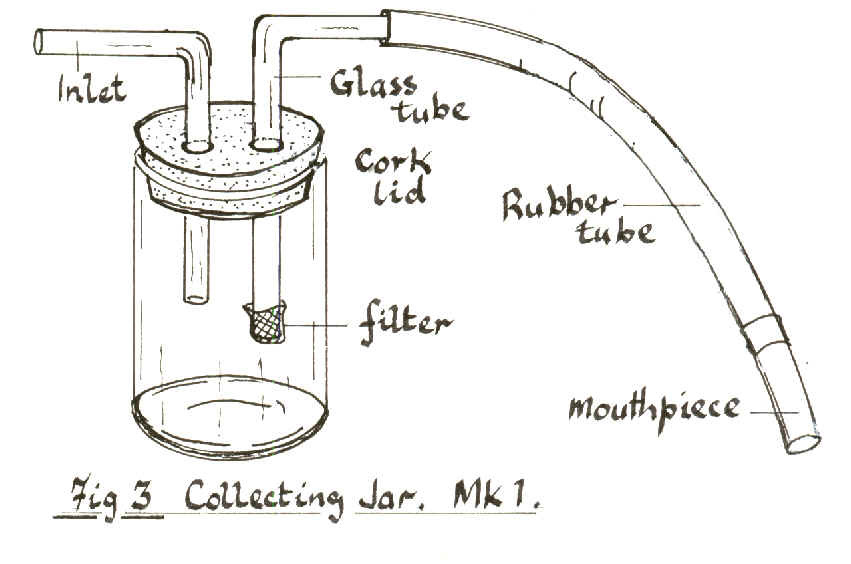
Give one instrument used for identifying organisms in a habitat (include labels).
A pooter. (Diagram switches mouthpiece and inlet, can be used either way however flexible tube makes collecting easier).
What is the difference between a qualitative and a quantitative survey?
• A qualitative survey records the presence/absence of an organism in a habitat. • A quantitative survey records the amount of an organism present in a habitat.
How would you carry out a quantitative survey of plants?
• I would throw a quadrat, at random, 10 times within the habitat. • I recorded the space taken up (% cover) or the presence/absence of the plant (frequency) in the grids of the quadrat. • To calculate % cover of the plant, I would estimate the % coverage for each of the 10 trials, then find the average. • To calculate the frequency of the plant in the habitat, I would use the following formula: Times the plant appeared x 100 Total no. of throws 1
How would you carry out a quantitative survey of animals in a habitat?
• I would use the capture-recapture method, firstly capturing a set amount of a species. • They are marked in such a way that does not put the organism at a disadvantage (nail varnish on snail shell) and released. • After a few days, I would return to the habitat and collect the same number of organisms of that species as I had on the first day. • Using the following formula, I could estimate the population size of the species in the habitat: (Captured 1st visit) x (Captured 2nd visit) Total no. of organisms marked 2nd visit
Name three possible abiotic factors in a grassland ecosystem.
• Light intensity (measured in lux, measured w/ light meter). • Soil pH (measured with soil pH meter). • Climate (measured with thermometer).