proteins- david klein
No description yet. This curated deck is ready for daily study.
Card preview (24)
Structure of α-Amino Acids
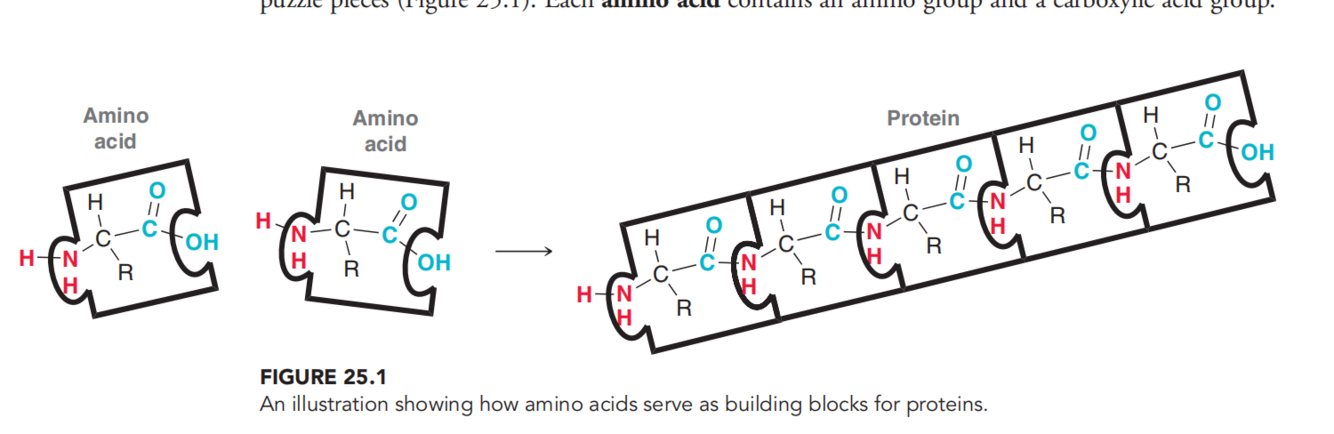
An amino acid contains two key functional groups: Amino group (–NH₂) Carboxylic acid group (–COOH) These two groups can be separated by various numbers of carbon atoms, but the most biologically important amino acids are those where: The amino group is attached to the α-carbon, which is the carbon adjacent to the carboxyl group. ➤ α-Amino Acids: Defined by the structure: H 2 N – C H ( R ) – C O O H H 2 N–CH(R)–COOH The α-carbon: Is bonded to: An amino group (–NH₂) A hydrogen (H) A carboxyl group (–COOH) A side chain group (R) Becomes a chiral center if R ≠ H.
Peptide Bonds (Amide Linkages)
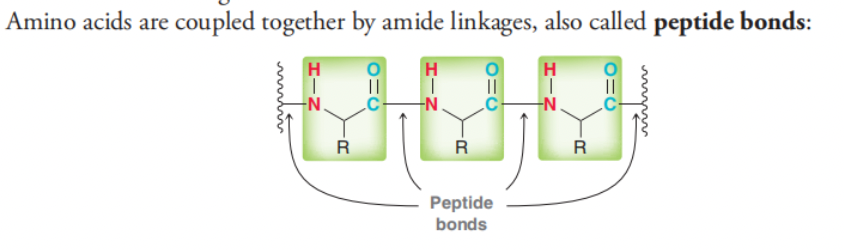
Amino acids join to form peptides or proteins through amide bonds called peptide bonds. This occurs via a condensation reaction: The –NH₂ group of one amino acid reacts with the –COOH group of another. A molecule of water (H₂O) is eliminated. A peptide bond is formed: – C O – N H – –CO–NH– This reaction links amino acids into long chains (polypeptides).
Peptides
A peptide is a short chain of amino acids linked by peptide bonds (amide linkages). Naming is based on the number of amino acids: Dipeptide: 2 amino acids Tripeptide: 3 amino acids Tetrapeptide: 4 amino acids And so on…
Polypeptides vs. Proteins When the chain grows longer:
Chains with fewer than 40–50 amino acids are typically called polypeptides. Chains with more than 50 amino acids are usually considered proteins.
Proteins and Their Roles Proteins are biologically essential macromolecules.
They perform a variety of structural, regulatory, transport, and catalytic functions. Enzymes are a class of proteins that: Act as biological catalysts Speed up chemical reactions in cells Are crucial for metabolism and life processes 🧠 It is estimated that the human body uses more than 50,000 enzymes to carry out life functions efficiently.
What is a peptide?
A: A short chain of amino acids linked by peptide (amide) bonds.
How many amino acids make up a dipeptide?
A: 2
How many amino acids make up a tripeptide?
A: 3
What kind of bond joins amino acids in peptides?
A: A peptide bond (–CO–NH–)
What is the difference between a polypeptide and a protein?
A: A polypeptide has fewer than 40–50 amino acids, while a protein is a longer chain (usually >50 amino acids).
What are enzymes?
A: Proteins that function as biological catalysts to speed up chemical reactions in cells.
At what point is a peptide typically considered a protein?
A: When it has more than 50 amino acids.
How many enzymes are estimated
to be needed by the human body? A: Over 50,000
What are some functions of proteins in the body?
A: Catalysis (enzymes), structure (e.g., collagen), transport (e.g., hemoglobin), signaling (e.g., hormones).
Not All Amino Acids Are in Proteins
While 20 standard amino acids are commonly found in proteins, other amino acids exist in the body that: Are biologically important Do not get incorporated into proteins Serve specific physiological roles
GABA (γ-Aminobutyric Acid)
Structure: NH₂–CH₂–CH₂–CH₂–COOH Classification: γ-amino acid (amino group is on the γ-carbon—3 carbons away from the carboxyl group) Function: Acts as a neurotransmitter Found in the brain Inhibitory — reduces neuronal excitability Not used in proteins
Thyroxine
Structure: A complex derivative of tyrosine with iodine atoms Classification: A modified amino acid Function: A hormone secreted by the thyroid gland Regulates metabolism, growth, and development Not incorporated into proteins directly
Are all amino acids found in proteins?
A A: No, some amino acids (like GABA and thyroxine) are not found in proteins but still serve important functions in the body.
What does GABA stand for?
A: γ-Aminobutyric acid
What is the role of GABA in the body?
A: It acts as an inhibitory neurotransmitter in the brain.
Why is GABA classified as a γ-amino acid?
A: Because the amino group is on the γ-carbon (3 carbons away from the carboxyl group).
Is GABA incorporated into proteins?
A: No
What is thyroxine?
A: A hormone derived from tyrosine, produced by the thyroid gland.
What is the biological role of thyroxine?
A: It regulates metabolism, growth, and development.