Chapter 15: NMR Spectroscopy
No description yet. This curated deck is ready for daily study.
Card preview (10)
What determines the energy gap between spin states NMR Spectroscopy
The magnitude of the energy gap depends on the strength of the imposed external magnetic field
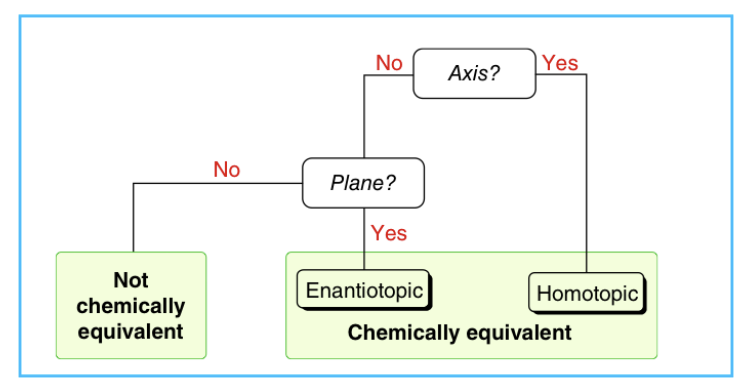
Chemical equivalence categories NMR Spectroscopy
Homotopic- protons are chemically equivalent and are interchangeable by rotational symetry Enantiotopic- protons are chemically equivalent and are interchangeable only by reflectional symmetry Diasterotopic- protons are not chemically equivalent and cannot be interchanged by symmetry
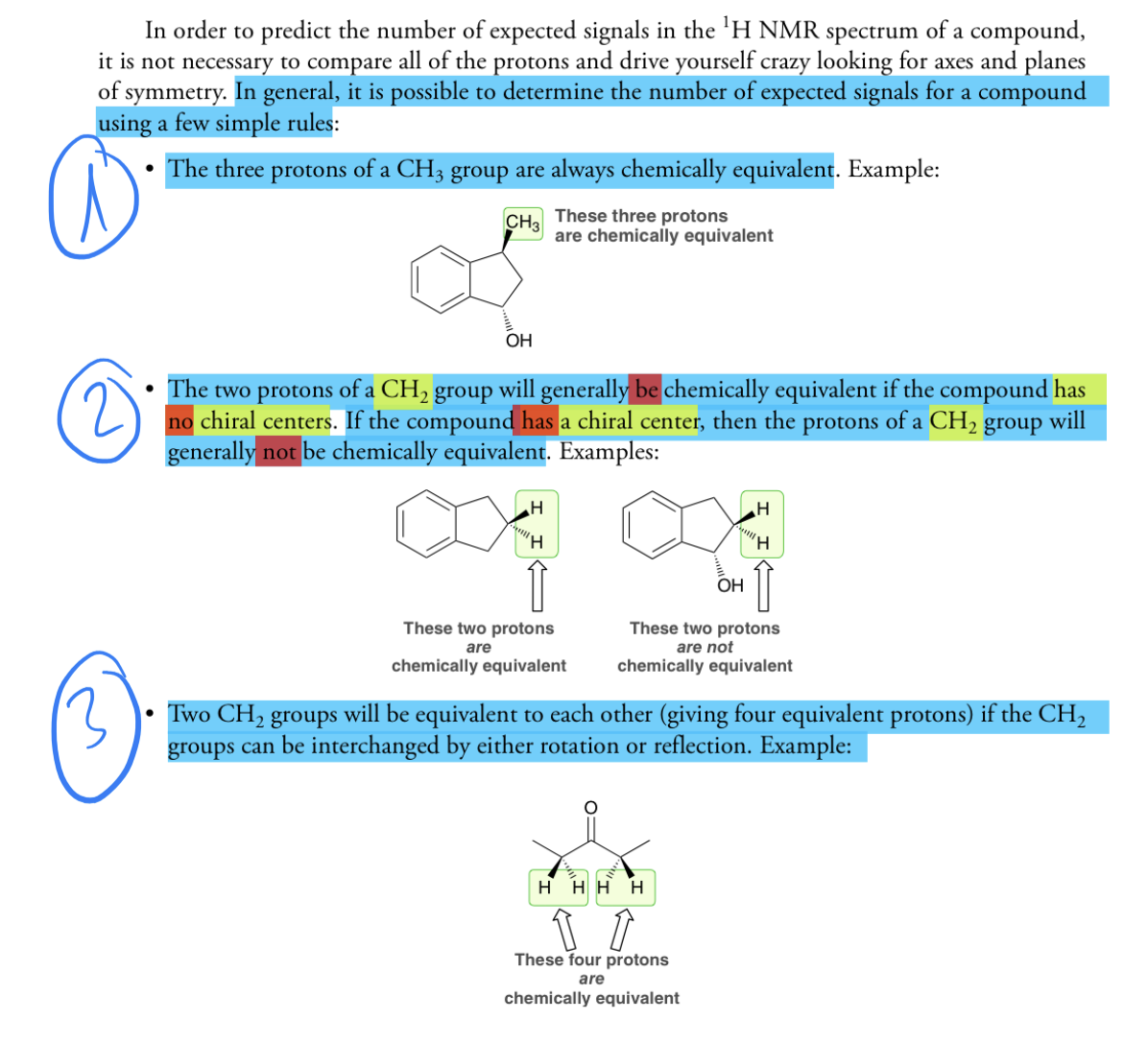
Number of expected signals NMR Spectroscopy
A signal is expected for each chemically equivalent hydrogen atom
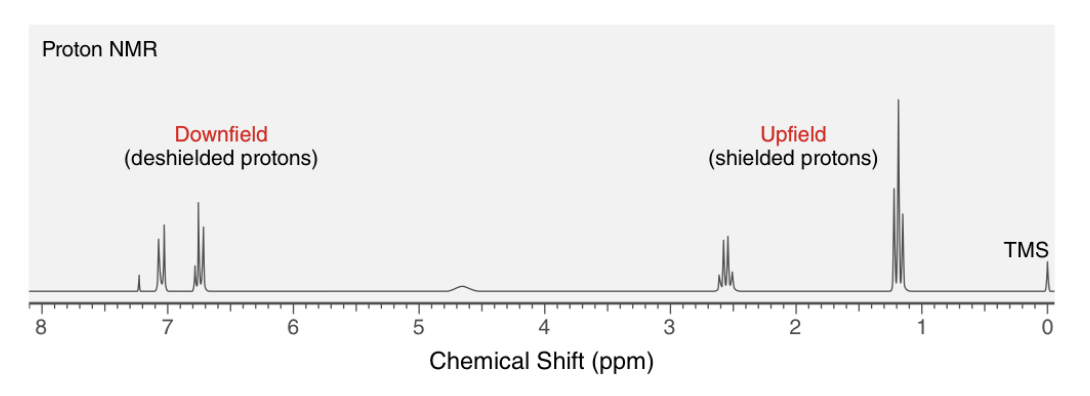
Chemical shifts NMR Spectroscopy
A LEFT shift is described as DOWNFIELD and results from deshielded protons that absorb a higher frequency of rf radiation A RIGHT shift is described as UPFIELD and results from shielded protons that absorb a lower frequency of rf radiation− a lower frequency wave can penetrate further
Integration NMR Spectroscopy
• Divide each individual integration value by the smallest integration value • This gives the ratio of protons relative to each other • Compare the ratio of protons to the molecular formula to determine the number of protons in the compound
Multiplicity NMR Spectroscopy
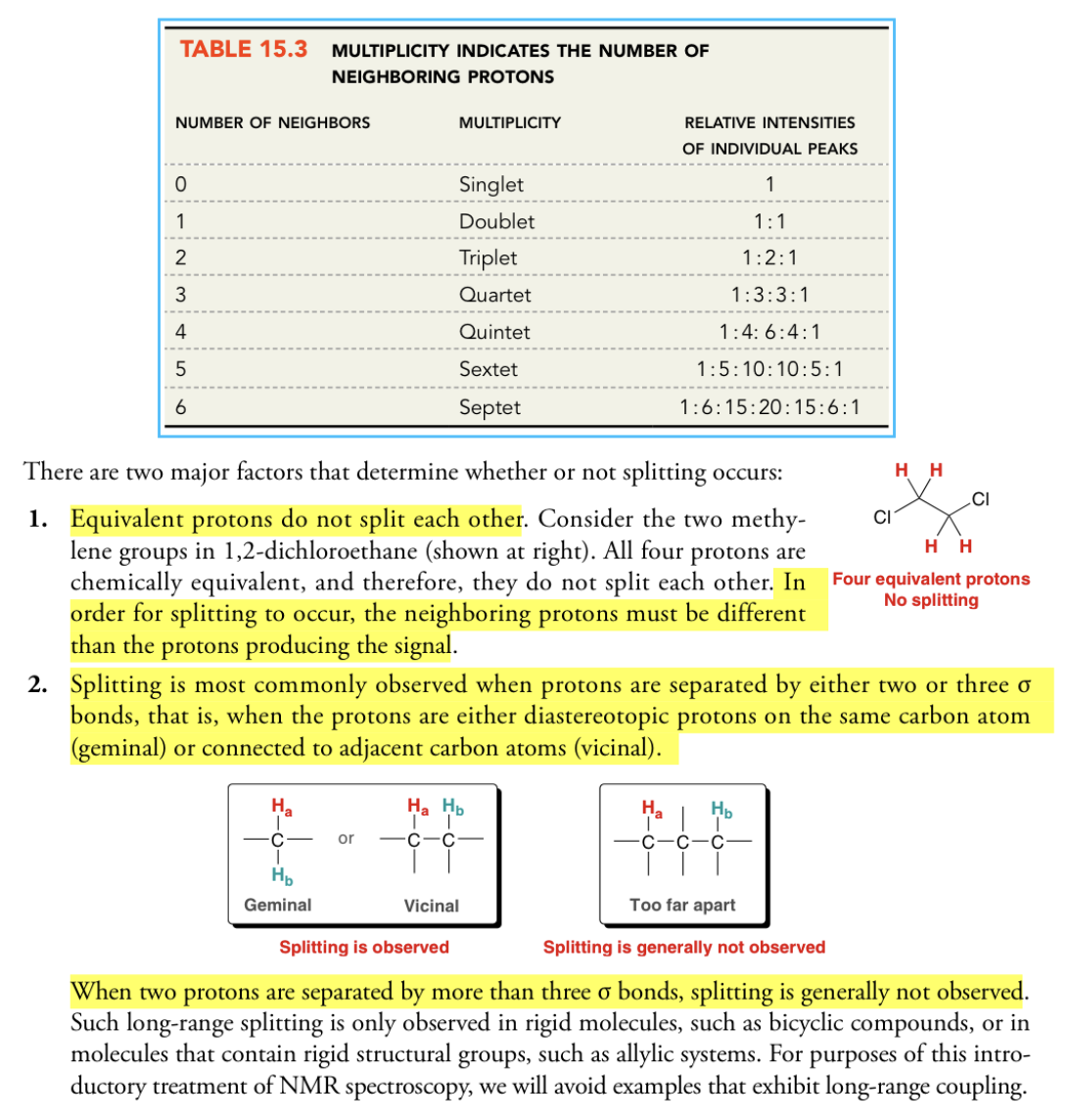
• Identify all chemically equivalent protons • Identify number of immediate neighbors for each equivalent proton; either geminal or vicinal • Apply the n+1 rule determine splitting
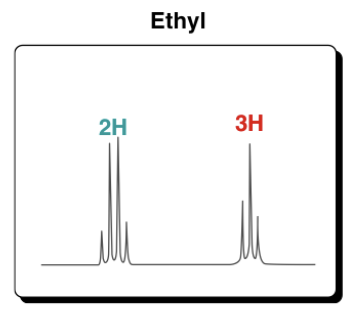
Ethyl splitting patterns NMR Spectroscopy
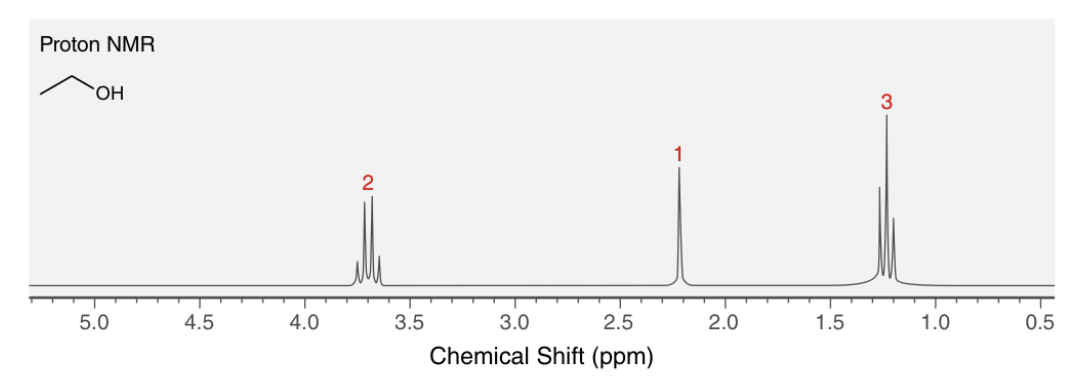
2H quartet and 3H triplet
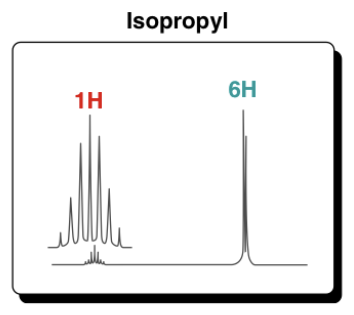
Isopropyl splitting pattern NMR Spectroscopy
1H septet and 6H doublet
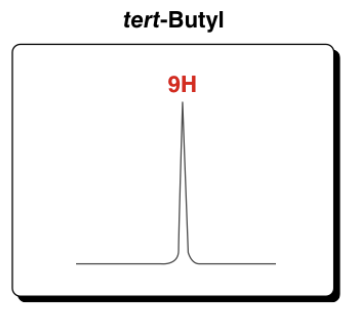
tert-Butyl splitting pattern NMR Spectroscopy
9H singlet
Alcohol splitting pattern NMR Spectroscopy
Generally no splitting is observed across an alcohol oxygen atom Chemical shift ~2-5 ppm