1.2 The muscular system
No description yet. This curated deck is ready for daily study.
Card preview (24)
1.2.2 Distinguish between the different types of muscle
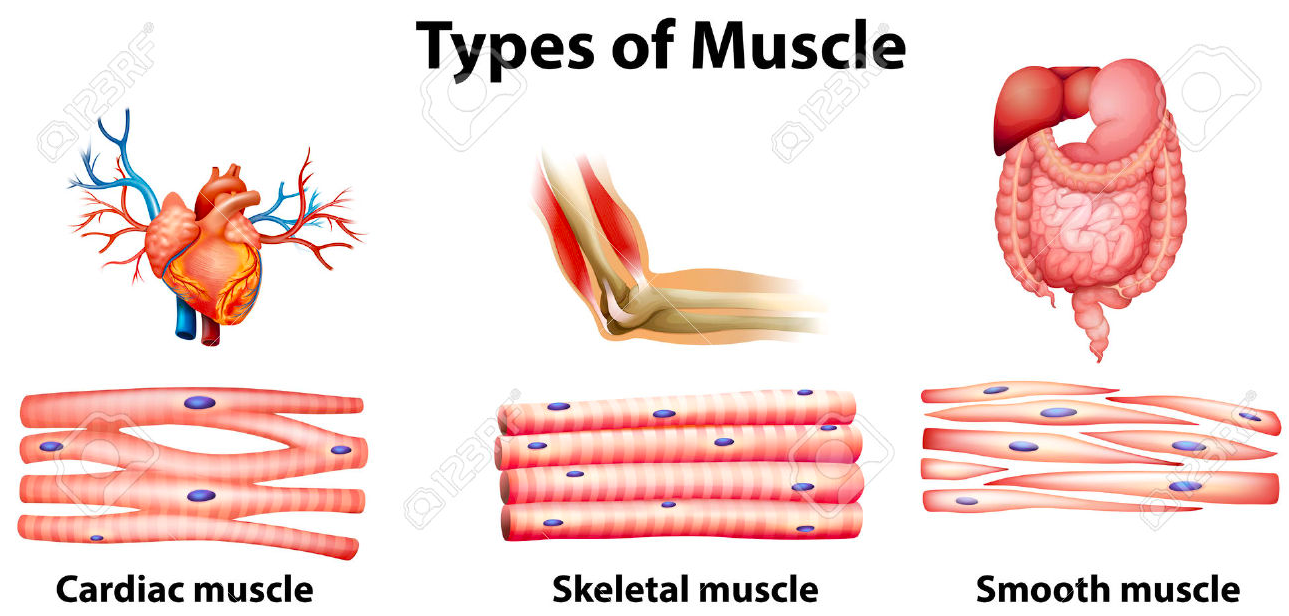
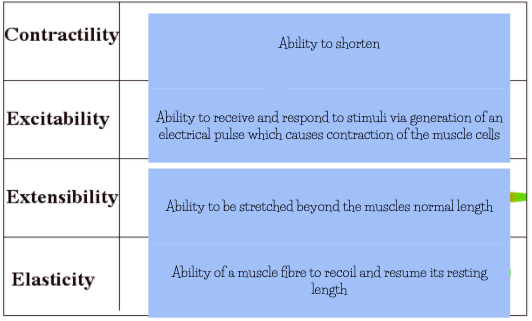
1.2.1 What are the characteristics of Muscle?
1.2.4 Define the terms origin and insertion of muscles.
• The origin is where the tendon of the muscle joins the stationary bone(s). Usually more proximal. • The insertion is where the tendon of the muscle joins the moving bone(s). Usually more distal.
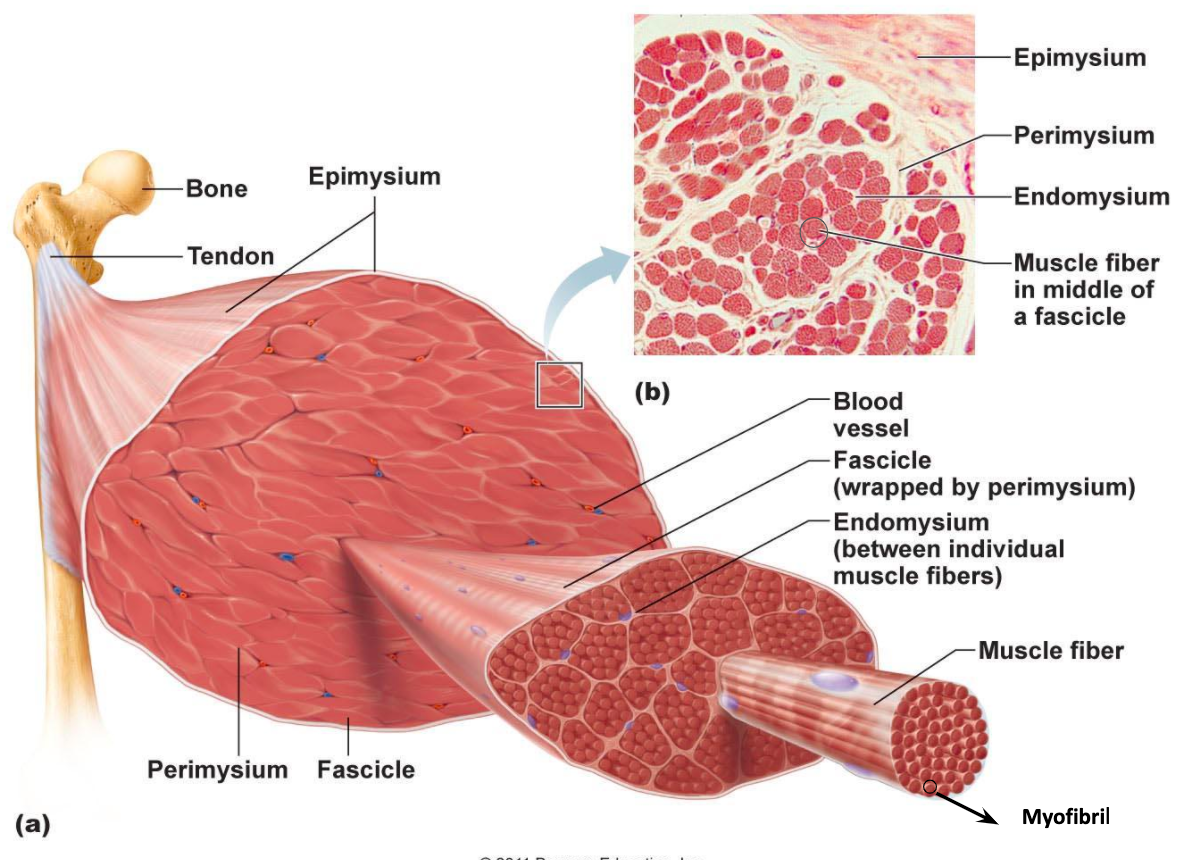
1.2.3 Annotate the structure of skeletal muscle.
Name the muscle (yellow), the joint it moves
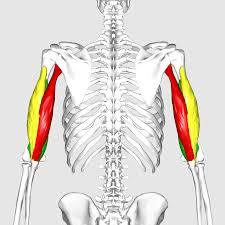
Triceps Brachii Movement. Elbow extension (agonist) Elbow flexion (antagonist)
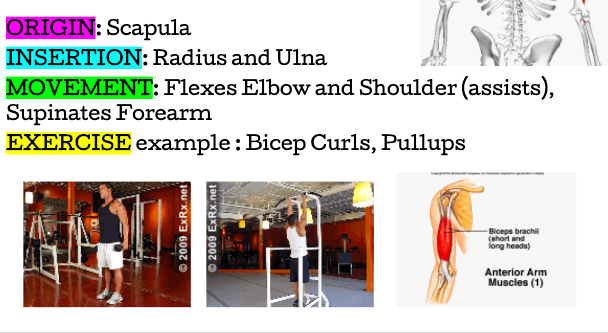
Name the muscle below, and the joint movement it is responsible for. Include its origin and insertion.
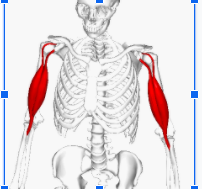
Bicep Brachii Movement: Elbow flexion. (agonist) Elbow extension (antagionsit) Origin: Scapula Insertion: Radius and Ulna
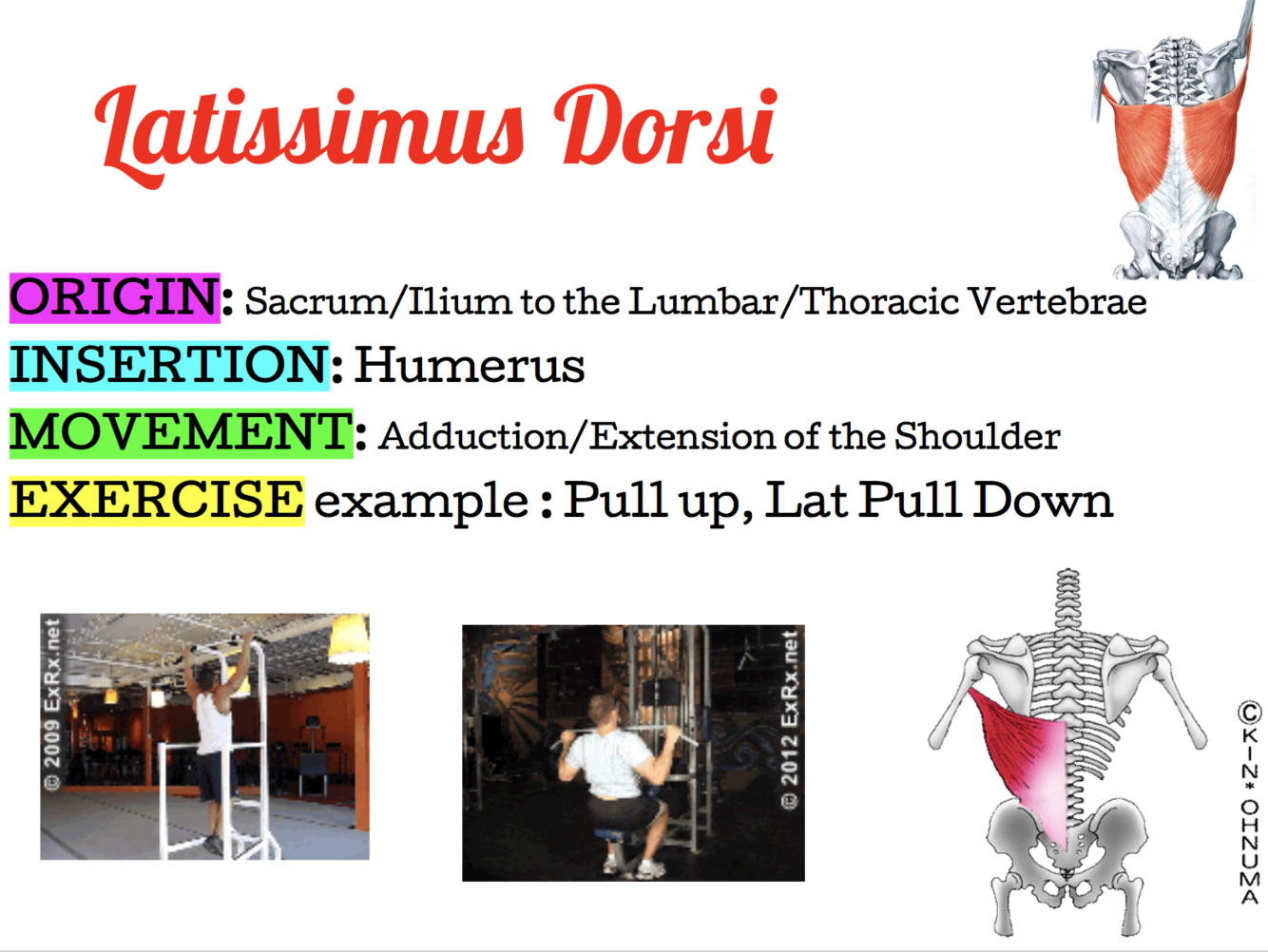
Name the muscle, the joint it moves, and its origin and insertion.
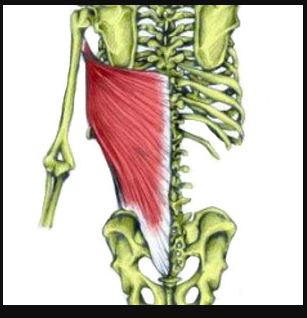
Latissimus Dorsi Joint: Shoulder Movement: Adduction, extension. (agonist) Abduction, flexion (antagonist) Origin. Thoracic vertebrae Insertion: Humerus.
Name the muscle, the joint it moves, and its origin and insertion.
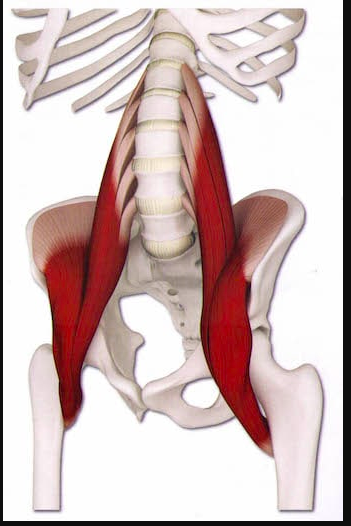
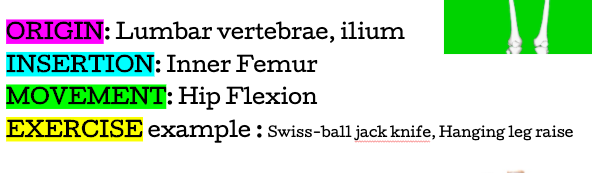
iliopsoas Movement. Hip flexion (agonist) Hip extension (antagonist) Origin. Lumbar vertebrae Insertion. Femur.
Name the muscle, the joint it moves, and its origin and insertion.
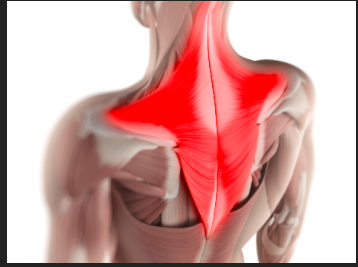
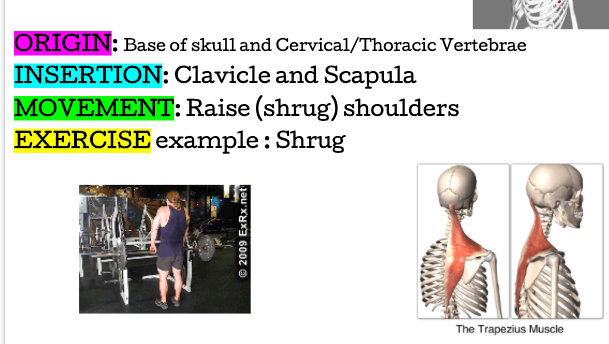
Trapezius Movement: Shoulder elevation (agonist) Shoulder depression (antagonist) Origin. the base of the skull (cervical vertebrae) Insertion: Clavicle & scapula.
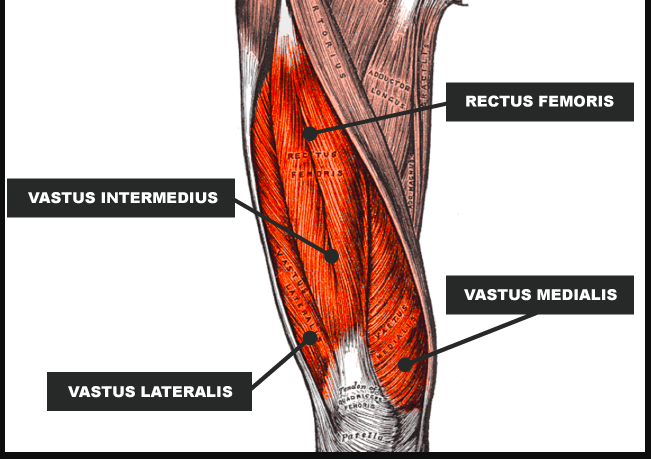
Name the 4 muscles that make up the quadriceps
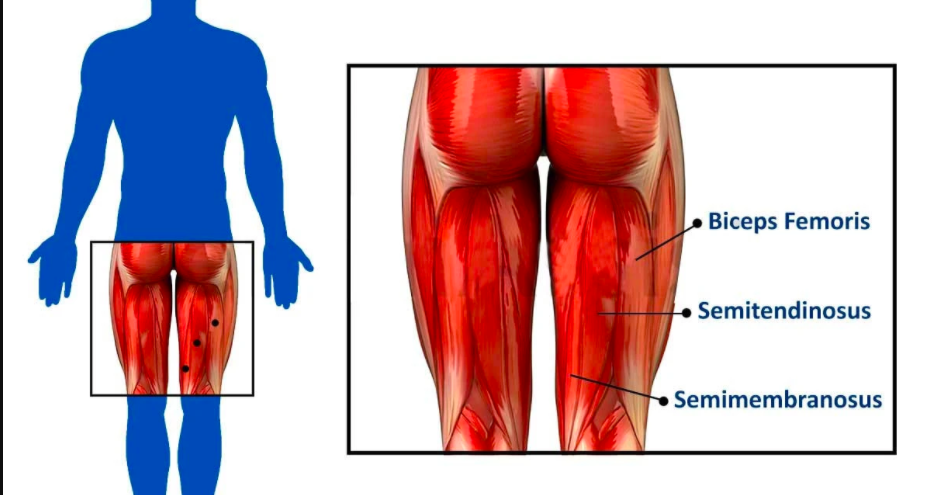
Name the 3 muscles of the hamstrings.
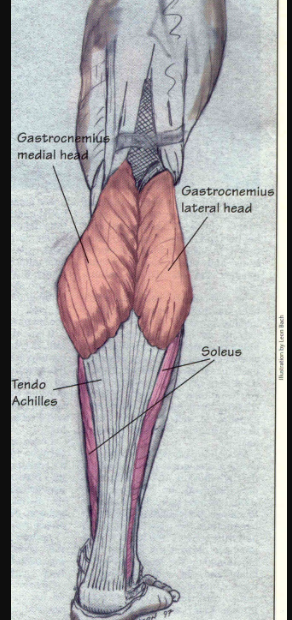
Name the muscles on the posterior aspect of the lower leg. (from knee down)
Gastrocnemius Soleus (underneath the gastrocnemius)
Name the muscle, the joint it moves, and its origin and insertion.
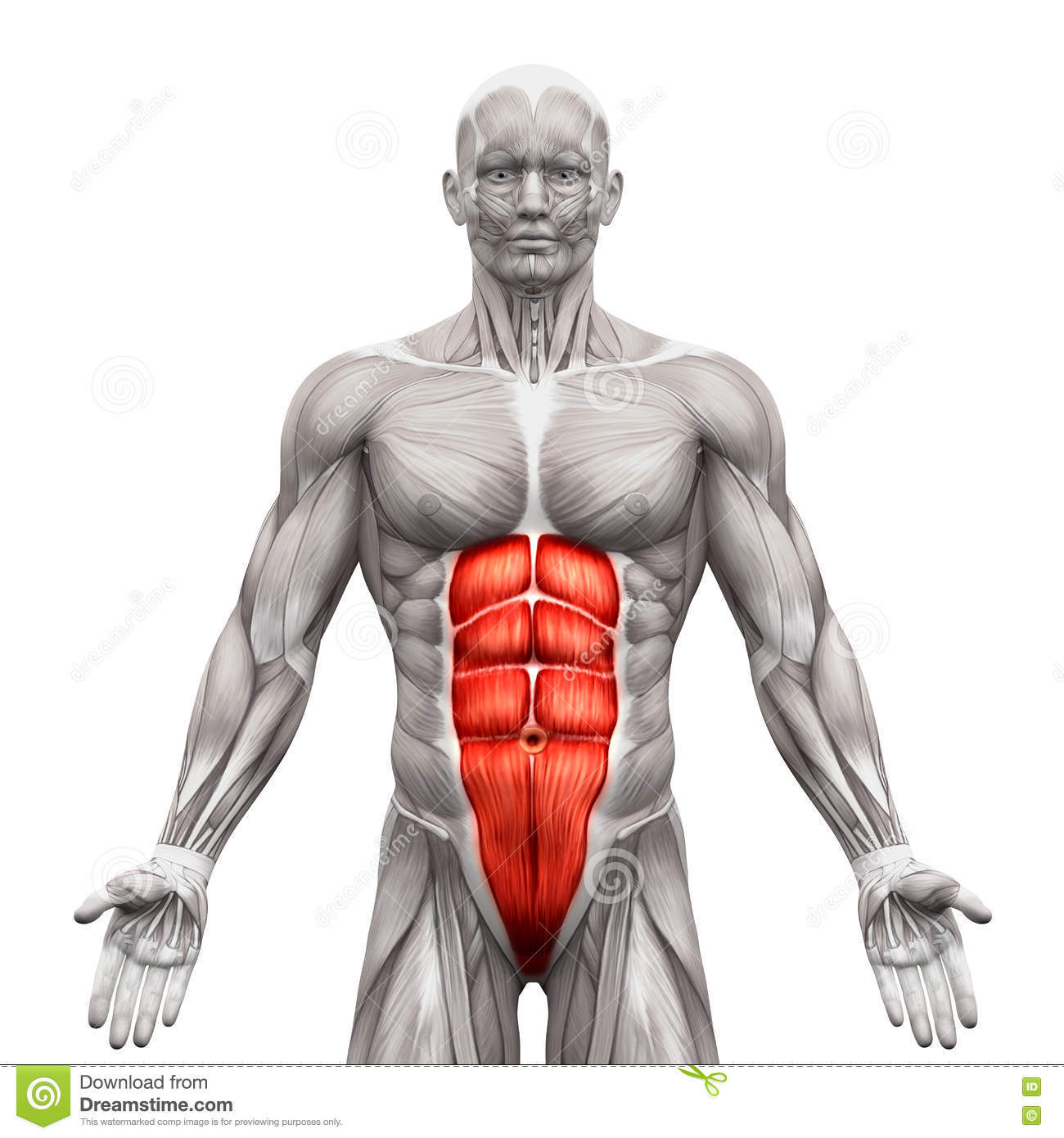
Rectus Abdominis Movement: Flexion of the spine Origin: Pubis Insertion: Sternum
Name the muscle, the joint it moves, and its origin and insertion.
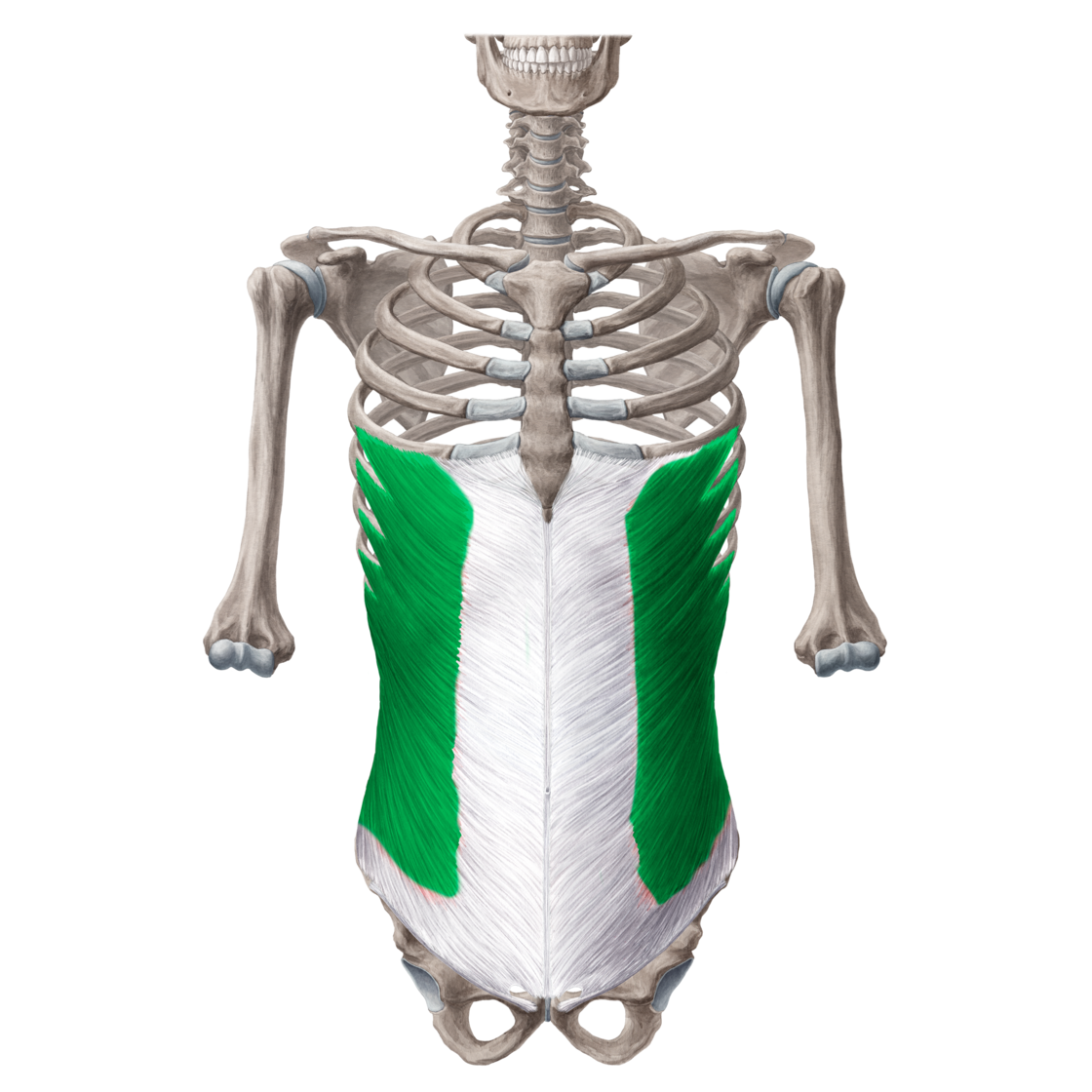
External Obliques Movement: Lateral trunk flexion Origin: lower Ribs Insertion: Ilium
Name the muscle, the joint it moves, and its origin and insertion.
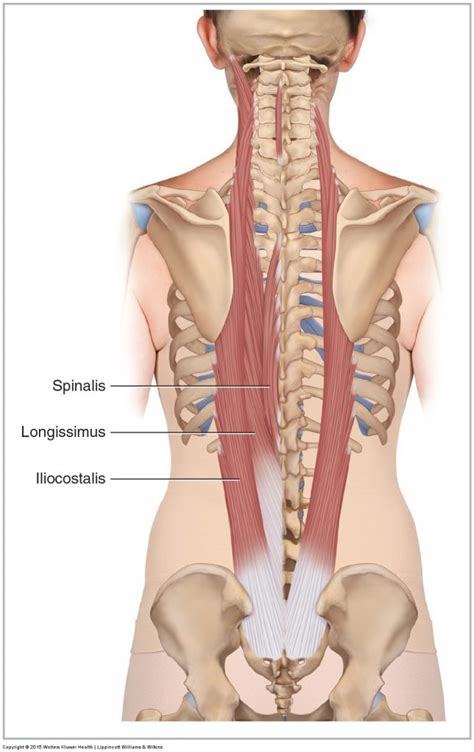
Erector Spinae Movement: Trunk extension Origin: Thoracic Vertebrae, ilium Insertion: Ribs and Thoracic vertebrae, Sacral vertebrae
Name the muscle, the joint it moves, and its origin and insertion. (3 parts)
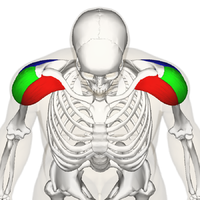
Deltoids Red = Anterior Green = Middle Blue = Posterior Movement: Flexion, and abduction of the shoulder Origin: Clavicle, Scapula Insertion: Humerus
Name the muscle, the joint it moves, and its origin and insertion.
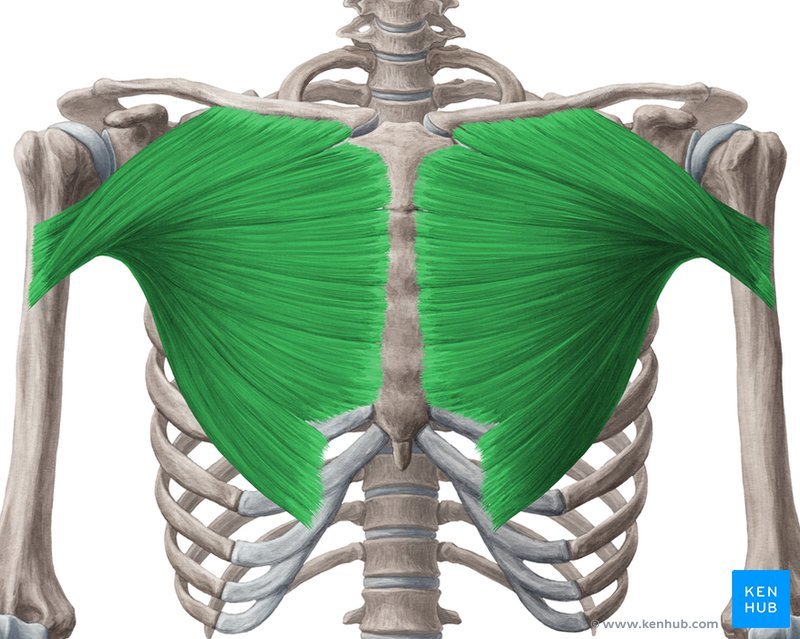
Pectoralis Major Movement: Horizontal Flexion and Abduction of the shoulder Origin: Sternum, clavicle Insertion: Humerus
Name the muscle, the joint it moves, and its origin and insertion.
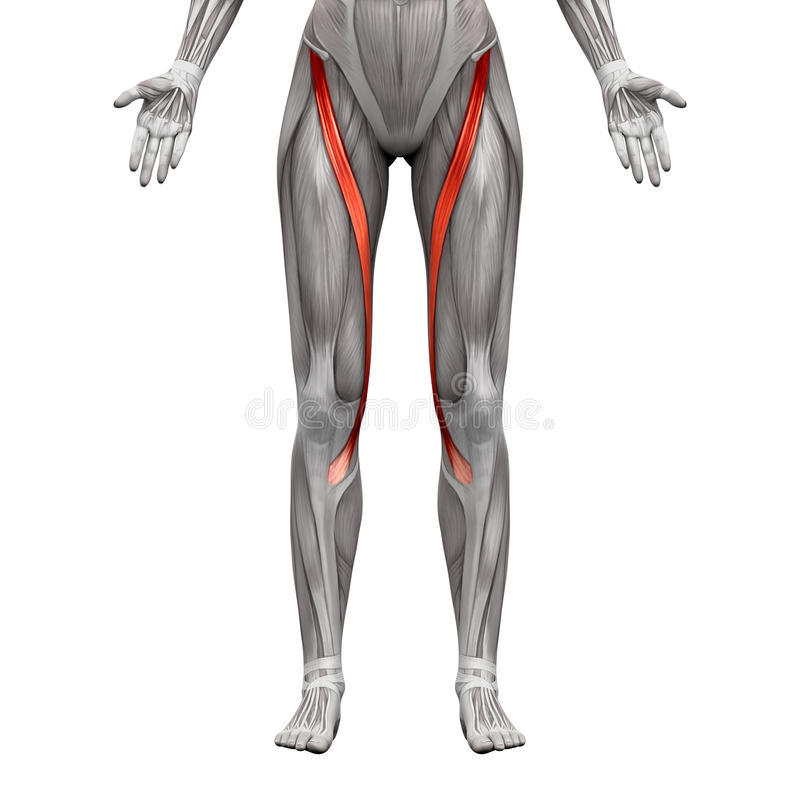
Sartorius Movement: Hip flexion, Hip abduction, Knee flexion Origin: Ilium Insertion: Tibia
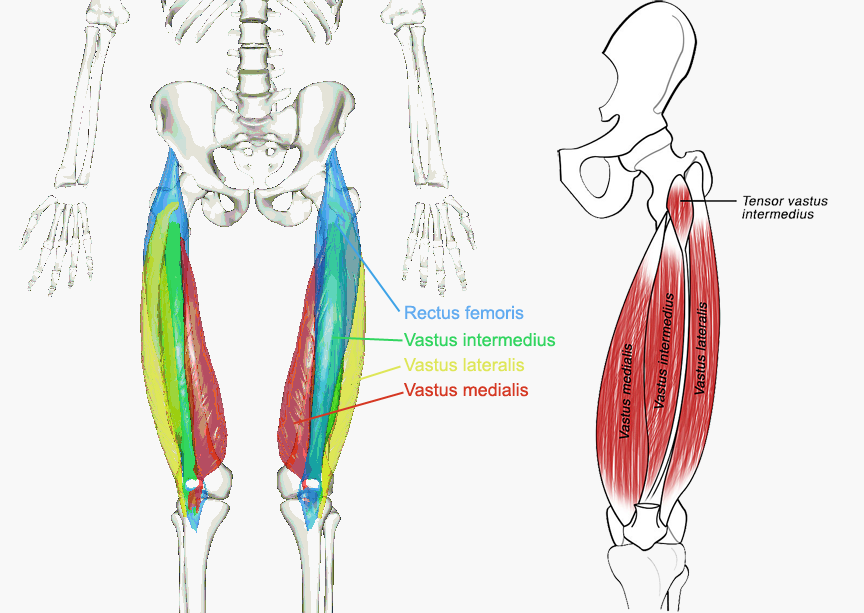
Name the muscle, the joint it moves, and its origin and insertion. (4 different Parts)
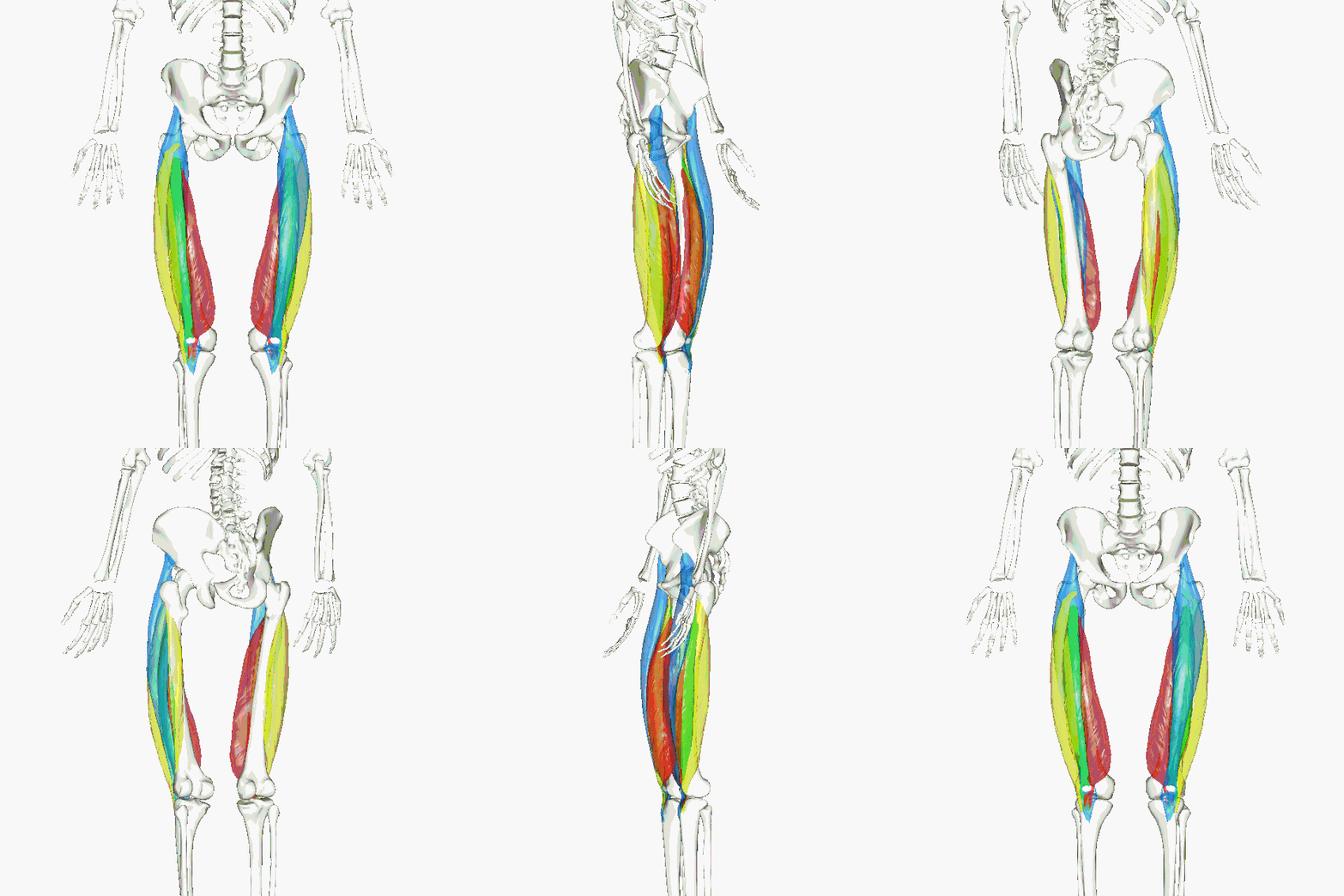
Quadriceps Blue = Rectus femoris (RF) Green = Vastus intermedialis (VI) Yellow = Vastus lateralis (VL) Red = Vastus medialis (VM) Movement: Knee Extension, Hip flexion (RF) Origin: Ilium (RF), Femur (VI, VL, VM) Insertion: Patella and Tibia
Name the muscle, the joint it moves, and its origin and insertion. (3 Parts)
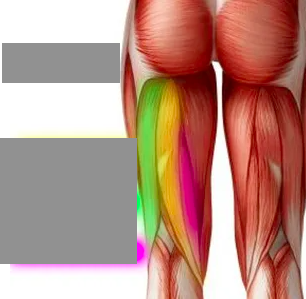
Hamstrings Green = Bicep Femoris (BF) Yellow = Semitendinosus (ST) Purple = Semimembranuses (SM) Movement: Hip extension, Knee flexion Origin: Ischium (below Sacral Verterbrae) Insertion: Medial Tibula, Lateral Tibula/ Fibula
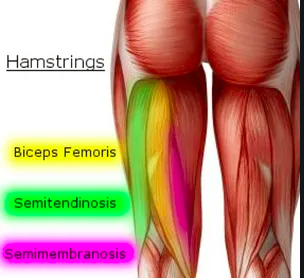
Name the muscle, the joint it moves, and its origin and insertion.
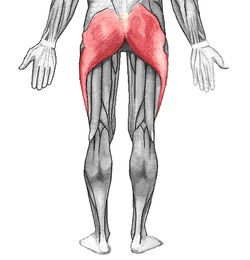
Gluteus Maximus Movement: Hip extension Origin: Coccyx Vertebrae, Ilium, Sacral Insertion: Femur
Name the muscle, the joint it moves, and its origin and insertion.
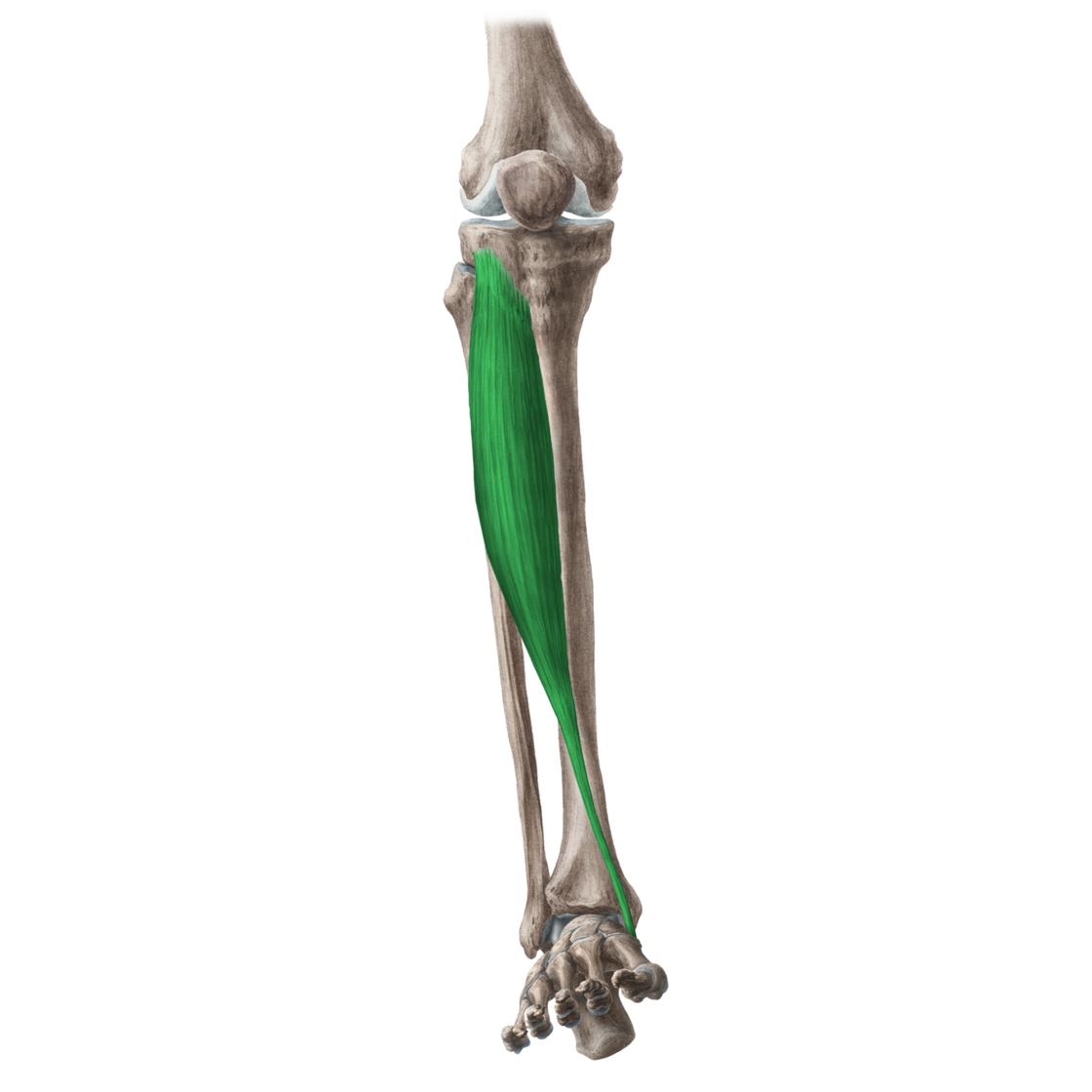
Tibialis Anterior Movement: Dorsiflexion of the foot Origin: Tibia Insertion: Tarsals/ Metatarsals of foot
Name the muscle, the joint it moves, and its origin and insertion. (two different Muscles)
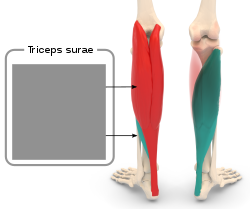
Gastrocnemius and Soleus Red = Gastrocnemius (GN) Green = Soleus (S) Movement: Plantarflexion of foot Origin: Femur (GN), Tibia / Fibula (S) Insertion: Both (GN and S) from Achilles tendon which attaches to heel and foot
State the name of the thigh muscle indicated by label X in the diagram below
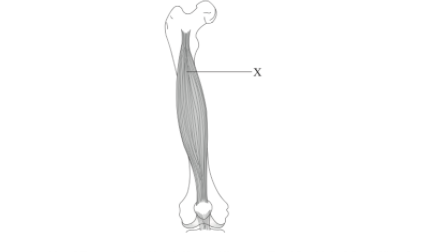
Vastus intermedius