Aldehydes and Ketones II: Enolates
No description yet. This curated deck is ready for daily study.
Card preview (24)
carbon adjacent to carbonyl carbon
α-carbon
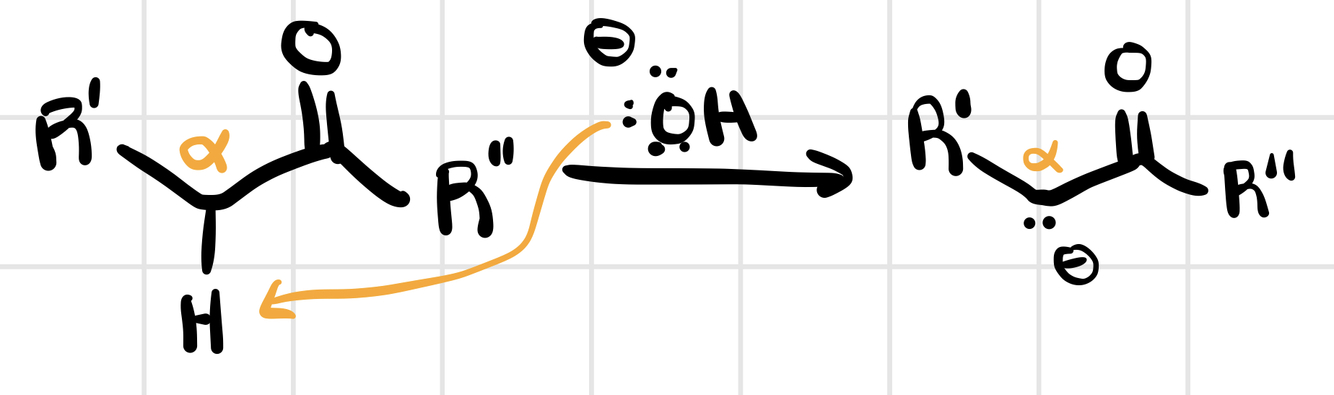
hydrogen attached to α-carbon; relatively acidic and can be removed by a strong base
α-hydrogen
effect of oxygen of carbonyl that weakens the C-H bonds on α-carbons
electron-withdrawing
deprotonation of an α-carbon, forming a carbanion:
less reactive toward nucleophiles because of α-carbon destabilization and steric hindrance
ketones
presence crowds transition step and increases its energy; also donates electron density to carbanion, making it less stable
additional alkyl group
traditional form aldehydes and ketones exist in (C=O)
keto form
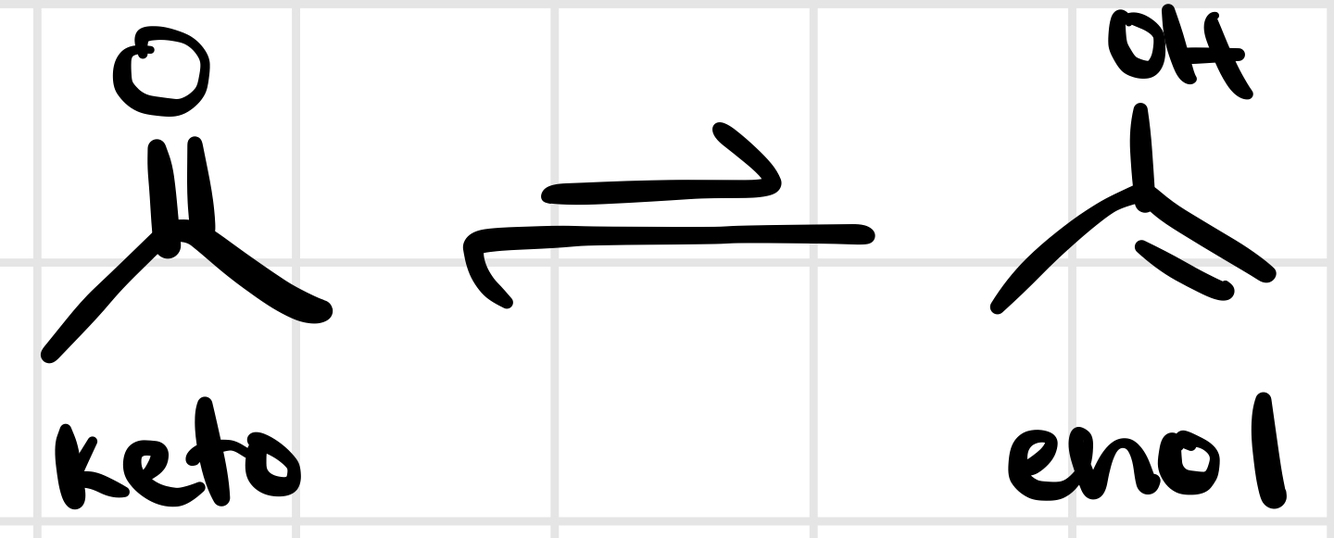
less common form aldehydes and ketones exist in; ene + ol = double bond + hydroxyl group
enol form
isomers that can be interconnected by moving a hydrogen and a double bond; keto and enol forms are ____ of one another
tautomers
deprotonated form of enol; they are good nucleophiles
enolate
enolization (tautomerization):
reaction where an enolate attacks an α, β-unsaturated carbonyl, creating a bond
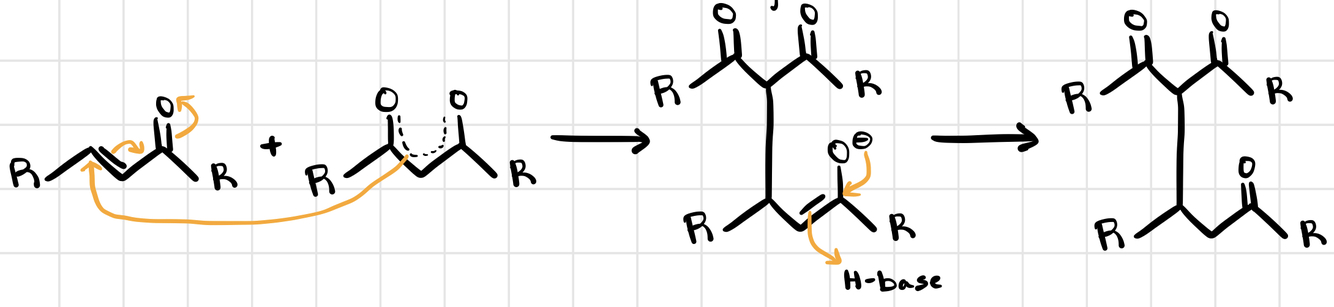
Michael addition
step of Michael addition- base deprotonates α-carbon (making it a good nucleophile):

step of Michael addition- carbanion attacks the double bond (resulting in Michael addition):
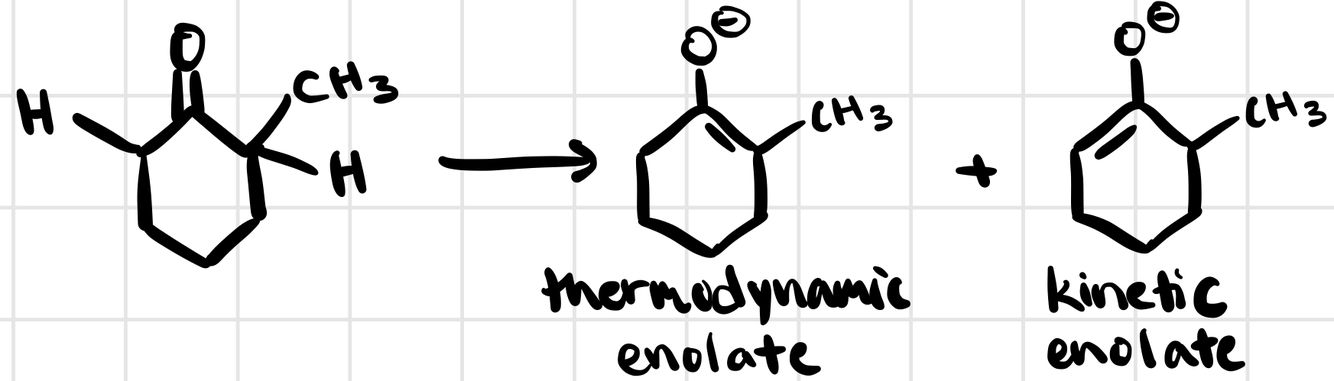
enolate favored by fast, irreversible reactions at lower temperatures with strong, sterically hindered bases
kinetic enolate
enolate favored by slower, reversible reactions at higher temperatures with weaker, smaller bases
thermodynamic enolate
kinetic and thermodynamic enolate:
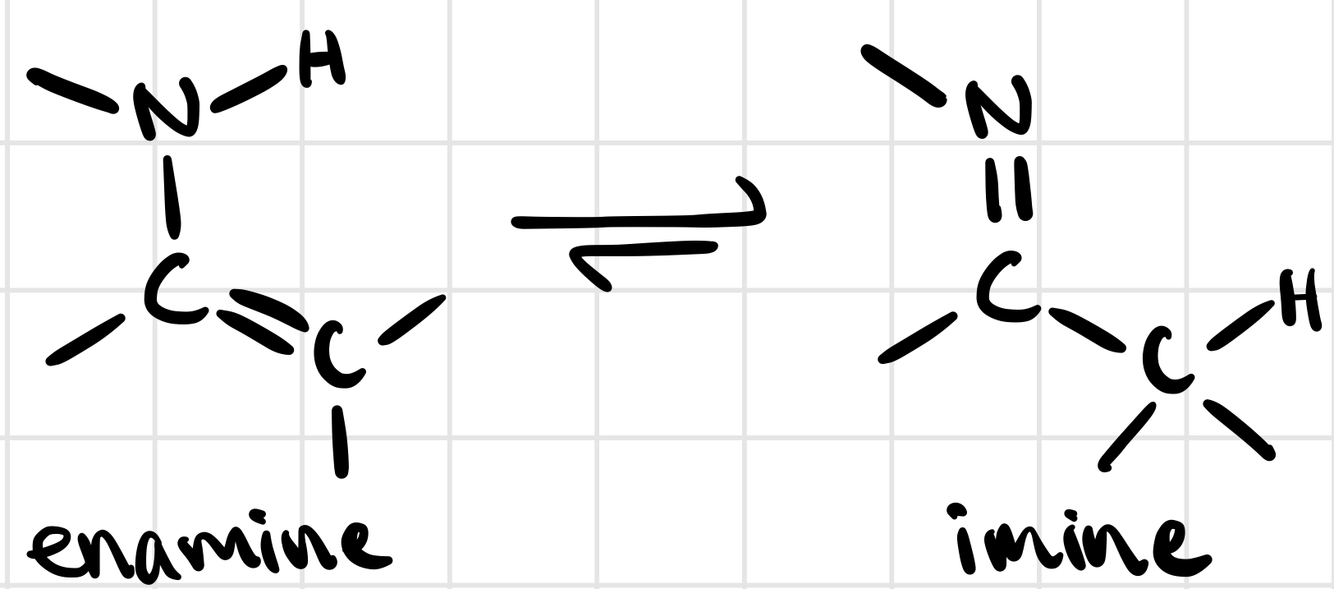
tautomers of imines; imines are thermodynamically favored, so are the more common tautomer
enamines
enamination (tautomerization):
reaction where the aldehyde or ketone acts as both nucleophile and electrophile, resulting in formation of a C-C bond in a new ____ molecule
aldol condensation
aldol condensation: contains both aldehyde and alcohol functional groups
aldol
aldol condensation: the enolate formed from deprotonation of the α-carbon acts as the ____
nucleophile
aldol condensation: the aldehyde or ketone in form of the keto tautomer acts as the ____
electrophile
aldol condensation: first step; two molecules come together forming the aldol
condensation reaction