18 - Rates
暂无描述。系统推荐的高质量记忆内容,适合每天坚持背诵学习。
卡片预览 (24 张)
Two ways of determining rate
• Measuring the decrease in the concentration of a reactant over time • Measuring the increase in the concentration of a product over time
How can rate equations be determines
can only be determined experimentally not by mole ratios
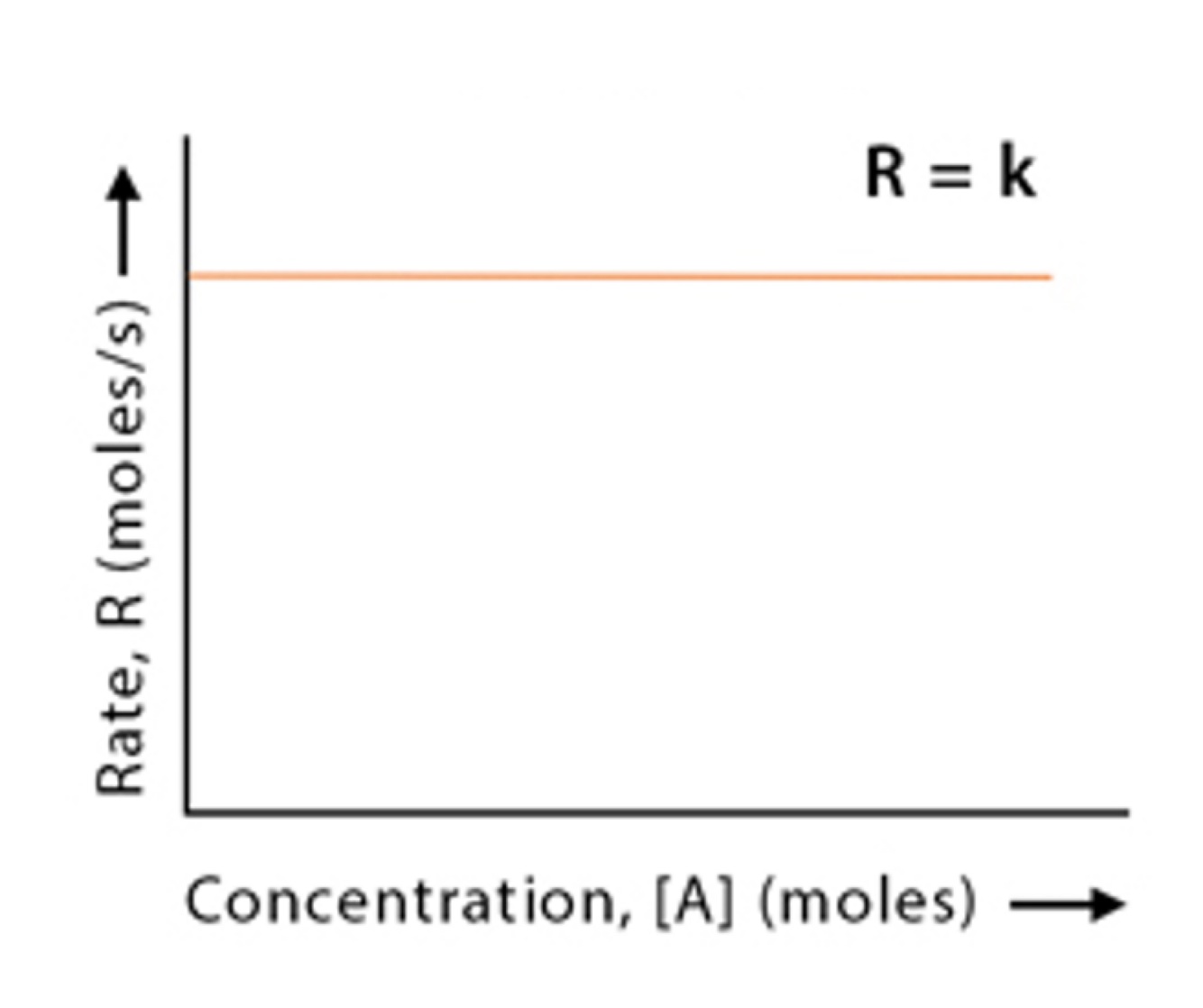
Rate-concentration = 0 order
o Changing the concentration of the chemical has no effect on the rate of the reaction
Is the 0 order included in rate equation
No
Rate from 0 order rate-concentration graph
o Rate = K // y-intercept
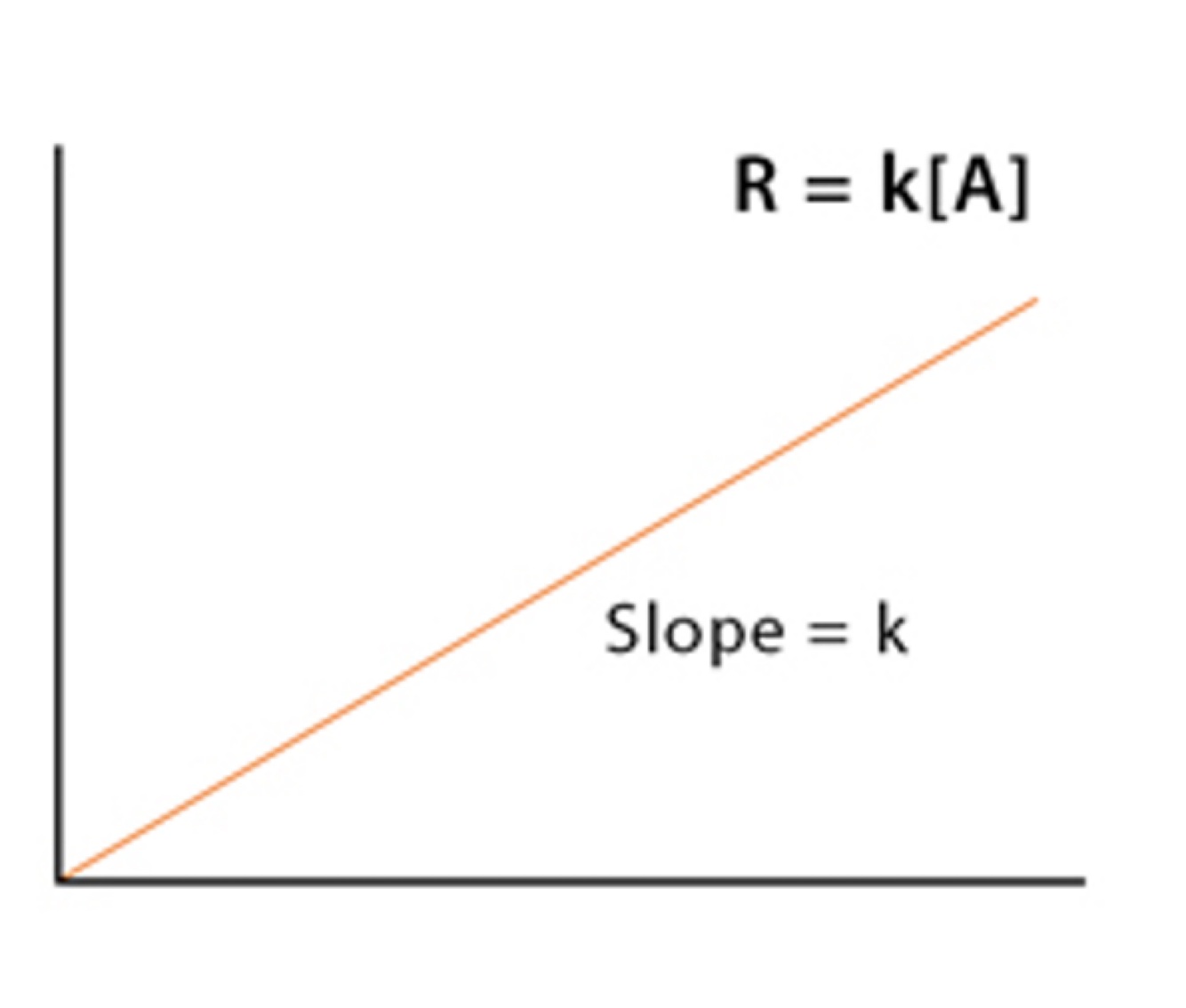
Rate - concentration 1st order
o The concentration of the chemical is directly proportional to the rate of reaction, e.g. doubling the concentration of the chemical doubles the rate of reaction
Rate from a first order rate-concentration graph
o Rate = gradient
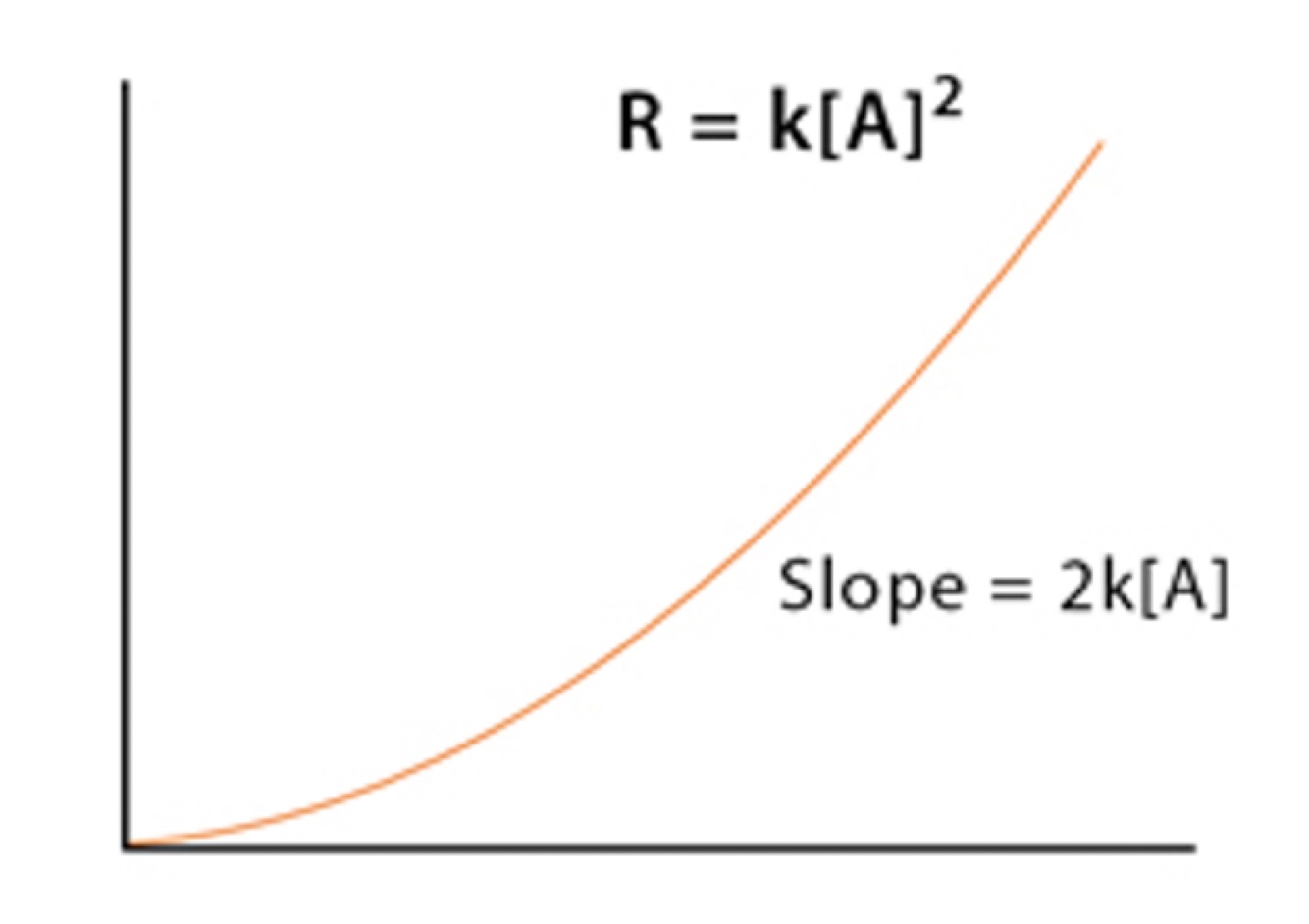
Rate - concentration 2nd order
o The rate is directly proportional to the square of the concentration of that chemical, e.g. doubling the concentration of the chemical increases the rate of reaction by a factor of four
Rate from 2nd order rate-concentration graph
o Upward curve = plot rate against conc squared = straight line = k = gradient • gradient of straight line
Overall order of a rate equation
sum of the powers of the reactants in a rate equation
Order with respect to [(CH3)3CBr]
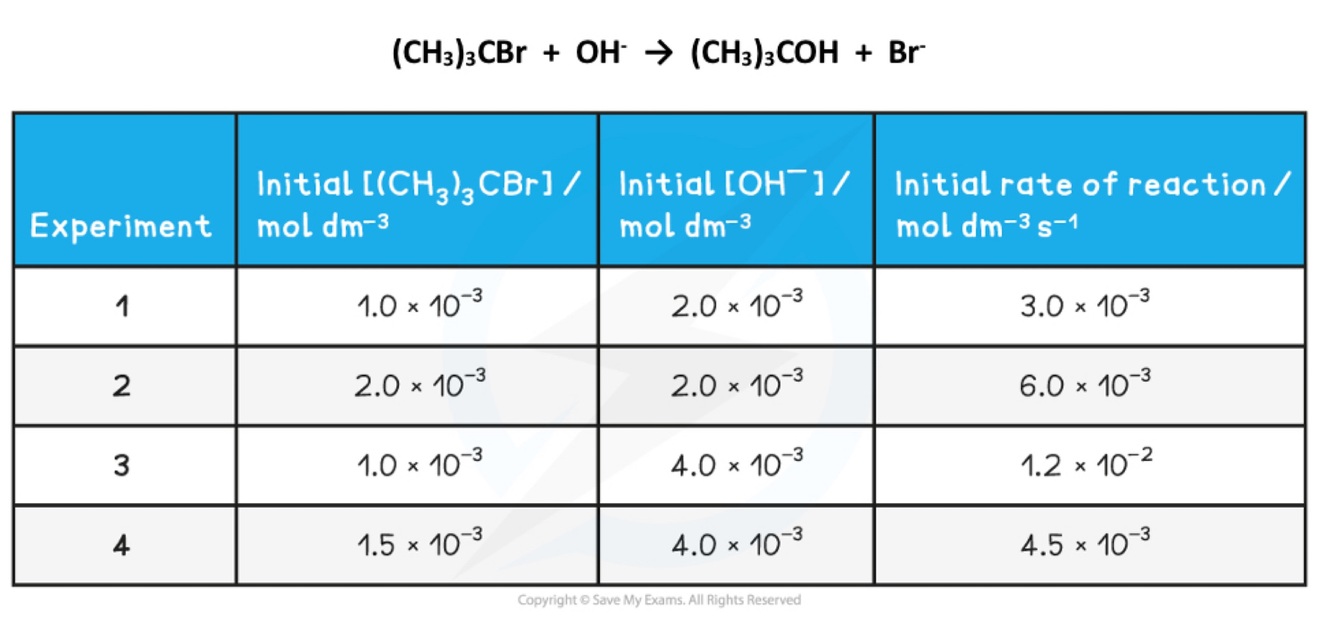
• From the above table, that is experiments 1 and 2 o The [(CH3)3CBr] has doubled, but the [OH-] has remained the same o The rate of the reaction has also doubled o Therefore, the order with respect to [(CH3)3CBr] is 1 (first order)
Order with respect to [OH-]
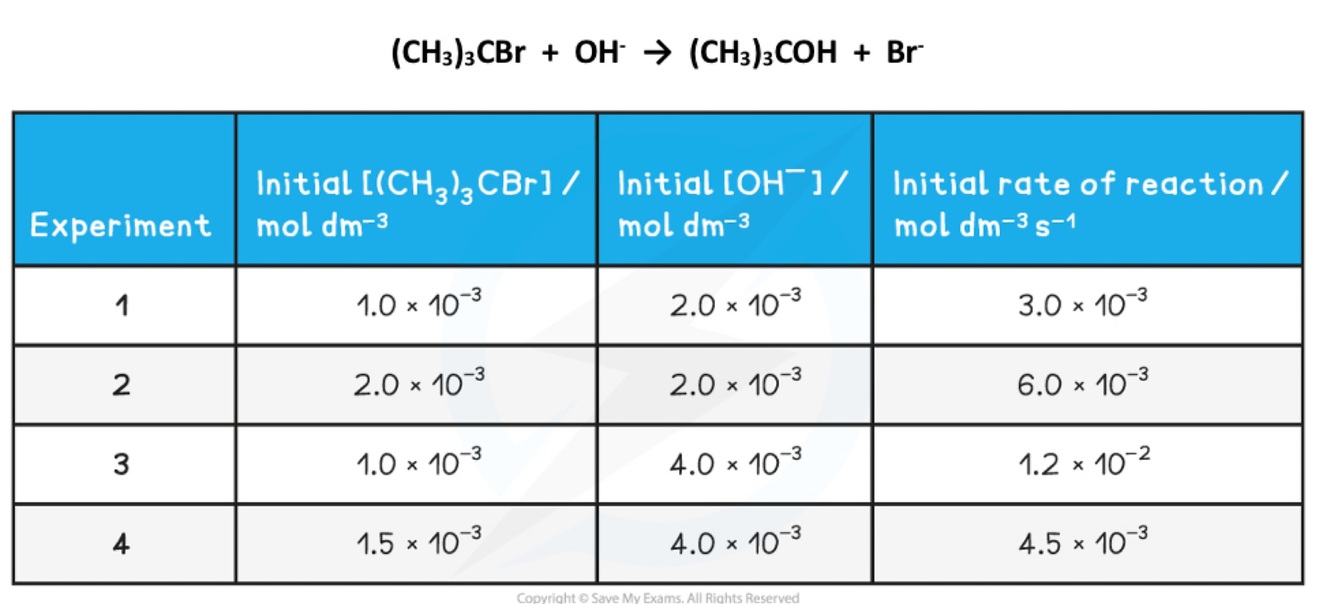
• From the above table, that is experiments 1 and 3 o The [OH-] has doubled, but the [(CH3)3CBr] has remained the same o The rate of reaction has increased by a factor of 4 (i.e. increased by 22) o Therefore, the order with respect to [OH-] is 2 (second order)
Rate equation of this
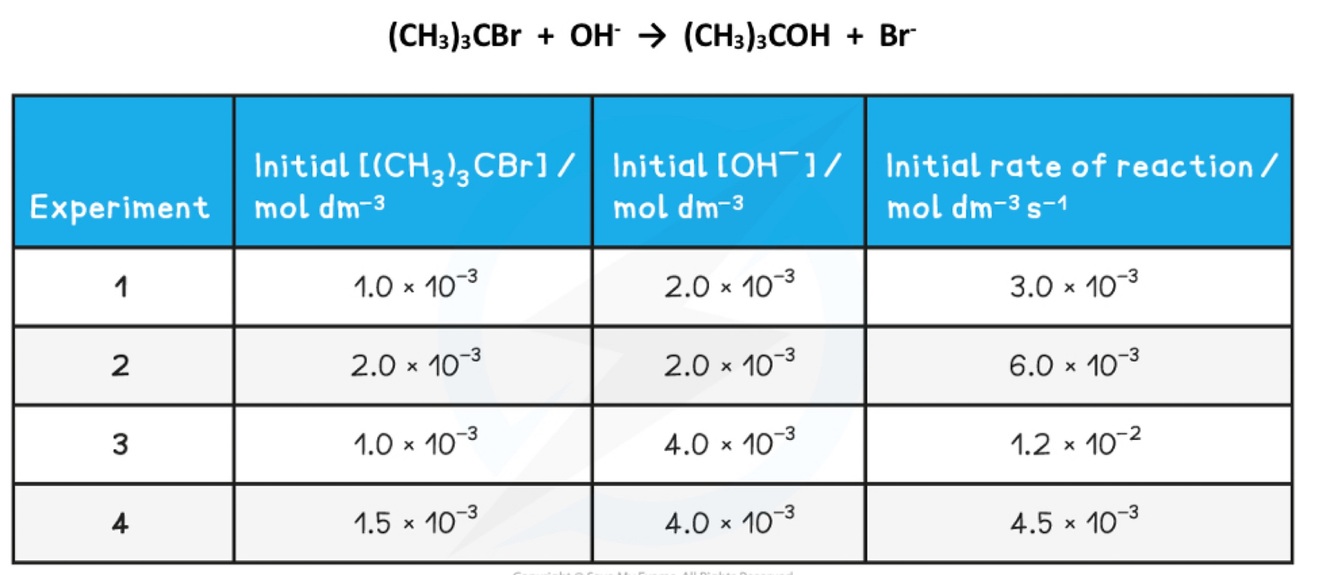
Rate = k [(CH3)3CBr] [OH-]2
Draw 0 order rate concentration graph
Draw second order rate-concentration graph
Draw third order rate-concentration graph
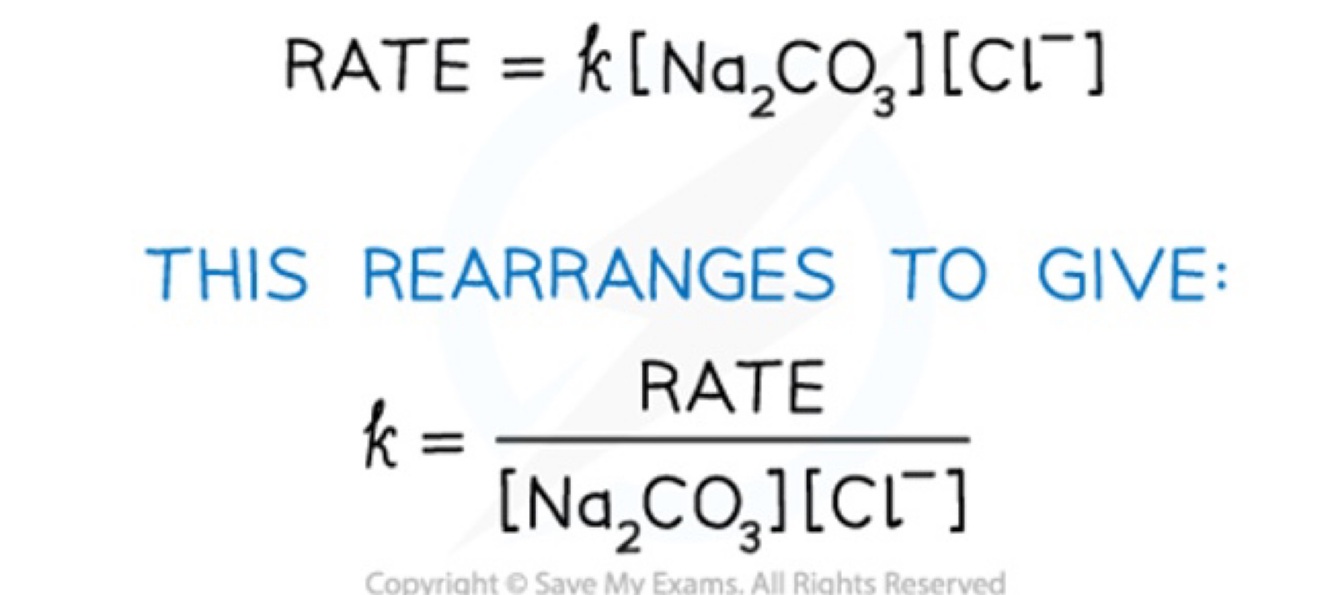
How to find k

Use one row from table
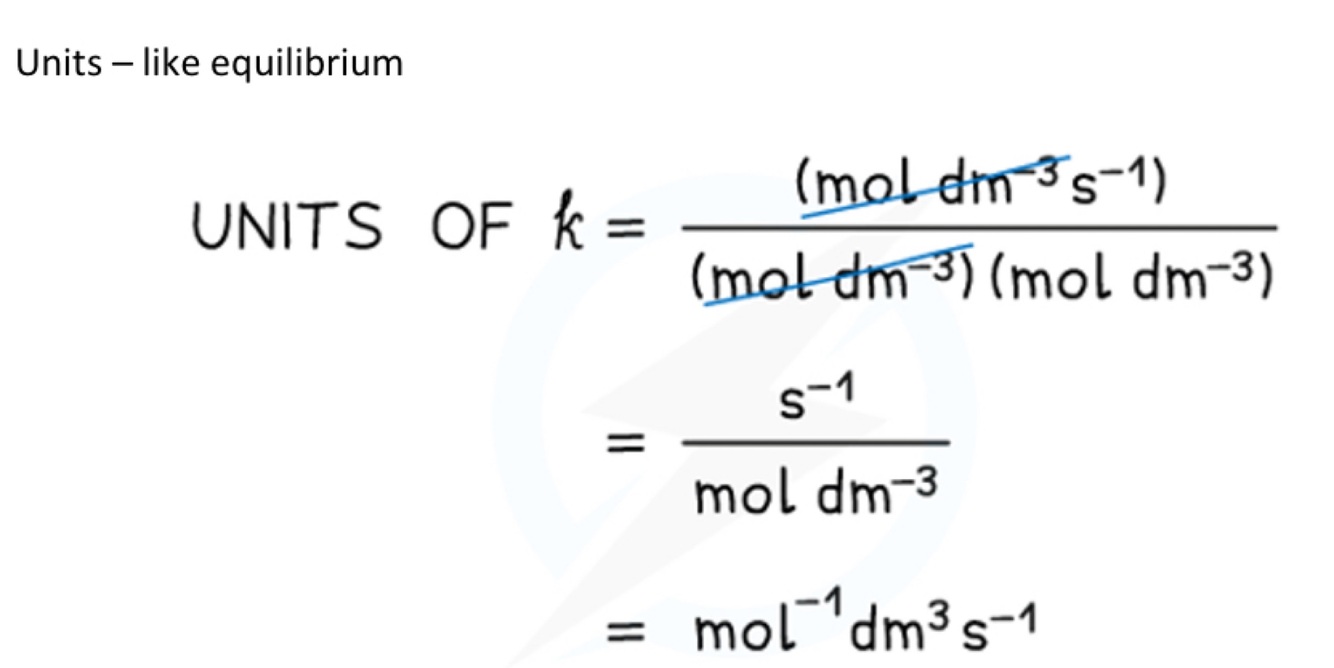
Units of k
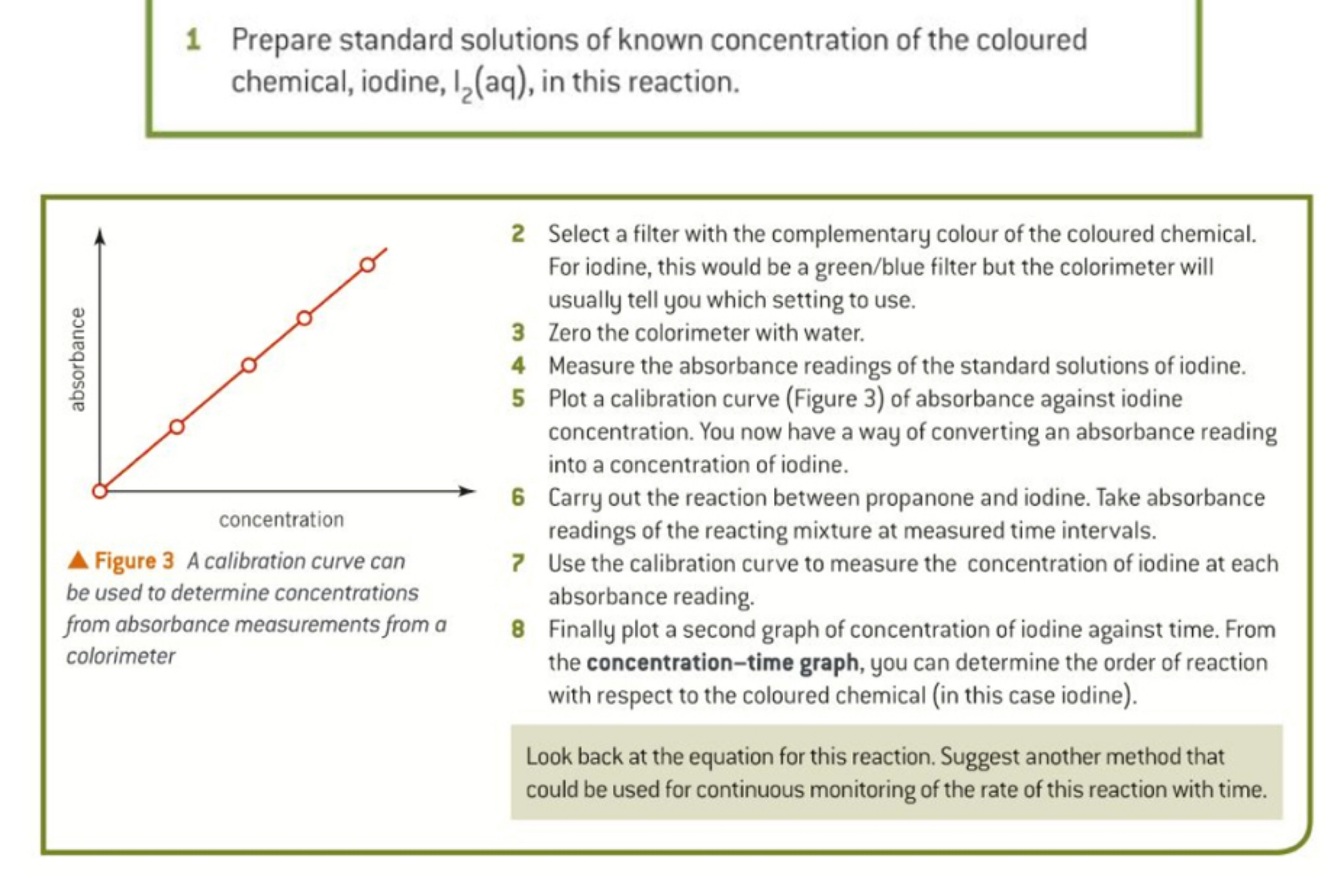
Monitoring rate with a colorimeter
• In colorimeter – wavelength of light passing through a coloured solution is controlled using a filter • Amount of light absorbed is measures
How to use a colorimeter - 6 marks
Concentration - time graph 0 order
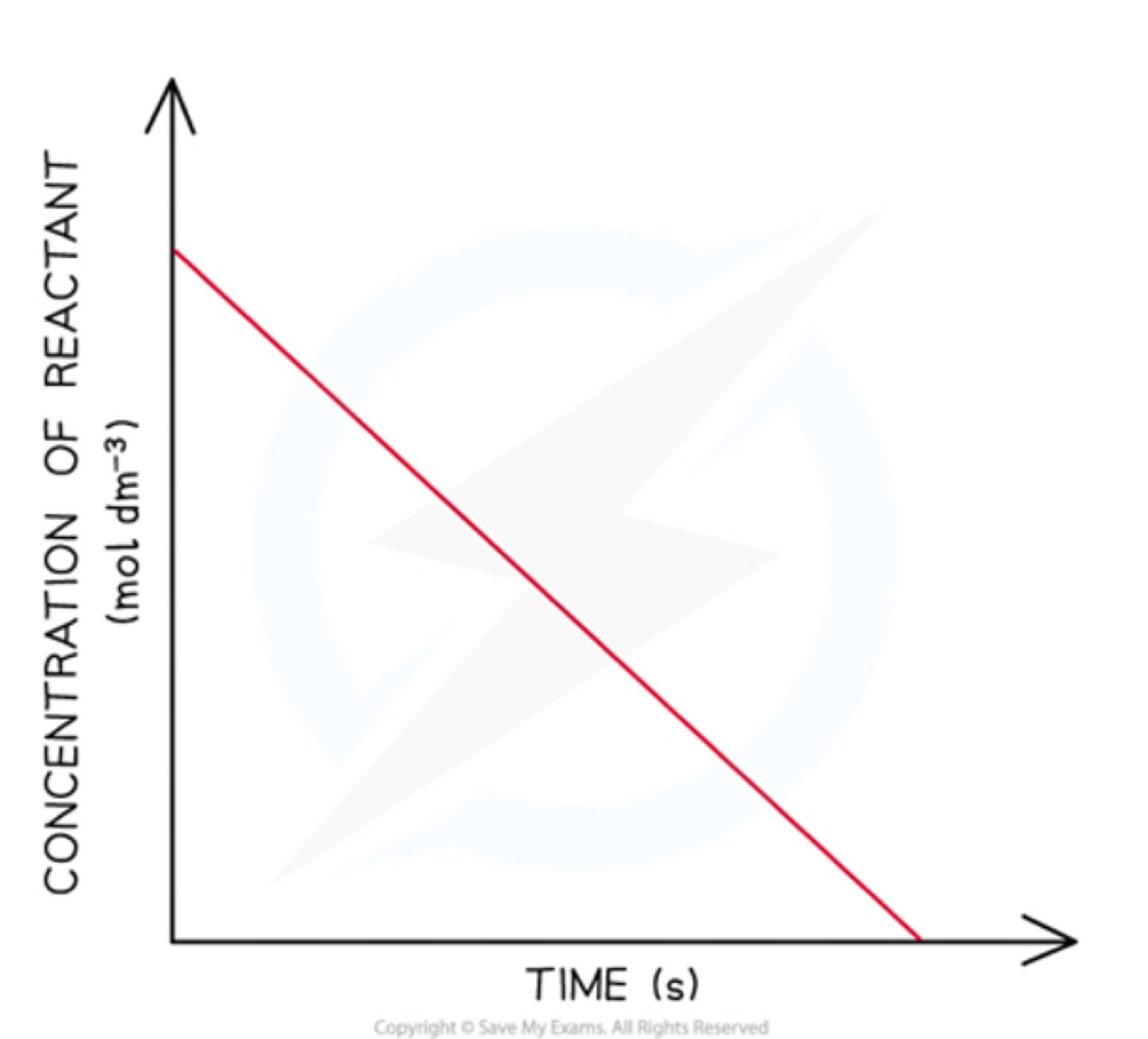
• In a zero-order reaction, the concentration of the reactant is inversely proportional to time • When the order with respect to a reactant is 0, a change in the concentration of the reactant has no effect on the rate of the reaction
Rate constant of concentration time graph
gradient= rate constant k
Draw 0 order concentration time graph
1st order concentration-time graph
• In a first-order reaction, the concentration of the reactant decreases with time o The graph is a curve going downwards and eventually plateaus: