Combined Physics - 6.3
No description yet. This curated deck is ready for daily study.
Card preview (23)
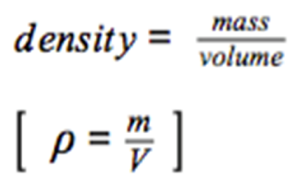
How can the density of a material be calculated?
What are the three states of matter?
• Solid • Liquid • Gas
What affects the density of an object?
The material it is made of and how the particles are arranged
Draw a model of the particle arrangement for a solid

Draw a model of the particle arrangement for a liquid
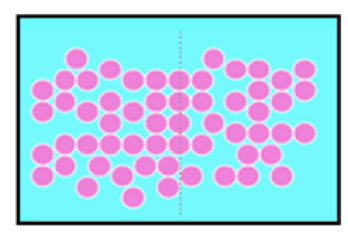
Draw a model of the particle arrangement for a gas

What does the phrase: “a change of state conserves mass” mean?
When materials change state this is a physical change where the number of particles (and the mass) remains the same
Describe the state changes
• Melting (solid → liquid) • Freezing (liquid → solid) • Sublimating (solid → gas) • Boiling / evaporating (liquid → gas) • Condensing (gas → liquid)
What happens in a physical change of state to a material’s original properties?
The properties can be recovered if the change is reversed
What is internal energy?
The energy stored by the particles which makes up a system
How can internal energy be calculated?
It is the total kinetic energy and potential energy of all the particles that make up the system
What happens to the internal energy of a system when heat is applied?
Heating the system transfers energy to the particles (gaining energy in their kinetic stores and moving faster) increasing the internal energy
What is the specific heat capacity of a substance?
The amount of energy required to raise the temperature of 1kg of the substance by 1oC
What does a change of state require?
Energy
What is specific latent heat?
The amount of energy needed to change 1kg of the substance’s state (without changing its temperature)
What is specific latent heat of fusion?
A change of state from solid to liquid
What is specific latent heat of vapourisation?
A change of state for liquid to vapour
What do the horizontal lines on a heating or cooling curve represent?
A change of state
What is average energy in kinetic stores related to?
Temperature
What happens to the particles of a gas when temperature is increased?
The average speed of the particles increases as the energy in the particles’ kinetic energy stores is ½mv2
Explain what changing the temperature of a gas at constant volume causes
Increases the pressure as the particles move faster and hit the container walls more often
What can a change in pressure cause?
A change in volume
Why can work done cause a temperature increase in a gas?
Energy transferred by a force (work) transfers energy to the kinetic energy stores of the gas particles, increasing their temperature