Carbohydrates - Structure & Function
No description yet. This curated deck is ready for daily study.
Card preview (24)
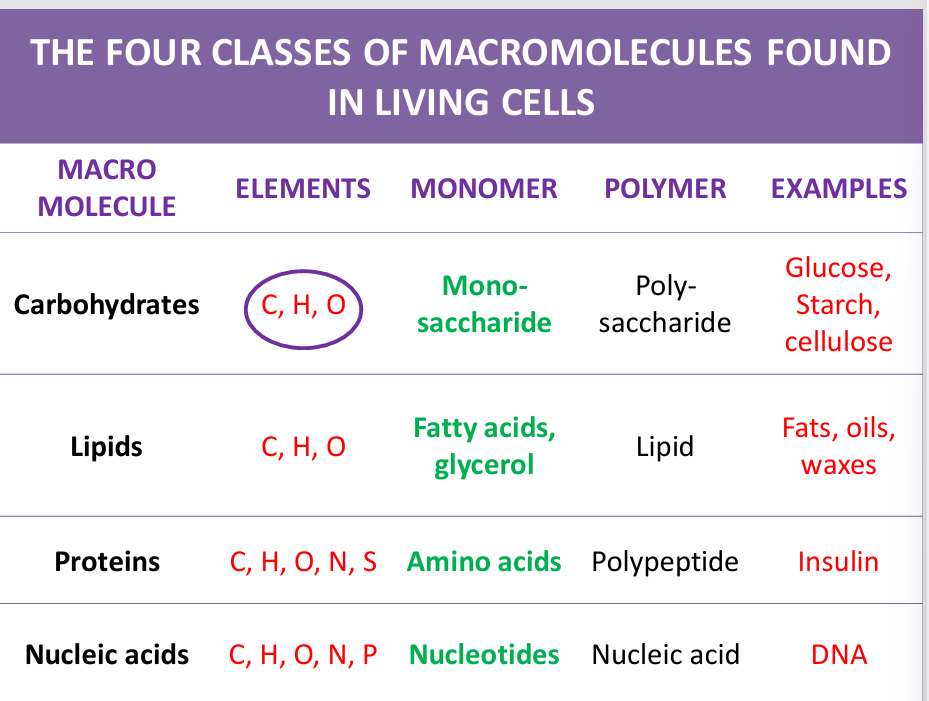
What are the four major macromolecules and their monomers?
Four major types: 1. Carbohydrates (rich in hydroxyl groups) – monosaccharides 2. Proteins– amino acids 3. Nucleic acids – nucleotides 4. Lipids-no true basic units = fatty acids + glycerol Body can obtain energy from carbohydrates, lipids and proteins but carbohydrates are used first, if available. Then lipids, then proteins (only after primary functions fulfilled).
Chemistry of Carbon
Carbon is a very important atom in the biological sciences. Because it forms very stable bonds with itself and with other atoms such as: hydrogen (H), nitrogen (N) and oxygen (O). Can form single, double or triple bonds with other carbon atoms. * Carbon can form up to 4 bonds. * As such organic molecules can assume complex shapes :long chains, branched chains, rings, sheets and helices.
General Chemistry of Carbohydrates
Saccharides which means “sugars” and are polyhydroxy aldehydes or ketones. (have many hydroxyl groups). Primary source of energy for the body. • Oxidation of carbohydrates during respiration yields energy which is stored in ATP and utilized whenever needed. General Formula: Cn(H2O)n Pentose = C5H10O5
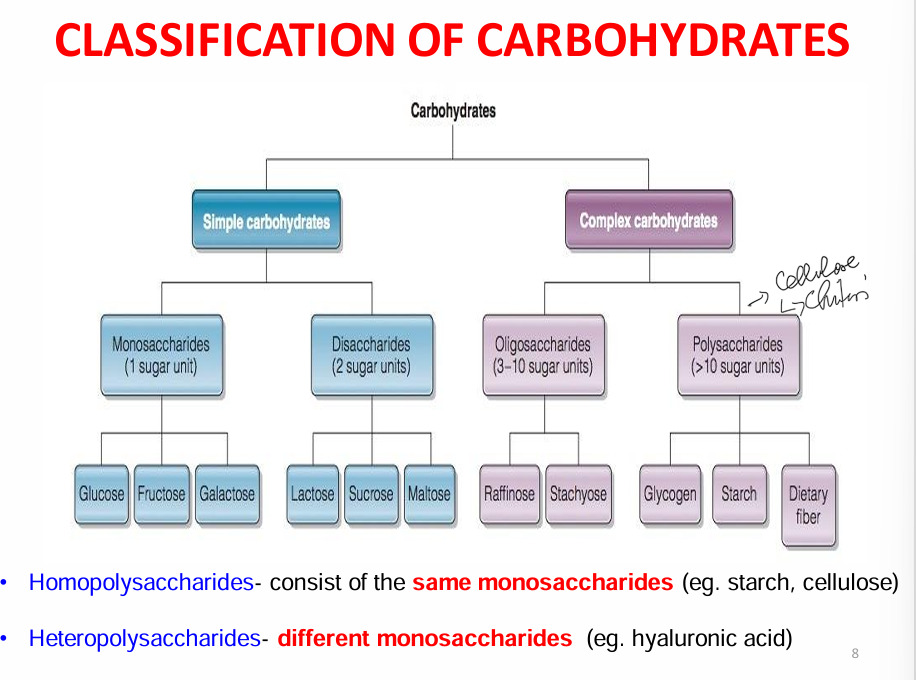
Classification of Carbohydrates
Classification of Monosaccharides
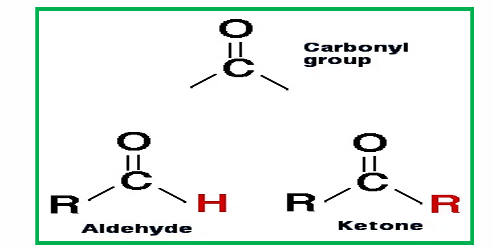
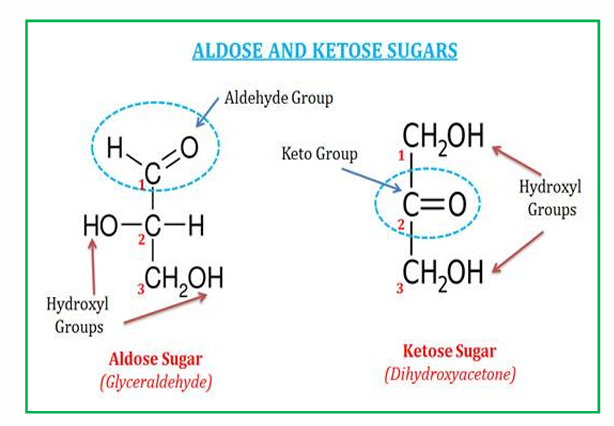
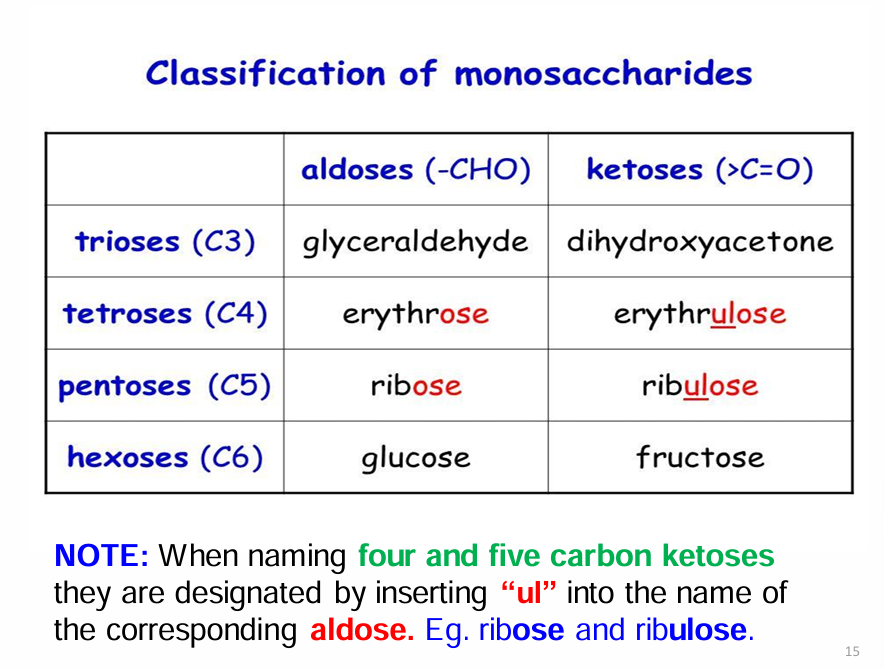
Monosaccharides are classified based on either functional group or number of carbon atoms. Monosaccharides with aldehyde and ketone groups are referred to as aldoses and ketoses respectively. Since a 4-Carbon sugar is a tetrose, then an aldotetrose is a 4-Carbon sugar that contains an aldehyde functional group.
What are the simplest Monosaccharides?
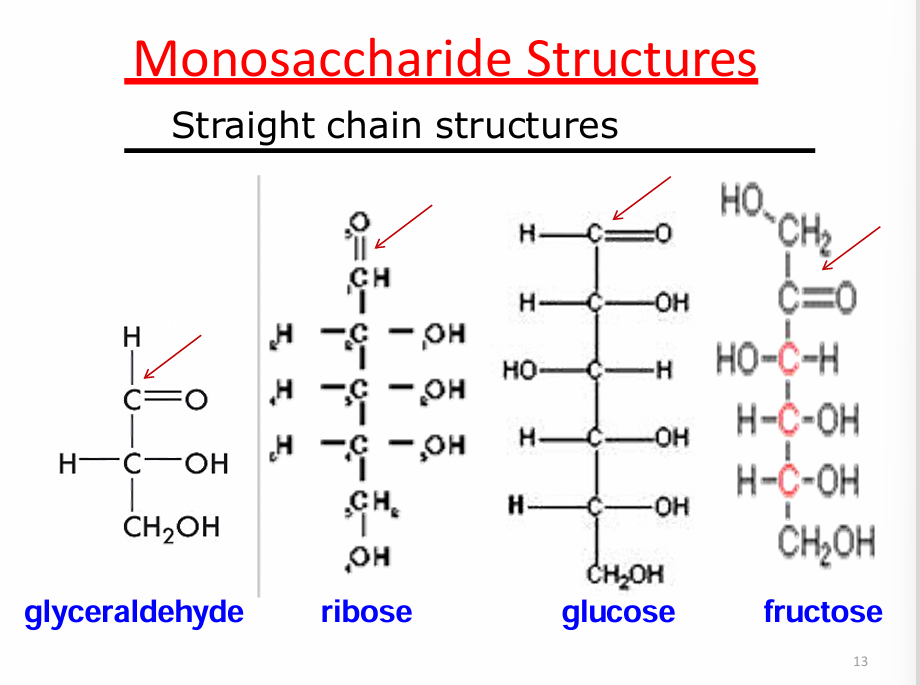
Simpliest monosaccharides are two 3-Carbon trioses: * Glyceraldehyde(an aldotriose) * Dihydroxyacetone(a ketotriose) The most common monosaccharides have 3-8 carbon atoms. The suffix –ose indicates that a molecule is a ‘sugar’- carbohydrate.
Other examples of monosaccharides
Chemistry of Monosaccharides
CANNOT be hydrolyzed to any simpler form. Most monosaccharides and disaccharides also are sweet-tasting, digestible and non-toxic. Except for glyceraldehyde and fructose most of the carbohydrates of interest in human biochemistry are aldohexoses or aldopentoses.
Glucose
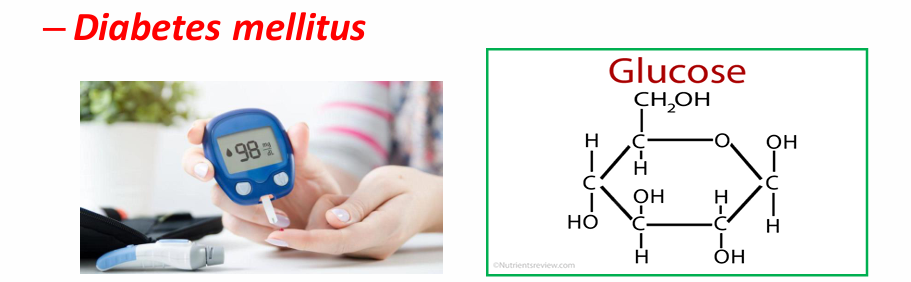
Glucose (C6H12O6)–Most important simple carbohydrate in human metabolism. –Regulation of blood glucose is important in human health. Hormones: insulin and glucagon –Diabetes mellitus
Fructose
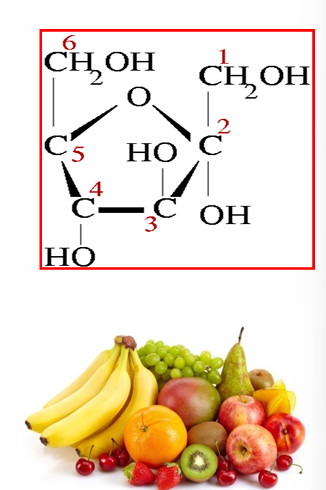
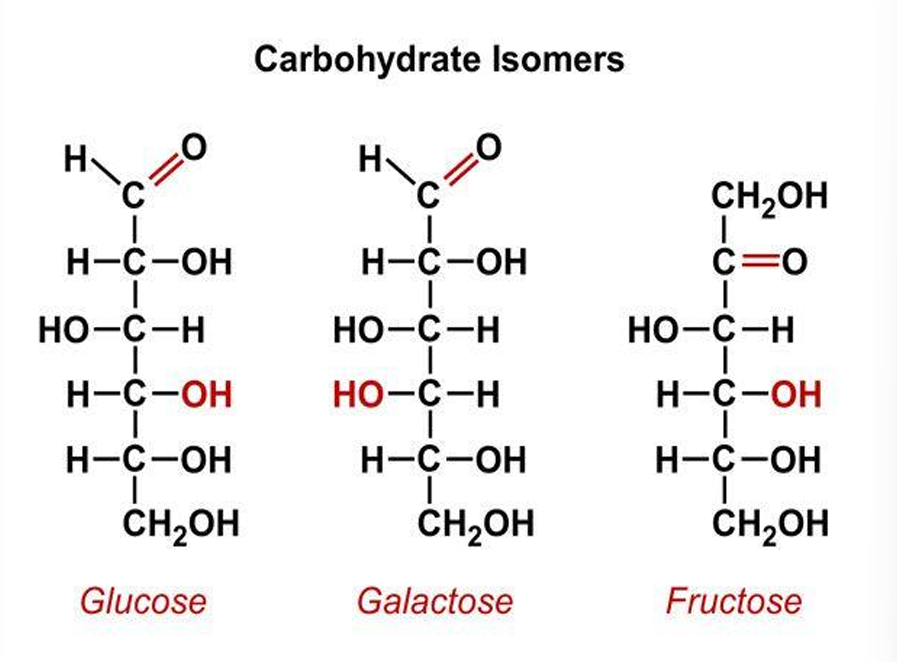
Fructose (C6H12O6): fruit sugar- Structural isomer of glucose Sweeter than glucose Fructose intolerance leads to fructose accumulation and hypoglycaemia
Galactose
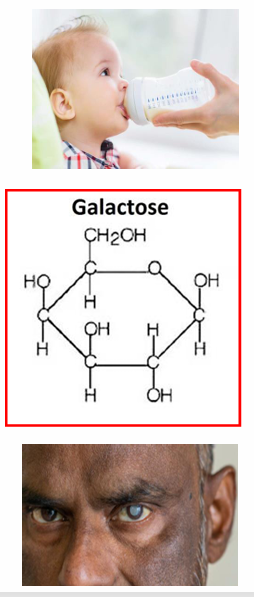
Galactose (C6H12O6) –Major source: diary products -milk –Component of lactose (disaccharide) & glycoproteins found in brain and nerve tissue –Galactosemia: excess galactose results in Cataract due to enzyme deficiency
Carbohydrate Isomers
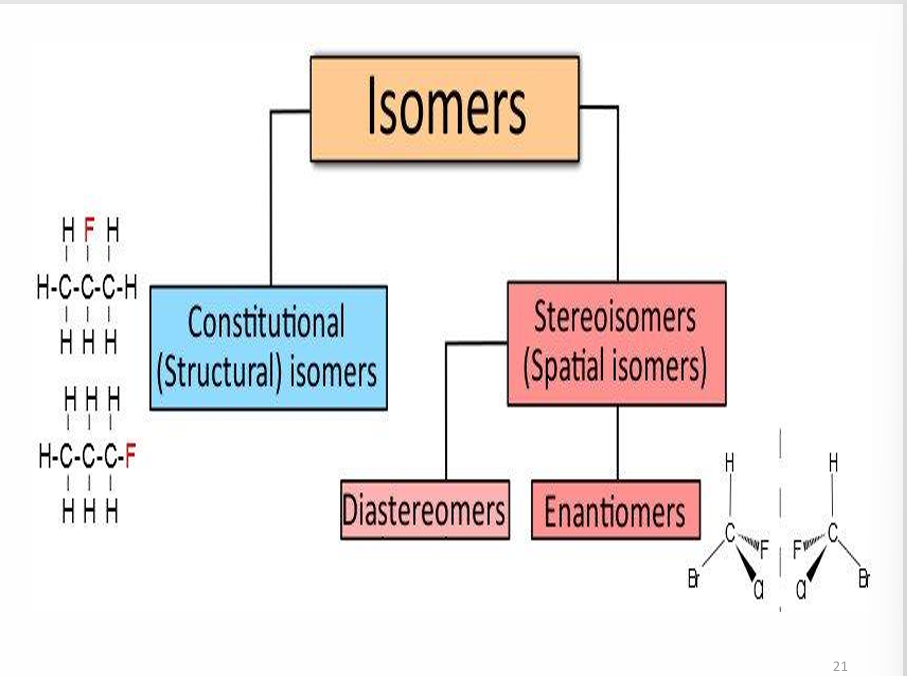
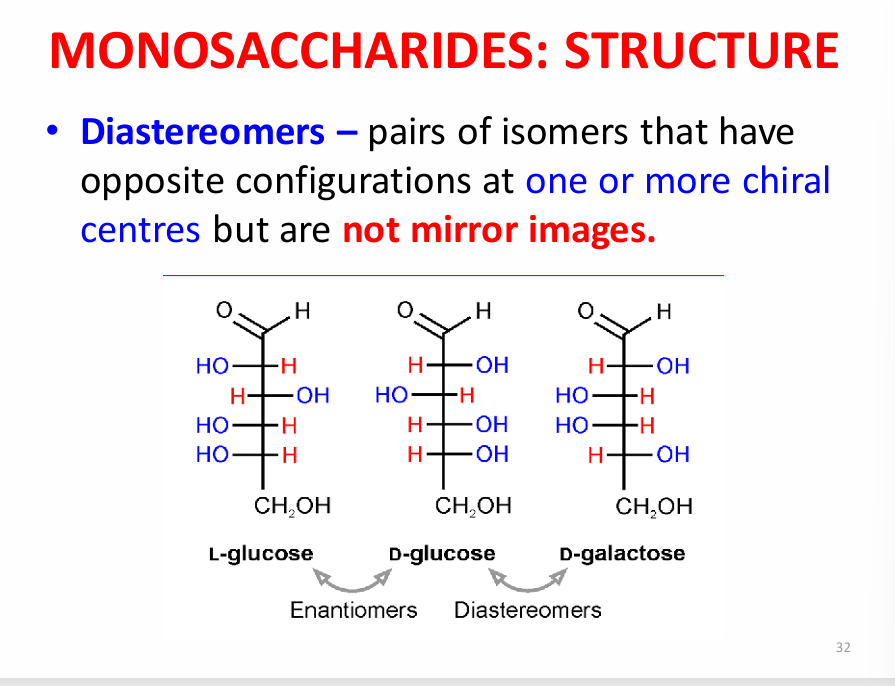
Dihydroxyacetone and glyceraldehyde are called constitutional isomers. They have an identical molecular formula but differ in how the atoms are ordered (connectivity). Steroisomer: same molecular and structural formula but different spatial arrangement of atoms. All carbohydrates have at least one chiral carbon. **Dihydroxyacetone has no chiral carbon. ** Diastereomers are stereoisomers (same formula, different 3D arrangement) that are not mirror images of each other, occurring in molecules with multiple chiral centers. Enantiomers are stereoisomers which form non superimposable mirror images of each other. These sugars are differnt only in configuration around one (chiral) carbon atom (C attached to four different groups and therefore no axis of symmetry).
The structures in which monosaccharides exist
• Linear form (Fischer’s projection) - not very stable (energetically), hence pentoses and hexoses tend to form rings to improve stability. • Cyclic form (Haworth’s formation) • Chair conformations (Cyclohexane form) or 3-D boat configuration
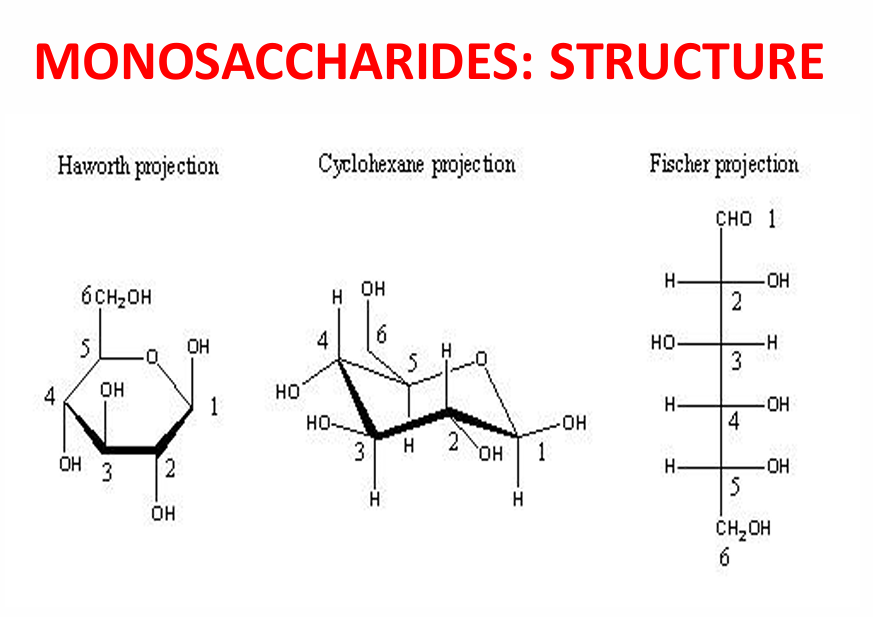
Classification of Carbohydrate Isomerism
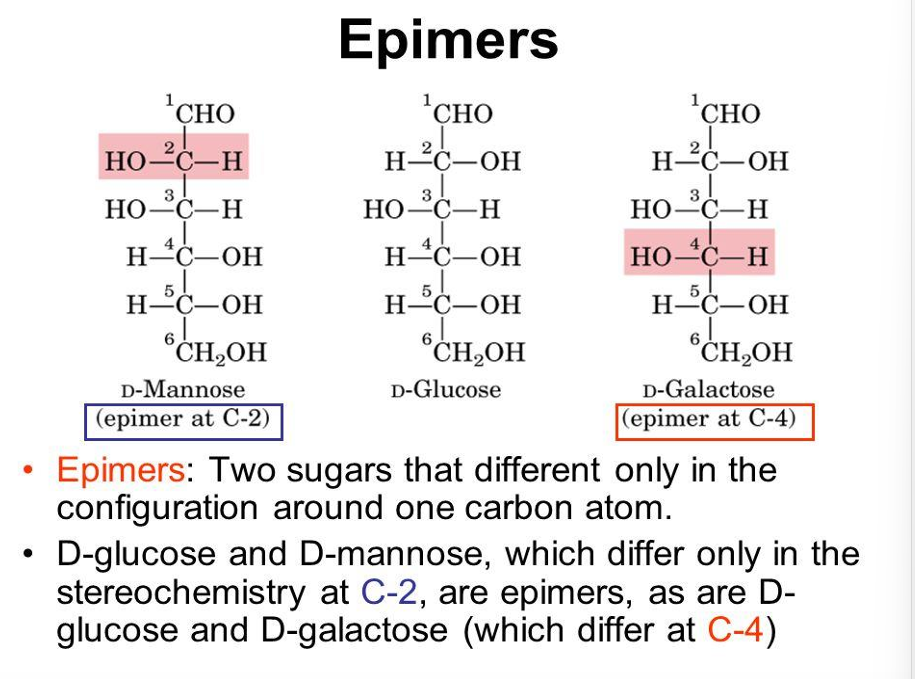
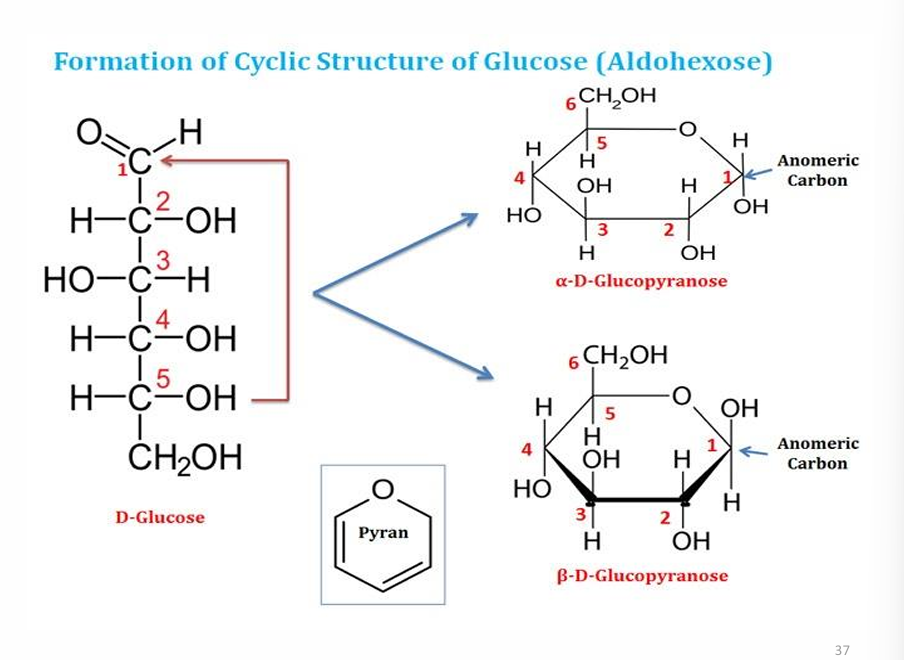
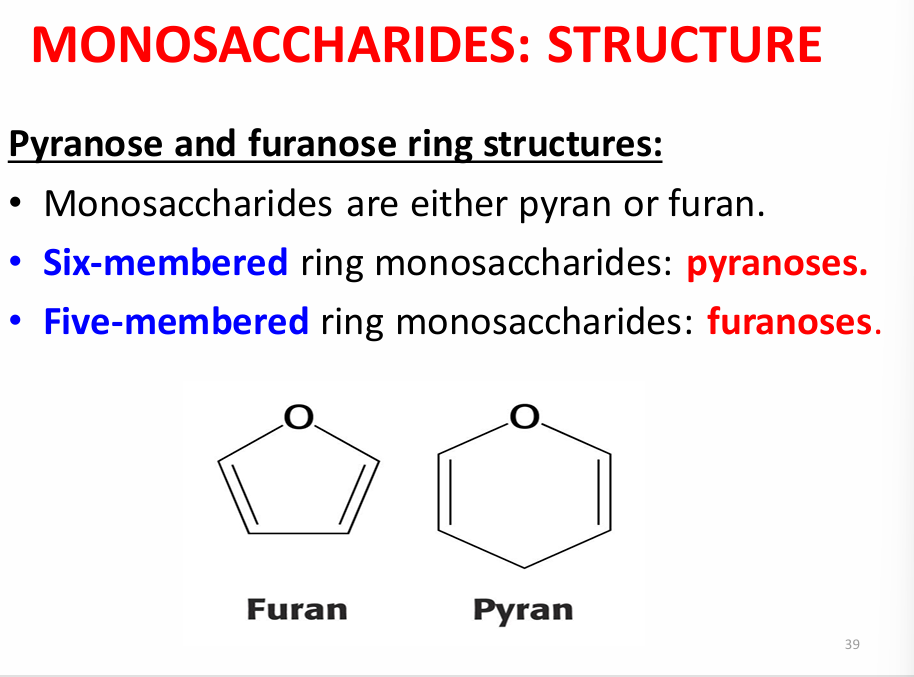
• Aldose-ketose isomerism: constitutional (functional group isomerism) • D-and L-forms: These are enantiomers (optical isomers - can rotate plane of polarised light). If the enantiomer rotates the plane of lght to the right then it is (+) (D) Dextrorotatory or to the left (-) (L)- Levorotatory. • Epimers: a type of diastereomer, that are molecules with the same chemical formula but differ in the spatial arrangement of atoms at one specific chiral (stereogenic) centre, while all other chiral centers are identical. The isomers have opposite configurations at one or more chiral centres but are not mirror images. • Alpha (α) and beta (β) anomers are cyclic sugar isomers that differ only in the orientation of the hydroxyl (-OH) group at the anomeric carbon. Alpha is trans (-OH group opposite to CH2OH). Beta is cis (-OH group same side to CH2OH). • Pyranose and furanose ring structures. Six-membered ring monosaccharides: pyranoses.Five-membered ring monosaccharides: furanoses.
Glyceraldehyde
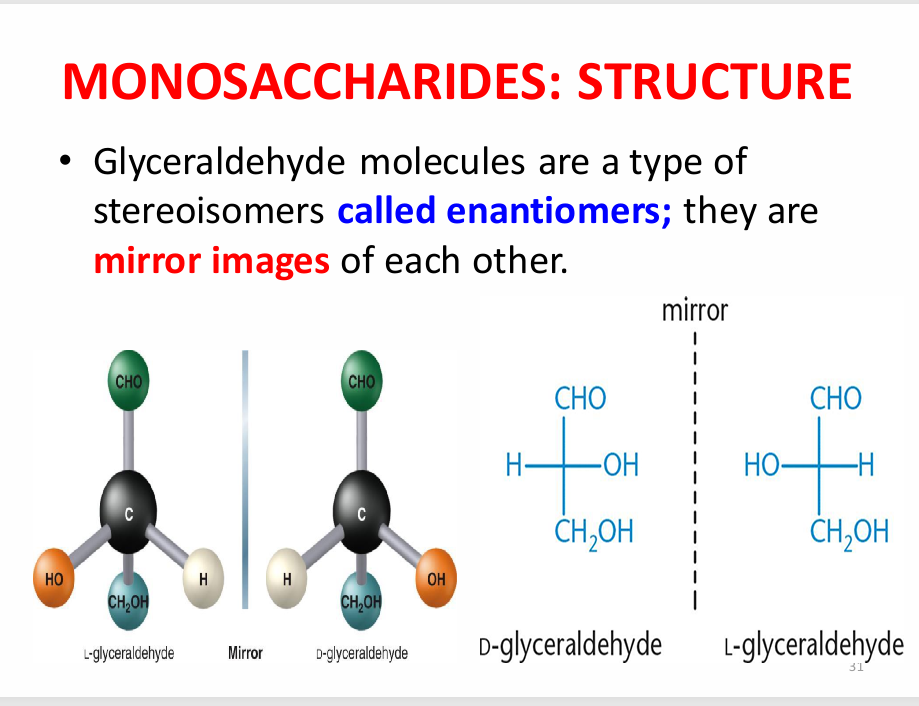
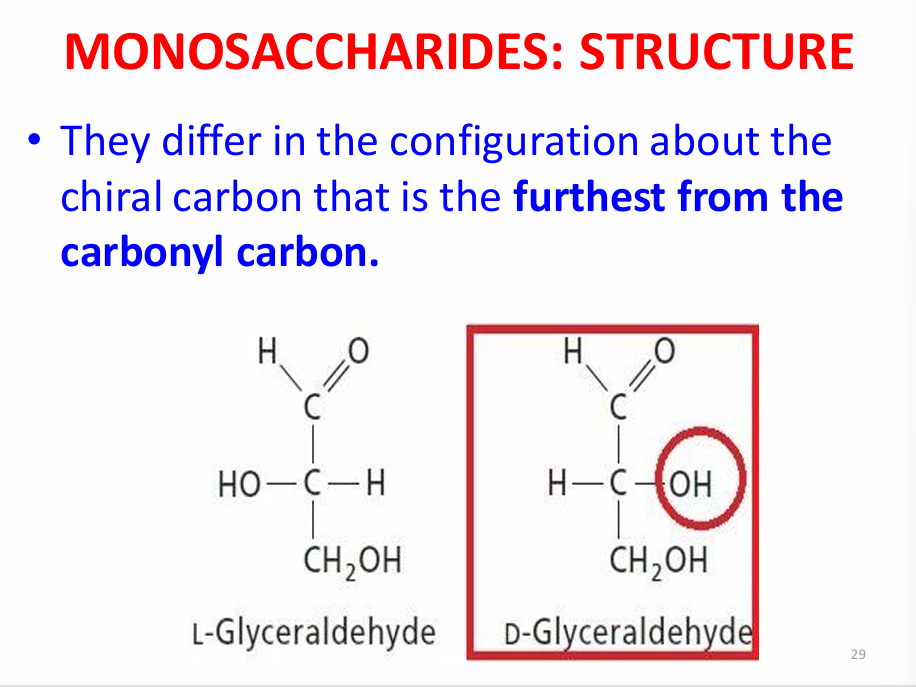
Glyceraldehyde (a chiral molecule) is used as the standard reference molecule. The presence of asymmetric carbon atoms confers optical activity. Has two enatiomers (steroisomers): D-glycerldehyde rotates light to the right; L-glyceraldehyde rotates light to the left. The two enantiomers differ in the configuration about the chiral carbon that is the furthest from the carbonyl carbon.
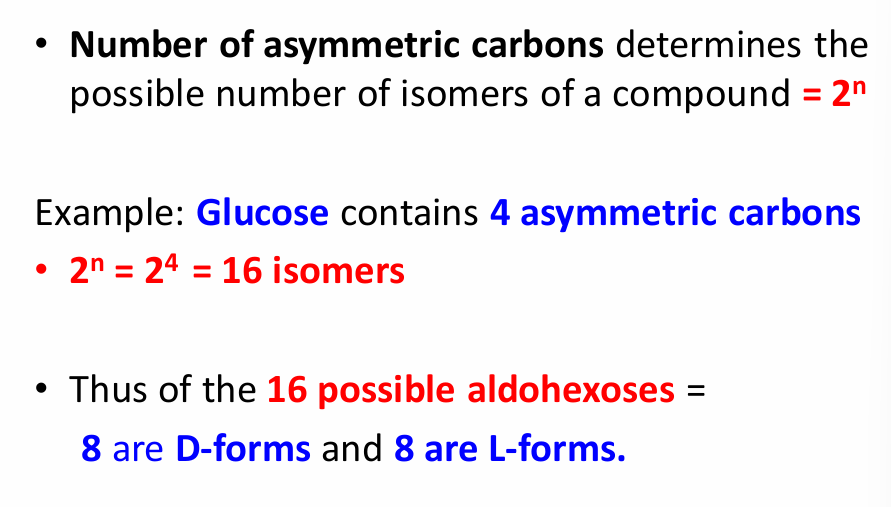
How to determine the number of isomers of a compound
Diastereomers
Epimer
Anomers
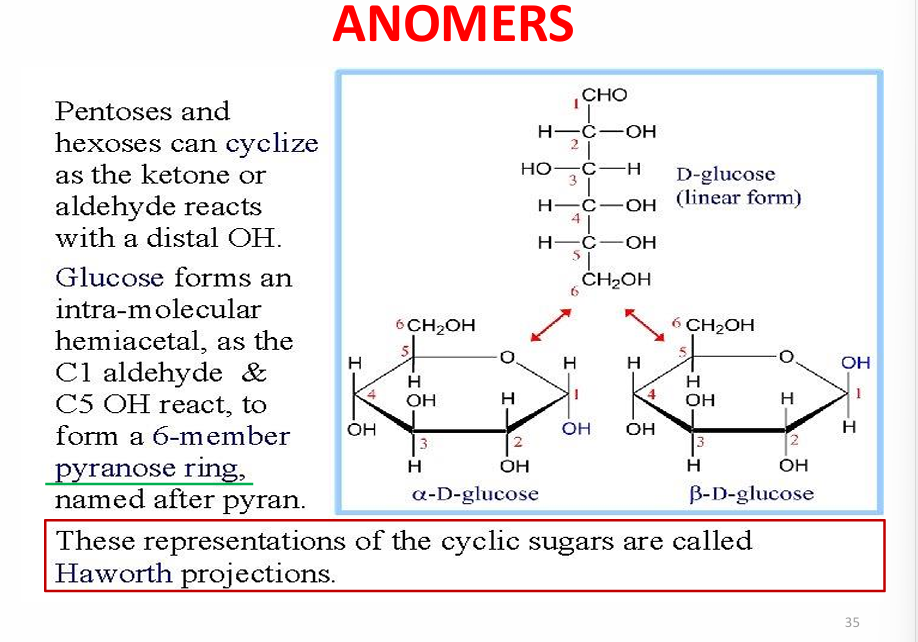
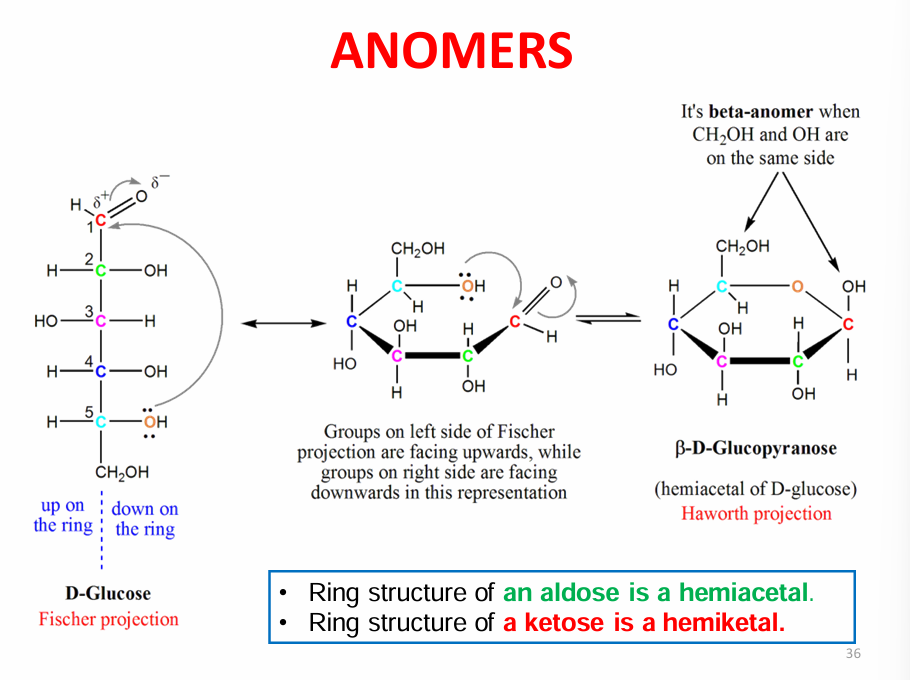
α and β Glucose
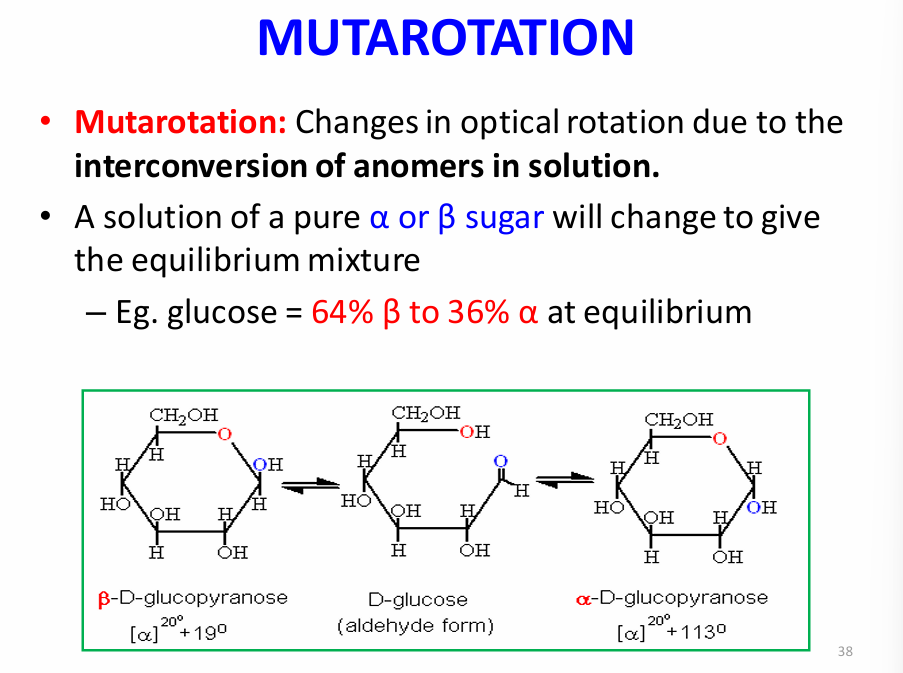
Mutarotation
Mutarotation is the change in a sugar’s optical rotation in solution as its alpha (α) and beta (β) anomeric forms interconvert, reaching an equilibrium mixture through ring-opening and reclosing (ring-chain tautomerism). Starting with pure (α)-glucose (rotation +112°) or pure (β)-glucose (rotation +19°) eventually leads to the same equilibrium rotation of +52.7°, as both forms, plus the open-chain aldehyde, balance out
Pyranose and Furanose
Biological significance of monosaccharide isomers
Most of the monosaccharides in humans are D-sugars and the enzymes responsible for their metabolism are specific for this configuration. There are some important sugars however, that occur in the L- form. L-arabinose and L-fucose found in glycoproteins of plants and mammalian cells respectively. Only L-amino acids are used in protein synthesis
Disaccharides
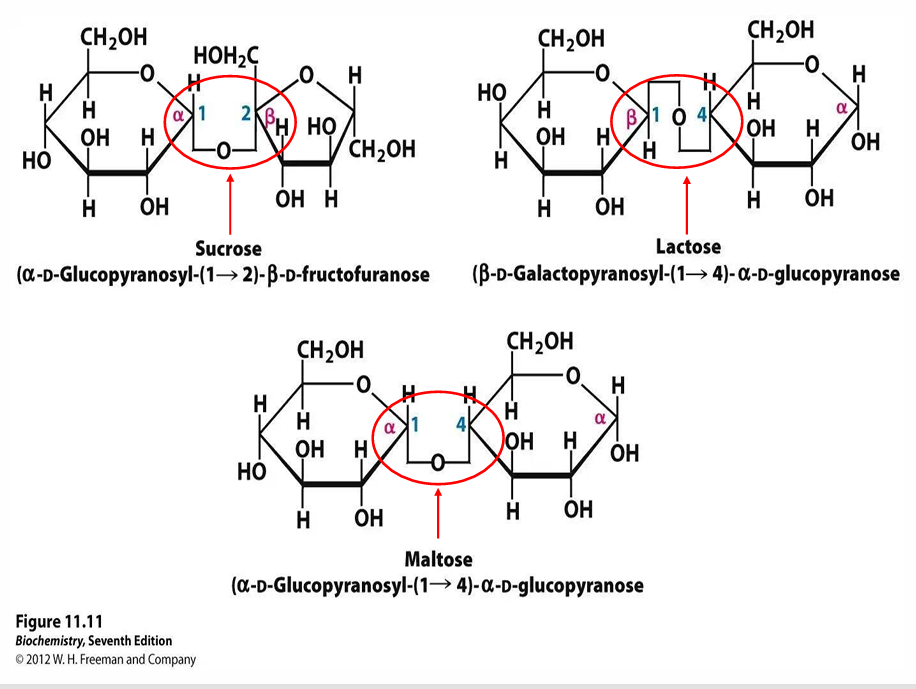
Two (2) monosaccharides joined = disaccharide • Sucrose= glucose + fructose (table sugar) • Maltose= glucose + glucose (used to make malted candy) • Lactose = glucose + galactose (found in cow’s milk)