Chapter 12: Alcohols
No description yet. This curated deck is ready for daily study.
Card preview (18)
Average pKa for alcohols
15−18
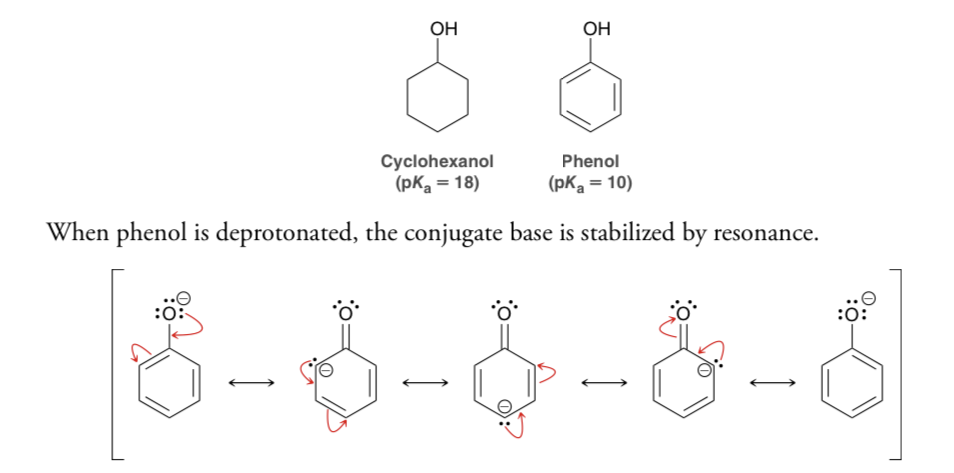
Factors affecting acidity of alcohols and phenols
• Resonance- phenols are more acidic (pKa = 10) than alcohols because they are resonance stabalized • Induction- a conjugate base that is resonance stabilized by the electron withdrawling effects of nearby atoms will be more stable • Solvation effects- a smaller alcohol such as ethanol will be better solcated and will be more stable than a larger alcohol such as tert-butanol (pKa 16 vs. 18)
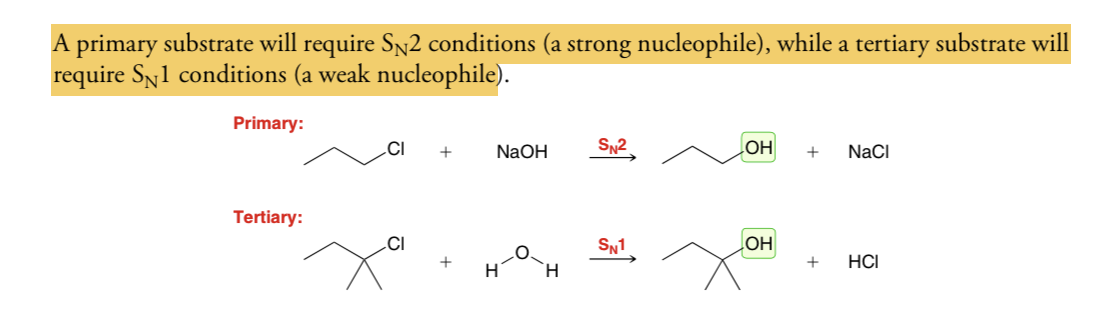
Preparation of alcohols via substitution
Alcohols can be prepared by substitution reactions in which a leaving group is replaced by a hydroxyl group A primary substrate will require SN2 conditions; a strong nucleophile (NaOH) A tertiary substrate will require SN1 conditions; a weak nucleophile (H2O) A secondary substrate is not effective for preparing a secondary alcohol
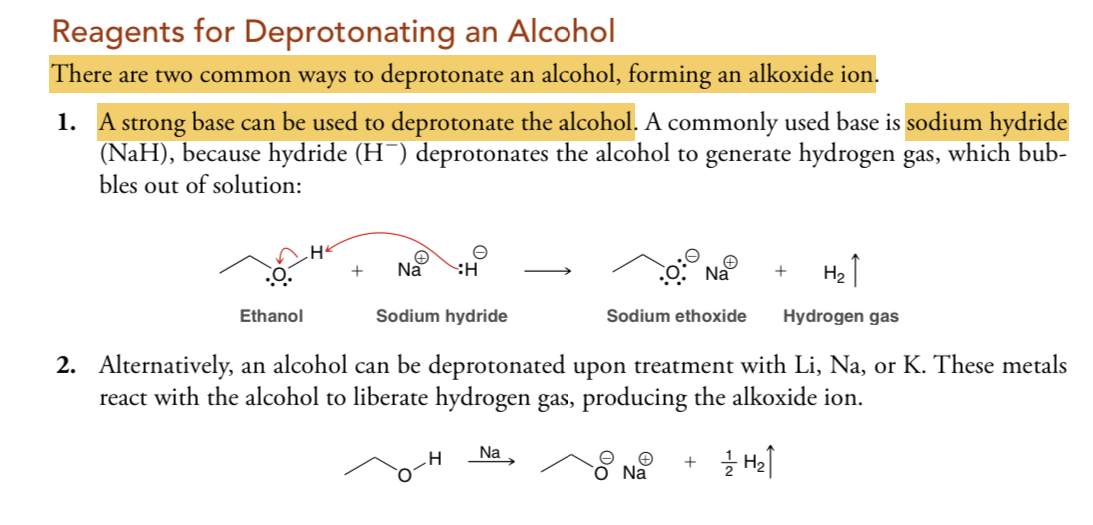
Reagents for deprotonating an alcohol
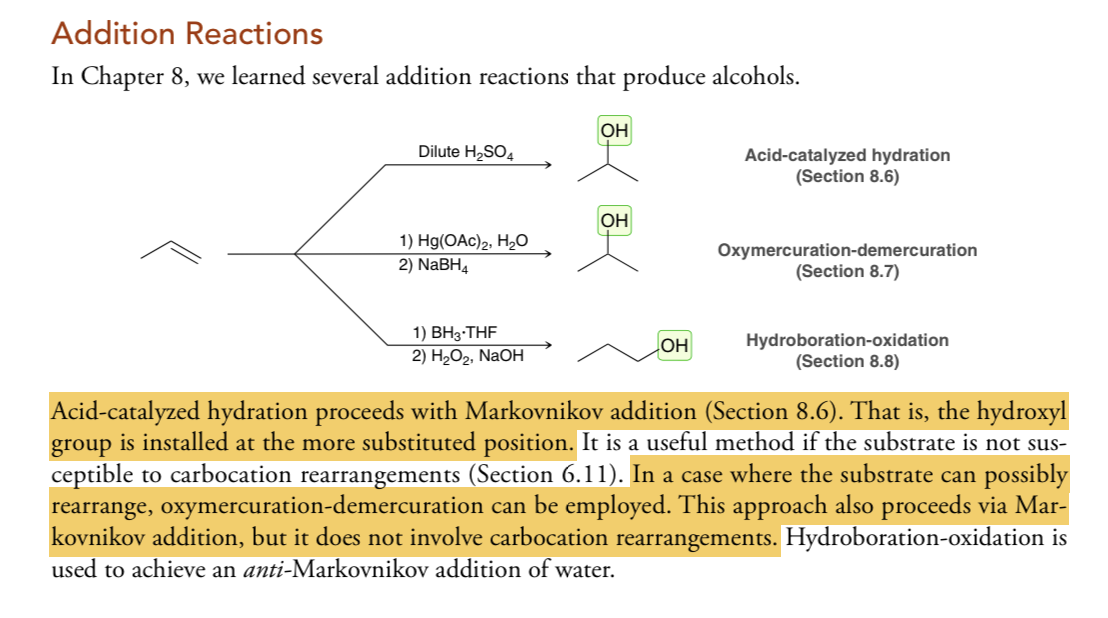
Three methods to produce an alcohol from an alkene via addition
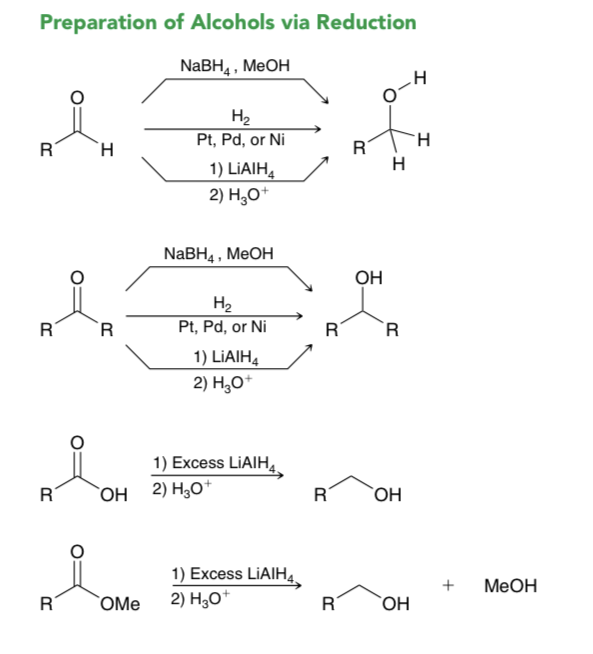
Preparing alcohols via reduction
Reagents H2 & Pt, Pd, or Ni Catalytic hydrogenation does NOT selectively reduce carbonyl groups; will also reduce C=C bonds present in molecule or NaBH4 (sodium borohydride) & EtOH, MeOH, or H2O NaBH4 serves as a hydride delivery device and the solvent functions as a proton source; results in a racemic mixture if a chiral center is present or • LiAlH4 (lithium aluminum hydride) • H3O+ LiAlH4 serves as a hydride delivery device, a proton source is subsequently added in a work-up step; results in a racemic mixture • LiAlH4 can also reduce carboxylic acids and esters
Preparation of diols
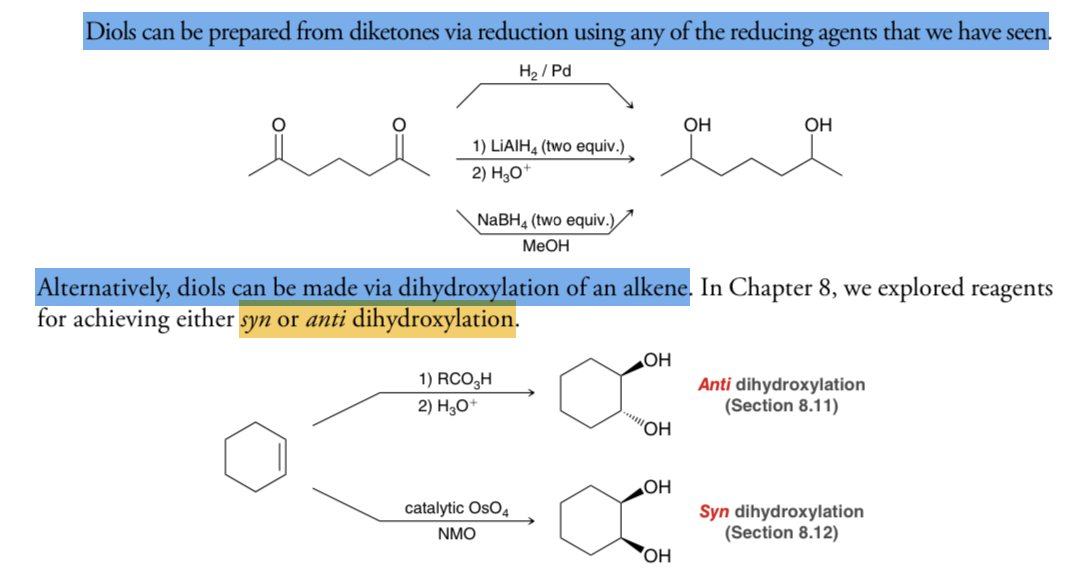
Diols are compounds with TWO hydroxyl groups
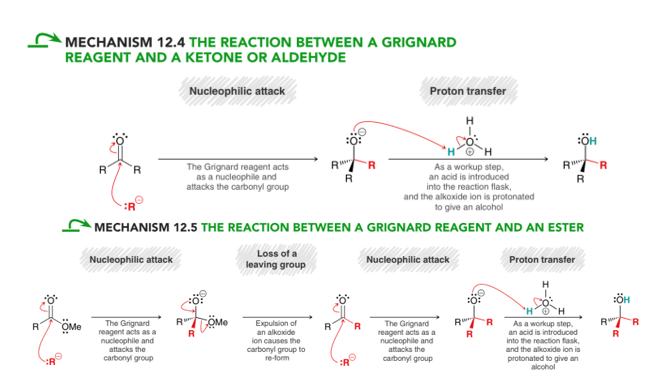
Gringard Reagents
Reagents • RMgX • H3O+ Mechanism A Grignard reagent is formed by the reaction between an alkyl halide and magnesium characterized by a C−Mg bond; acts as a nucleophile and attacks a carbonyl carbon CANNOT be used in the presence of a mildy acidic proton as it will just deprotonate the substrate; NOT compatible with carboxylic acids Regeoselectivity Attaches the R group to the carbonyl carbon; subsequent workup protonates the carbonyl oxygen creating a hydroxyl group Stereospecificity Nuclephilic attack can occur form either side; forms a mixture of enantiomers when a chiral center is present
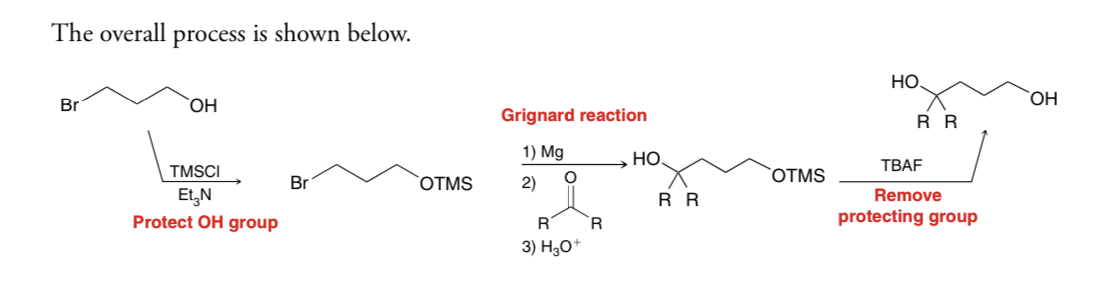
Protection of Alcohols
Reagents • TMSCl & Et3N (triethylamine) • TBAF Mechanism Allow Grignard reaction to be performed in the presence of acidic protons by replacing them with a protecting group which can subsequently be removed and converted back to its initial group
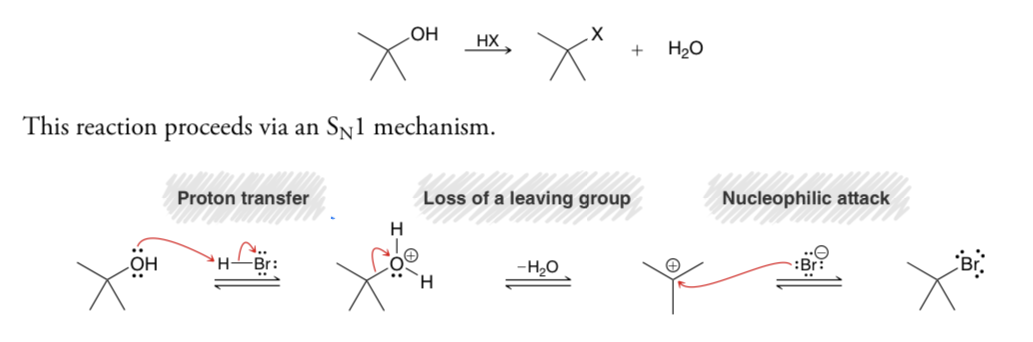
SN1 Reactions Alcohols
Reagents HX Mechanism A tertiary alcohol will undergo a substitution reaction when treated with a halogen halide; not effective for primary or secondary alcohols; results in a mixture of enatiomers
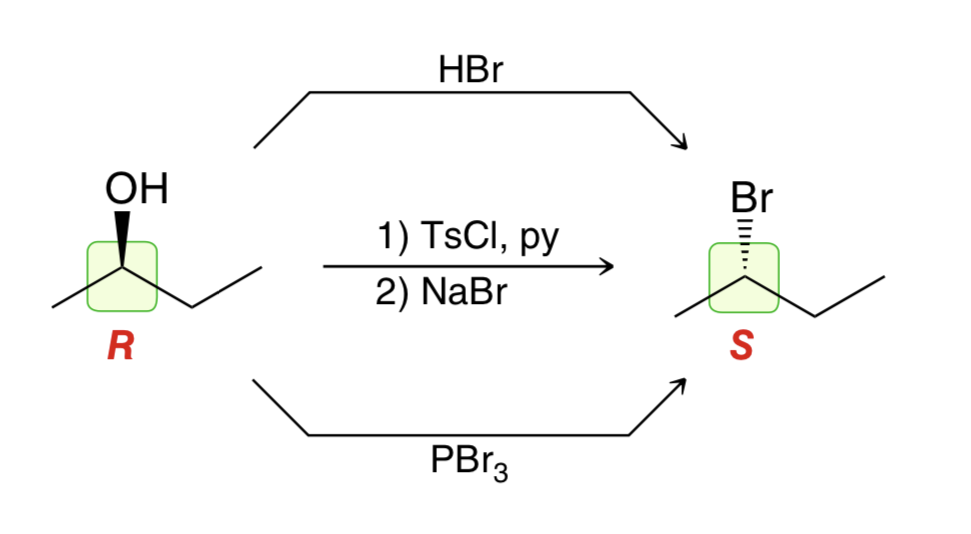
SN2 Addition of Bromine Alcohols
Reagents HBr or • TsCl (toluenesulfonyl chloride) & py (pyridine) • NaBr or PBr3 (phosphorus tribromide) Mechanism Occur via “backside attack” leading to inversion of configuration
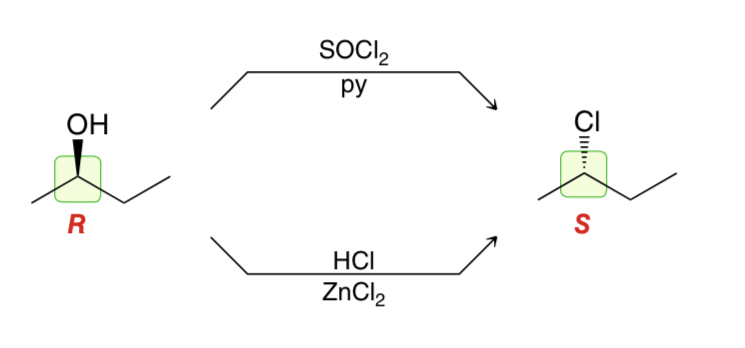
SN2 Addition of Chlorine Alcohols
Reagents HCl and ZnCl2 Due to its ionic nature can only be used with alcohols that are water-soluble- alcohols with less than eight carbon atoms or SOCl2 (thionyl chloride) & py (pyridine) or • TsCl (toluenesulfonyl chloride) & py • NaCl Mechanism Occur via “backside attack” leading to inversion of configuration
Elimination Reactions Alcohols
Reagents conc H2SO4 & heat ONLY works for tertiary alcohols; favors the more substituted Zaitsev product or • TsCl (toluenesulfonyl chloride) & py (pyridine) • Strong base • Choice of base determines Hofmann vs. Zaitsev product
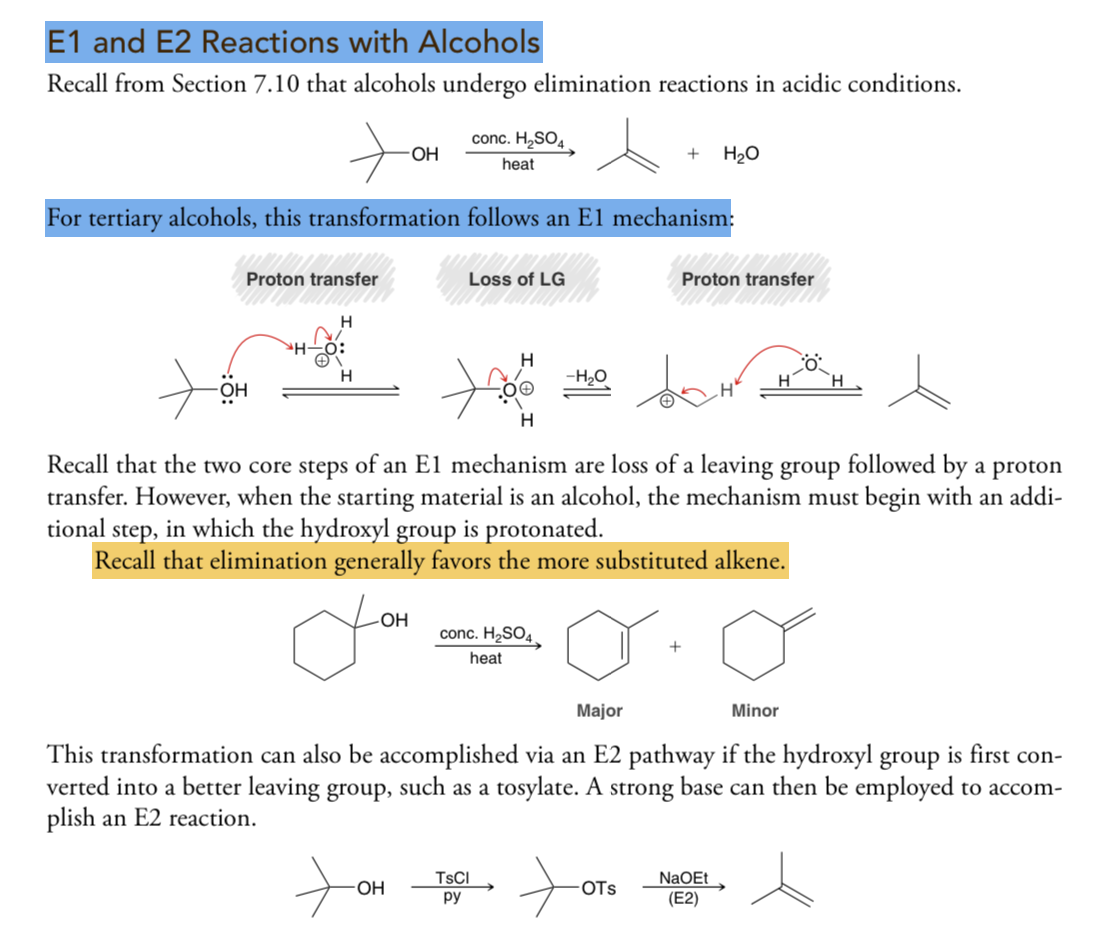
Primary Alcohol Oxidation
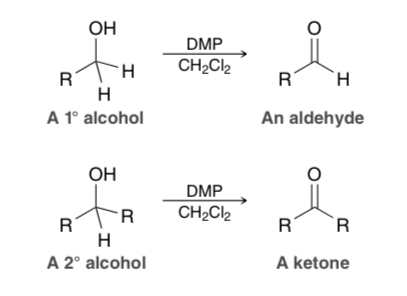
Carboxylic Acid as the Product Na2Cr2O7 (sodium dichromate) & H2SO4/H2O or xs CrO3 (chromium trioxide) & H3O+/acetone Aldehyde as the Product PCC & CH2Cl2 (dichloromethane) or Swern oxidation 1. DMSO & (COCl)2 (oxalyl chloride) 2. Et3N (triethylamine) or Des-Martin periodinane (DMP) oxidation DMP and CH2Cl2
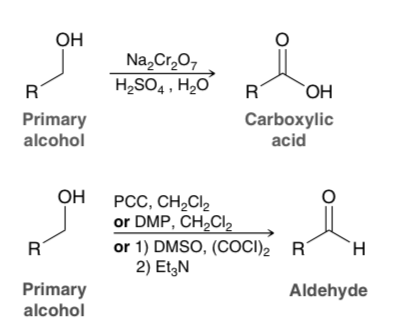
Secondary Alcohol Oxidation
Reagents All processes reduce the secondary alcohol to a ketone Na2Cr2O7 (sodium dichromate) & H2SO4/H2O or xs CrO3 (chromium trioxide) & H3O+/acetone or PCC & CH2Cl2 (dichloromethane) or Swern oxidation 1. DMSO & (COCl)2 (oxalyl chloride) 2. Et3N (triethylamine) or Des-Martin periodinane (DMP) oxidation DMP & CH2Cl2 (dichloromethane)
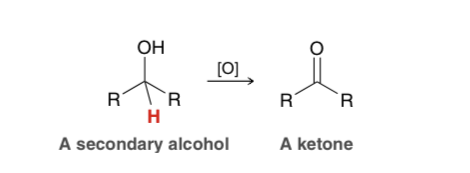
Swern Oxidation Alcohol
Reagents • DMSO & (COCl)2 (oxalyl chloride) • Et3N (triethylamine) Mechanism Converts a primary alcohol to an aldehyde Converts a secondary alcohol to a ketone
Des-Martin periodinane (DMP) oxidation Alcohol
Reagents DMP and CH2Cl2 (dichloromethane) Mechanism Converts a primary alcohol to an aldehyde Converts a secondary alcohol to a ketone
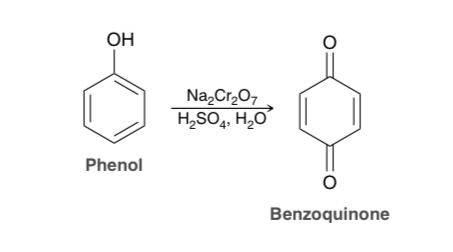
Oxidation of Phenol
Reagents Na2Cr2O7 (sodium dichromate) & H2SO4/H2O or xs CrO3 (chromium trioxide) & H3O+/acetone Mechanism Although there is no alpha proton, phenol still undergos oxidation to form a benzoquinone