Topic 15.3
No description yet. This curated deck is ready for daily study.
Card preview (14)
Heterogenous catalyst
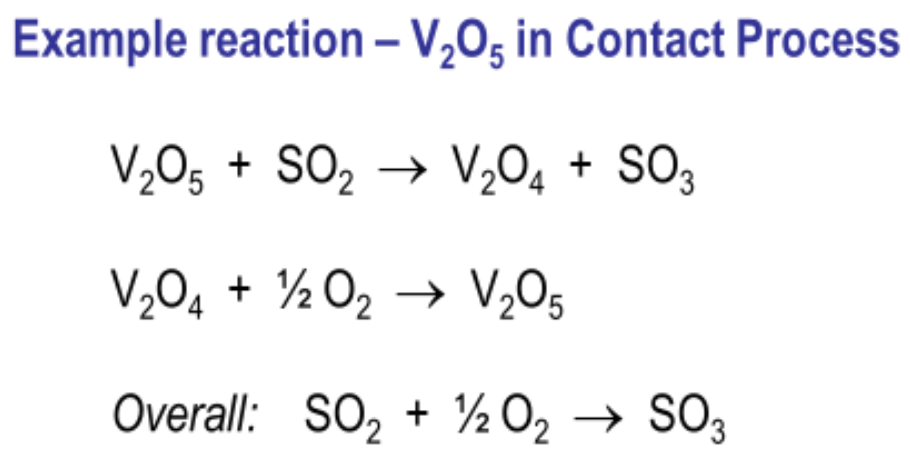
Different state to the reactants. -Catalyst is usually a solid and takes place on the surface. -Eg. Haber process (iron catalyst) -Eg. Contact process (vanadium oxide catalyst)
Homogenous catalyst
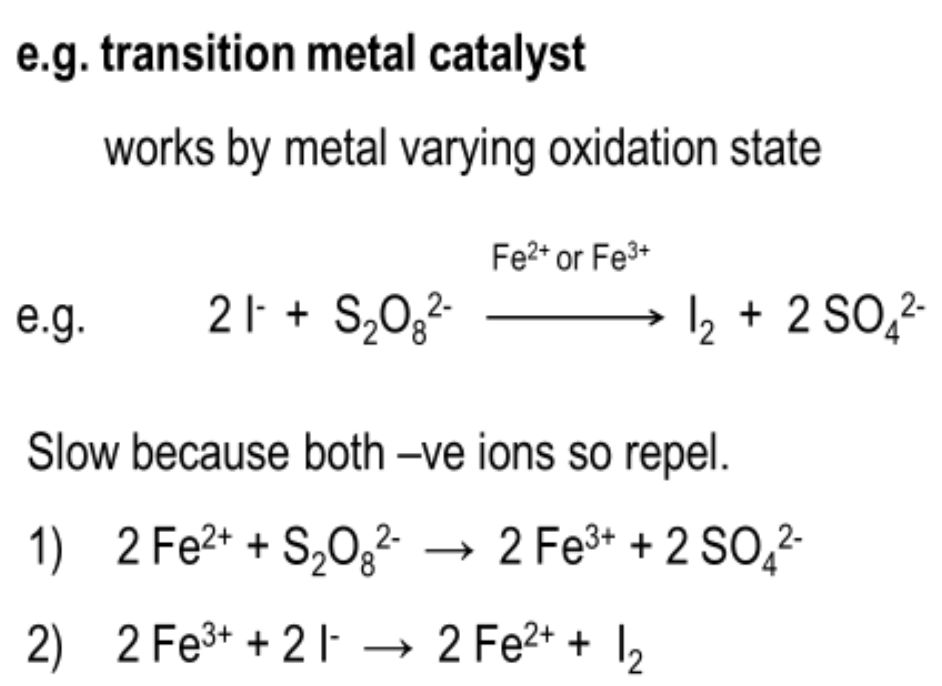
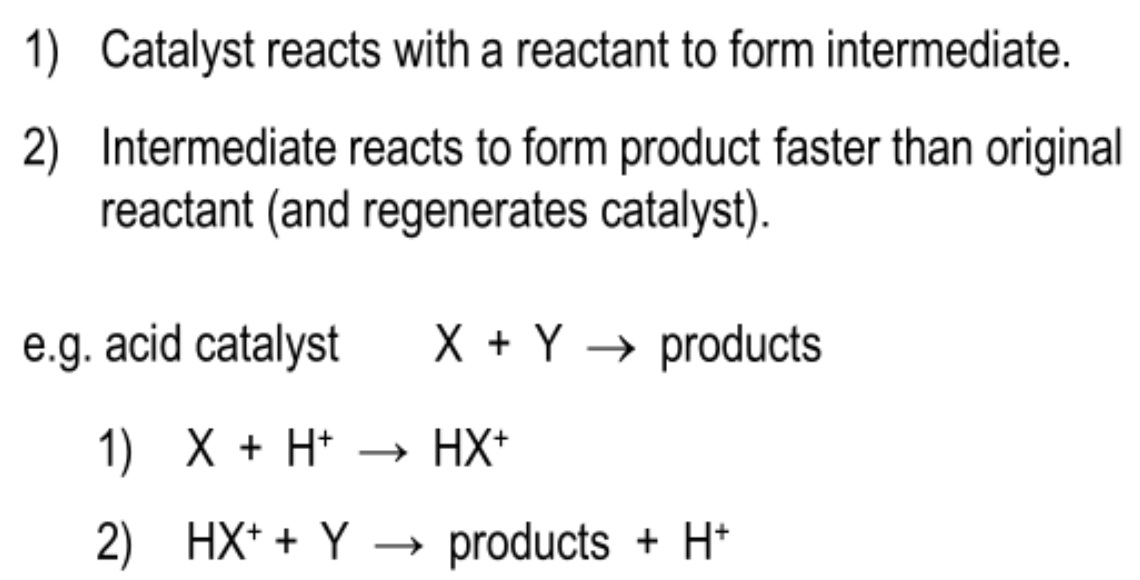
Same phase as the reactants. -Most reactions take place In solution (all species are either liquids or dissolved in solution). -Reactions proceed via an intermediate species formed from a reactant and the catalyst, which reacts further and regenerates the catalyst. S2O8^2- + 2I- —> I2 + 2SO4^2- S2O8^2- + 2Fe^2+ —> 2Fe^3+ + 2SO4^2- 2Fe^3+ + 2I^- —> 2Fe^3+ + I2 (common questions)
Solid catalyst
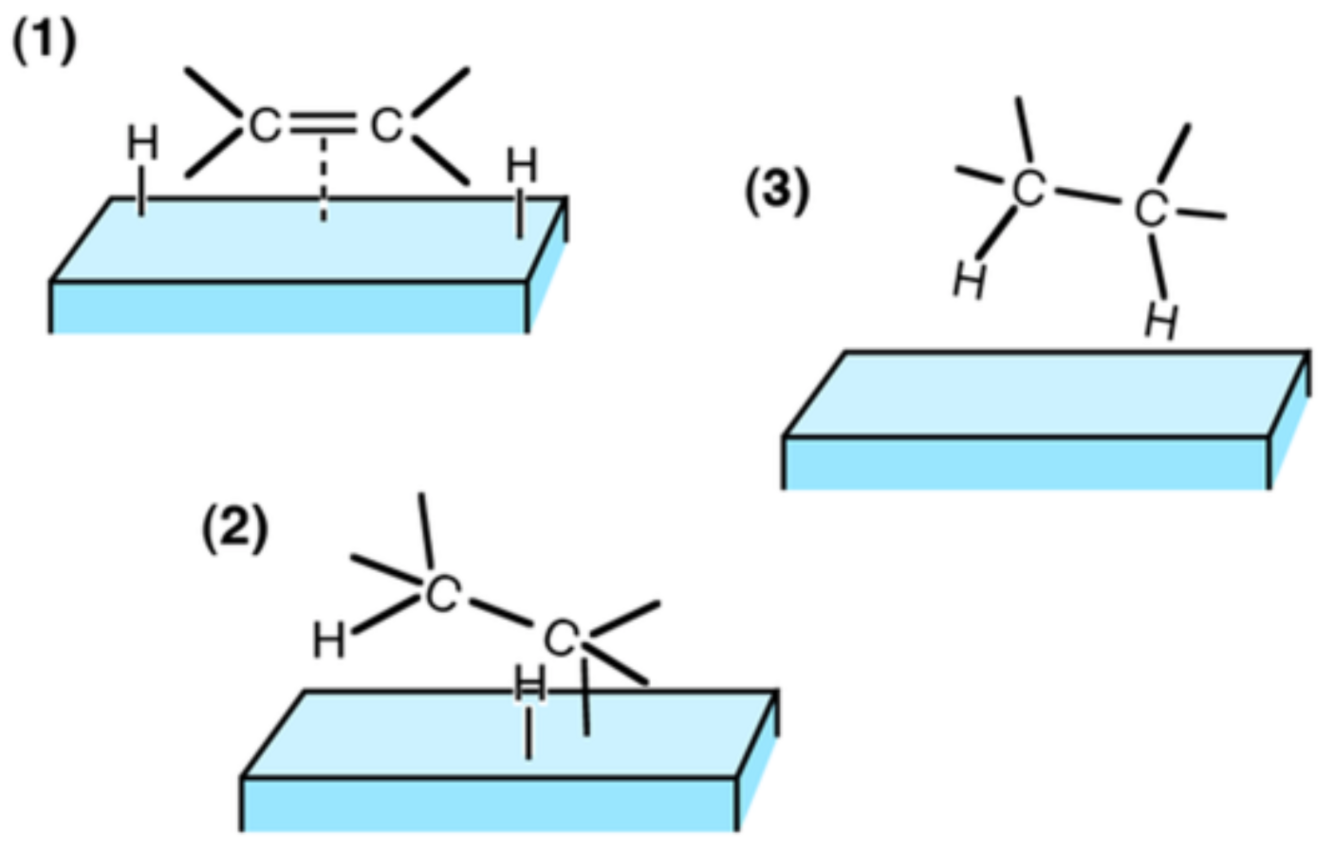
Adsorption on surface -Active site–> proximity of molecules Lowe, weaken covalent bonds -Desrobed from surface
Poisoning of catalyst
-Impurities block active sites. -Can ruin catalyst. -Catalyst has no effect on rate of reaction (lowers its efficiency). –> Increased chemical costs, cleaning, reduces production (Haber process-> sulfur impurities)
Autocatalysis
-1 product acts as a catalyst -More product -> higher rate of reaction -eg. redox MnO4^- C2O4^- (MnO4^- acts as a catalyst) 2MnO4^- + 16H+ + 5C2O4^2- —> 2Mn^2+ + 8H2O + 10CO2 Intermediate: 4Mn^2+ + MnO4^- + 8H+ –> 5Mn^3+ + 4H2O 2Mn^3+ + C2O4^2- –> 2CO2 + 2Mn^2+ —> Heat to start- rate of reaction will continue to increase
How does a homogenous catalyst work?
-At least one reaction is adsorbed onto the surface (ie. forms bonds to the atoms in the solid surface). -The places on the surface where molecules are adsorbed are called active sites. -In an effective catalyst, the molecule can move about the surface, bonding to different active sites. -The adsorption of reactants onto the surface can result in increased reaction in a number of ways: a) adsorption onto the surface effectively concentrates the reactants (ie. brings them closer to the gas phase- increasing likelihood of collisions). b) it may weaken some of the bonds in the molecule, making reaction easier. c) it may position the molecule in a favourable orientation for reaction.
If adsorption is too weak:
Not many molecules will be adsorbed so the catalyst will have very little effect.
If adsorption is too strong:
Molecules will not be able to move around the active sites and so be less likely to meet another reactant and so be less likely to react. (Also many products will tend to remain adsorbed on the surface).
Ideal catalyst
Nickel and platinum- ideal adsorption strength. (Ag has too weak adsorption, W too strong adsorption).
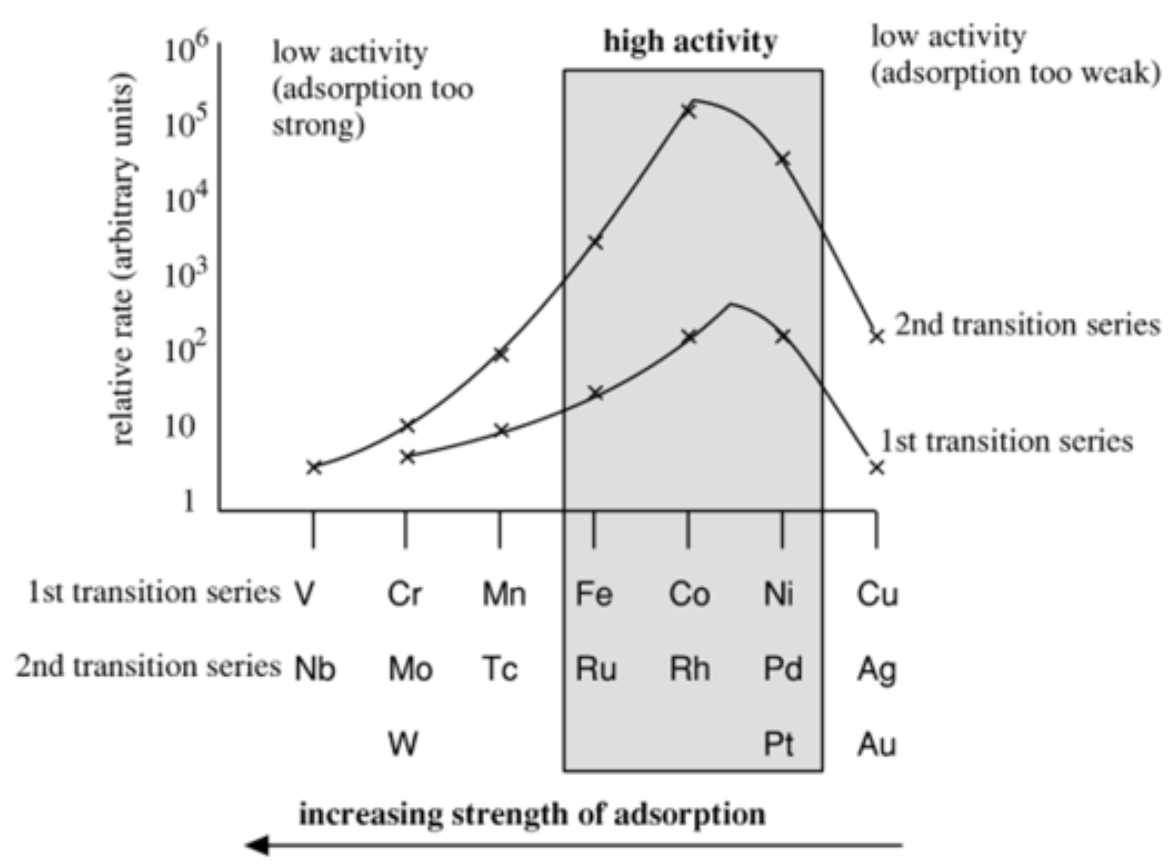
The nature of the catalyst
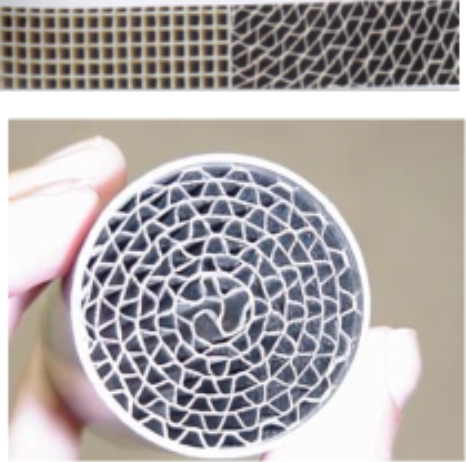
-The larger the surface area, the less quantity of catalyst that is needed. -Maximising surface area of catalyst, has important cost savings. -Surface area is maximises by using a thin coating of the catalyst on some type of support medium (eg, honeycomb structure).
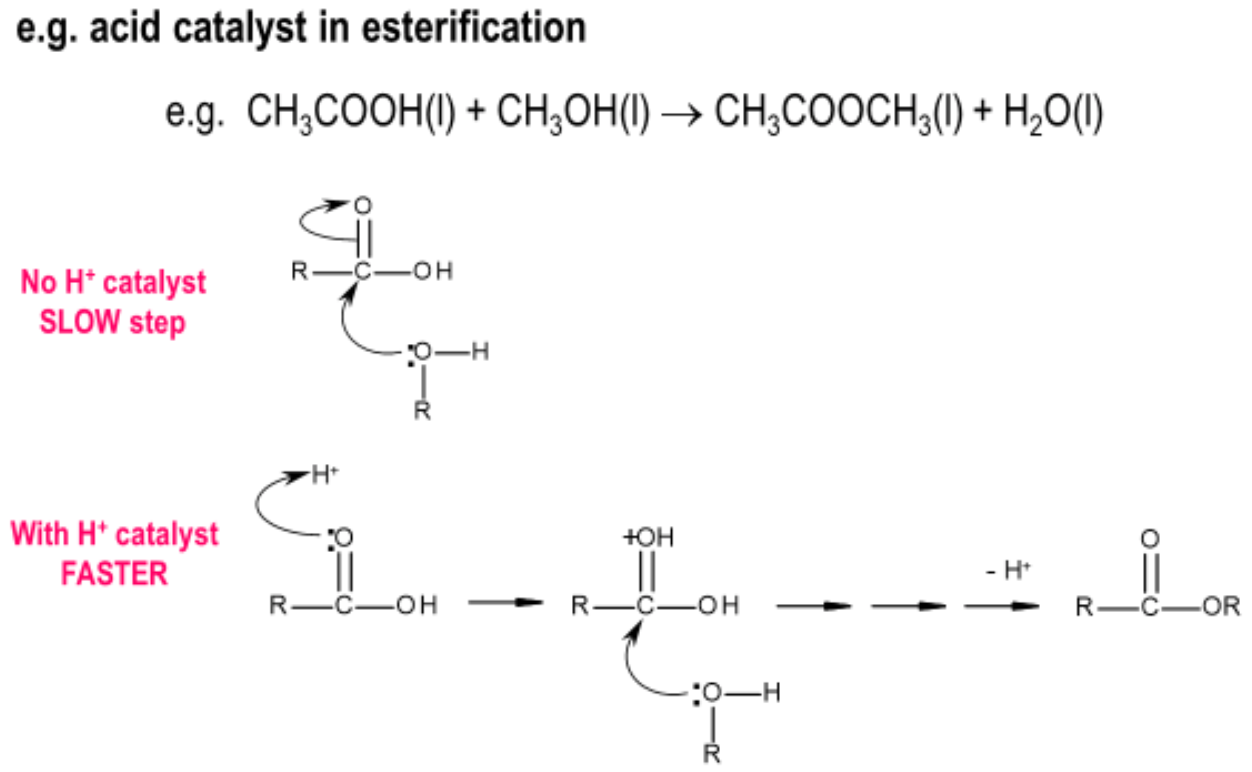
Acid catalyst in esterification
Transition metal catalyst (double -ve)