energetics 5.2
No description yet. This curated deck is ready for daily study.
Card preview (20)
what is an enthalpy change?
the heat energy released or absorbed per mole ΔH kJ/mol
if the sign is positive + what type of reaction is it and what type of energy released?
endothermic absorbed energy
if the sign is negative - what type of reaction is it and what type of energy released?
exothermic released energy
what type of reaction in endothermic?
absorbed energy positive
what type of reaction in exothermic?
released energy negative
what is the units for enthalpy changes?
kJ/mol
do breaking bonds release or absorb energy?
absorb energy
do making bonds release or absorb energy?
releases energy
how do we represent enthalpy changes diagrammatically?
energy level diagrams
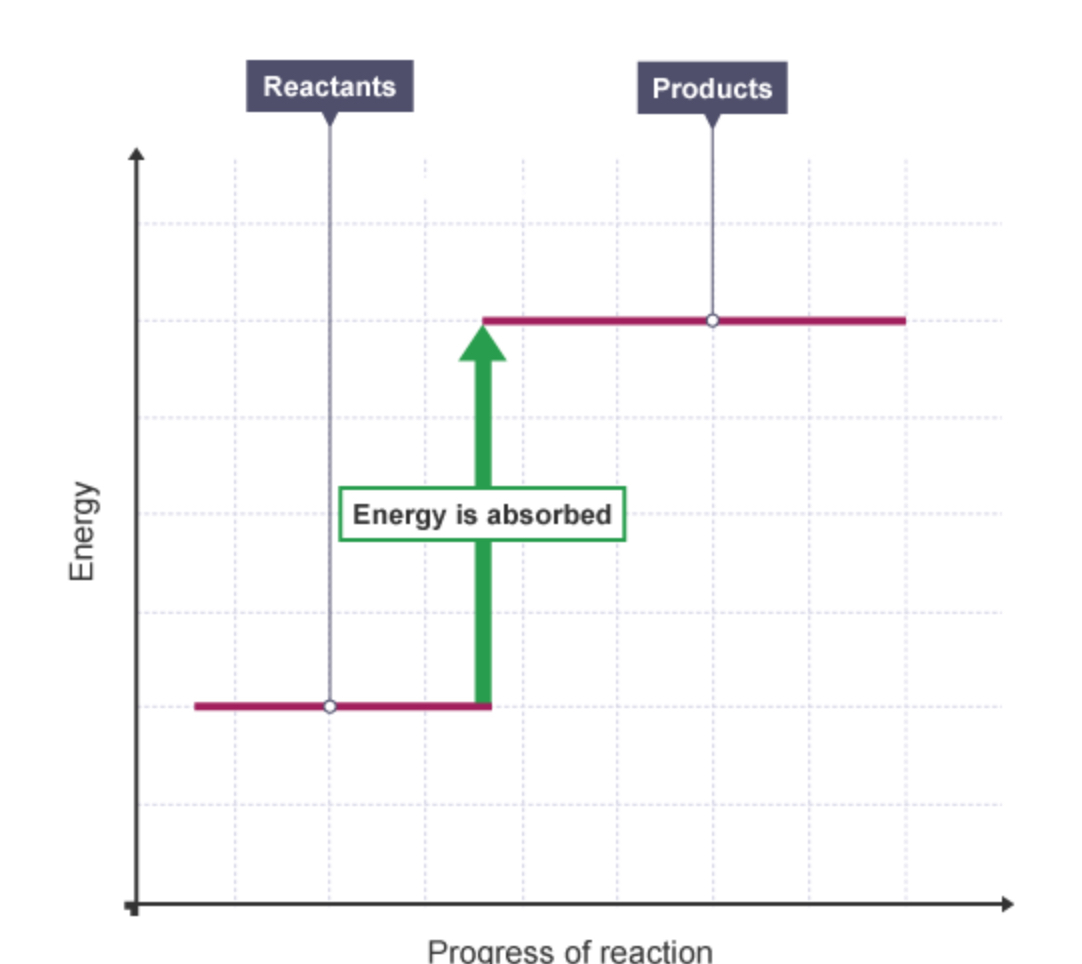
how do you draw an endothermic reaction on an energy level diagram?
heat is absorbed and positive products end up with more energy than the reactants reactants low down products high up
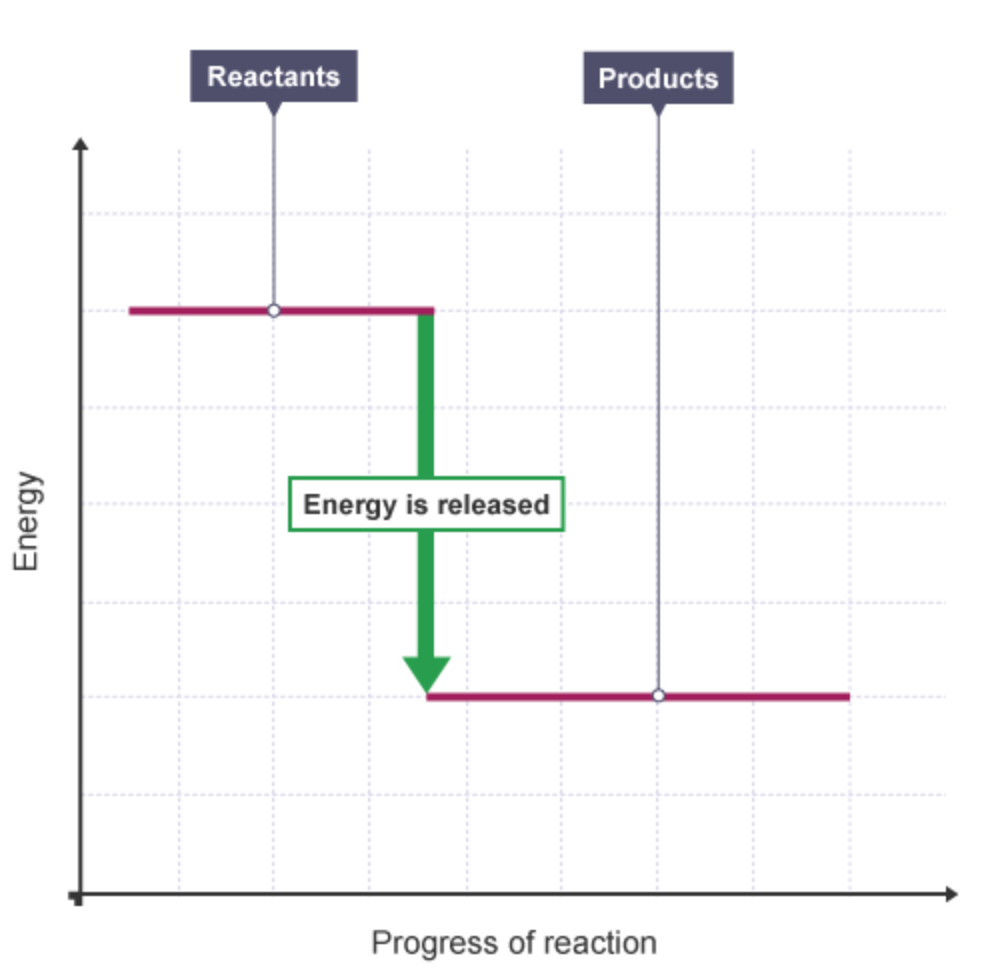
how do you draw an exothermic reaction energy level diagram?
heat is released and negative products ends up with less energy than reactants reactants high up products low down
how can you work out enthalpy change using bond energies?
ΔH = bonds broken − bonds made
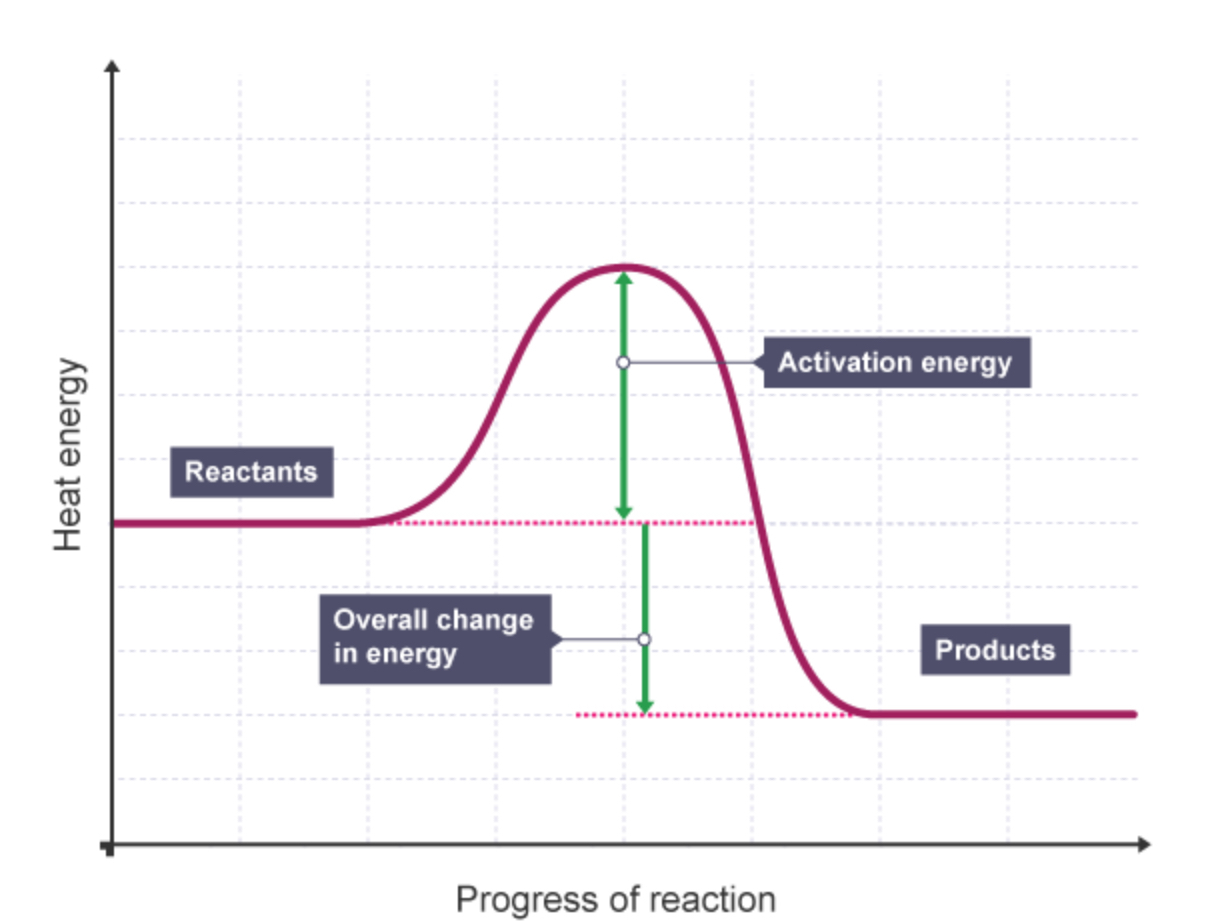
what’s a reaction profile diagram?
like an energy level diagram HOWEVER shows the path of the reaction it actually takes from reactants to products activation energy - represented by an arrow from reactants to the top of the hump
what is calorimetry?
experimental method used to measure an enthalpy change (ΔH) reaction is carried out near some water for example EXOTHERMIC -reaction releases heat energy -heat energy is absorbed by nearby water -temperature of water increases
the two formulae we use to convert measurements into ΔH:
Q = mcΔT heat energy (J) = mass of water (g) x specific heat capacity x temperature change ΔH = -Q/moles kJ/ mol = - (heat energy in J) /moles
what is combustion calorimetry?
combustion of a fuel to heat up the water
method of combustion calorimetry:
• weigh out 50g of water and place in a can above the burner • measure initial mass of burner and initial temperature of the water • ignite the burner, stir water for 30 seconds, then extinguish the burner • measure the finial mass of the burner and the finial temperature of water
what are two significant sources of error in combustion calorimetry experiments?
heat loss - most of the heat energy dissipating into the air instead of the water incomplete combustion - releases less heat energy than expected
what is solution calorimetry?
the reaction you are measuring dissolves in water reaction releases energy and water absorbs it but water and reaction are in the same place
what is the method of solution calorimetry?
• pipette 25cm3 of CuSO4 into a polystyrene cup 1cm3 solution has a mass of 1g • measure the initial temperature of the solution • add 1g of Mg and stir continuously • measure the maximum temperature of the solution