Organic Synthesis
No description yet. This curated deck is ready for daily study.
Card preview (10)
Draw out the flow diagram for synthetic routes (ignore the ones you haven’t learnt yet I couldn’t find a diagram without them)
<img></img>
Why do chemists look at synthetic routes?
When they want to generate a target molecule
How would you use the synthetic routes flow diagram to generate a target molecule from a starting molecule?
• Identify functional group 2. Use the chart to identify routes to generate the functional group 3. Draw the relevant starting molecules and list the reagents and conditions
How would you generate a target molecule if a starting group has two functional groups?
This would mean two reactions would have to occur. Steps; 1. Identify the functional groups on starting molecule 2. Identify the new functional groups on target molecule 3. Look at each conversion in turn and identify the reaction and the reagents and conditions
When would two stages have to occur to produce a target molecule?
When the target molecule can only possibly be produced by two reactions and happens via an ‘intermediate’ molecule
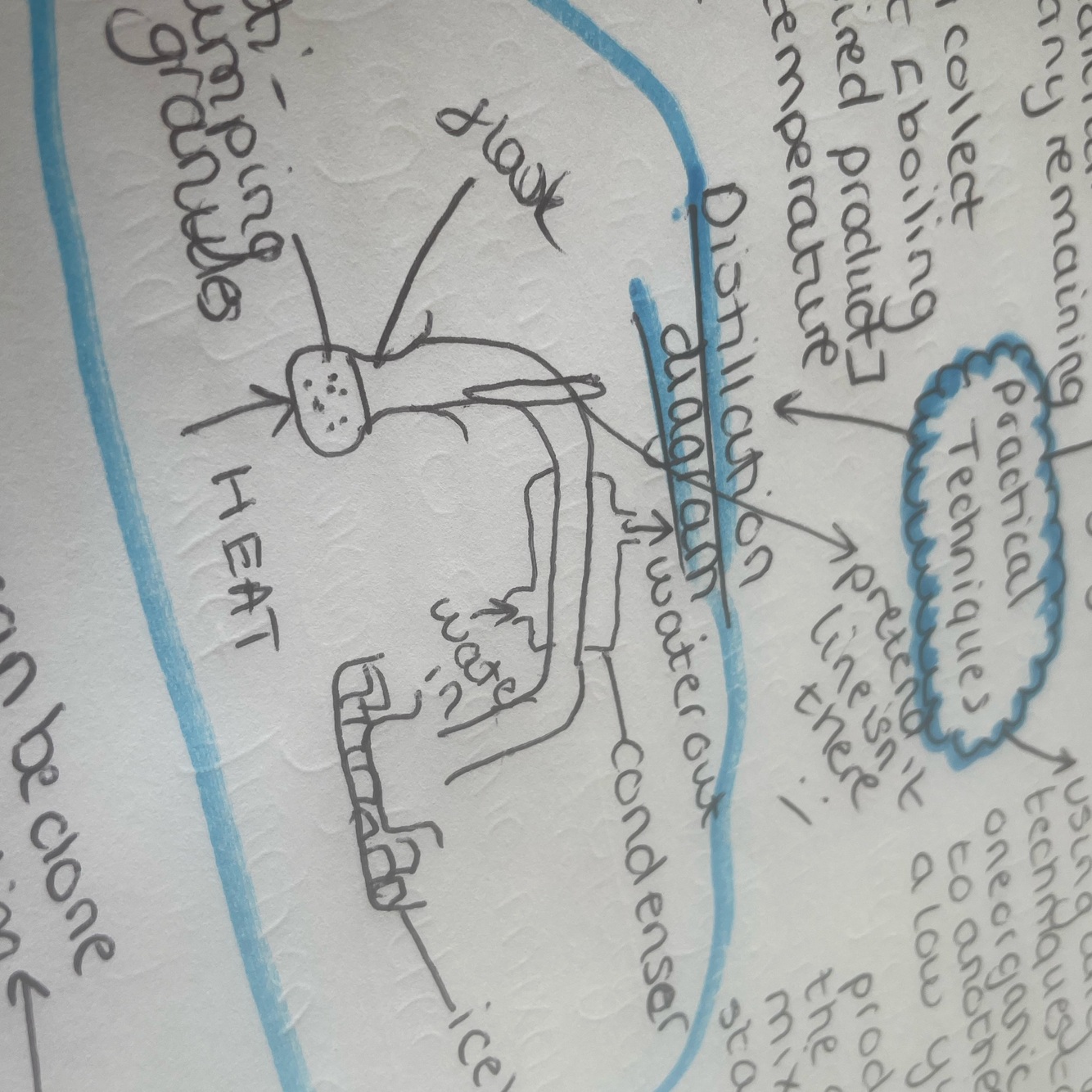
Draw out a distillation diagram
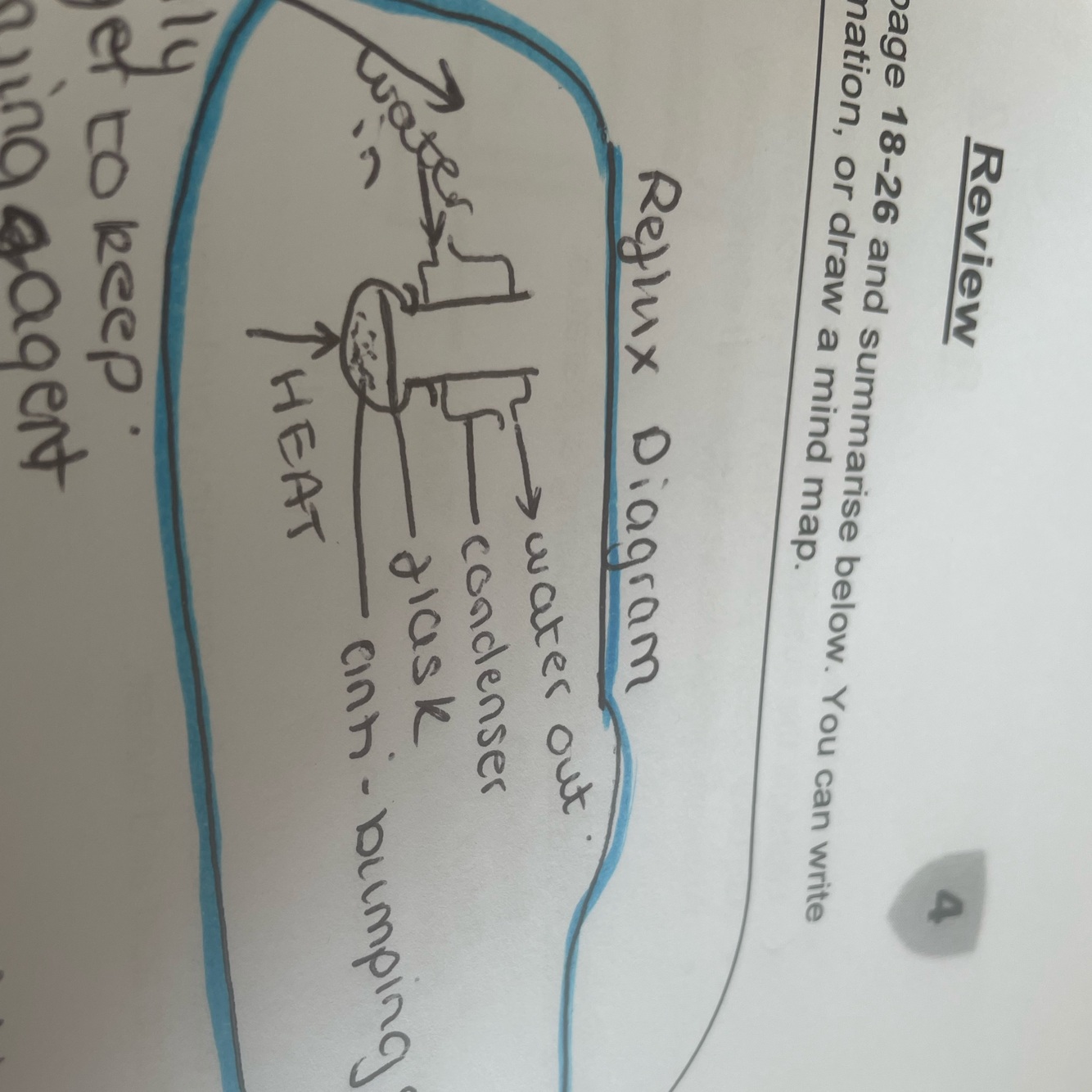
Draw out a reflux diagram
Why does using distillation or reflux to convert one organic compound to another lead to a low yield?
Product can remain in apparatus or stay mixed with interacted starting material
What equipment is used to remove an organic liquid from interacted reagents, catalysts and other products?
A separating funnel
Describe the process of removing an organic liquid from unreacted reagents, catalysts and other products
• Add the mixture to a separating funnel 2. Compound with higher density is the bottom layer (usually aqueous) and compound with lower density is the top layer (usually organic) choose which layer to keep 3. Add the calcium chloride drying agent to absorb any remaining water 4. Distill and collect fraction at boiling point of desired product (state the temperature given in the question)