EXAM UNIT 2
No description yet. This curated deck is ready for daily study.
Card preview (24)
Exposure to UV
Can result in molecules gaining sufficient energy for bonds to be broken - responsible for sunburn and contributes to aging of skin
UVA & UVB
Cause wrinkles by breaking down collagen, creating substances called free radicals that inhibit the natural repair of the skin
Free radical
Chemical species that contains one unpaired electron and is highly reactive
Free radicals
Have unpaired electrons and are highly reactive
Initiation
UV light provides energy for the homolytic fission of halogen into reactive halogen atoms or free radicals
Propagation
Free radicals collide with other species but the number of free radicals is maintained
Termination
Free radical are used up by collision with eachother
Evidence to support free radical chain reactions
• Reaction is initiated by UV and once started can continue in the dark • Other substitution products are made such as Ch2Br2, CHBr3, CBr4, together with longer alkanes
Free radical scavengers
Present in many cosmetic products, they contain molecules which can react with free radicals to form stable molecules and prevent chain reaction. E.g. vitamin E
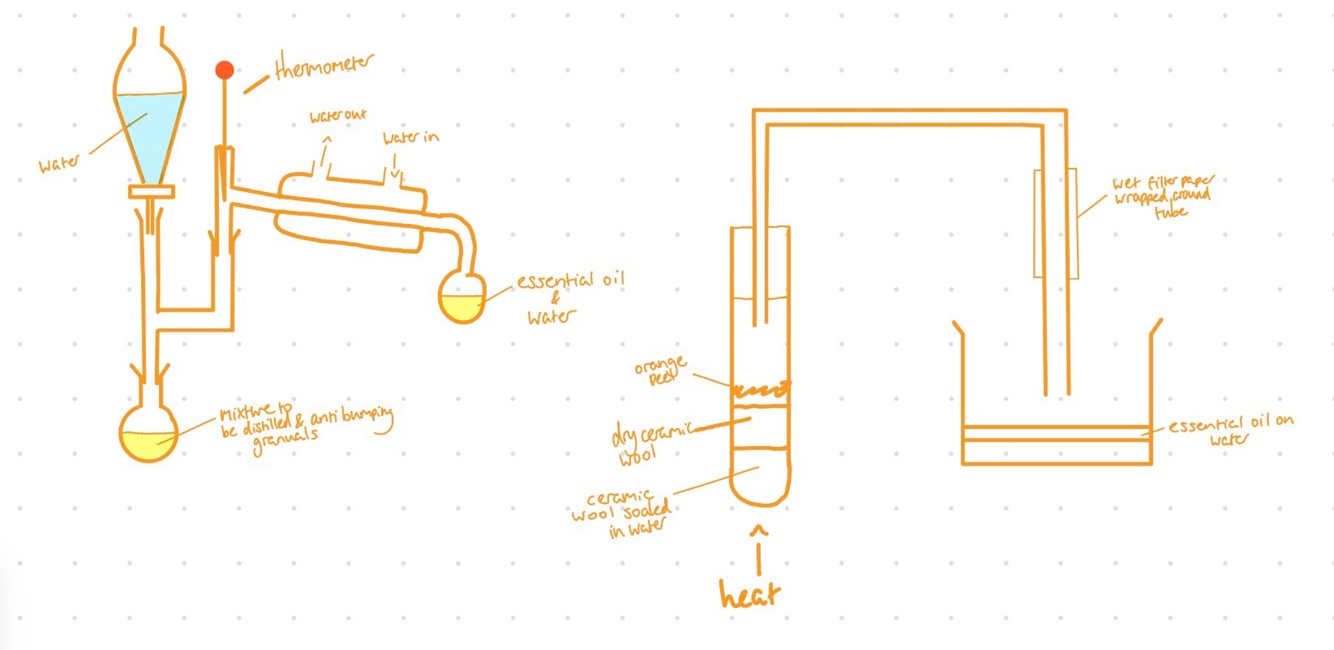
Steam distillation
Volatility of the oil so it is carried by the steam. More water can be added from the funnel. Essential oils collect as a mixture of oil and water, but as the two do not mix, they are easily separated.
Steam distillation experimental set up
Terpenes
Unsaturated compounds formed by joining together isoprene units
Terpenes oxidation
Terpenes can be oxidised into terpanoids within plants producing some of the compounds responsible for the distinctive aroma of spices
How are soaps produced
By the alkaline hydrolysis of edible fats and edible oils, fatty acids produced are neutralised by alkali, forming water-soluble ionic salts called soaps
Hydrolysis of fat
Produces fatty acids and glycerol (3:1)
Hard water
Water that contains dissolved metal ions like Ca2+ and Mg2+
Scum
An insoluble precipitate formed from the reaction between the soap molecule and the ions in the water
Soaps and detergents
Emulsifying reactants - chemicals that can make oil and water become permanently mixed to produce a stable emulsion
Soap molecules
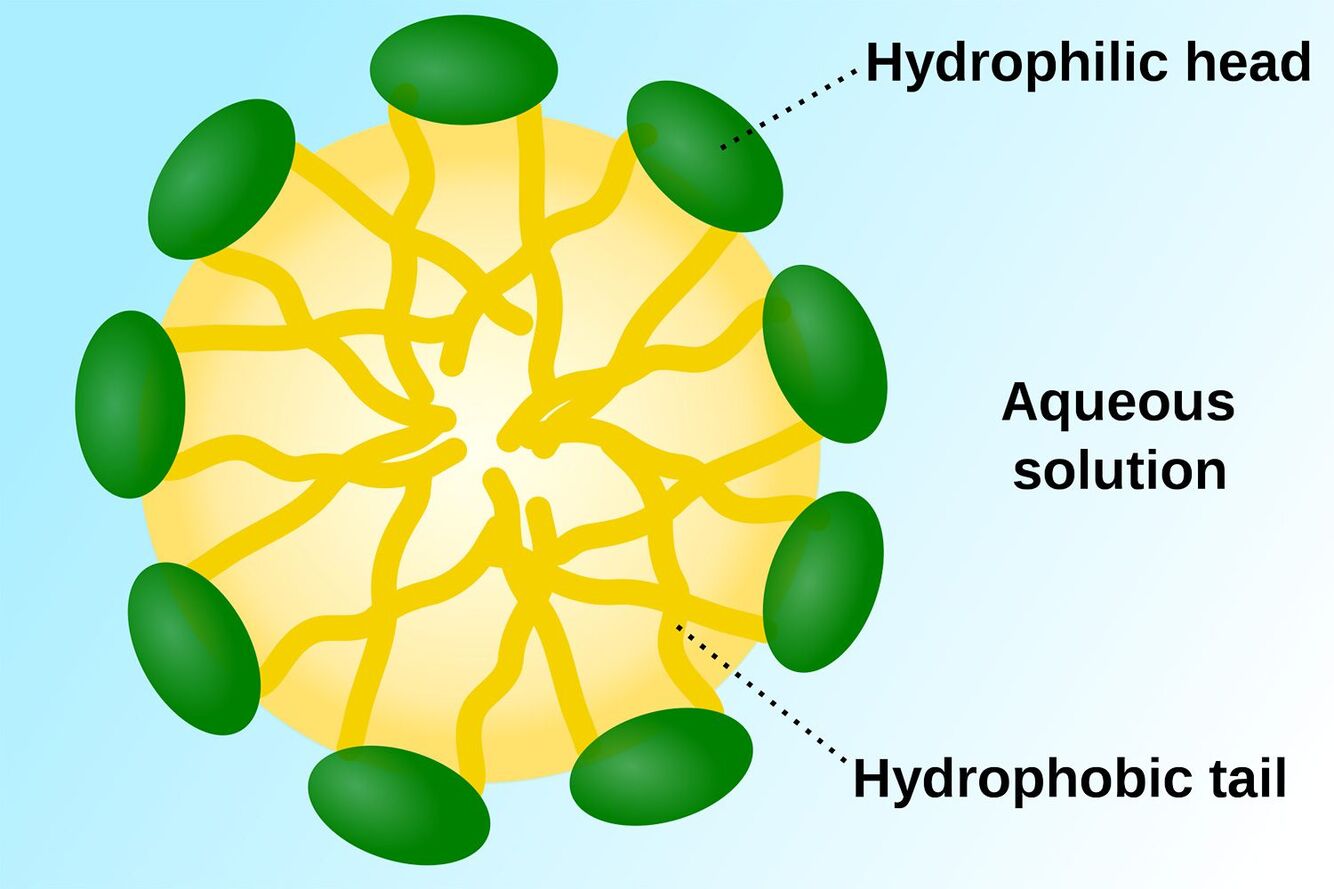
Have long non-polar hydrocarbon chain (which is readily soluble in non-polar compounds) and a polar ionic carboxylate head which is water soluble
How do soaps work
• Soaps have a long non-polar hydrocarbon chain (which is readily soluble in non-polar compounds) and a polar ionic carboxylate head which is water soluble • During cleaning, the hydrophobic tails dissolve in the droplet of grease, whilst the hydrophobic heads face out into the surrounding water, resulting in ball like structures • Agitation allows soap to break down grease and form suspended droplets, otherwise known as miscelles
Soaps at work diagram
Emulsion
Contains small droplets of one liquid dispersed in another liquid
Emulsifier
A reaction of edible oils with glycerol
Emulsifiers in food
Commonly made by reacting edible oils with glycerol