Topic 17.3 Carboxylic acids
No description yet. This curated deck is ready for daily study.
Card preview (19)
Carboxylic acid group
(-oic acid suffix) O II R-C-OH
Bonding in carboxylic acids
• Many reactions involve the loss of a H+ ion. • This produces a carboxylate ion where the charges are evenly distributed across C-O bonds.
Physical properties of carboxylic acids
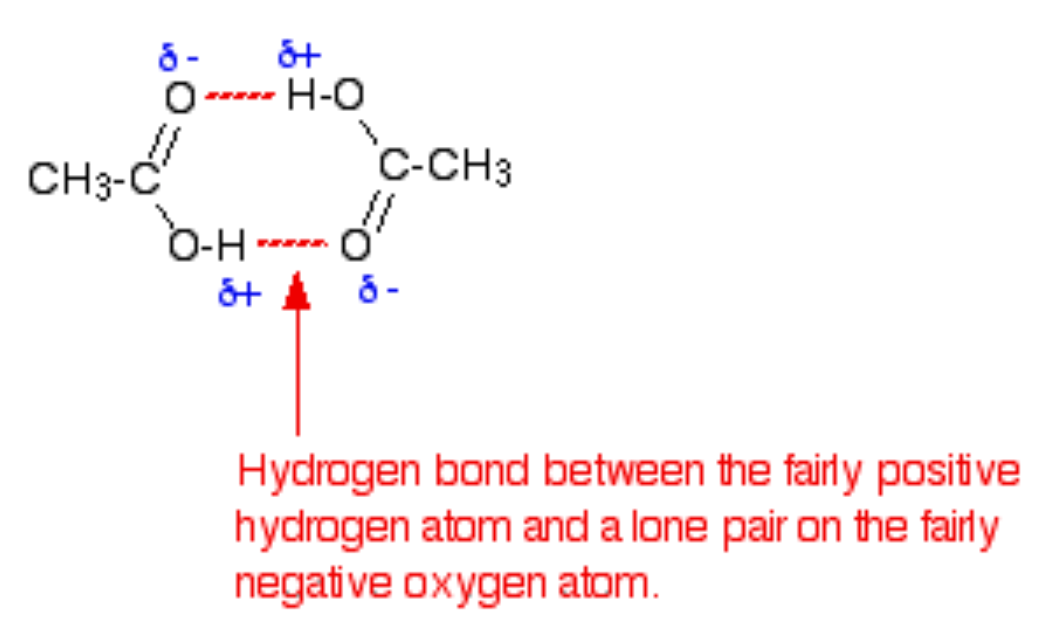
• High boiling point due to presence of hydrogen bonds. • Boiling point increase with chain length (increased London forces). • Pure carboxylic acid, hydrogen bonding can occur between two molecules of acid to produce a dimer. • Shorter chains are soluble as they can form H bonds as they don’t contain a bulky group in the way. • Weakly acidic.
Preparation of carboxylic acid: By oxidation
This uses a primary alcohol or aldehyde along with an oxidising agent, usually acidified potassium dichromate. CH3CH2CH2OH + 2[O] —> CH3CH2COOH + H2O
Preparation of carboxylic acid: By hydrolysis
• Can be formed by hydrolysis of nitriles under reflux with either dilute or aqueous alkali. • Acidic hydrolysis: CH3CH2CN + H+ + 2H2O –> CH3CH2COOH + NH4^+ • Alkaline hydrolysis: CH3CH2CH2CN + OH- + H2O –> CH3CH2CH2COO- + NH3
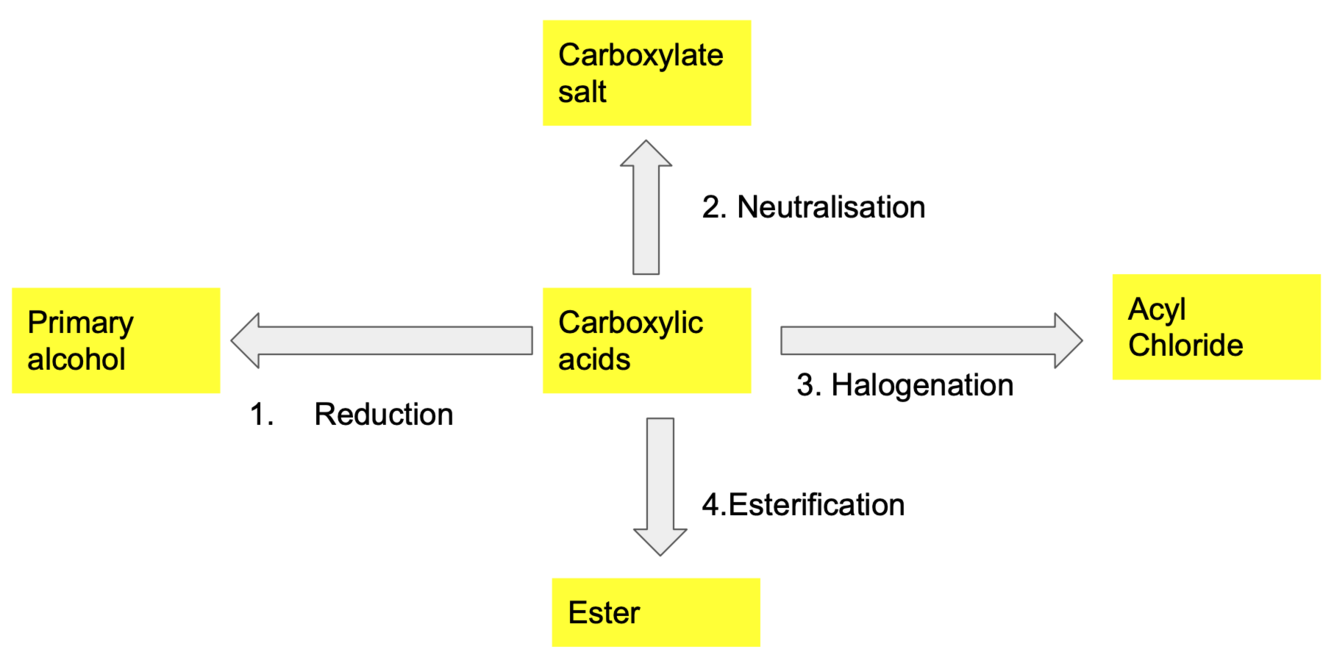
Reactions with carboxylic acids diagram
Reactions with carboxylic acids: Reduction
Carboxylic acids can be reduced to primary alcohols, but not to aldehydes Reducing agent: lithium tetrahydridoaluminate (lithium aluminium hydride)
Acyl Chloride
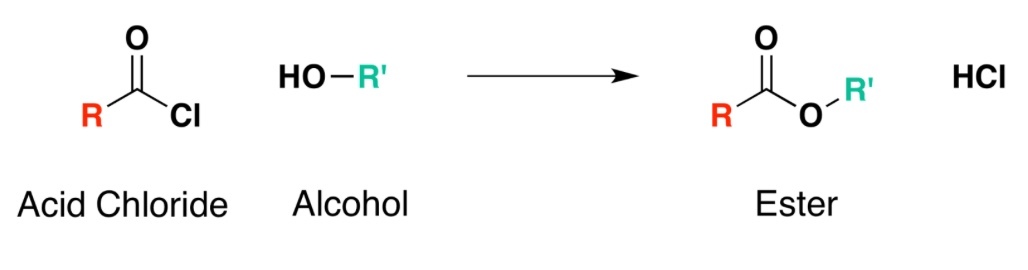
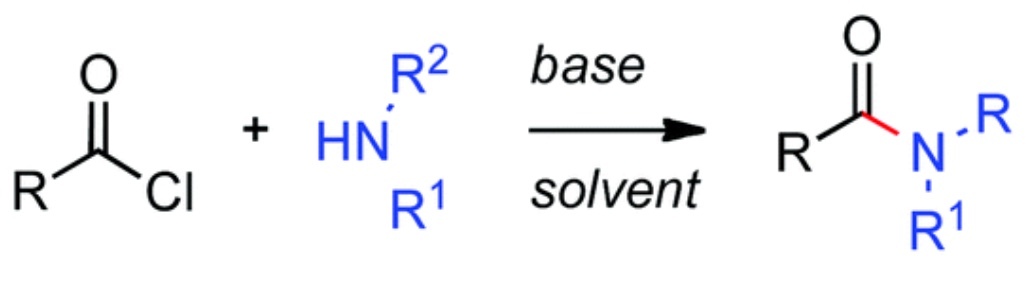
• Known as acid chlorides. • General formula: RCOCl. • The C in RCOCl is attached to 2 electronegative atoms, so it is electron deficient (this means it is susceptible to attack by nucleophiles).
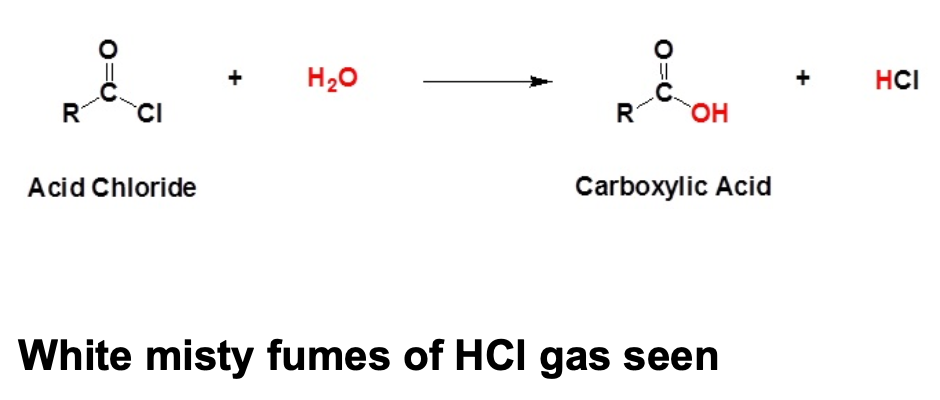
Reactions of Acyl chlorides: Water
Reactions of Acyl chlorides: Alcohols
Reactions of Acyl chlorides: Conc. Ammonia solution

Reactions of Acyl chlorides: Amines
Esters
-Colourless liquids -Relatively low melting points/ boiling points -Insoluble in water -Present in: perfumes, food flavourings, solvents -Pleasant smell
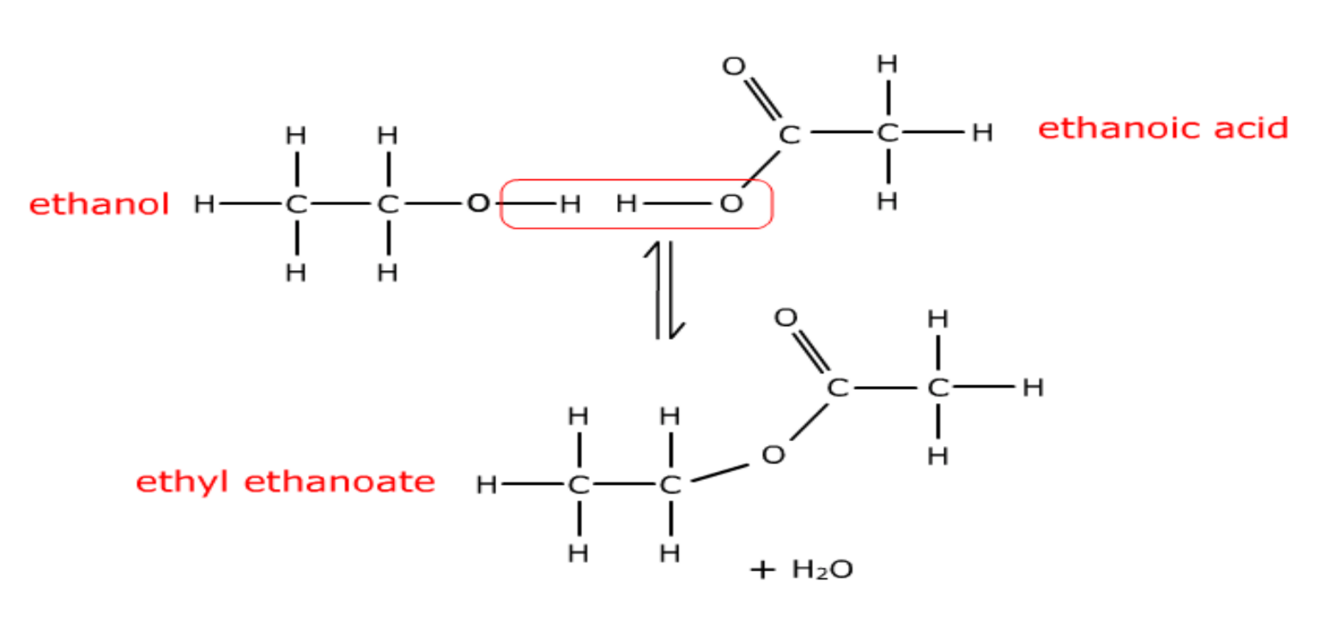
Esterification
• Esters are formed from the reaction of an alcohol and a carboxylic acid. • Esters form in the presence of HCl or sulphuric acid (which acts as acids). • The O-H bond in the alcohol and the C-O bond in the carboxylic acid will break. • A new bond between the oxygen atom from the alcohol and the carbon atom in the carboxylic acid.
Naming an ester
-Alcohol ends in -ly -Acid ends in -oate -Alcohol first, then acid
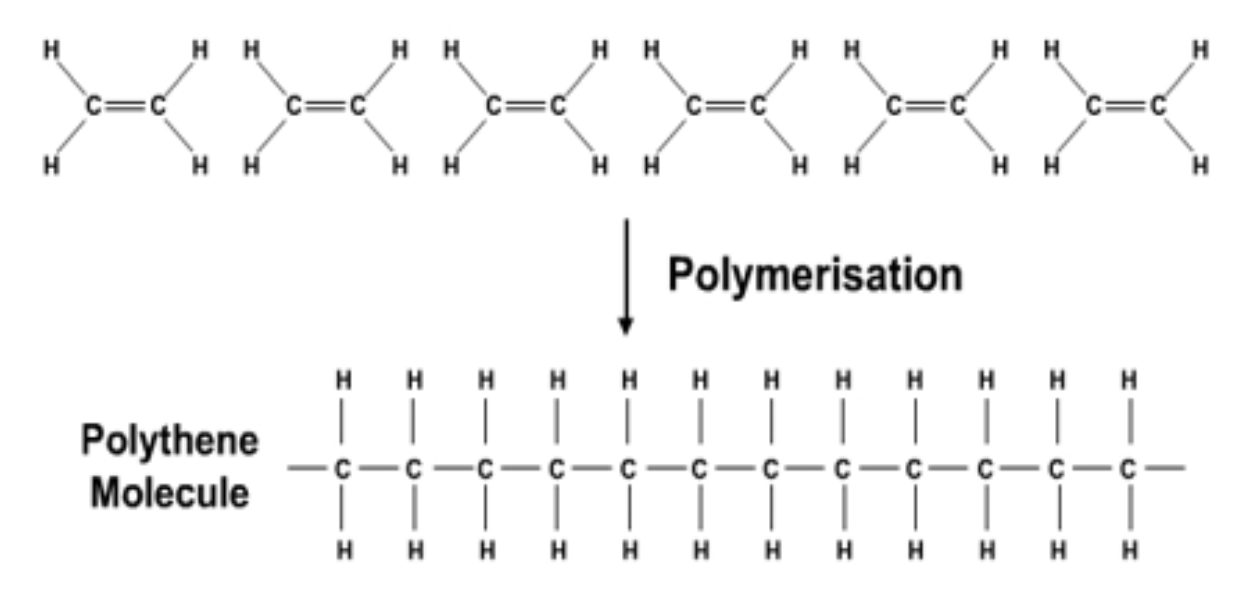
Addition polymerisation
Involves an alkene monomer becoming a long chain polymer. (One product)
Condensation polymerisation
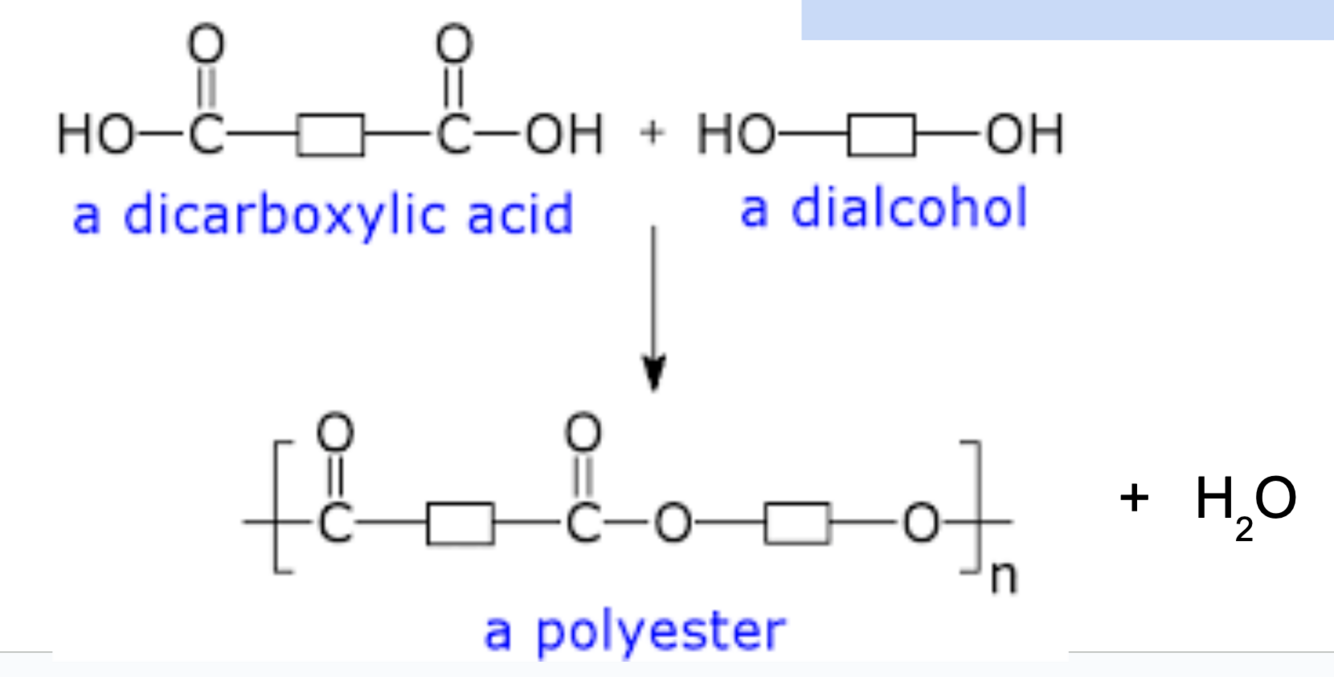
The joining of two monomers, with the elimination of a small molecule (eg. H2O) Polyesters are polymers that have monomers bonded via an ester link
Two ways to form polyesters
There are two ways to form a polyester: 1) Two different monomers, a diol and a dicarboxylic acid (eg. Ethane-1,2-diol) 2) One monomer with -OH and -COOH groups (eg. Poly(lactic acid))
Making polyesters