Chapter 17: Aromatic Compounds
No description yet. This curated deck is ready for daily study.
Card preview (24)
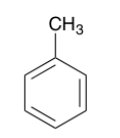
Toluene
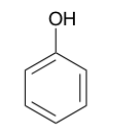
Phenol
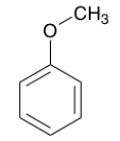
Anisole
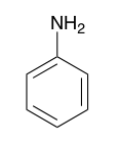
Aniline
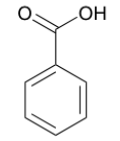
Benzoic Acid
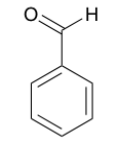
Benzaldehyde
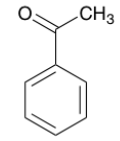
Acetophenone
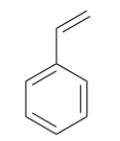
Styrene
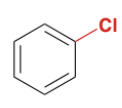
Chlorobenzene
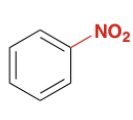
Nitrobenzene
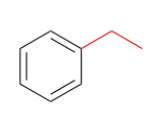
Ethylbenzene
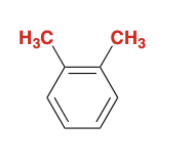
ortho-Xylene (1,2-dimethylbenzene)
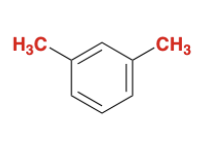
meta-Xylene (1,3-dimethylbenzene)
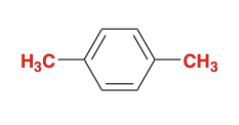
para-Xylene (1,4-dimethylbenzene)
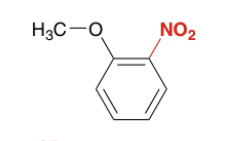
ortho-Nitroanisole (2-nitroanisole)
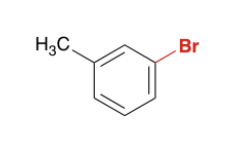
meta-Bromotoluene (3-bromotoluene)
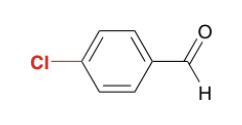
para-Chlorobenzaldehyde (4-chlorobenzaldehyde)
Criteria for aromaticity
• Fully conjugated ring with overlapping p orbitals • Follow Hückel’s rule-: odd number of electron pairs with 4n+2 π electrons • Adopt a planar configuration Any ring that is not conjugated is just cyclic These two do not meet Hückel’s rule, and are therefore anti-aromatic

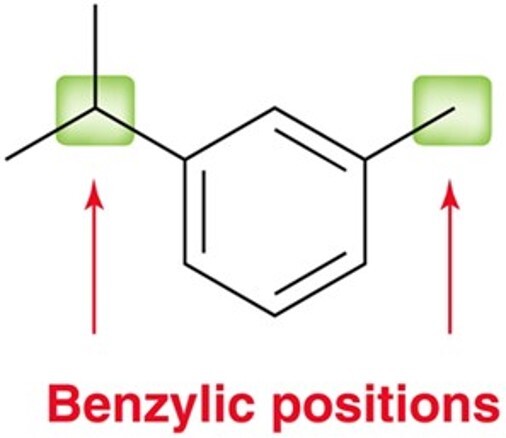
Benzylic position
Any carbon atom attached directly to a benzene ring α to the ring
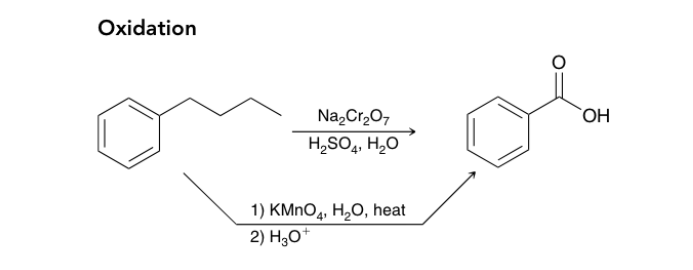
Alkylbenzene oxidation
Reagent Na2Cr2O7 (sodium dichromate) & H2SO4, H2O or • KMnO4 (potassium permanganate) , H2O, heat • H3O+ Mechanism Replaces alkyl group with a benzylic carboxy group converting the compound into a benzoic acid regardless of alkyl group Does NOT work if the benzylic position is quaternary
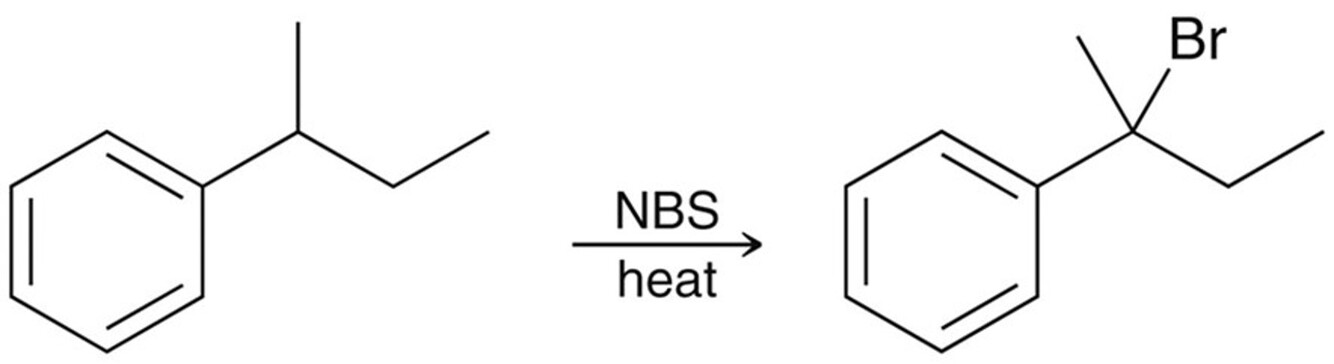
Radical bromination Alkylbenzenes
Reagents NBS & heat Mechanism Free-radical bromination occurs readily at the benzylic position due to the resonance stabilization of the intermediate benzylic radical
Substitution Reactions Alkylbenzenes
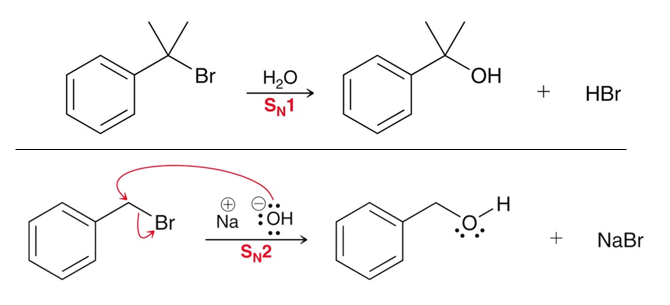
Benzylic bromides can undergo SN1 reactions if sterically hindered such as tertiary alkylhalides Can also do SN2 reactions when unhindered such as primary
Elimination Reactions Alkylbenzenes
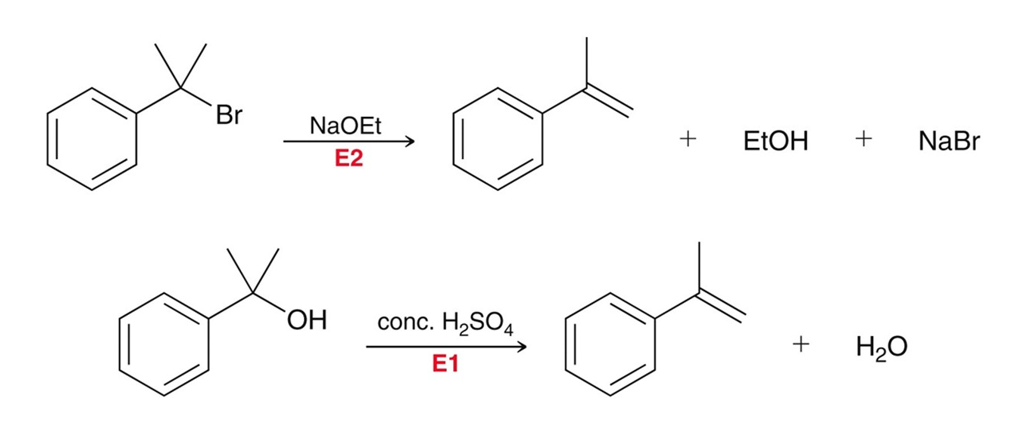
Benzylic bromides can undergo elimination reactions
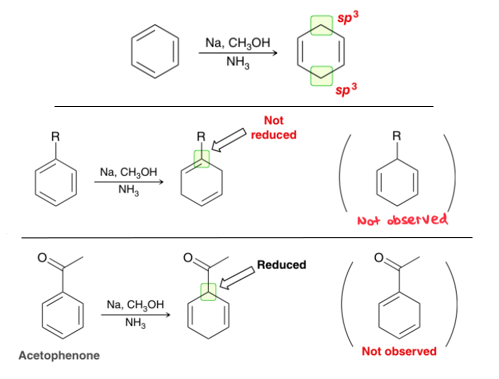
Birch Reduction
Reagents Na(s), MeOH & NH3 Mechanism Will selectively reduce sp2 carbons on opposite sides of a benzene ring to sp3 Will similarly reduce alkylbenzens but it will NOT reduce the carbon atom connected to the alkyl group due to electron-donating effects WILL reduced carbon atom connected to an electron-withdrawing group such as a carbonyl group