Unit 3 Medications
No description yet. This curated deck is ready for daily study.
Card preview (24)
Radiographer’s Responsibility for Medications
-Be familiar with drug names, routes of administration -Why? • Help prevent errors • Anticipate side effects • Report signs of adverse side effects
Chemical name
atomic or molecular structure CN- (4hydroxyphenyl)acetamide
Generic name
nonproprietary, official; drugs of a particular class usually have the same ending
Brand Name
proprietary or trade name given by manufacturer
PHARMACOKINETICS
study of how the body processes the drug. Individual responses can vary depending on age, physical condition, gender, weight, immune status Absorption, Metabolism, Distribution, Excretion
Absorption
how the medication moves from route of administration to circulation • Oral (by mouth)- GI • IM/SQ – Blood vessels • IV- None
Metabolism
how the body transforms drug into inactive form for excretion • Liver
Distribution
how the drug travels from bloodstream to target tissue and site of action
Excretion
elimination from the body after metabolized • Kidneys • Intestines, lungs
PHARMACODYNAMICS
-study of the effects of drugs on the normal physiological functions of the body -Agonist, Antagonist
Agonist
promotes desired result and produces a specific action
Antagonist
drug that attaches itself to the receptor, preventing the agonist from acting.
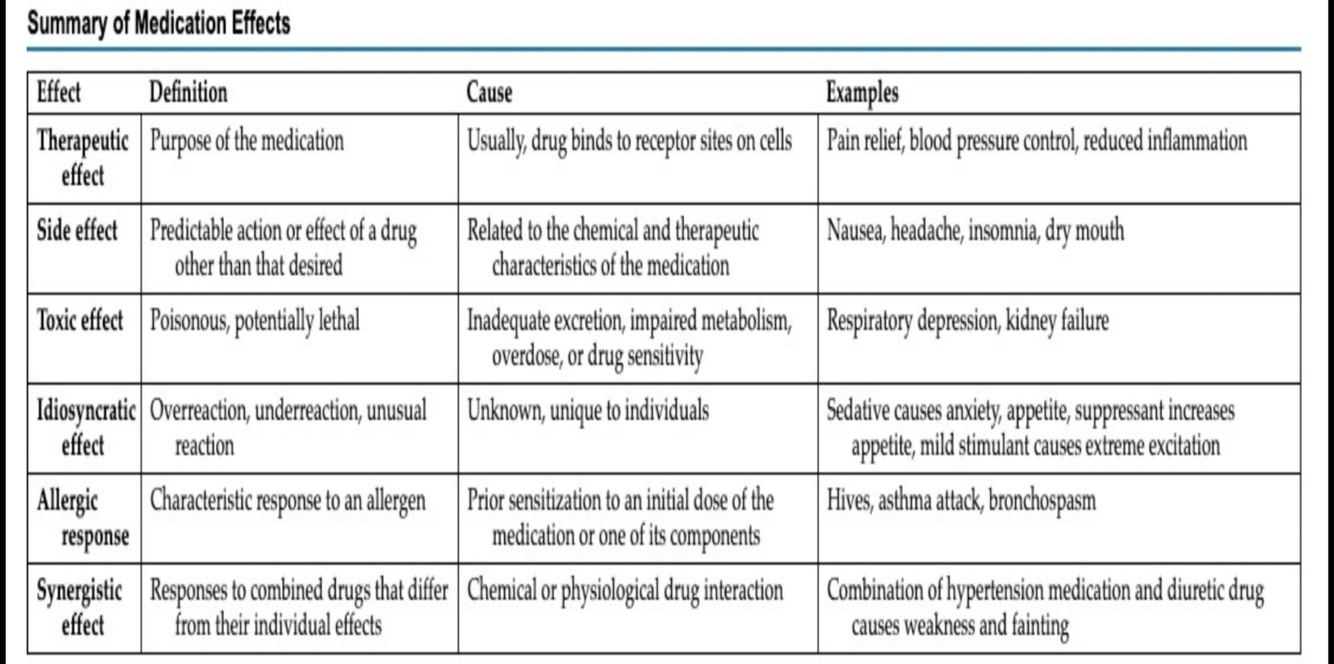
Medication Effects
FREQUENTLY USED MEDICATIONS IN THE IMAGING DEPARTMENT
• Medications to treat allergic reactions (contrast) • Analgesics/opiods – for pain • Sedatives, tranquilizers, paralytic agents- reduce mental activity/anxiety • Antagonist-reversal of sedatives and analgesics • Local anesthetics- eliminate sensation during procedures • Anticoagulants- inhibit clotting mechanism
Analgesics/opiods are used for
pain
Sedatives, tranquilizers, paralytic agents used for
reduce mental activity/anxiety
Antagonists used for
reversal of sedatives and analgesics
Local anesthetic
eliminate sensation during procedures
Anticoagulants
inhibit clotting mechanism
ALLERGIC REACTIONS Medications
• Diphenhydramine (Benadryl) -Antihistamine, side effects: sedative, anticholinergic (drying) • Epinephrine (Adrenalin) -Stimulates heart and parasympathetic nervous system administered for angioedema, shock, respiratory distress • Methylprednisolone (solu-Medrol) -corticosteroid, anti-inflammatory prevents swelling of bronchial tree • Atropine (Anticholinergic) -Used for bradycardia
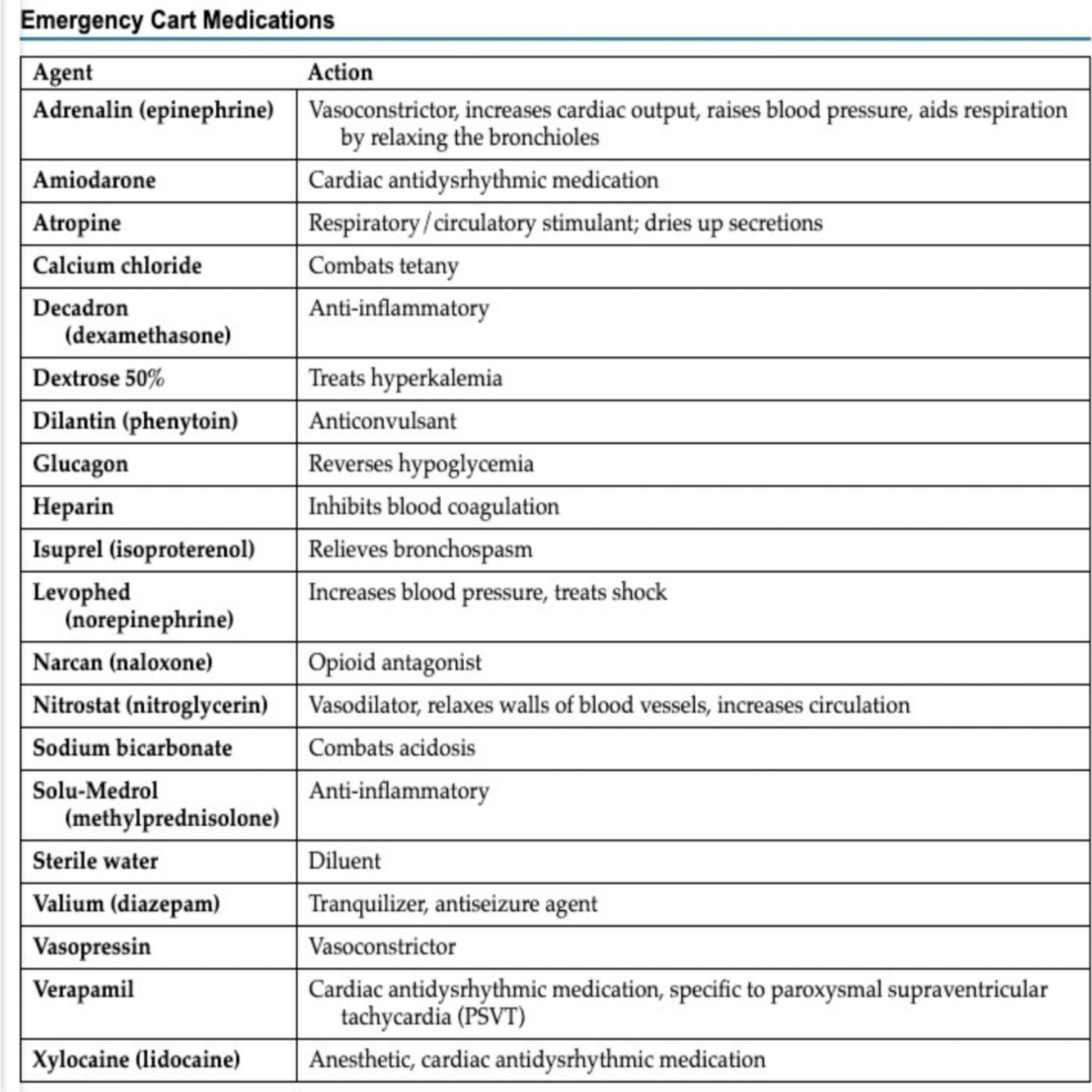
Emergency Cart Medications
Analgesics
• Drugs that relieve pain without causing a loss of consciousness -NSAIDs: Nonsteroidal anti- inflammatory drugs • Acetaminophen (tylenol) • Aspirin • Ibuprofen (advil)
Opioids
• Act by depressing the CNS, relieving pain, producing drowsiness • Oral: Hydrocodone (Vicodin), Oxycodone (Percocet) • Injectable: morphine sulfate, meperidine (Demerol), hydromorphone, Hydrochloride (dilaudid), fentanyl (sublimaze) • Naloxone (Narcan) antagonist to opioids • Side effect: respiratory depression, monitor with pulse ox
Sedatives and tranquilizers
• Quieting effect, reduce anxiety and mental tension Patients may feel drowsy, have slow reaction time • Benzodiazepines • Lorazepam(Ativan) • Diazepam(valium) • Midazolam(versed) • Flumazenil (Romazicon) antagonist to benzodiazepines