Lecture 10 : Glycolysis
No description yet. This curated deck is ready for daily study.
Card preview (16)
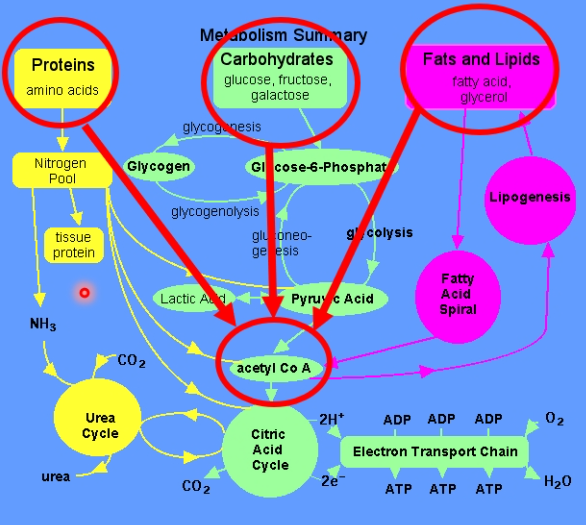
Summary of metabolism
We kind always want to end up with acetyl CoA
What are the 3 main phases of cellular respiration
• Glycolysis • TCA Cycle (Kreb’s) • ETC (electron transport chain)
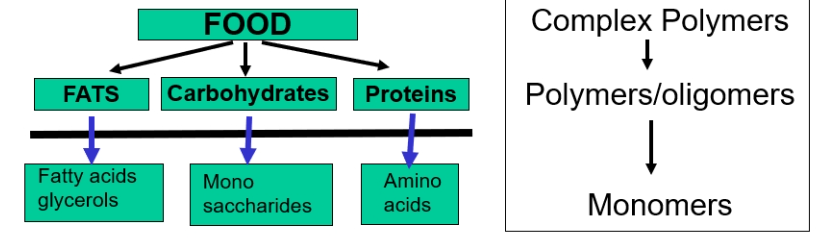
3 pathways of what molecules our food turns into when we eat it
What is the fed state
• 0-4 hours • Lipids, glucose, amino acids enter gut • Lipids pass into LIVER, liver packages up triglycerides in adipose tissue, stores fats but some transferred to muscle • Glucose delivered everywhere, primarily to brain • Amino acids to muscle for fuel source
What is glycogen
• Stores glucose • Highly branched glucose polymer • 1,4 alpha and 1,6 alpha glycosidic bonds • Stored as GRANULES in cytosol of cells • Lots of them in liver (storage) • Lots in muscle (only for local use, exercise, fasting) • Broken down by glucagon / insulin in phosphorylation cascades
What is the fasting state
• 4-12 hours • Adipose tissue releases fatty acids back into circulation for fuel • Liver, glycogen is broken down into glucose for BRAIN • If muscle needs it, local glycogen stores broken down to glucose
What is the starved state
• 12/20 hours onwards • Adipose fatty acid release accelerated, sent to liver to release energy. • Glucose released from liver via gluconeogenesis, liver also releases ketones (desperate) as energy source, ALL TO BRAIN • Muscle generates lactate, also uses amino acids as energy source in dire times
How many ATP molecules per glucose
28-32 Main energy source for body
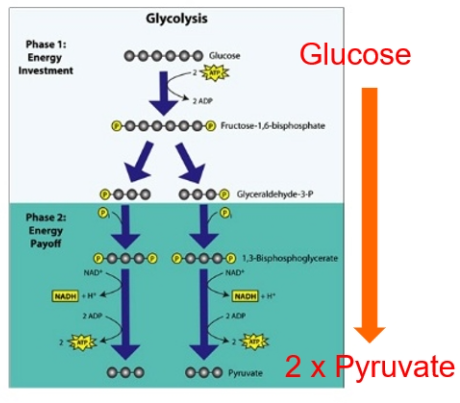
What is glycolysis
• Glucose, 6C sugar, split into 2 3C pyruvate molecules • net 2 ATP produced • net 2 NADH produced • Pyruvate mostly (when aerobic respiration) enters TCA cycle after
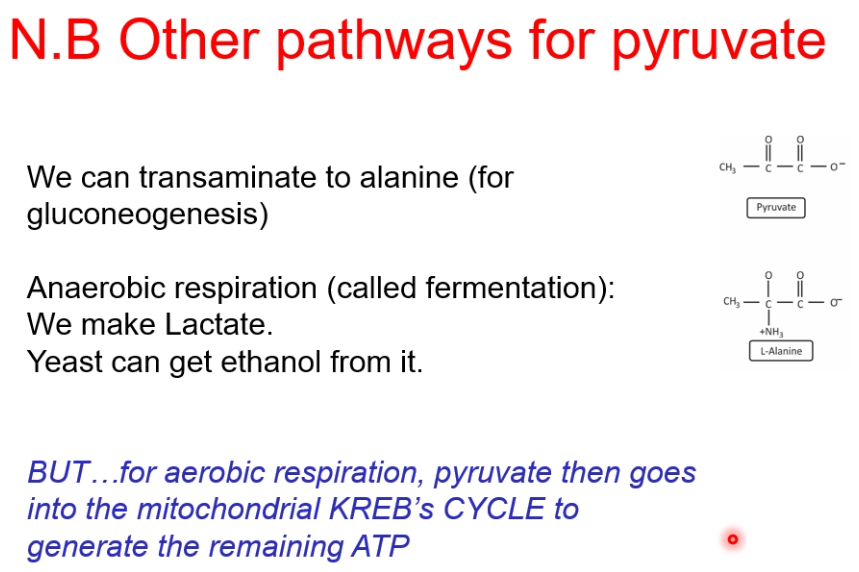
Other pathways for pyruvate
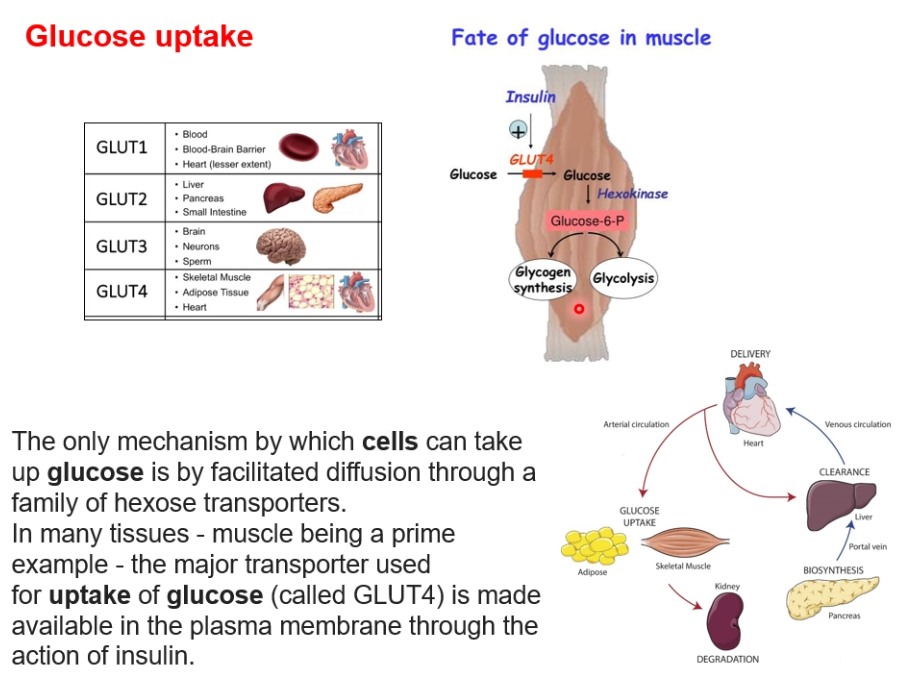
How is glucose uptaken in different parts of body
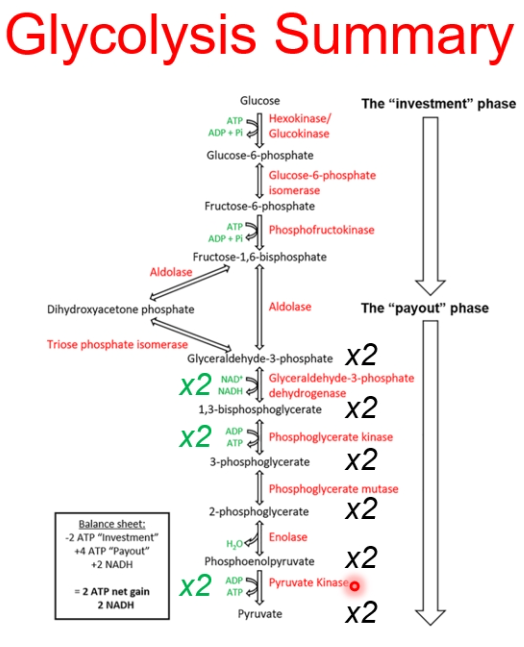
Glycolysis in depth summary
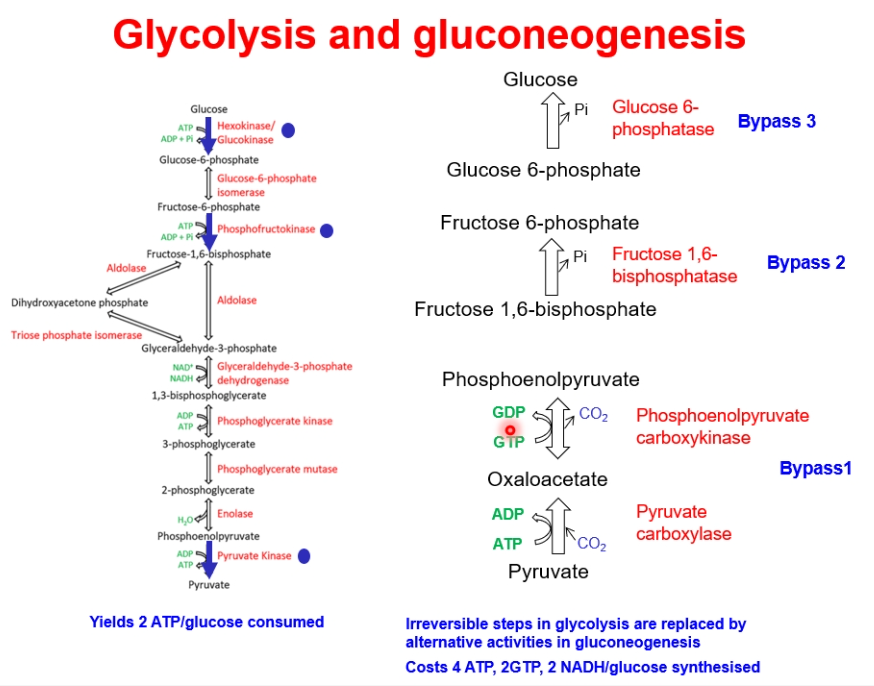
Note the arrow heads, some reactions are reversible, important in diseases or if we want to reverse reactions and create glucose
facts
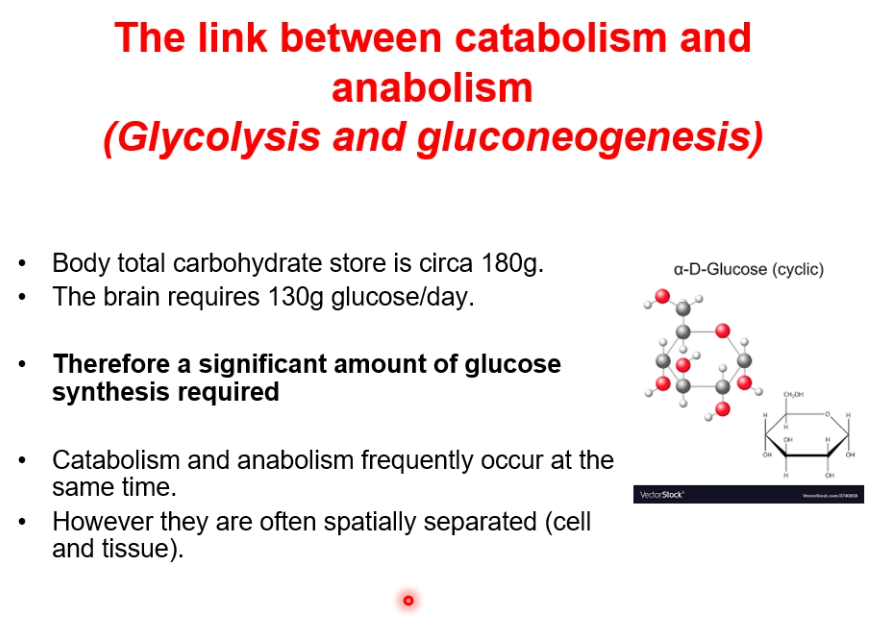
Glycolysis and gluconeogenesis
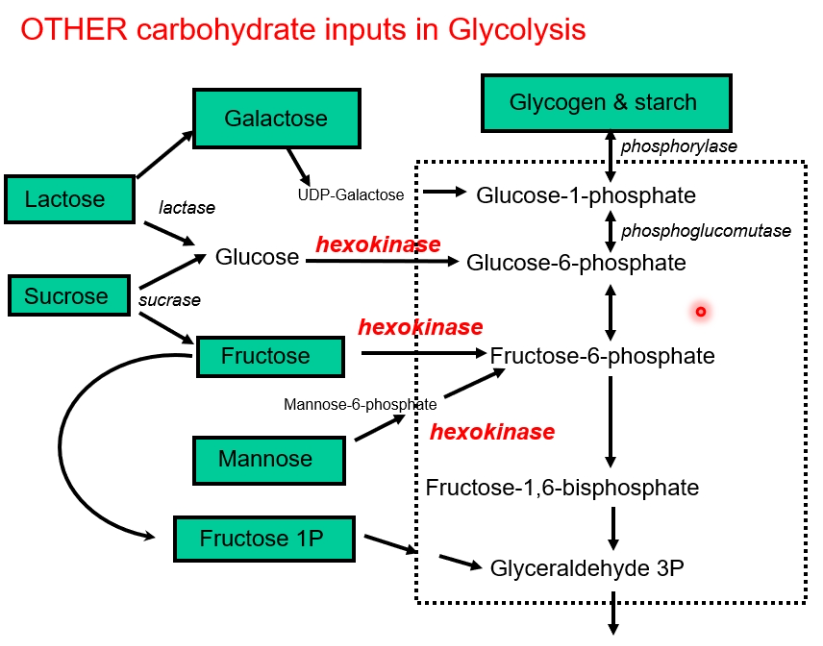
Where do other carbs go in glycolysis
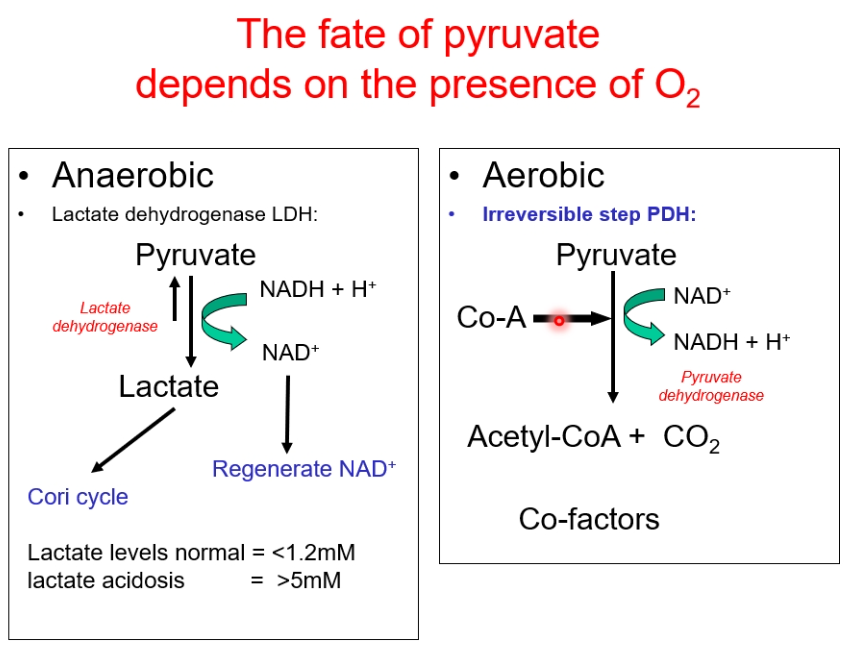
What is the fate of pyruvate
Depends on presence of O2. Cori cycle involves lactate, paying off o2 debt.