14&15 - PERICYCLIC REACTIONS
No description yet. This curated deck is ready for daily study.
Card preview (24)
how do lewis acids affect normal electron demand diels-alder?
accelerate those reactions improve the regioselectivity as well also works with protic acids, if they protonate something and make it a stronger EWG, this can make the reaction go faster lewis acids can block one face or the other to give regioselectivity
what is a normal electron demand cycloaddition?
add an EWG to the dienophile add an EDG to the diene this will make the reaction go faster
what is inverse electron demand diels alder?
when EDG on dienophile and EWG on diene, the HOMO and LUMO are not as close
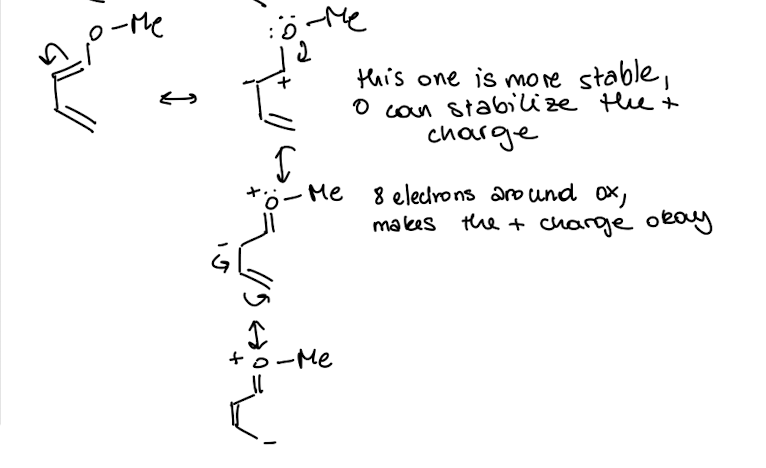
in which cases is positive charge on oxygen okay?
when there are 8 electrons around the oxygen but it’s still a positive charge makes the positive charge okay
how to figure out the regiochemistry of diers-alder? and an example?
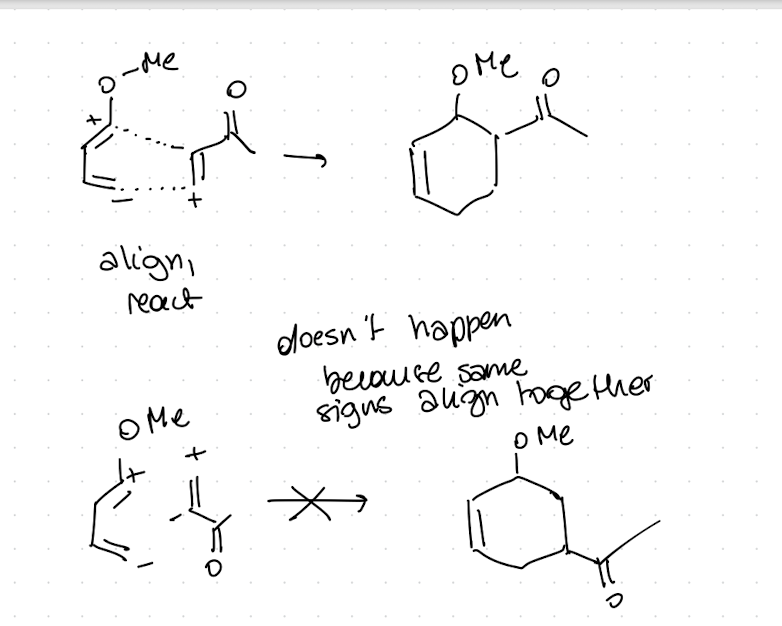
figure out which is the most E+ and most nu position and then bring those two together you can figure out those positions by drawing resonance structures
how can the alder endo rule be explained?
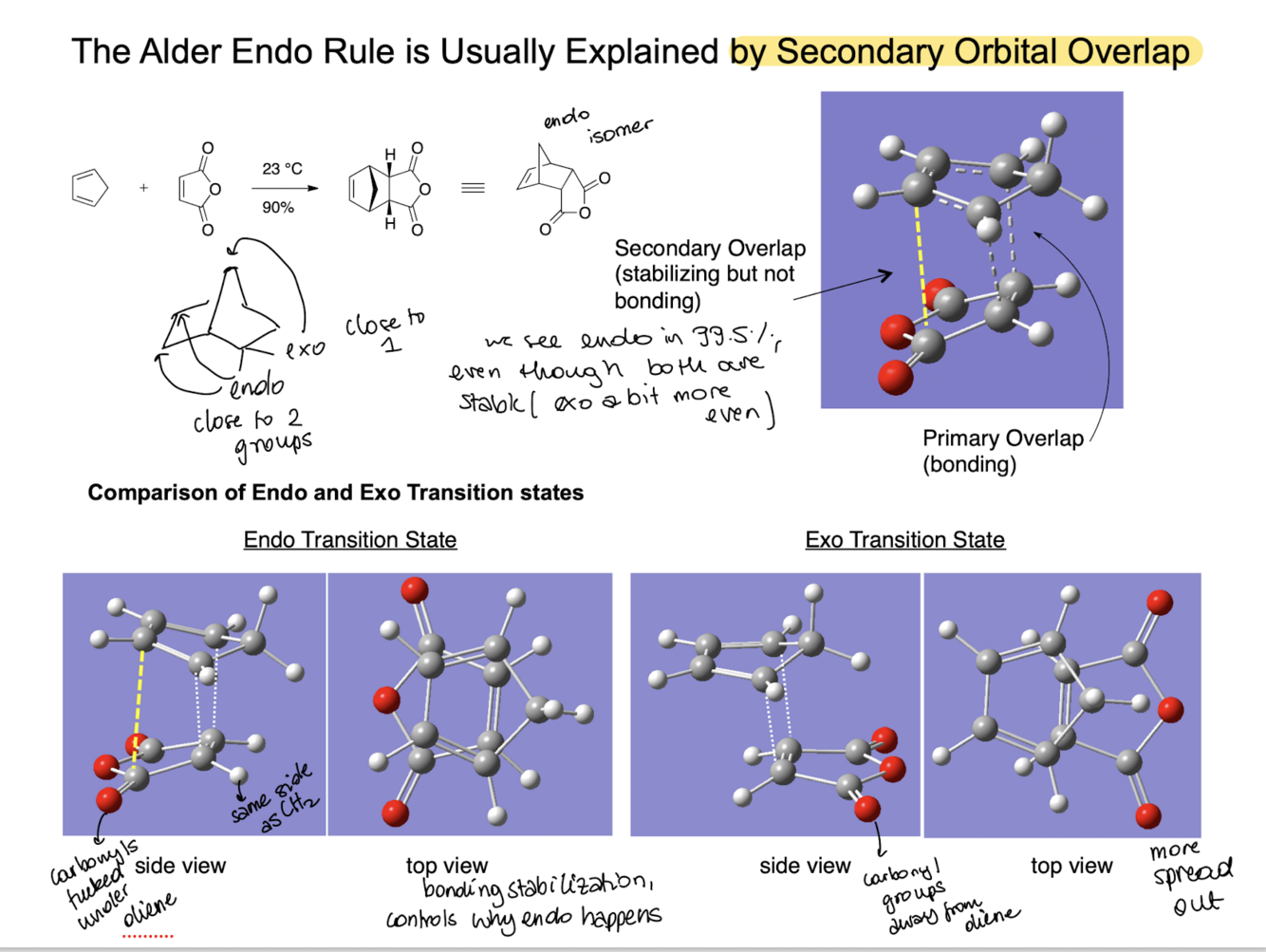
can be explained by secondary orbital overlap: stabilizing but not bonding in the endo transition state the carbonyl is tucked under the diene and it gives stabilisation endo group is close to two groups and exo group is close to one group
what influences the position of the equilibrium in thermal vs photochemical reactions?
thermal reactions: position of equilibrium is determined by starting material and product stability photochemical reactions: wavelength of light can be used to influence position of the reaction (it may not be at equilibrium) thermal and photochemical reactions happen but don’t happen in the same way
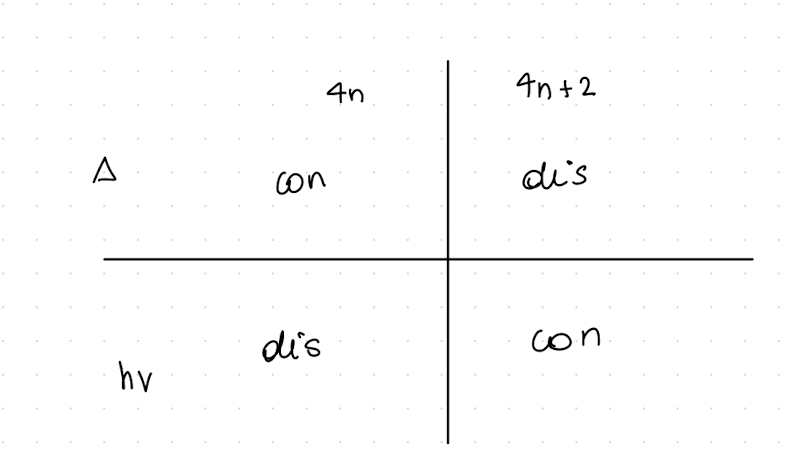
table of conrotatory vs disrotatory for 4n+2 and 4n at thermal and photochemical conditions
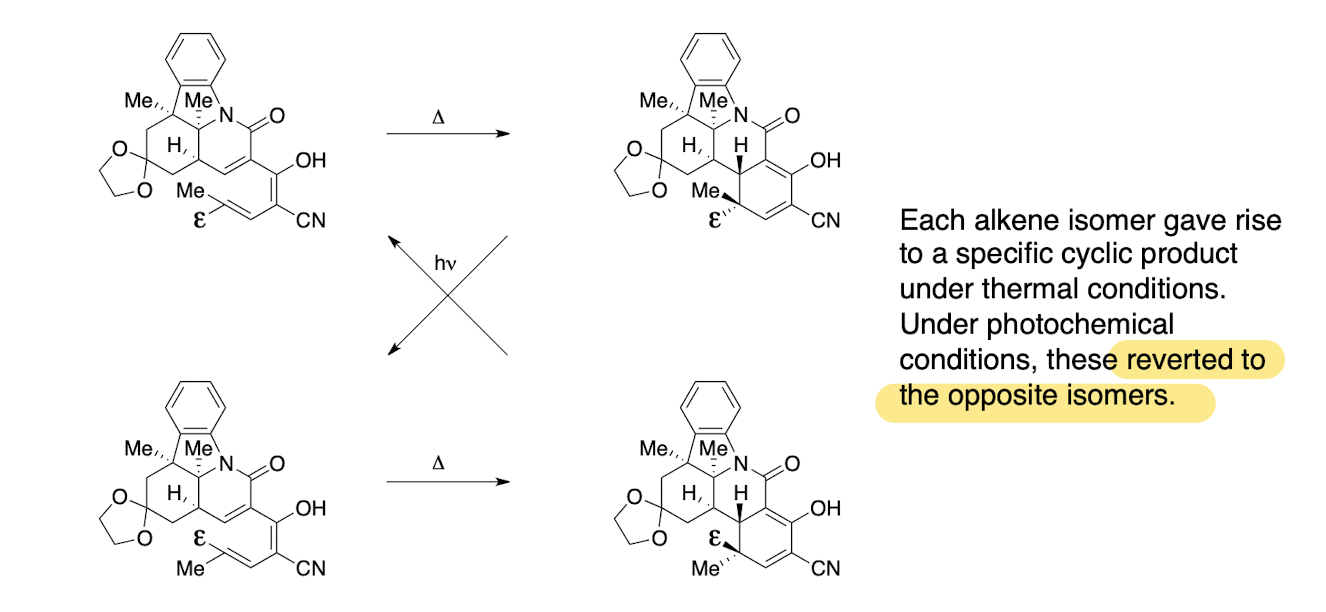
what were woodward’s observations of the synthesis of vitamin B12?
each alkene isomer gave rise to a specific cyclic product under thermal conditions however, under photochemical conditions it reverted to the opposite isomer!
what does stereoselectivity of electrocyclic ring closure/opening depend on?
depends on the number of electrons and whether the reaction is induced thermally or photochemically photochemical has same mechanism forward and backwards but thermal does not
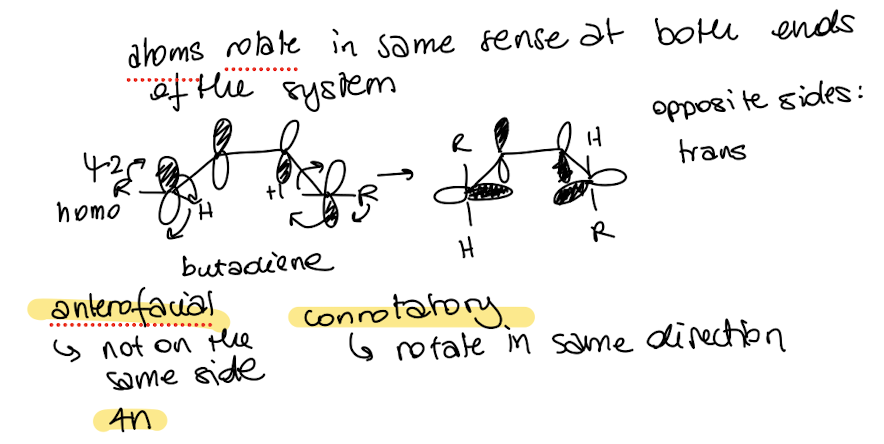
how does rotation determine whether cis or trans? example with butadiene
this ring closing is a 4n reaction: antarafacial since you lose pi bond character, the bonds can rotate they rotate in the same sense= conrotatory the R groups end up trans
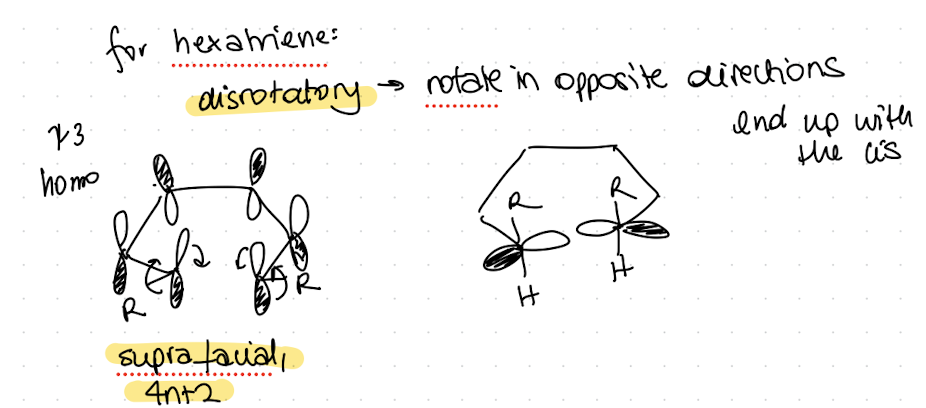
example of ring closing of hexatriene?
distrotatory 4n+2, suprafacial the center bond has to be cis so that the alkenes are close enough to interact
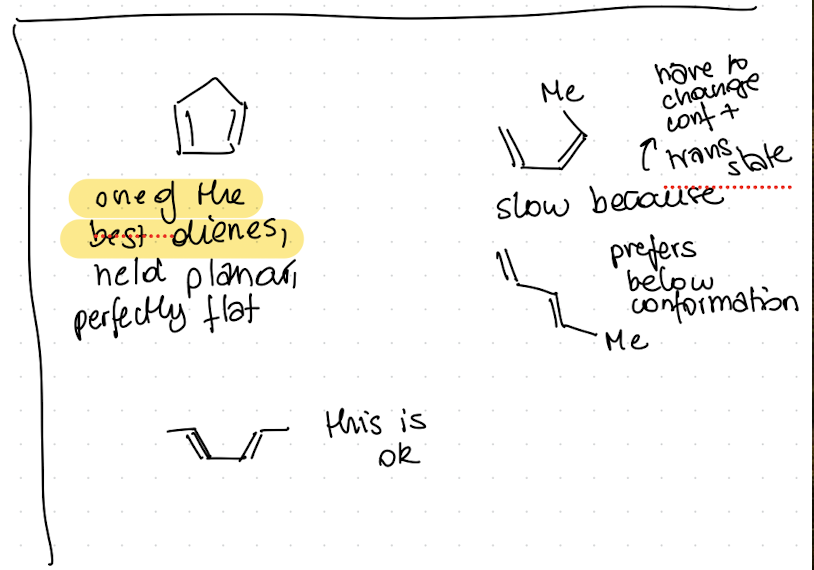
why is cyclopentene one of the best and how does it form?
why are thermal 4n con and why are thermal 4n+2 dis?
4n+2 are suprafacial 4n are antarafacial
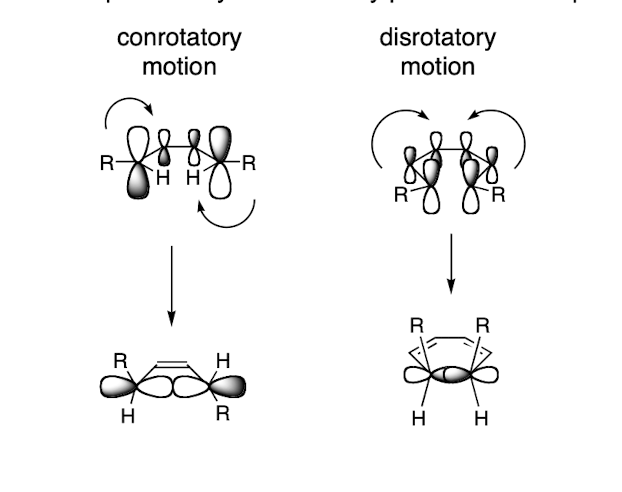
what are the rotations for 4n and 4n+2 under photochemical conditions?
antarafacial for 4n+2, conrotatory suprafacial for 4n, disrotatory as you shine light, the HOMO switches to a LUMO, so you have one more node and you change it
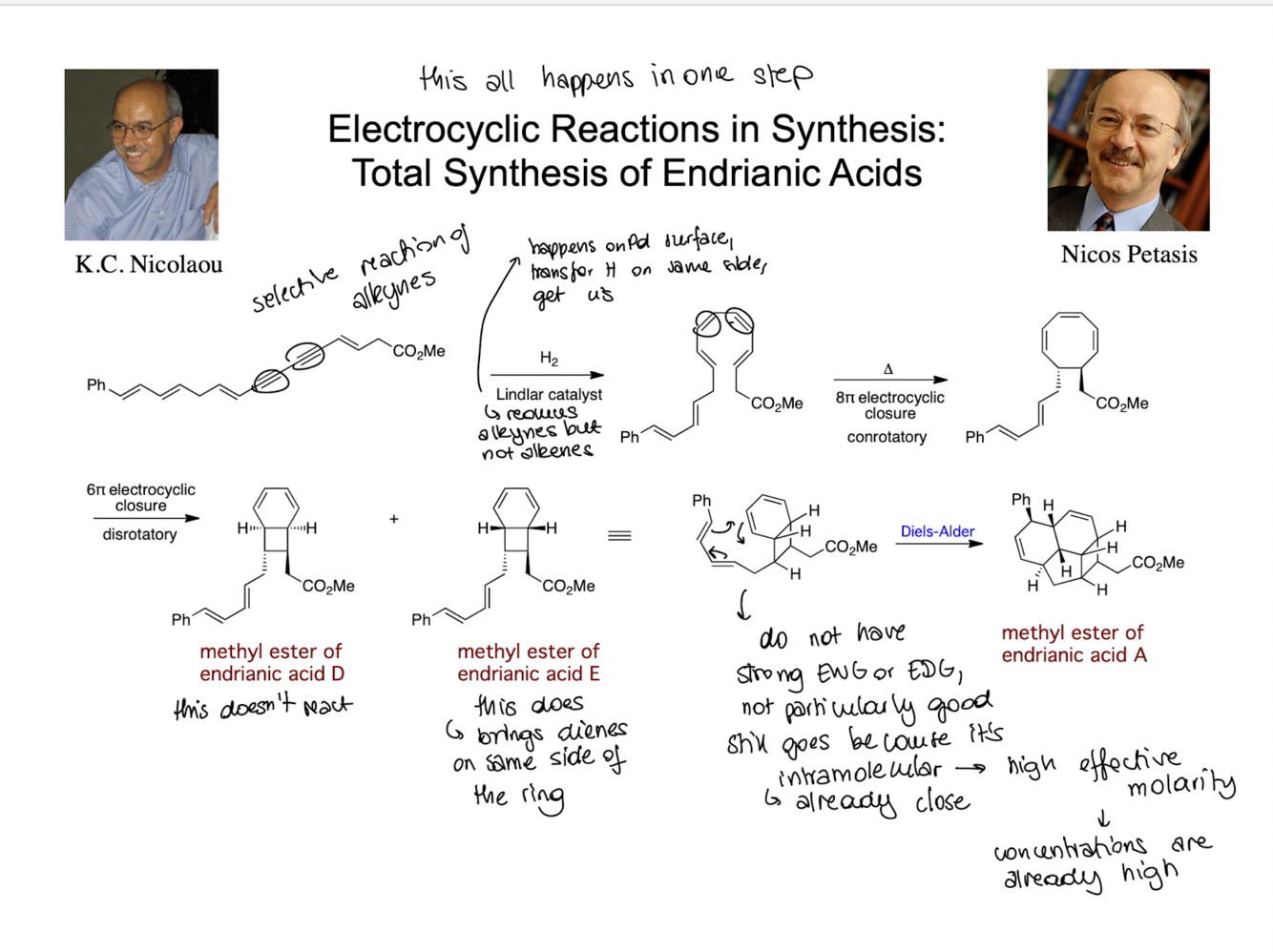
what does lindlar’s catalyst do?
reduces alkynes but not alkenes happens on a Pd surface, which mean you transfer the hydrogen on the same side and you get a cis bond
how does the synthesis of endrianic acid happen?
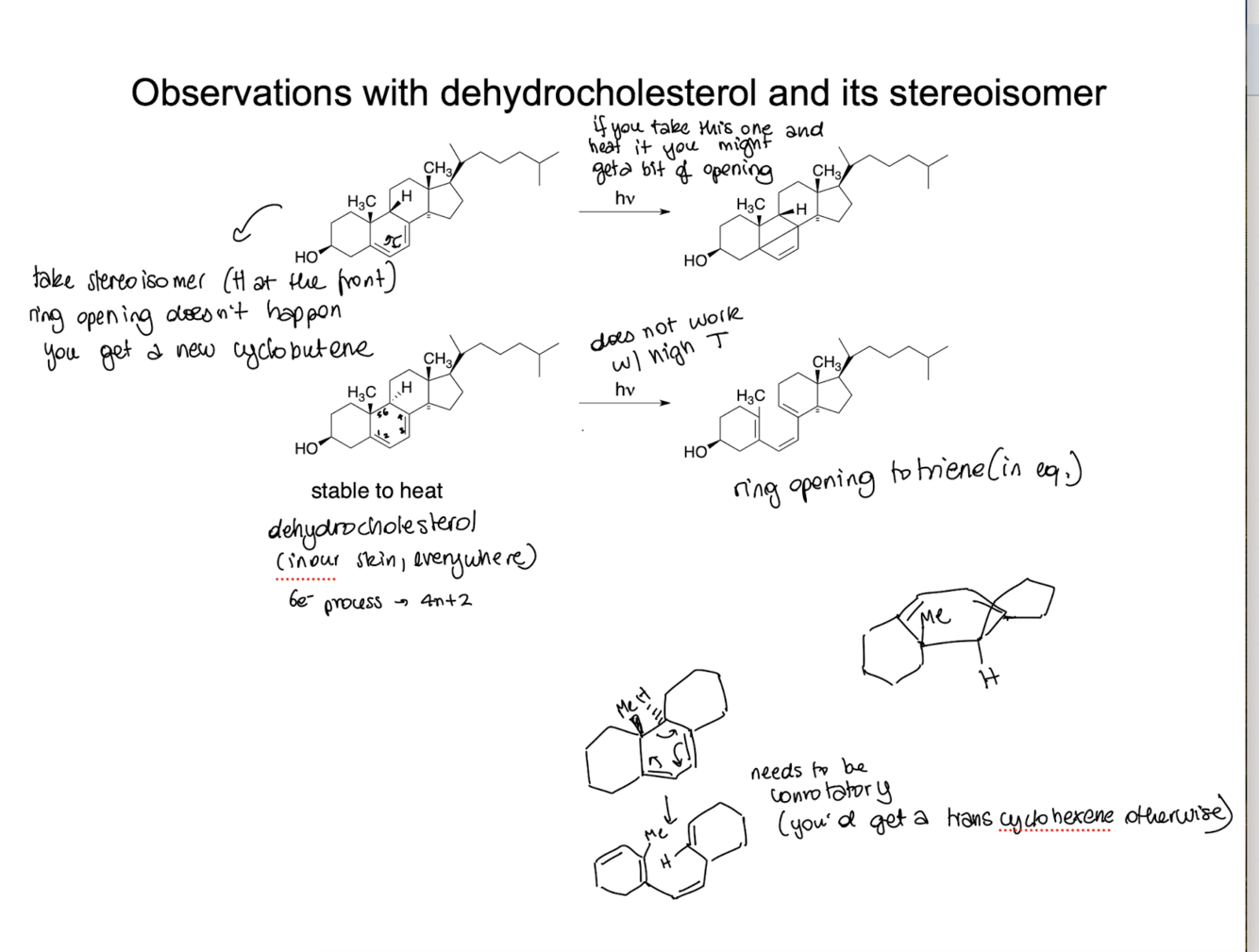
what are the observations made about cholesterol and its stereoisomer?
what is a sigmatropic shift?
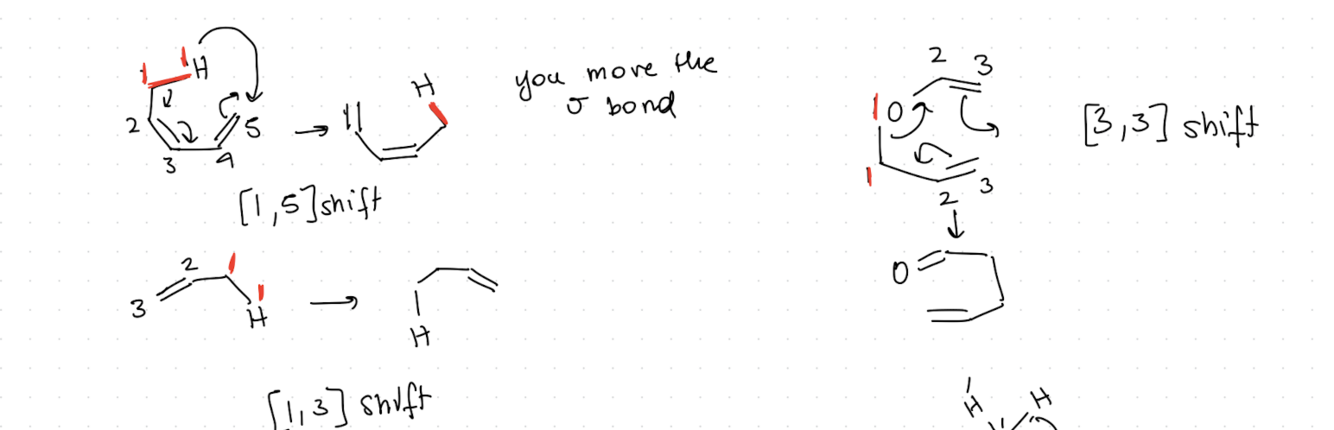
the shift of an atom or group of atoms across a pi system labelled in the form [m,n] shift where m=atoms shifting across an n atom pi system (n is almost always odd)
what are the most common shifts?
[1,7] (4n) and [1,5] (4n+2) are very common [3,3] and [2,3] are also very common concerted [1,3] shift of hydrogen never occurs some [5,5] shifts have been observed
how to figure out the nomenclature of the shifting?
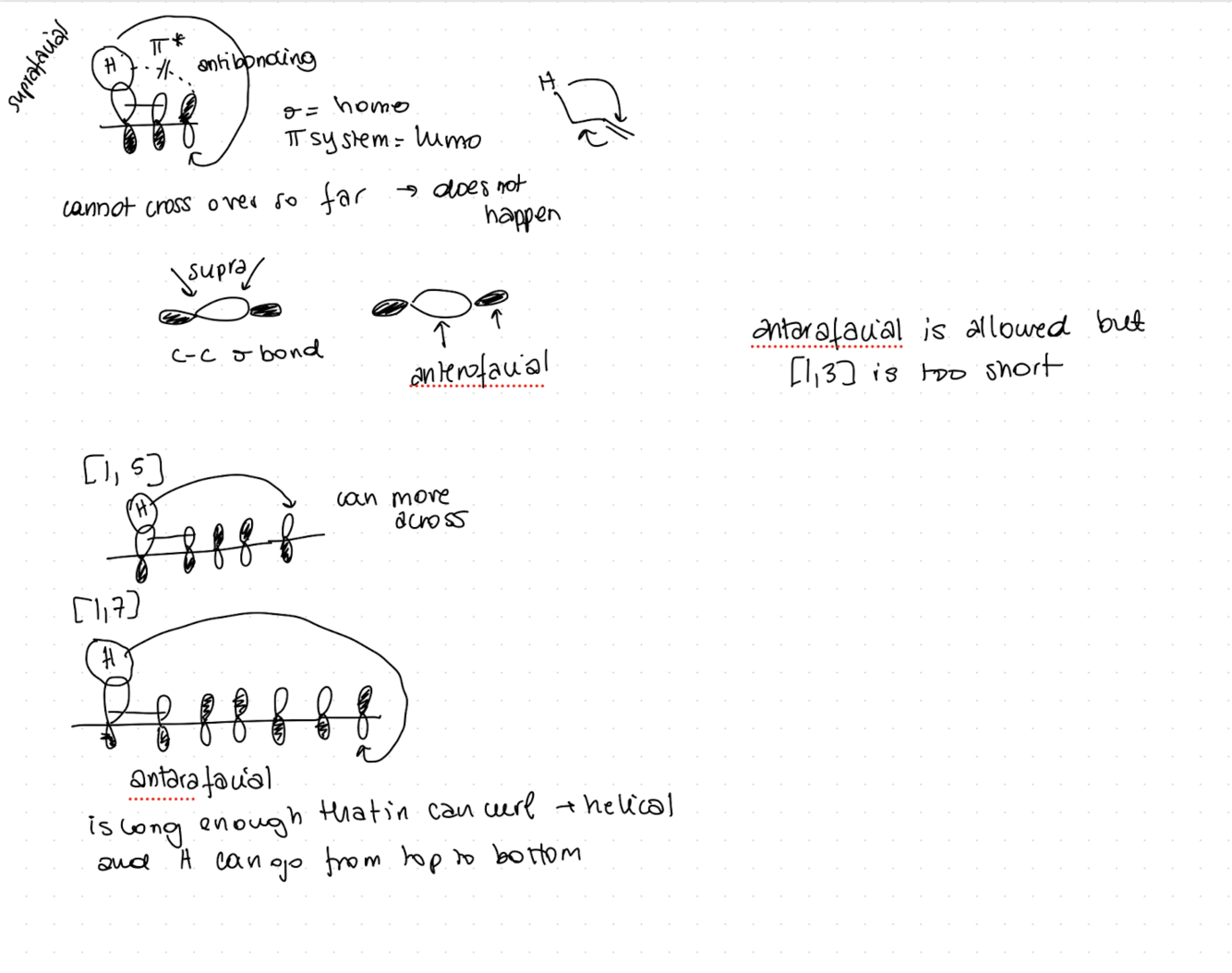
why is [1,3] antarafacial not allowed but [1,5] and [1,7] works?
when you do [1,5] since its suprafacial, the stereochemistry of the bond that moves is the same for [1,7], since its antarafacial, the stereochemistry changes, there’s a switch
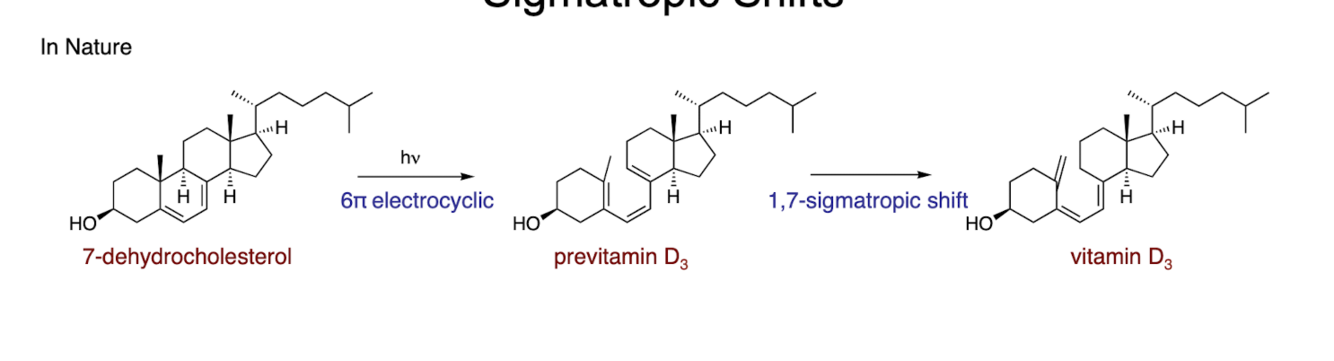
what is a sigmatropic shift that happens in nature?
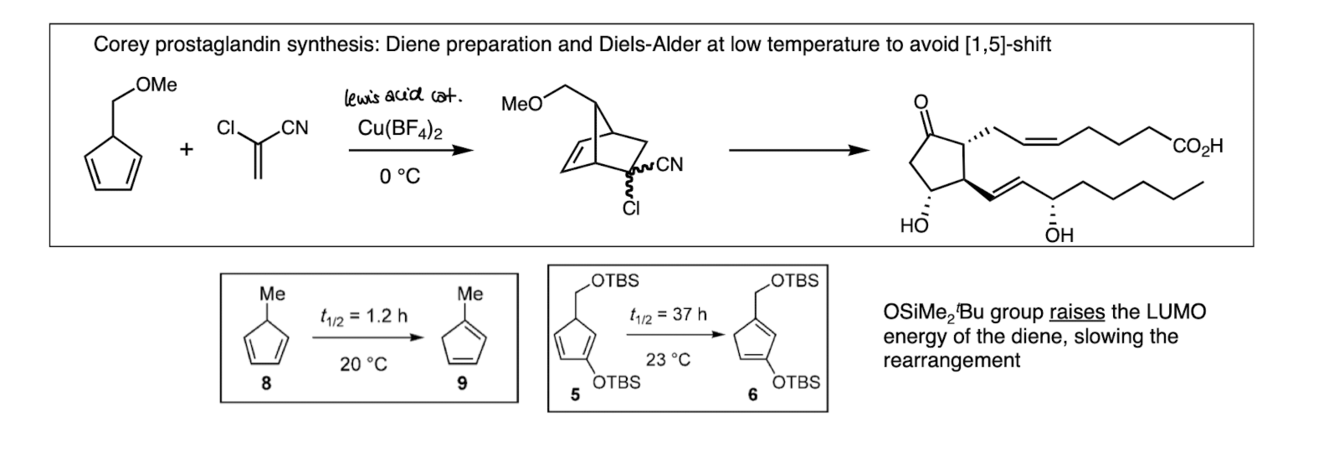
how do you combat a problematic 1,5 shift in corey synthesis of prostaglandin?