5.1 Exothermic and Endothermic Reactions
No description yet. This curated deck is ready for daily study.
Card preview (11)
What happens to energy during chemical reactions?
Energy is convserved Energy only changes form, it is never created or destroyed
What is an exothermic reaction?
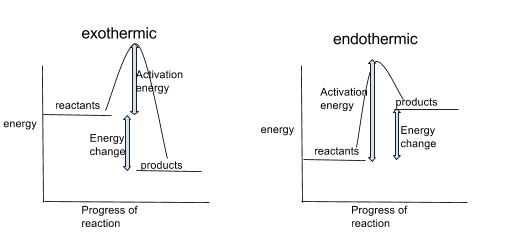
Reaction that transfers energy to the surroundings So the surroundings have an increase in temperature because energy is transferred from the reaction to the surroundings So product molecules have less energy than reactants
What are some examples of exothermic reactions?
Combustion (burning) Oxidisation reactions Neutralisation reactions
What are endothermic reactions?
Rection that takes energy in from the surroundings So the surroundings have a temperature decrease as the reaction takes in the energy So product molecules have more energy than reactants
When can chemical reactions occur?
Only when reacting particles collide with each other with sufficient energy
What is activation energy?
Minimum amount of energy that particles must have to react
What are used to show the relative energies of a reaction?
Reaction profiles
Label the reaction profiles
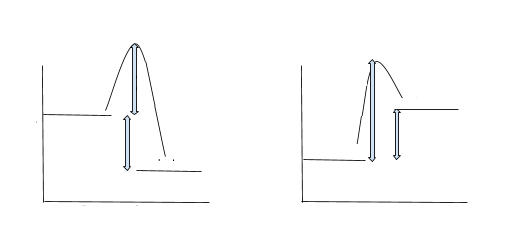
Exothermic- heat released to surroundings so products have less energy than reactants Endothermic- heat taken in from surroundings, so products have more energy than reactants
During a chemical reaction what must happen for the reaction to take place?
Energy must be supplied to break bonds in reactants Energy is released when bonds in products are formed
How is energy needed to break bonds and energy release from bonds formed calculated?
Sum of energy to break bonds - sum of energy released to form bonds = Overall energy change
What calculation values show endothermic and exothermic reactions?
Negative energy change = exothermic Energy taken in to break bonds < energy released when bonds formed Positive energy change= endothermic Energy taken in to break bonds > energy released when bonds are formed