Conformations of Acyclic systems
No description yet. This curated deck is ready for daily study.
Card preview (20)
What is ring strain energy?
• The ‘extra’ energy a molecule has by virtue of being constrained to a ring • Determined from heats of combustion
How many carbons are there in small rings
Between 3-4 carbons

How many carbons are there in normal sized rings
between 5-7 carbons

What happens to the ring strain energy as the ring gets bigger?
(apart from normal rings) the smaller the ring the larger the ring strain energy
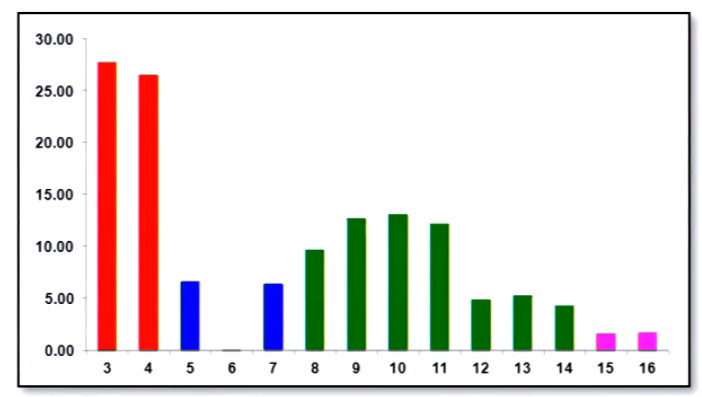
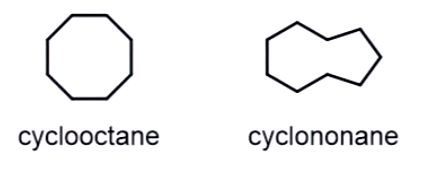
How many carbons are in medium sized rings
8-14
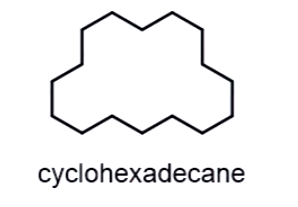
How many carbons are in large rings?
> 14
What are the 4 contributions to conformational energy in acyclic compounds?
• Sterics (repulsion between substituents) • Pitzer strain (repulsion between electrons in filled orbitals - favours staggered) • Hyperconjugation (σ-σ’ overlap stabilises staggered) • Hydrogen bonding
The conformation energier of saturated rings are determined by all the factors which affect acyclic systems and….
• Baeyer Strain • Transannual Strain
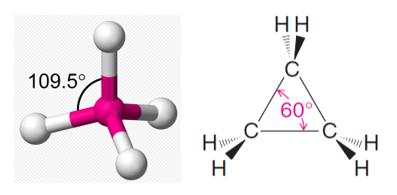
What is Baeyer Strain?
Atoms are distorted from their ideal bond angles in order to form a ring (required energy to distort) (e.g. from a 109.5° to 60°)
What is Transannular strain?
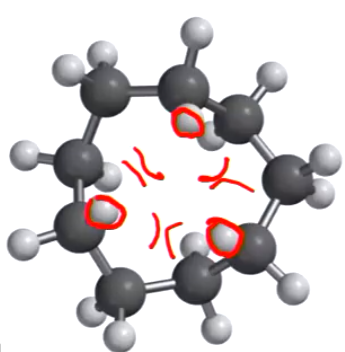
• Subsituents pointing at each other across the ring, leading to additional steric strain • Effects medium rings only (8-14 C) • e.g the 3 groups (in red) are pushed towards the centre of the molecule resulting in higher energy)
In general, rings will adopt the lowest energy (most stable) conformation possible by…
…minimising Baeyer (angle) and Pitzer (torsional) strain)
How does a compound facilitate the move from a 109.5° bond angle to a 60° bond angle in a cyclic compound?
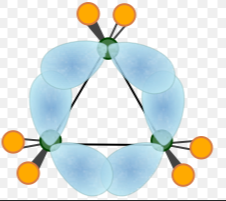
• Results in these round ‘banna bonds’ due to distortion • To allow this the carbon atoms rehybridize, forming sp›³ (more p character) • Results in overall weaker bonds
Why is the Pitzer strain so high in cyclopropane?
• All of the C-atoms are in one plane • all C-C bonds are eclipsed • Hence resulting in high Pitzer strain
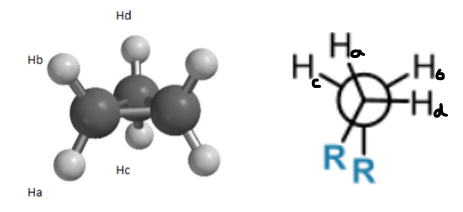
Cyclobutane rings puckers to reduce their overall energy (folding of the ring shown in the image) What does this does to the Baeyer strain?
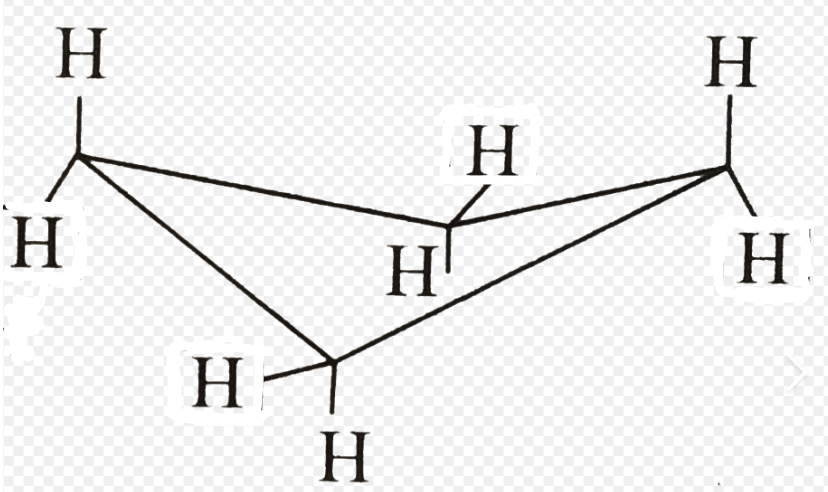
• Puckering decreases the bond angles • Hence increased Baeyer strain
How will cyclopentane pucker to adopt the lowest energy conformation?
• Envelope conformation • Some Pitzer strain • Some Baeyer strain
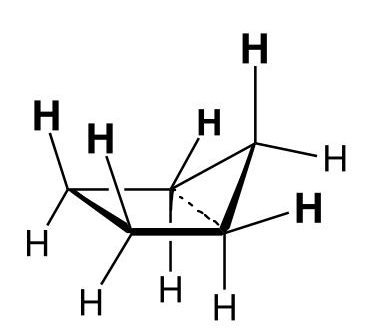
Cyclobutane ring puckers to reduce their overall energy What affect does this have on Pitzer strain
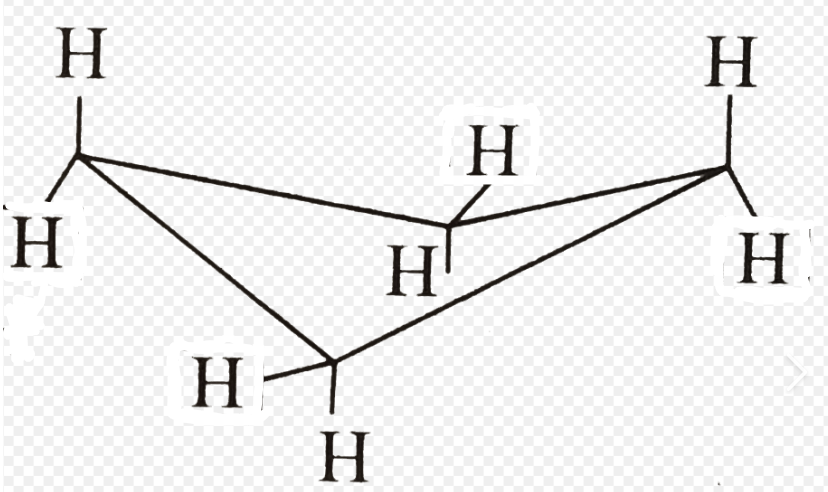
• No bonds are fully eclipsed • Reduced (but still high) Pitzer energy
How will cyclohexane pucker to adopt the lowest energy conformation?
• Chair conformation • All bonds are staggered • Essentially strain free
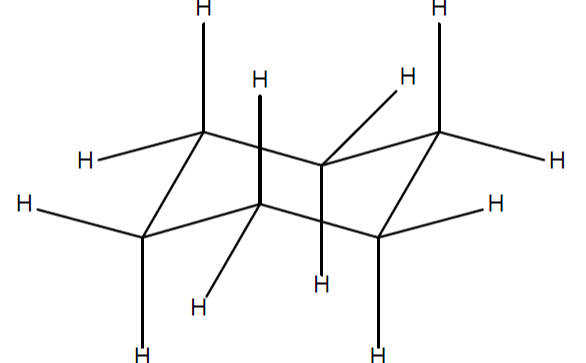
Cyclohexane adopts a chair conformation to minisize Baeyer strain and Pitzer strain What other conformers can it form however?
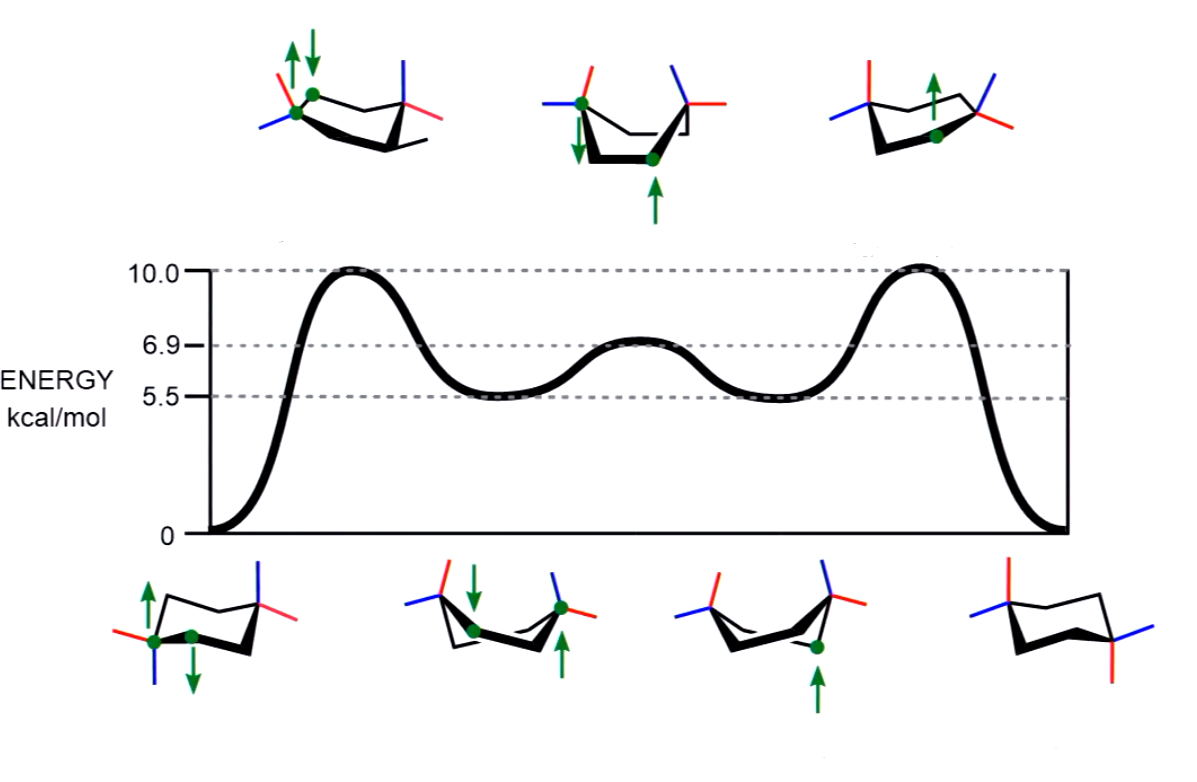
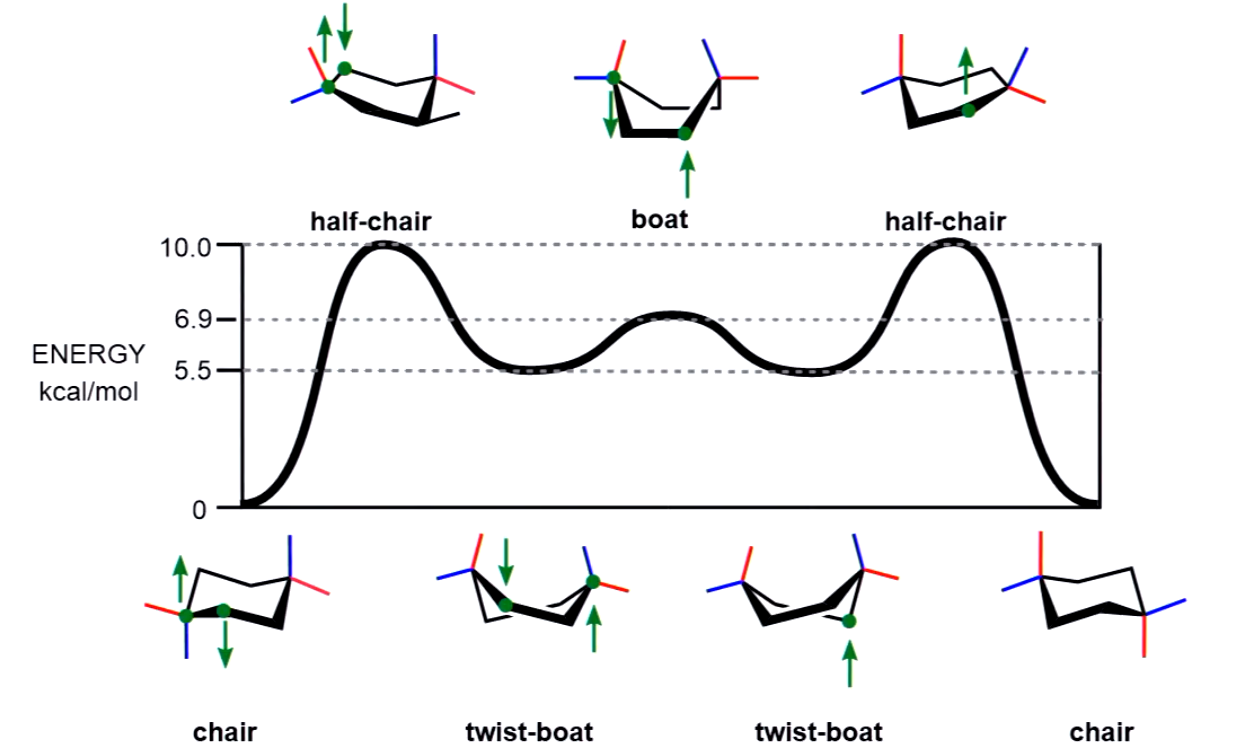
Substituted cyclohexanes generally favour the chair conformation that puts the largest group in…
Equatorial in order to minimise 1,3-diaxial interactions
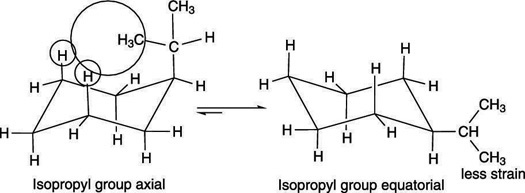
What is an A-value?
• The Energy difference between the lowest energy conformation and the highest energy conformation • The higher A, the bigger the substituent
