Organometallic Nomenclature
No description yet. This curated deck is ready for daily study.
Card preview (24)
fill in the blanks
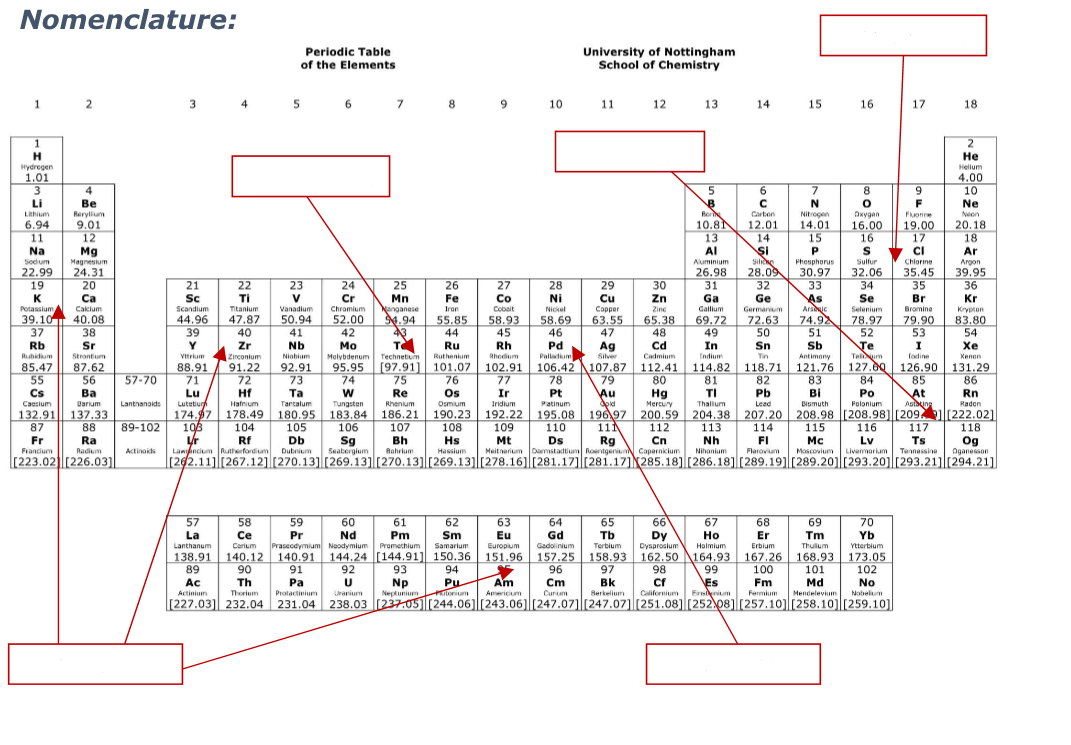
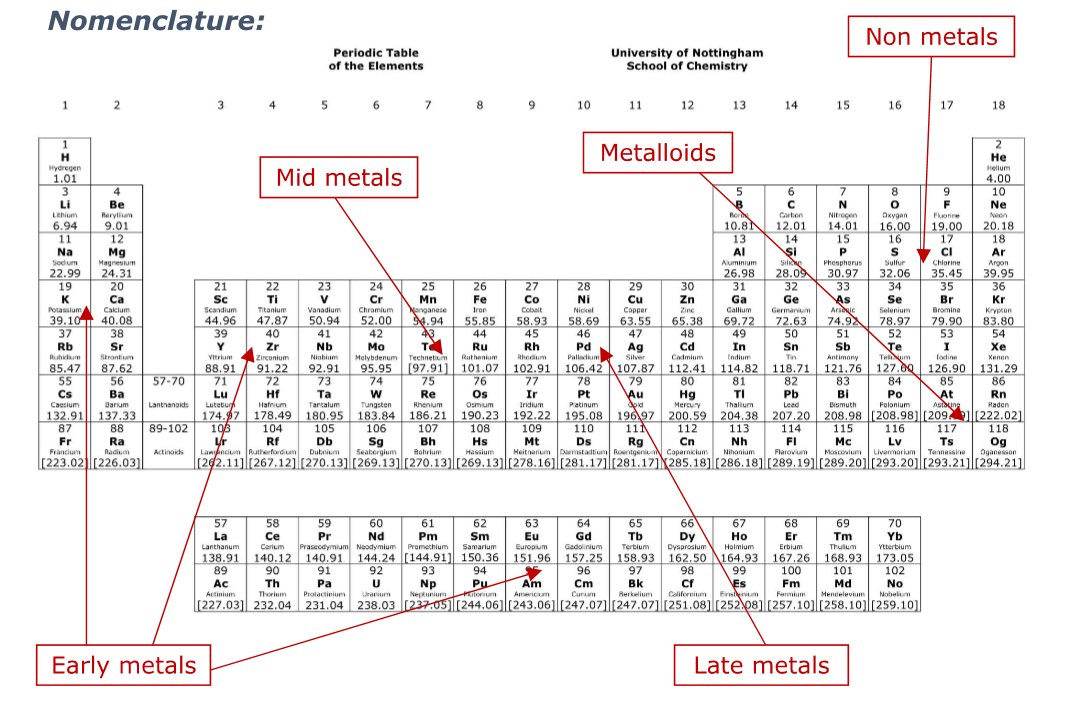
Describe the following bond
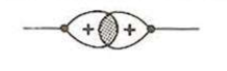
• σ bond • no nodal planes
Describe the following bond
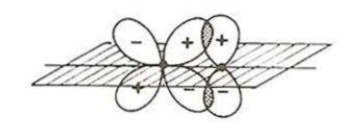
• π bond • one nodal plane
Describe the following bond
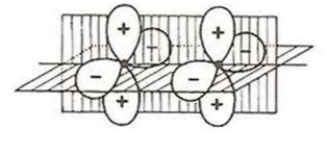
• δ bond • two nodal planes • due to the overlap of the 4 lobs of the d-orbitals
What does ηⁿ stand for (eta)?
• Some (unsaturated) ligands can bind through more than one carbon atom (ⁿ)
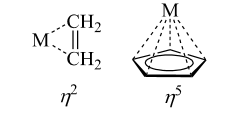
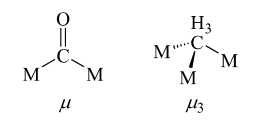
What does μₙ mean (mu)?
• Some ligands may bridge more than one metal centre (ₙ)
What are the 4 main types of organometallic complexes
• Ionic (charge separated) • Electron deficient • σ-bonding only • π bonding
What is an Ionic (charge seperated) complex?
Only with the most electropositive early elements Highly reactive and unstable More stable if R can be stabilised by delocalisation or steric bulk
What is an Electron deficient complex?
Insufficient electrons to fill valence orbitals and form 2-centre-2-electron bonds between all atoms Results in multi-centre bonding between R and two or more metal centres
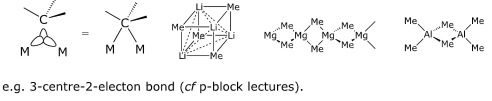
Describe σ-bonding only complexes
Occurs with closed-shell transitional metal and main group centres, often leading to volatile compounds
Describe π-bonding complexes
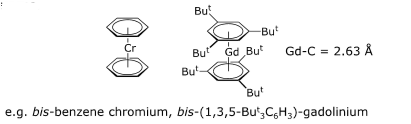
• This is the interaction of π and π’ orbitals of organic ligands with metal-based orbitals • This is especially prevalent with transition metals and zero-valent lanthanides
How do you work out the formal oxidation state
= charges on complex - sum of formal ligand charges
How do you work out the dⁿ electron count
dⁿ = metal group number - oxidation state
Which ligands have a -1 formal charge
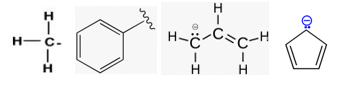
• Alkyl • aryl • H • η¹-allyl • η¹-cyclopentadienyl (Cp) • halide • NO • OR • NR₂ (amide)
Which ligands have a 0 formal charge
• CO • N₂ • PR₃ • NR₃ • OR₂ • RNC • pyridine • CR₂ • Alkene • butadiene
What is Coordinate unsaturation?
• Compounds wwhich have less than 18-electron count are said to be ‘coordinately unsaturated’ and there may be a tendency to add further ligands • This is because there must be one or more vacant orbital(s) available - hence likely to be reactive and unstable *

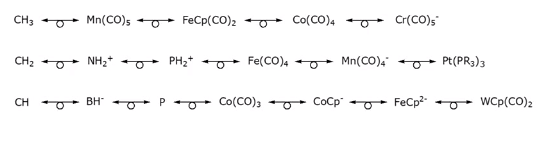
What is the Isolobal analogy?
• This relates two fragments (often an organometallic fragment to an organic fragment) • The two fragments are said to be isolobal if the: • Number, Symmetry Properties, Approximate Energy, and Shape (extent in space) of their frontier orbtials, as well as number of electrns occuping them, are similar
A consequence of the Isolobal Analogy is that if molecules are contructed from isolobal fragments, they themselves are isolobal Hence H₃-C-CH₃, (CO)₅Mn-CH₃, and (CO)₅Mn-Mn(CO)₅ are all isolobal to another because….
Mn(CO)₅ is isolobal to CH₃
What is an issue with the isolobal analogy?
The isolobal analogy does not say absolutely that a stable compound will result, it only rationalises that bonding may be feasible
What is the orbital arrangement for a ML₆ arrangement? (metal with 6 ligands)
sp₃d₂
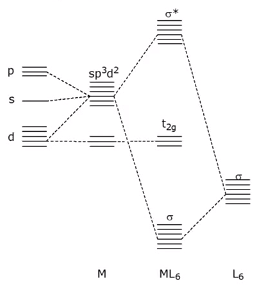
What is the orbital arrangement for a ML₅ arrangement?
sp₃d₂ but one of the hybrids is unused
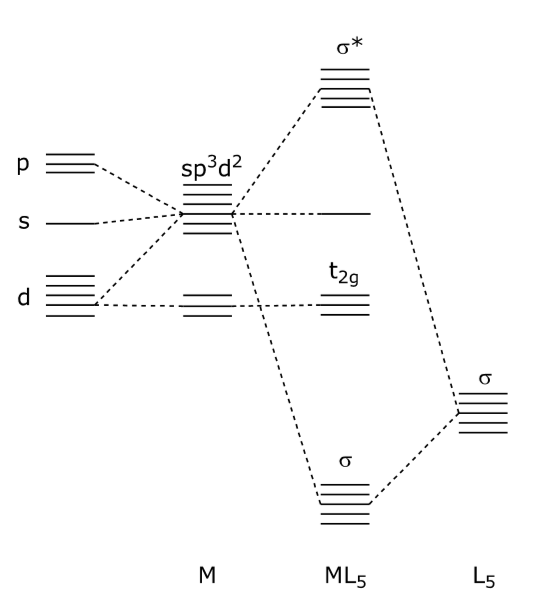
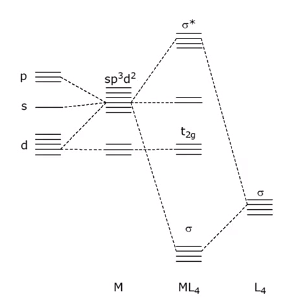
Going from ML₆, ML₅, ML₄ …. and so on What happens as a ligand is removed?
The corresponding frontier orbtial pointing towards the vacant site becomes non-bonding
What is the orbtial arrangement for the ML₄ arrangment?
sp₃d₂ but two of the hybrids are unused
What is the core idea of isolobal fragments?
In theory you can switch any isolobal fragments out and it will form the same structure