Chapter 4: Acids and Bases
No description yet. This curated deck is ready for daily study.
Card preview (24)
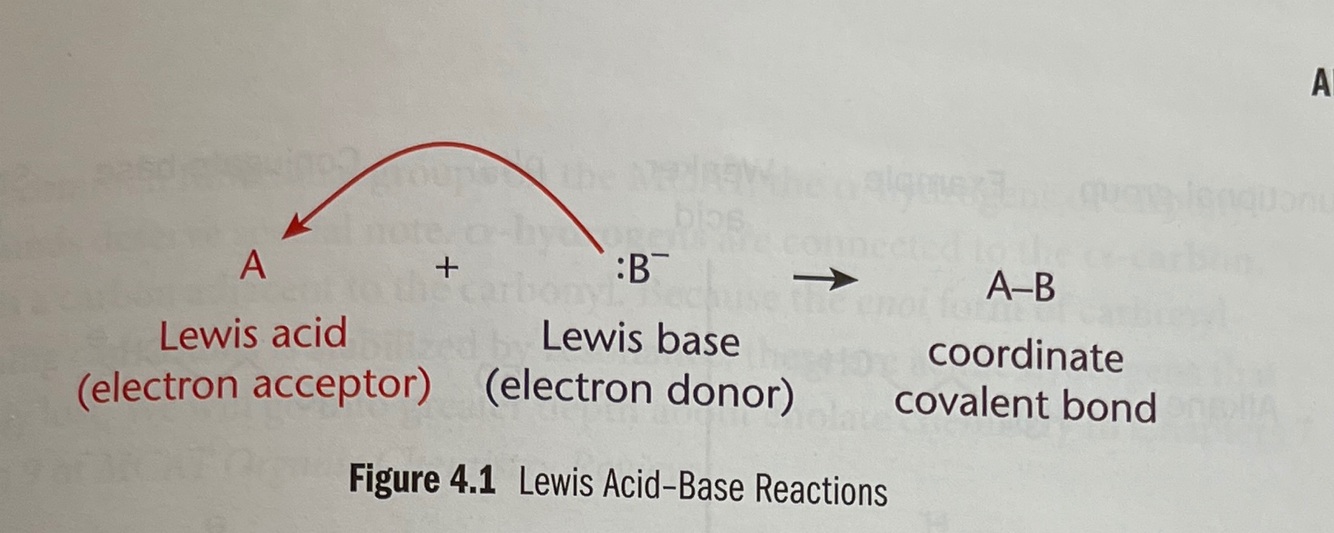
What is a Lewis acid? Lewis base?
Lewis acid is defined as an electronic acceptor in the formation of a covalent bond. Louis base is defined as an electron donor in the formation of a covalent bond.
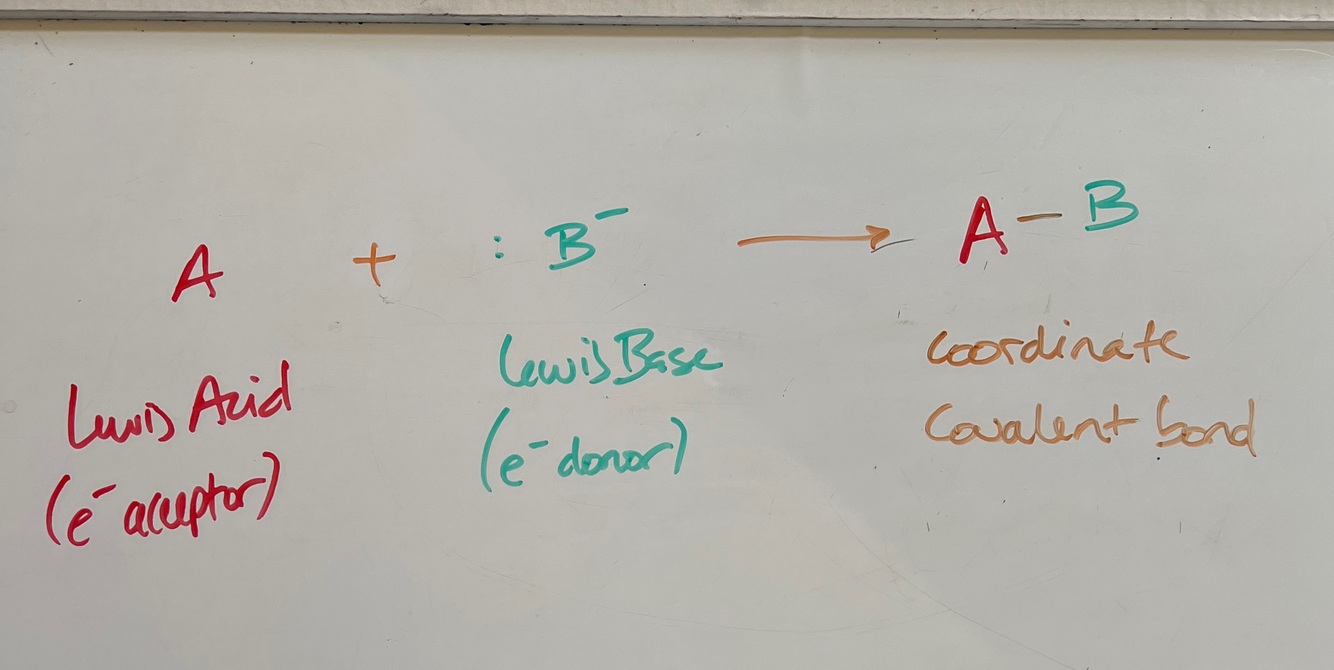
What is a coordinate covalent bond?
When Louis acids and bases interact, they form coordinate covalent bonds. Coordinate covalent bonds or covalent bonds in which both electrons in the bond came from the same starting atom (the Lewis base).
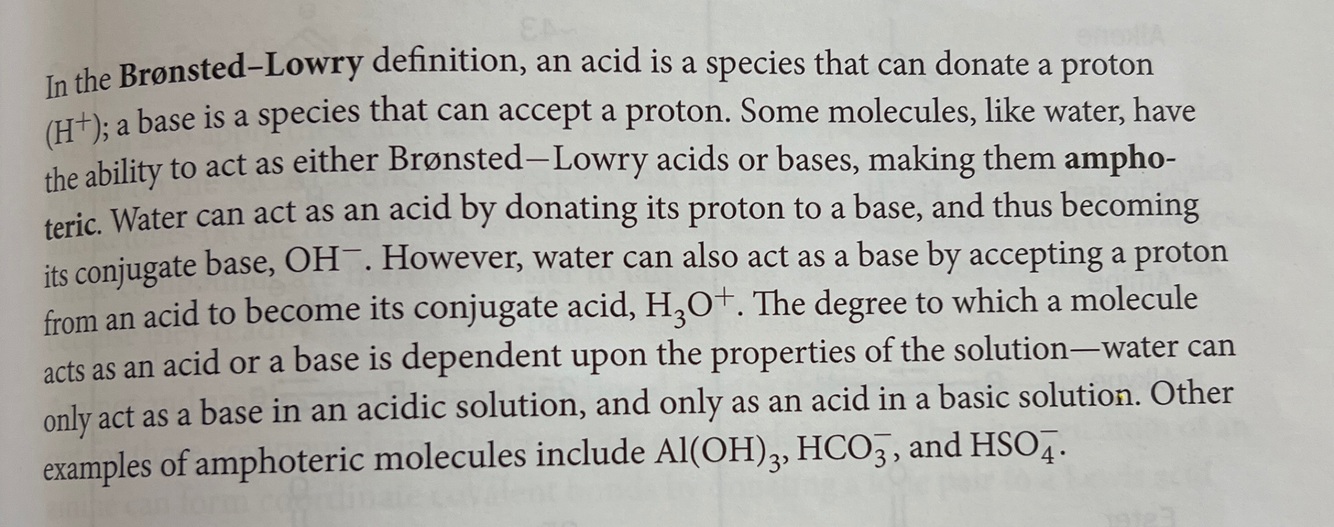
What is the Bronsted Lowry definition of an acid and a base? What’s the difference between a Lewis and BL acid/base?
A BL acid is a species that can donate a proton. A Bl base is a species that can accept a proton.
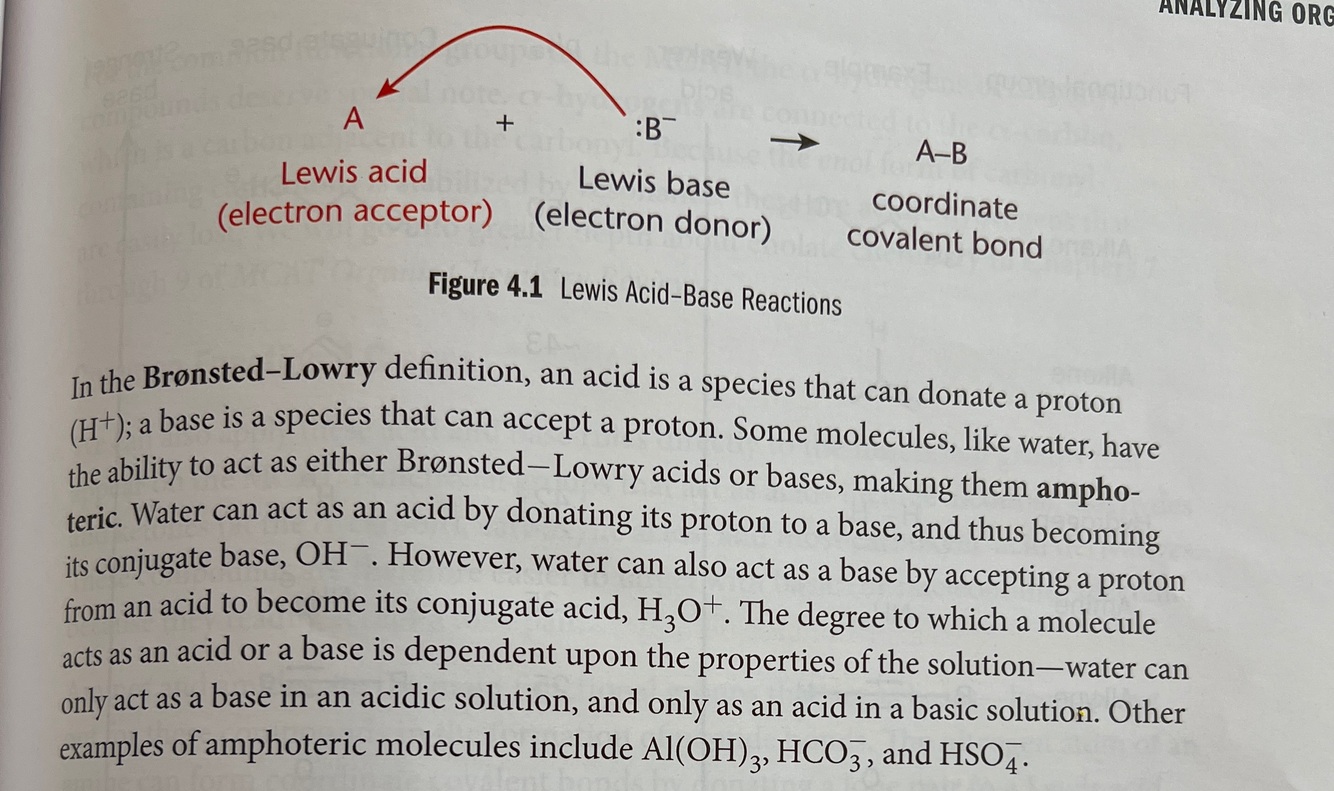
What is an amphoteric species? Give examples.
An amphoteric species have the ability to act as either BL acids or bases.
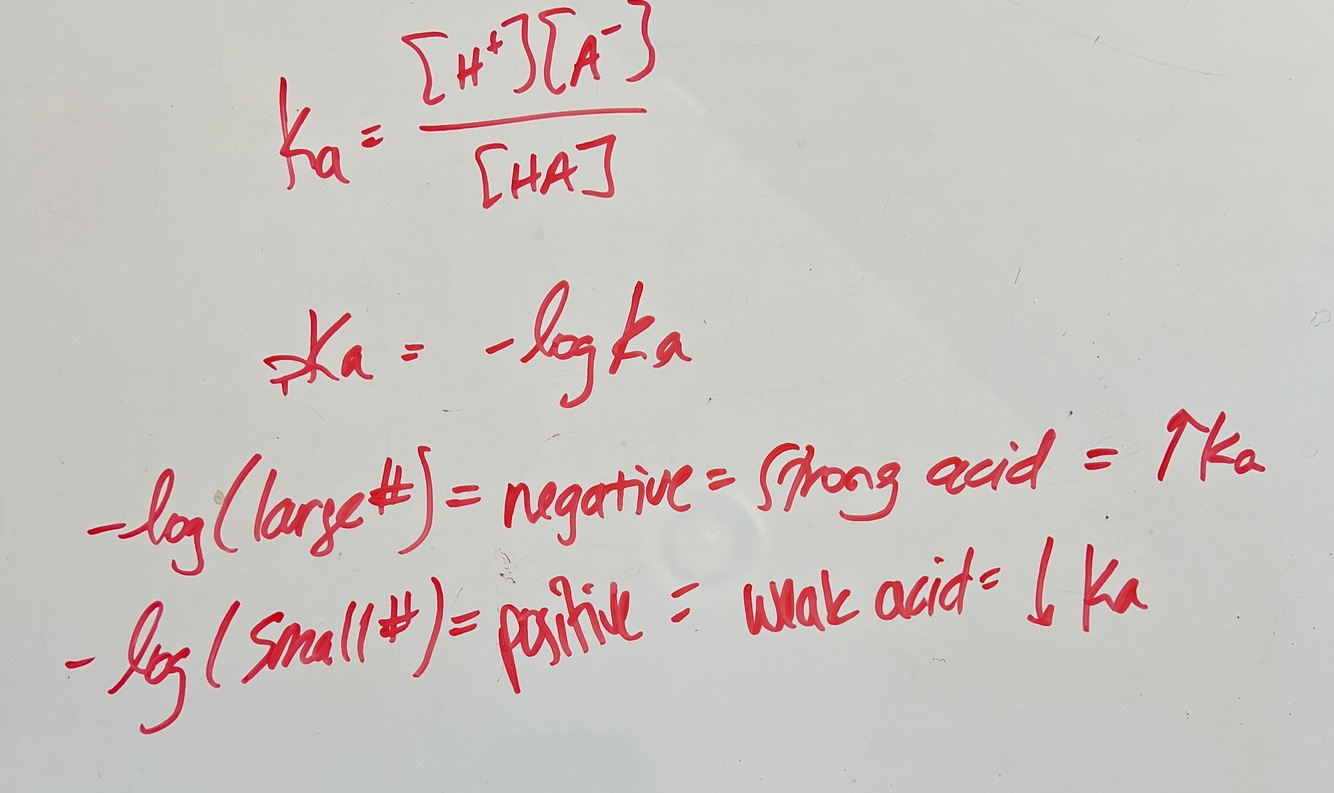
What is Ka? pKa? What do they mean?
Ka is the acid dissociation constant which measures the strength of an acid in solution. pKa is the -log(Ka) More acidic molecules will have a smaller pKA (or even negative). pKa<2 is a strong acid which almost always completely dissociate and aqueous solutions. pKa from 2-20 are weak acids.
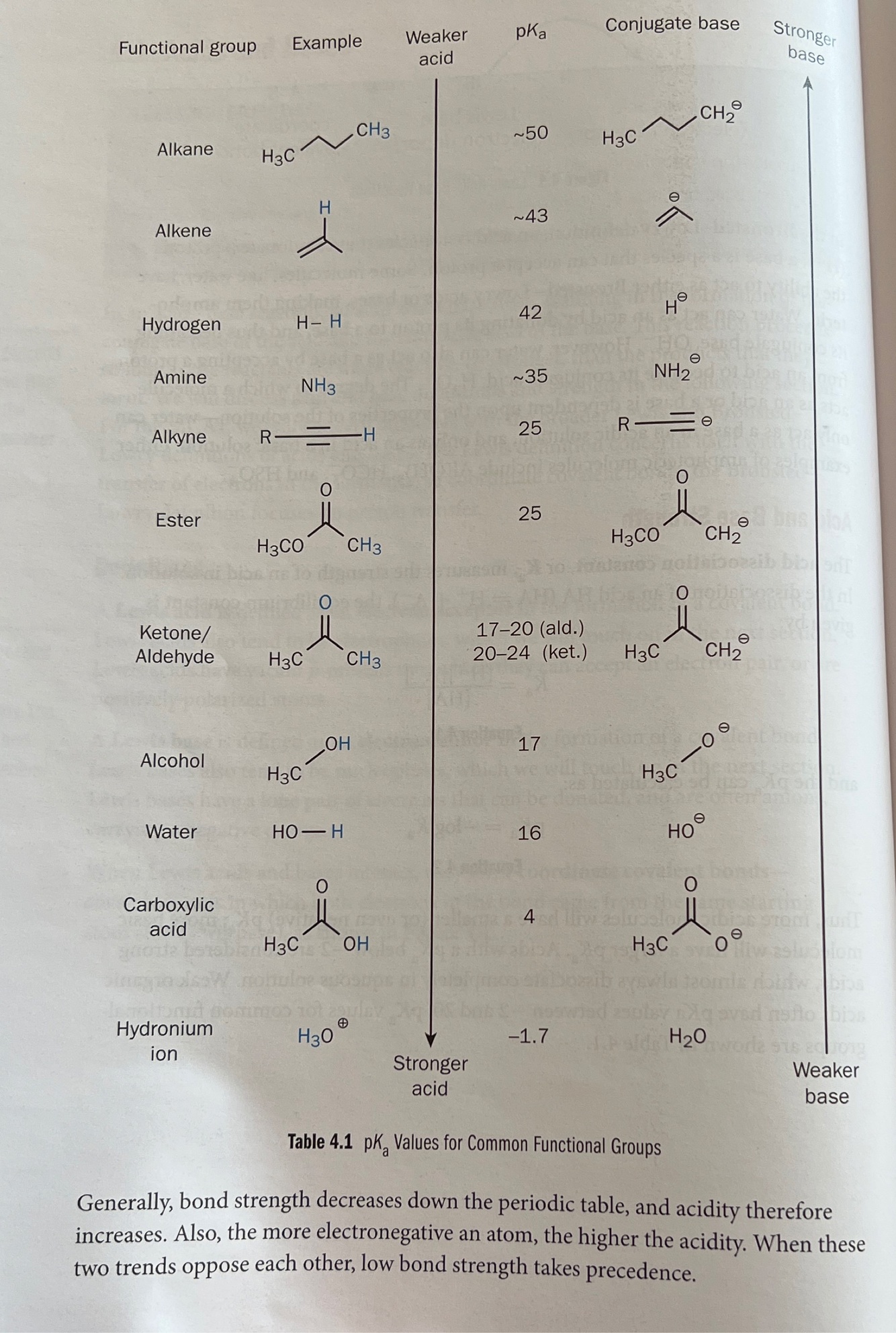
pKa values for common functional groups showing functional group and conjugate bases. What is the pKa of an alkane, amine, alcohol, water, carboxylic acid, hydronium ion? What is the trend for bond strength down the periodic table? What does that mean for acidity? What is the trend for electronegativity on the periodic table? What does that mean for acidity? What can be said for the acidity of a molecule when the en and bond strength oppose each other?
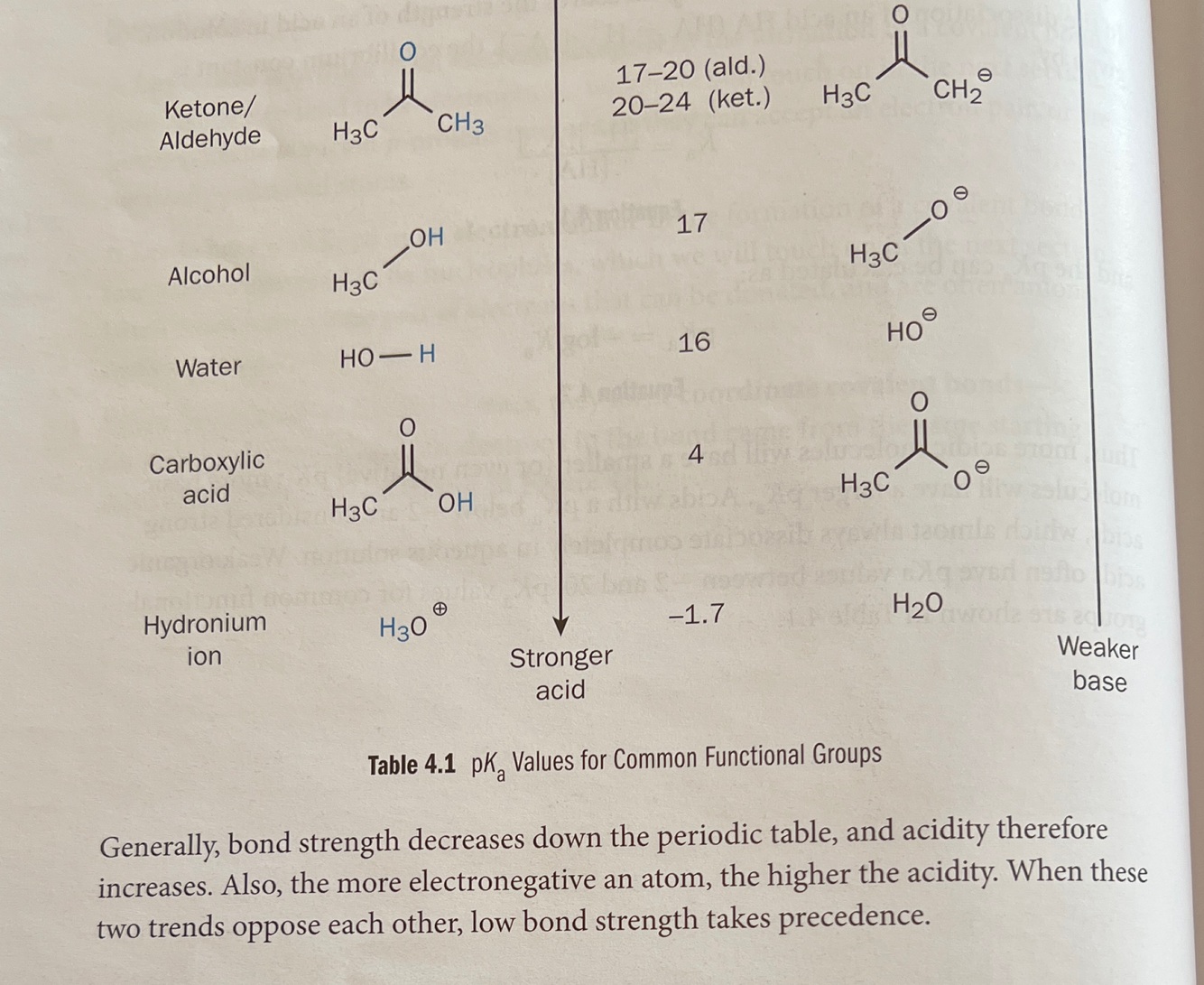
What is the trend for bond strength on the periodic table? What does this mean for acidity? What is the trend for acidity and electronegativity?
As we move down the periodic table, the atoms get larger and therefor the electrons aren’t held as tightly (the electrons have higher energy). If the electrons aren’t held tightly, the hydrogen atoms are lost easier and therefor acidity increases. Higher electronegativity means higher acidity. When these two trends oppose each other, bind strength determines the acidity.
What is the alpha hydrogen? Alpha carbon?
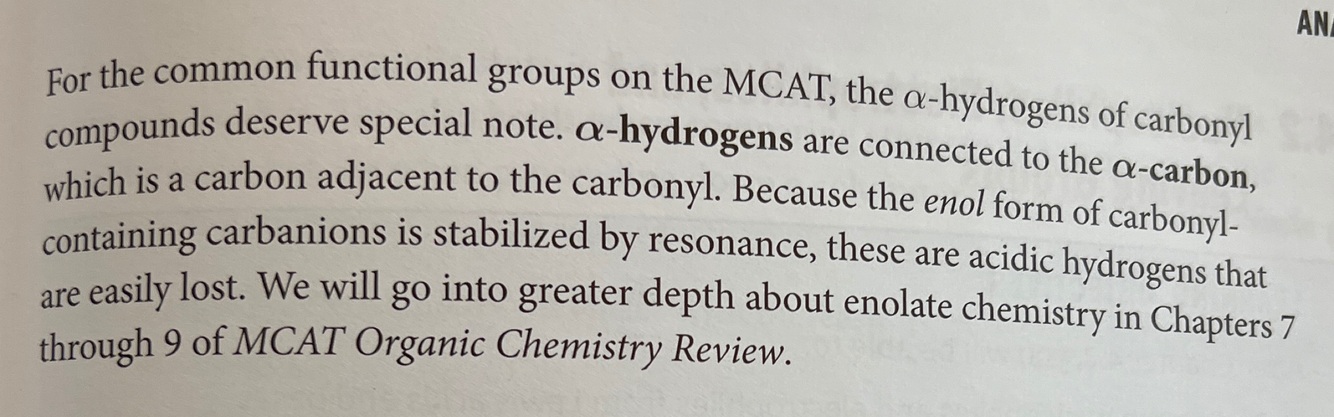
What are the main functional groups that act as acids? What are the main functional groups that act as bases? What does that mean?
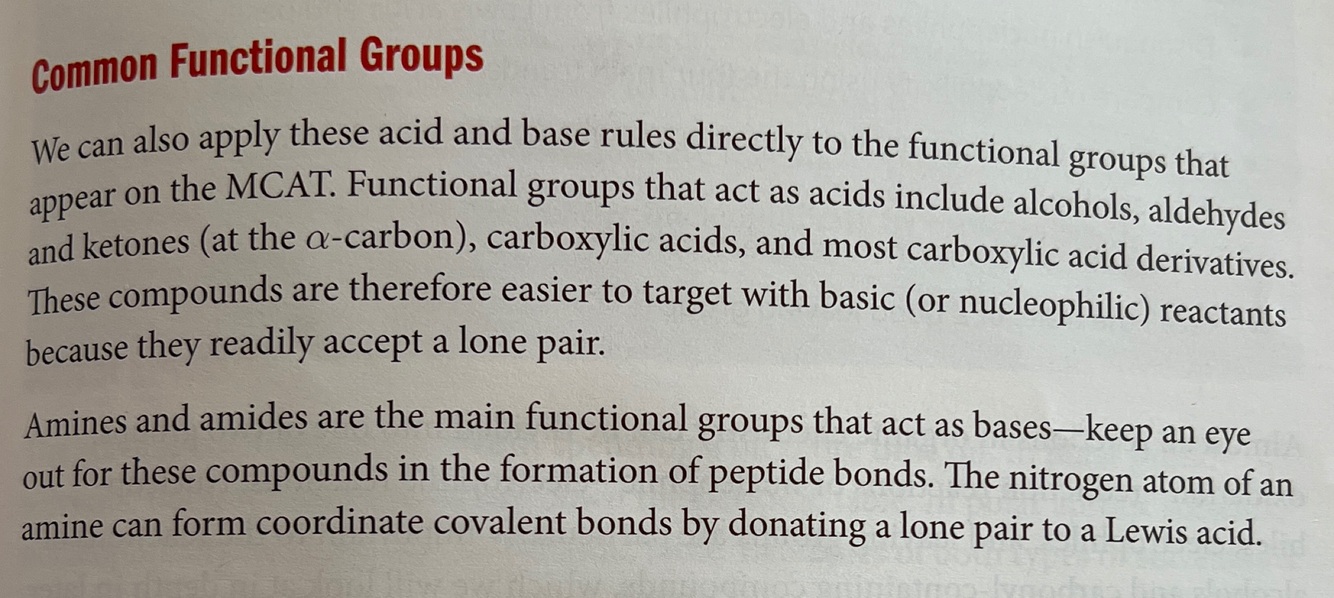
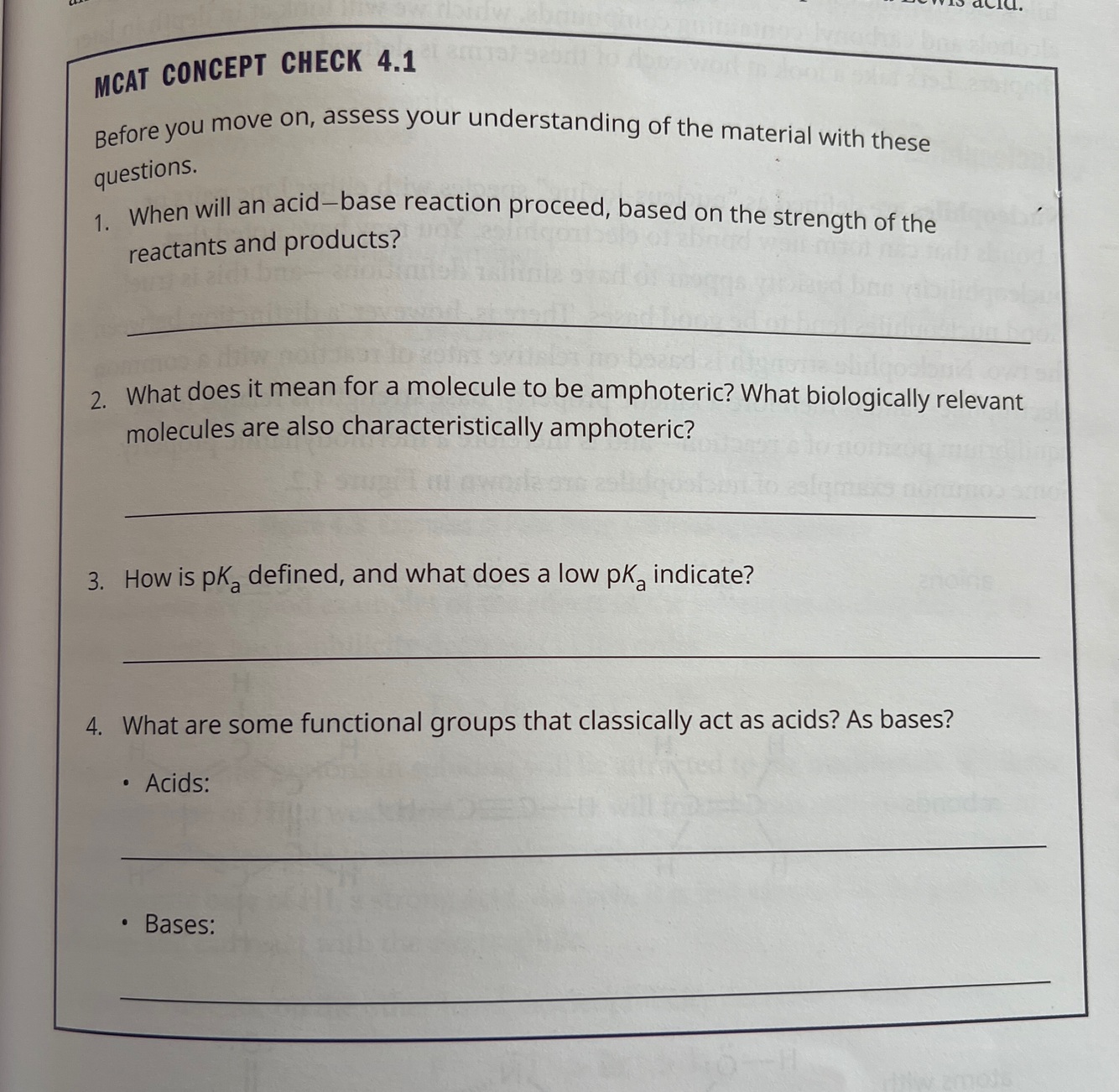
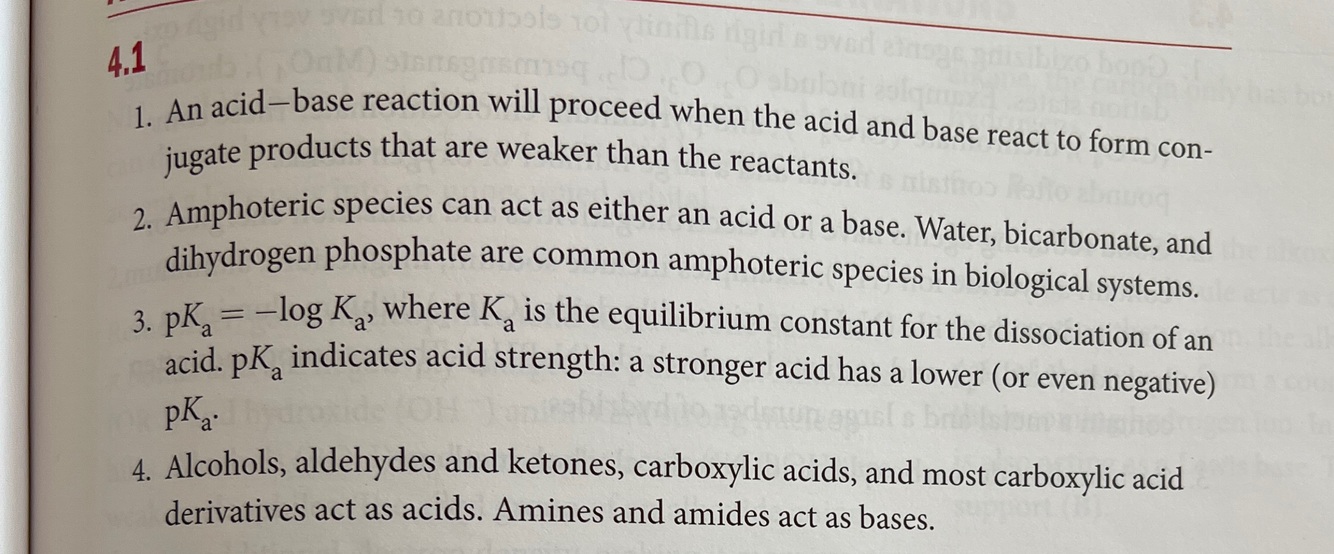
Connector check 4.1
Almost all reactions in organic chemistry can be divided into one of two groups. What are those groups?
Redox reactions Nucleophile-electrophile reactions
What are nucleophiles?
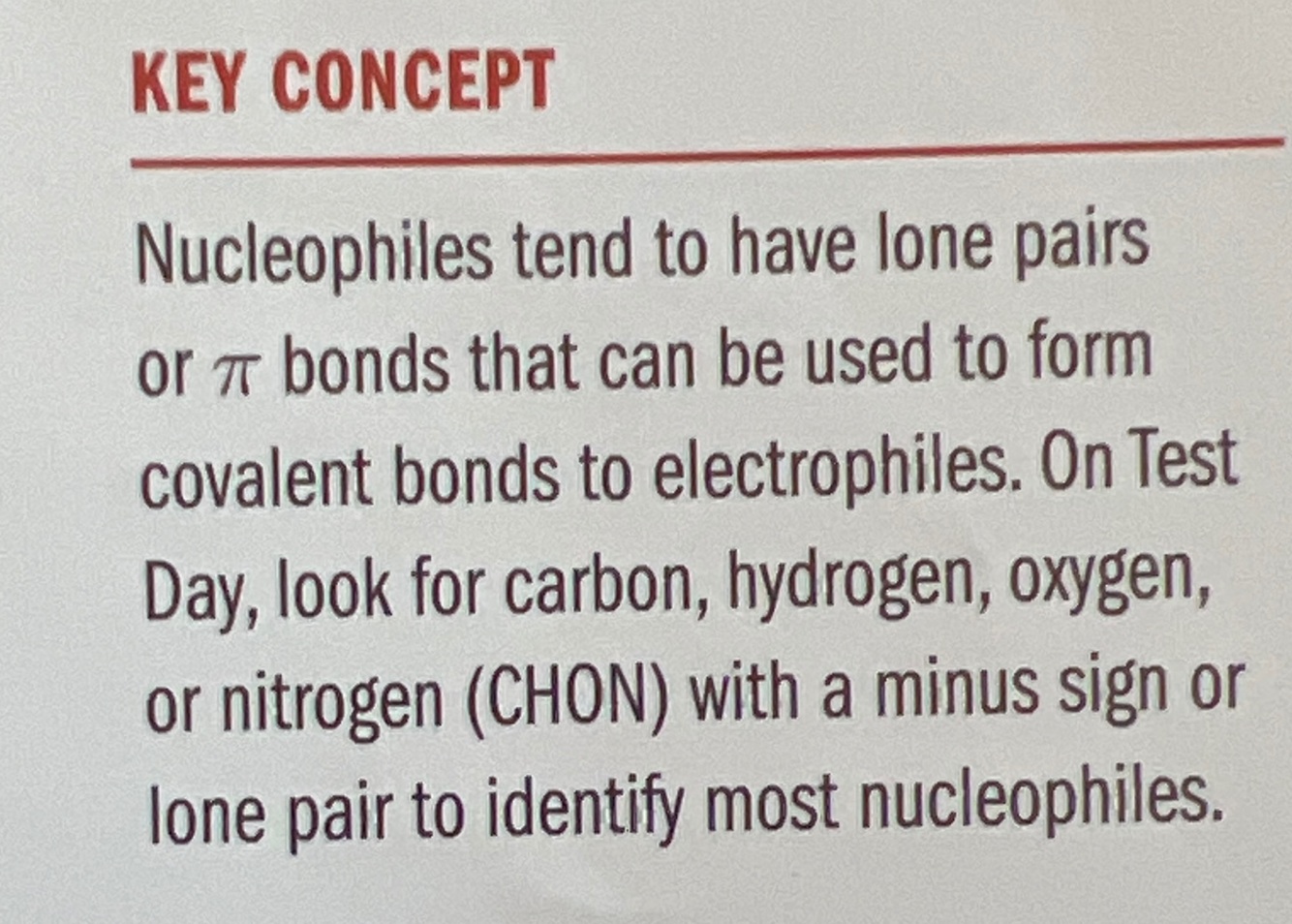
“Nucleus loving” species with either lone pairs or pi bonds that can form new bonds to electrophiles. Nulcleophilicity and basicity have similar definitions: GOOD NUCLEOPHILES TEND TO BE GOOD BASES. However, nucleophilicity is a kinetic property because their strength is based on relative rates of reaction with a common electrophile, and base strength is related to the equilibrium position of a reaction and is therefore a thermodynamic property.
Thermodynamic or kinetic property: Nucleophile Base
Nucleaophiles have kinetic property as their strength is based on relative rates of reaction with a common electrophile. Bases have thermodynamic property because their strength is related to the equilibrium position of a reaction.
What is a distinguishing characteristic of nucleophiles?
Keep in mind that pi bonds (the electrons associated with a pi bond) will act as nucleophiles in the presence of a good electrophile.
Generalized examples of nucleophiles, three kinds
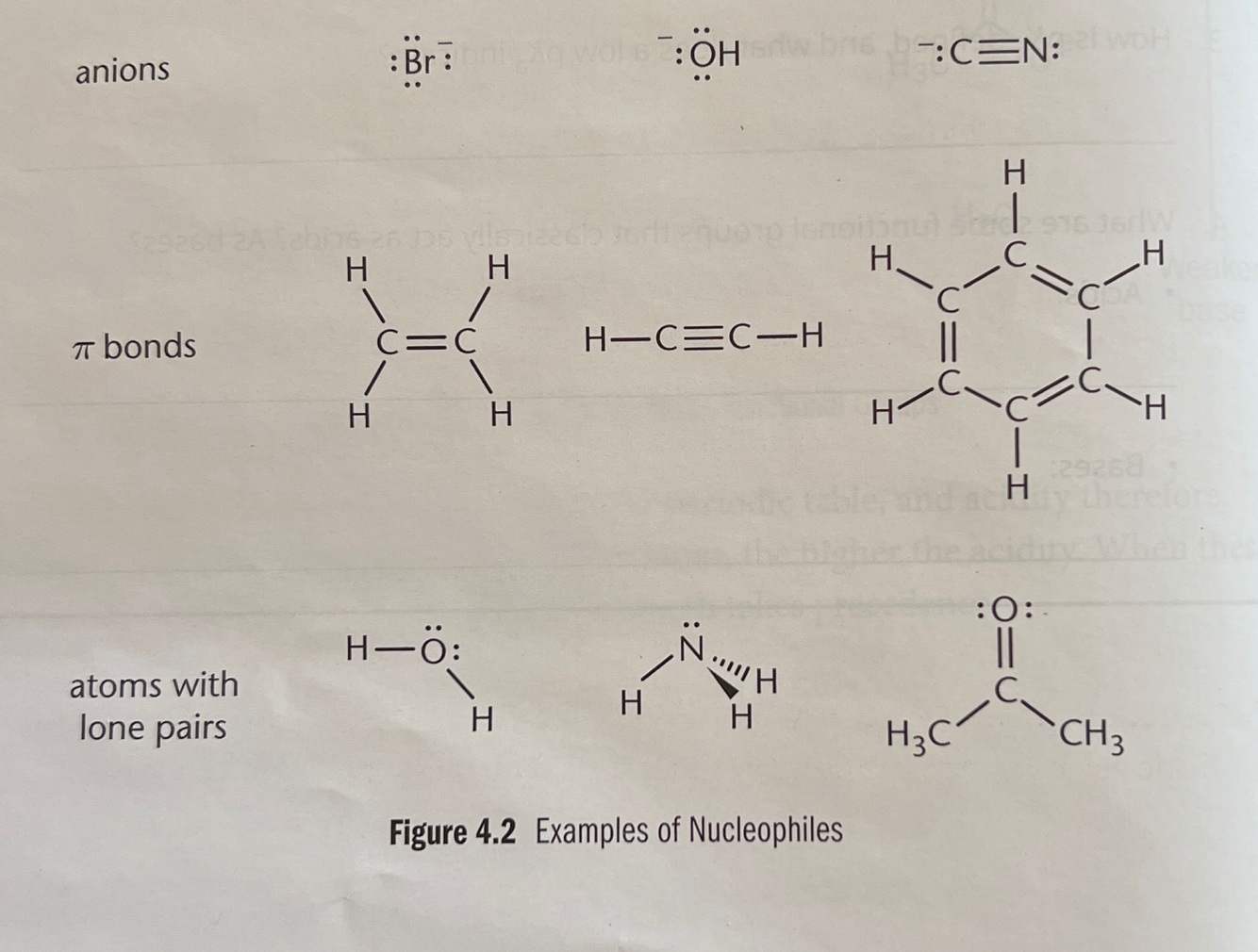
How is nucleophilicity determined?
Protic solvents protonate the nucleophile, reducing its capacity to attack.
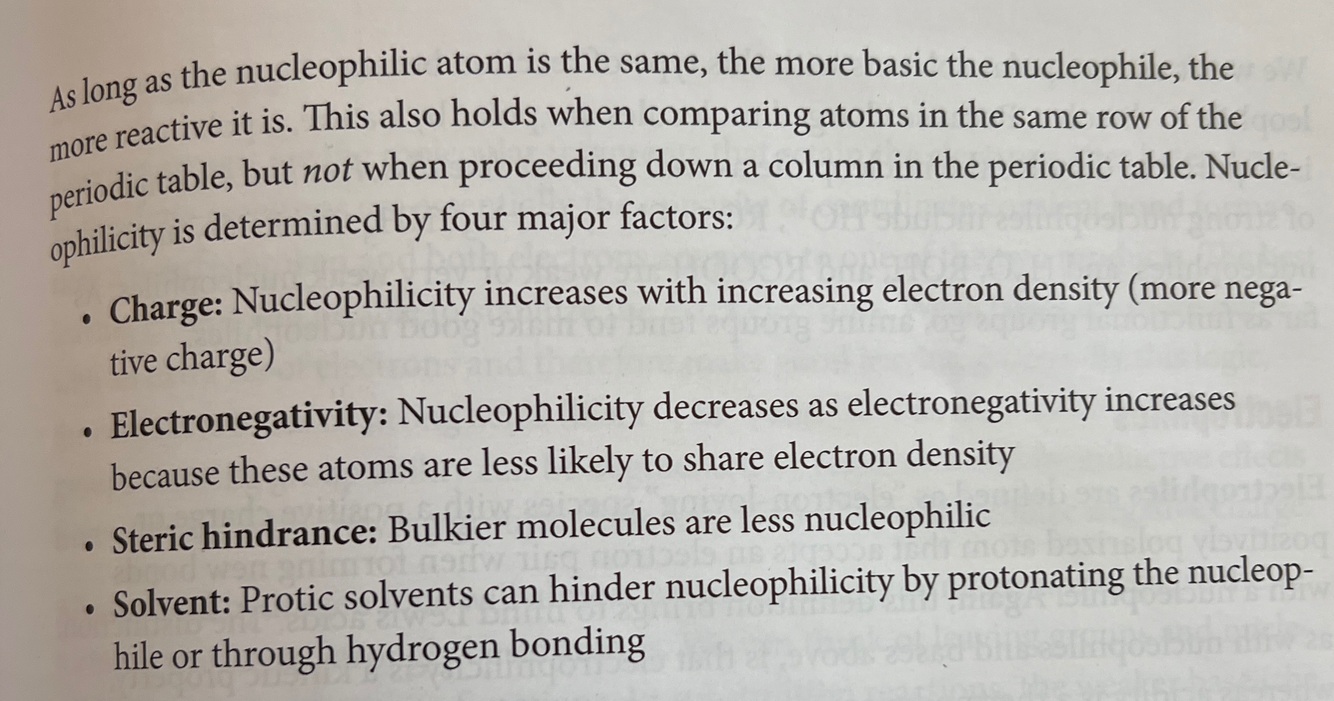
What is the trend for solvents and halogens and nucleophilicity?
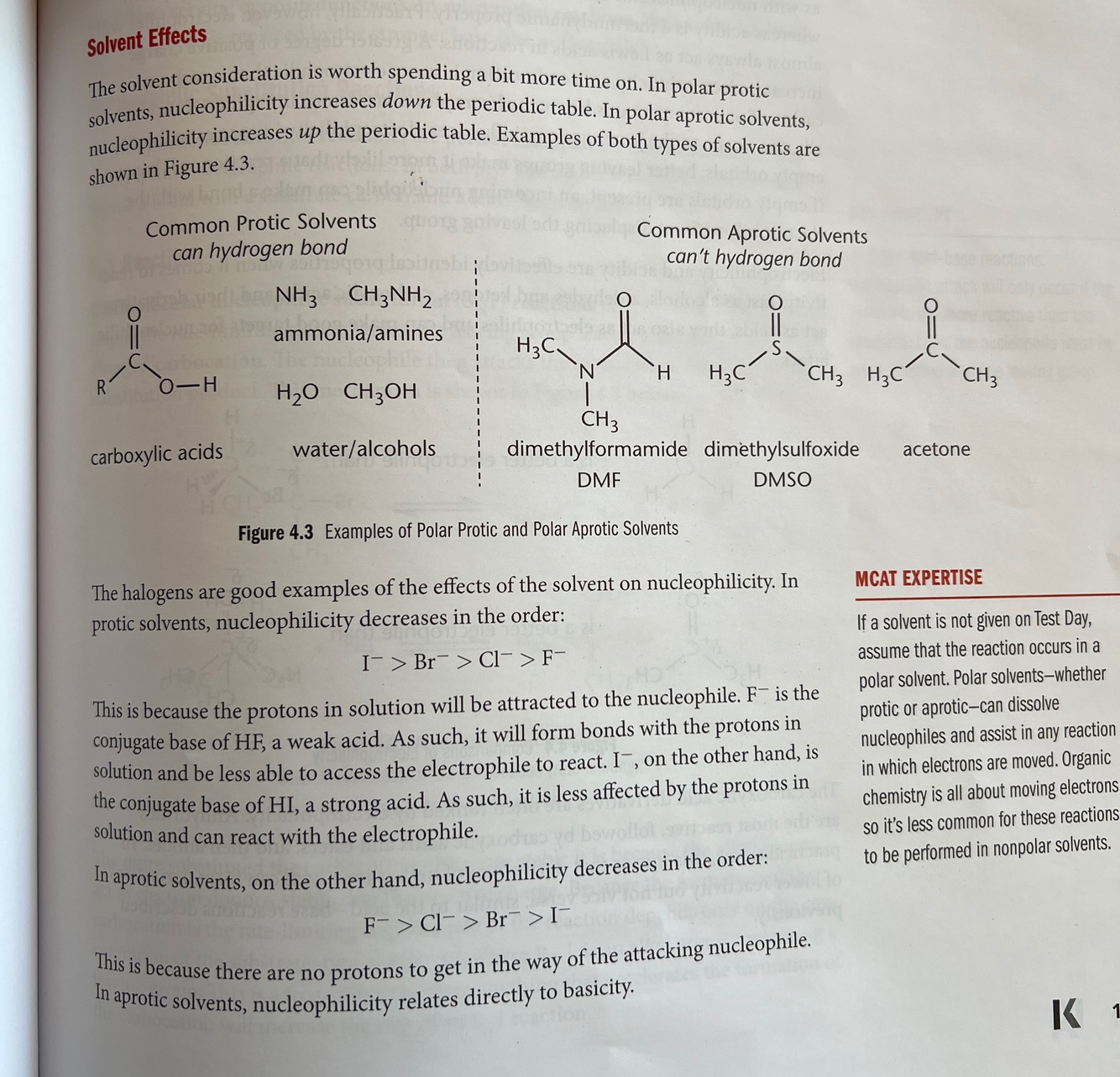
What happens to nucleophiles in polar solvents?
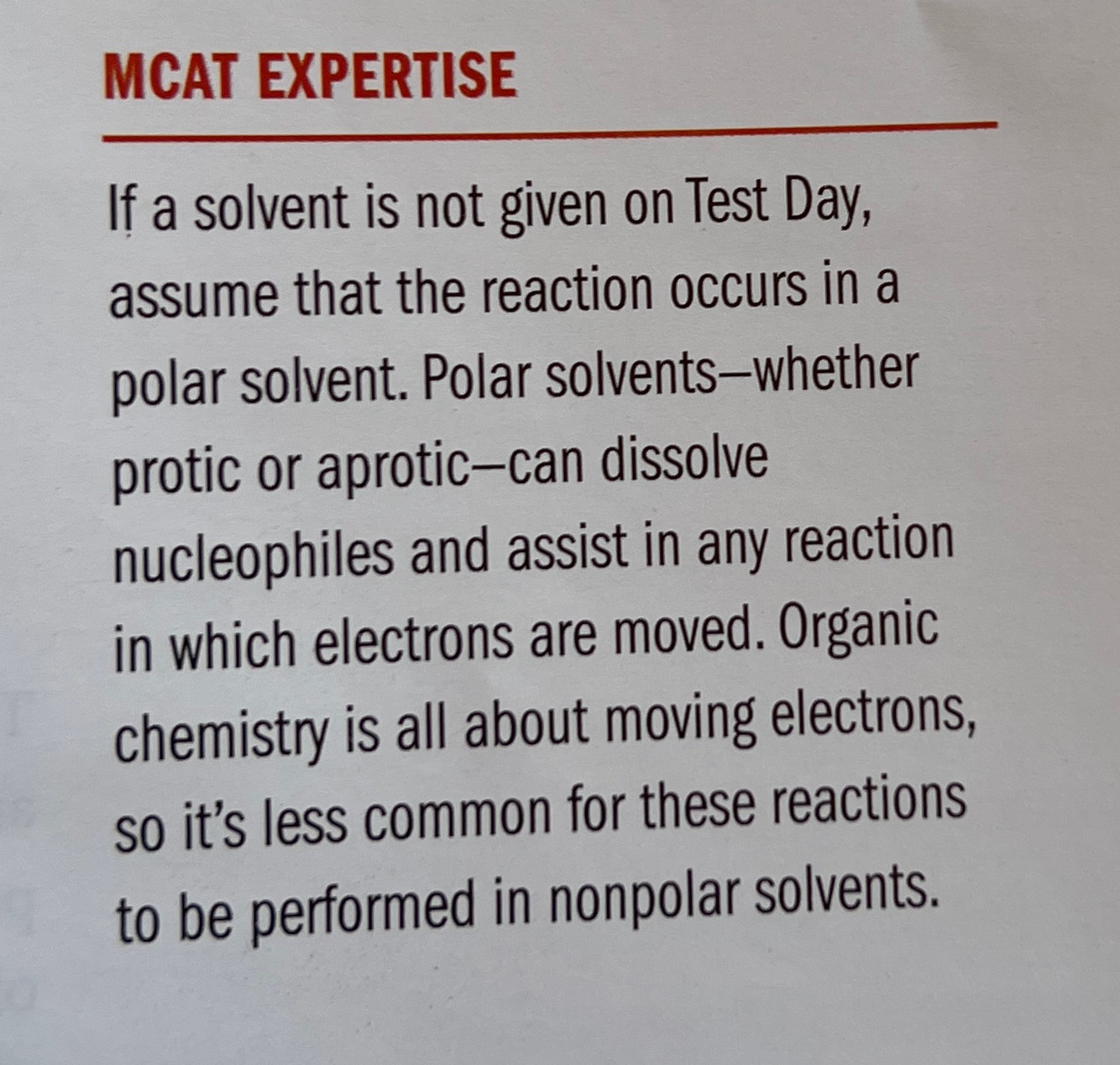
Examples of strong, fair, and weak nucleophiles. Can we use nonpolar solvent in nucleophile electrophile reactions?

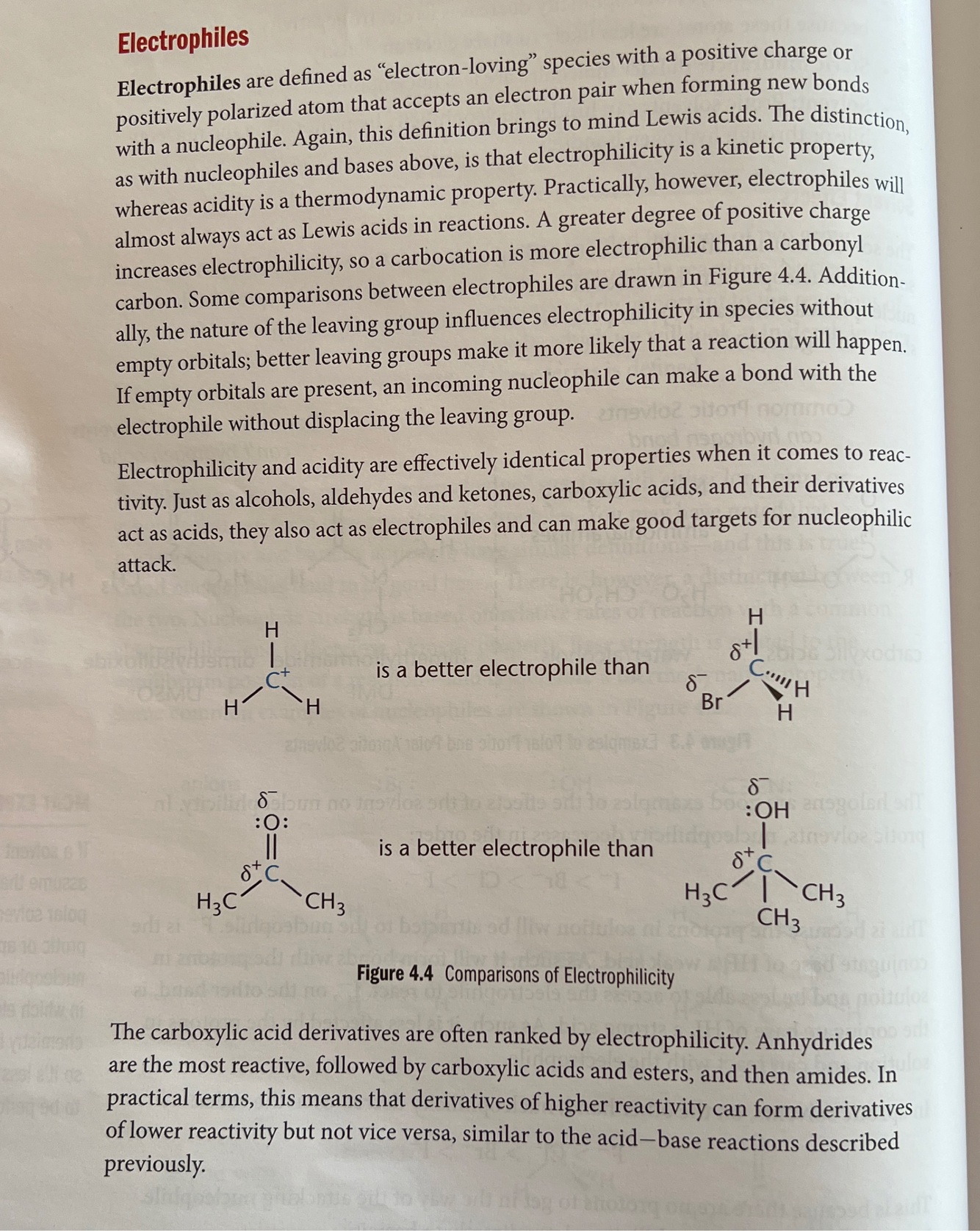
What are electrophiles? Is methyl carbon a better electrophile than bromomethane? Is acetone (dimethyl ketone) a better electrophile than trimethyl carbanol?
Defined as electron loving species with a positive charge or positively polarized atom that accepts an electron pair when forming new bonds with a nucleophile. Brings to mind Lewis acids. Electrophiles will almost always act as Lewis acids (accept electrons). Positive charge increases elcrophilicity.
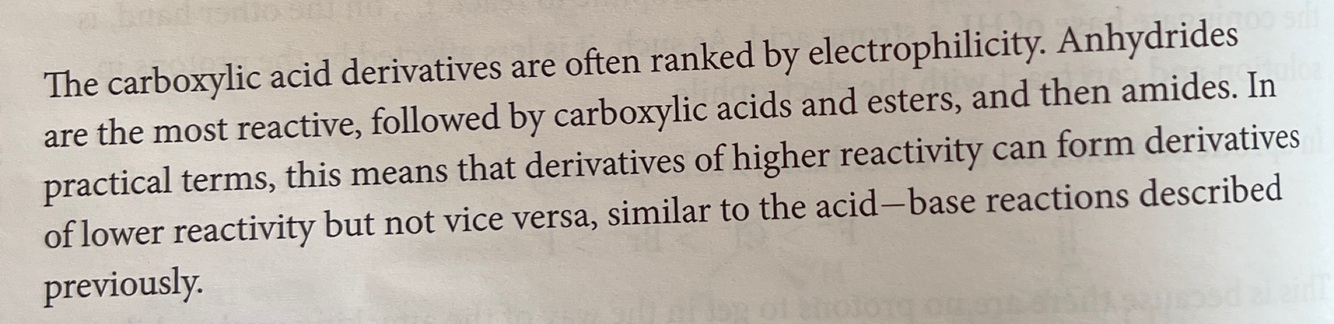
Rank the electrophilicity of carboxylic acid derivatives (ester, amides, anhydrides, carboxylic acids)
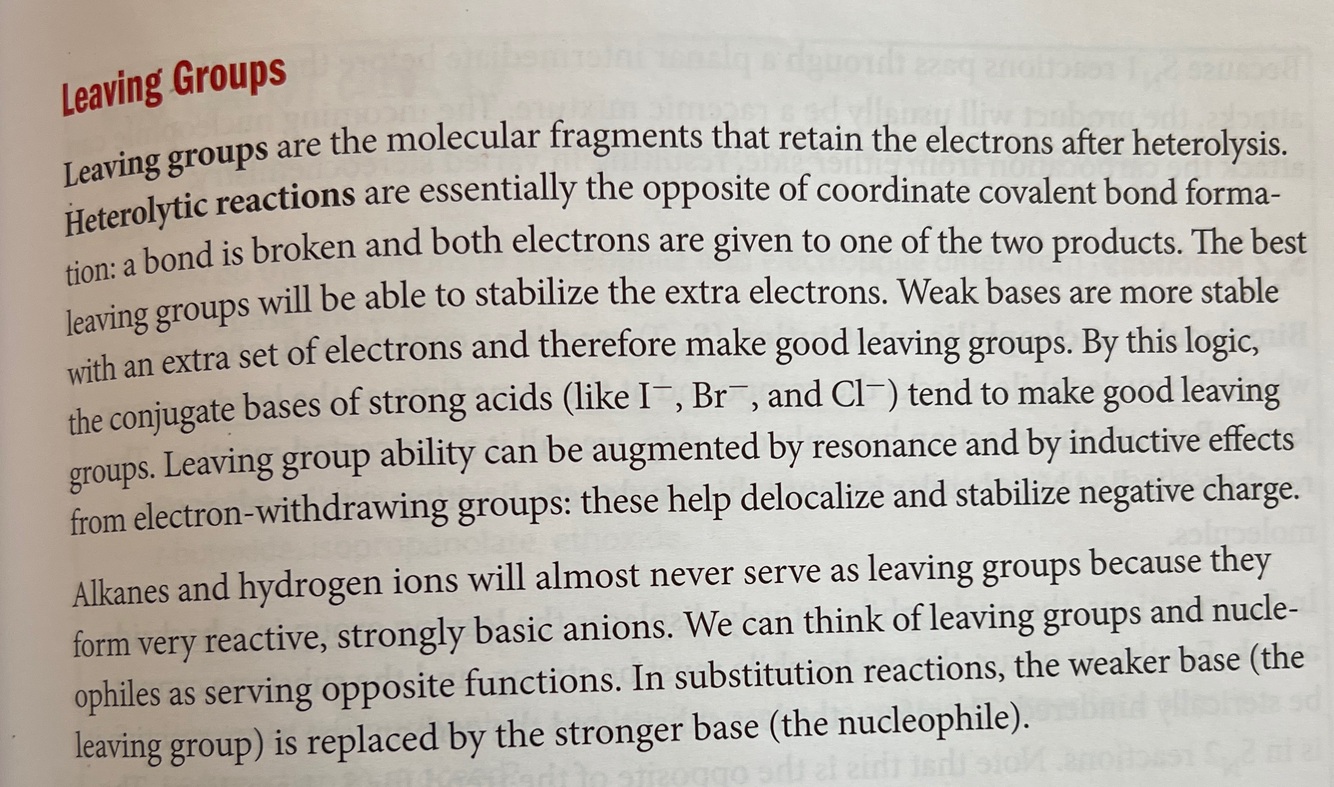
What is a leaving group? What is a heterolytic reaction? What compounds make good leaving groups? What compounds make poor living groups?
Leaving groups are the molecular fragments that retain the electrons after heterolysis. Heterolytic reactions are essentially the opposite of coordinate covalent bond formation: a bond is broken in both electrons are given to one of the two products. The Best living groups will be able to stabilize the extra electrons.
What is a nucleophilic substitution reaction? What are the two kinds?
A nucleophile forms a bond with a substrate carbon and a leaving group leaves. SN1 and SN2 reactions.
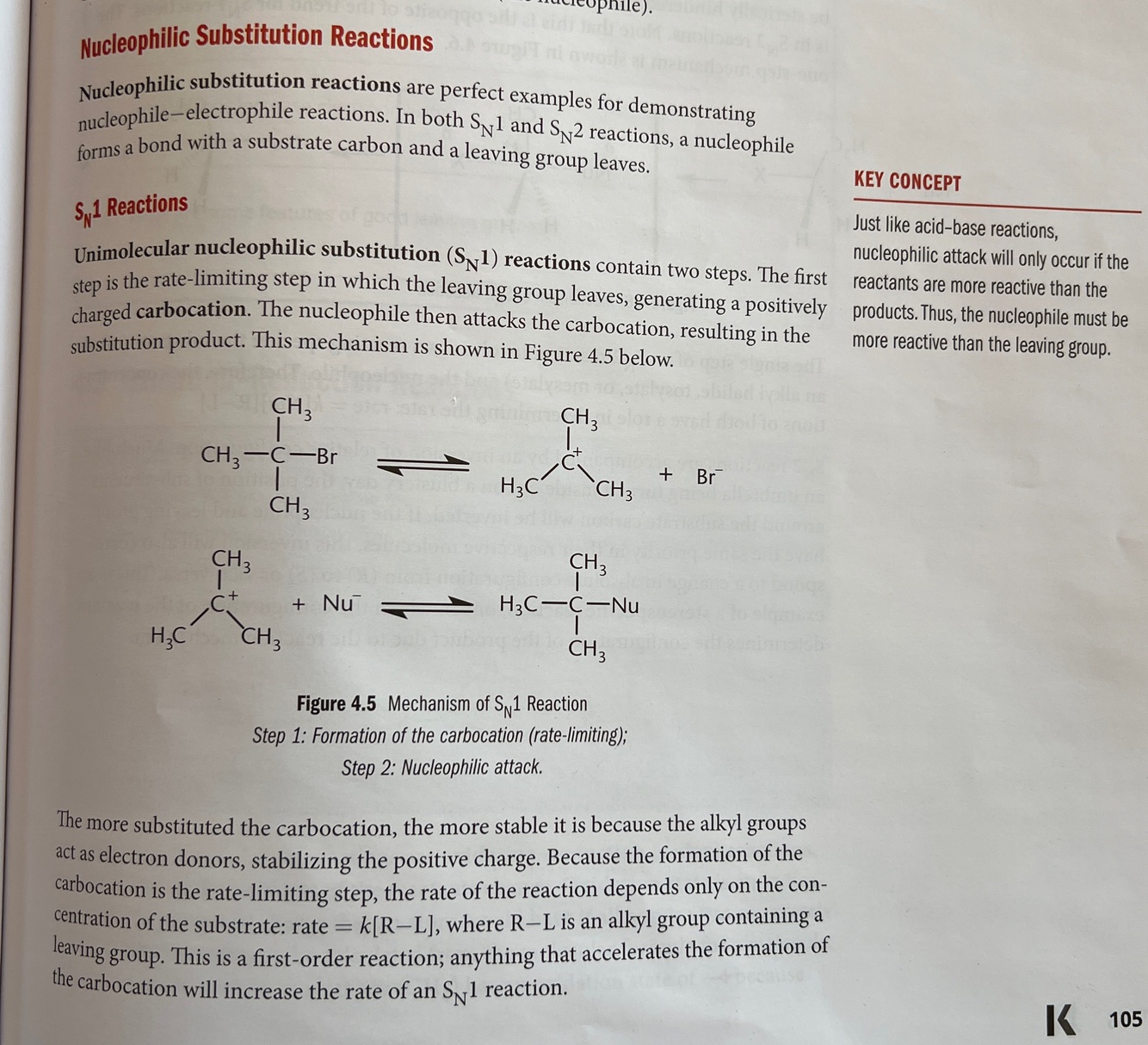
What is an SN1 reaction? Example.
SN1 (unimolecular nucleophilic substitution) reactions are a type of nucleophilic substitution reaction that happens in two steps: Step one: formation of the carbocation. Step two: nucleophilic attack. Recalling that a nucleophile forms a bond with a substrate carbon and a leaving group leaves in a nucleophilic substitution reaction.