6.1 AROMATIC COMPOUNDS,CARBONYLS & ACIDS
No description yet. This curated deck is ready for daily study.
Card preview (24)
Define aliphatic
• Straight or branched organic substance
State the two similarities of kekules benzene and delocalised benzene
1) Both have sideways overlap of p-orbitals 2) Both have π bonding above and below the carbon atoms
State the two differences of kekules benzene and delocalised benzene
1) Kekule has three alternating π bonds with localised π electrons 2) Delocalised has a π ring system where all p-orbitals overlap
State the three experimental evidence against kekules model
1) All six carbons have the same bond length 2) Benzene is resistant to addition reactions 3) ΔH hydrogenation is less exothermic that expected
Explain bond length evidence for delocalised benzene
• The carbon bond lengths in delocalised benzene are a value between the C=C double bonds and C-C single bonds • So, all bond lengths are equal
Explain benzenes resistance to addition reaction evidence for delocalised benzene
• Benzene doesnt readily undergo addition reactions like alkenes as benzene is less reactive than alkenes
Explain ΔH hydrogenation evidence for delocalised benzene
• The ΔH hydrogenation of benzene is less exothermic than expected so is more stable than predicted
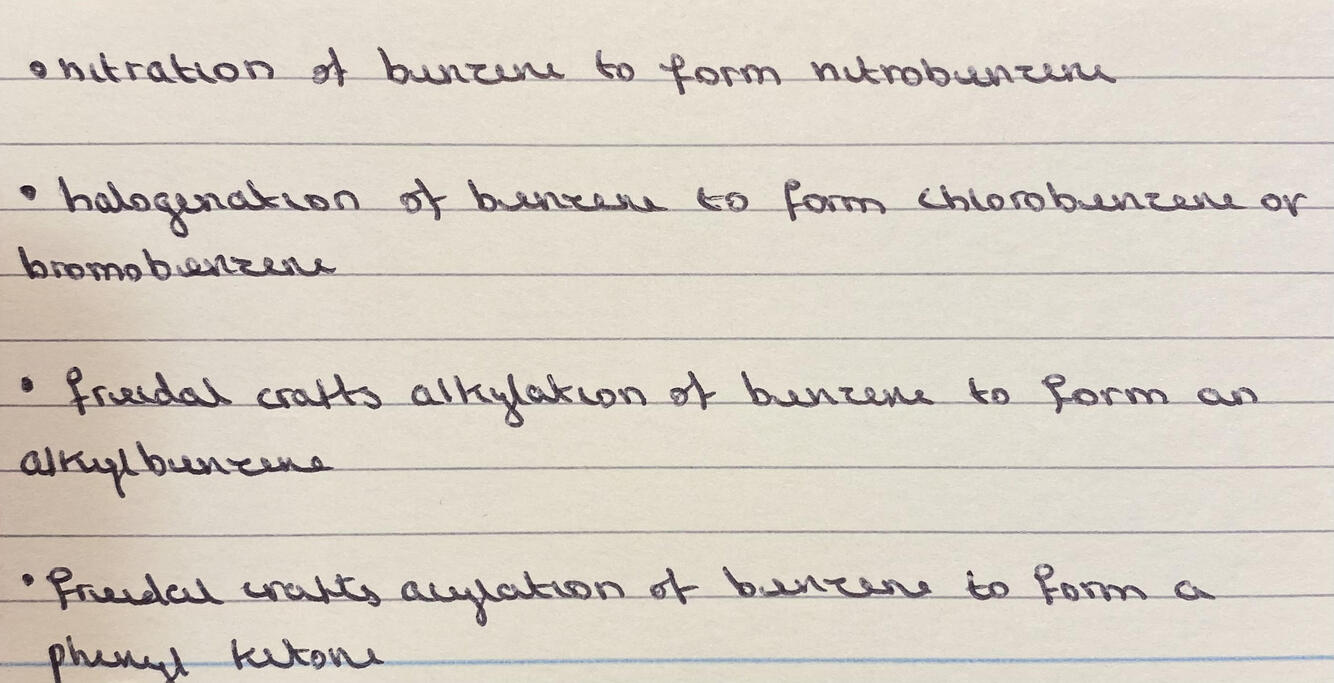
State the four reactions of benzene
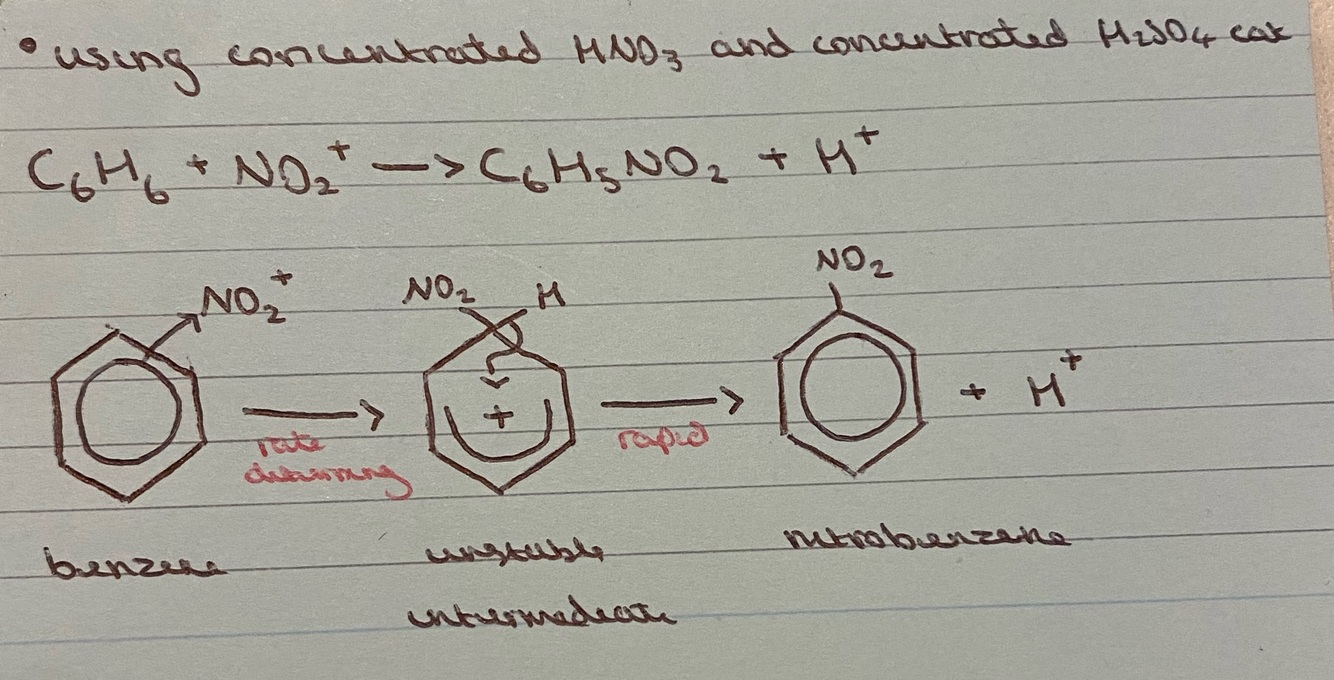
Conditions/reaction/mechanism for the nitration of benzene
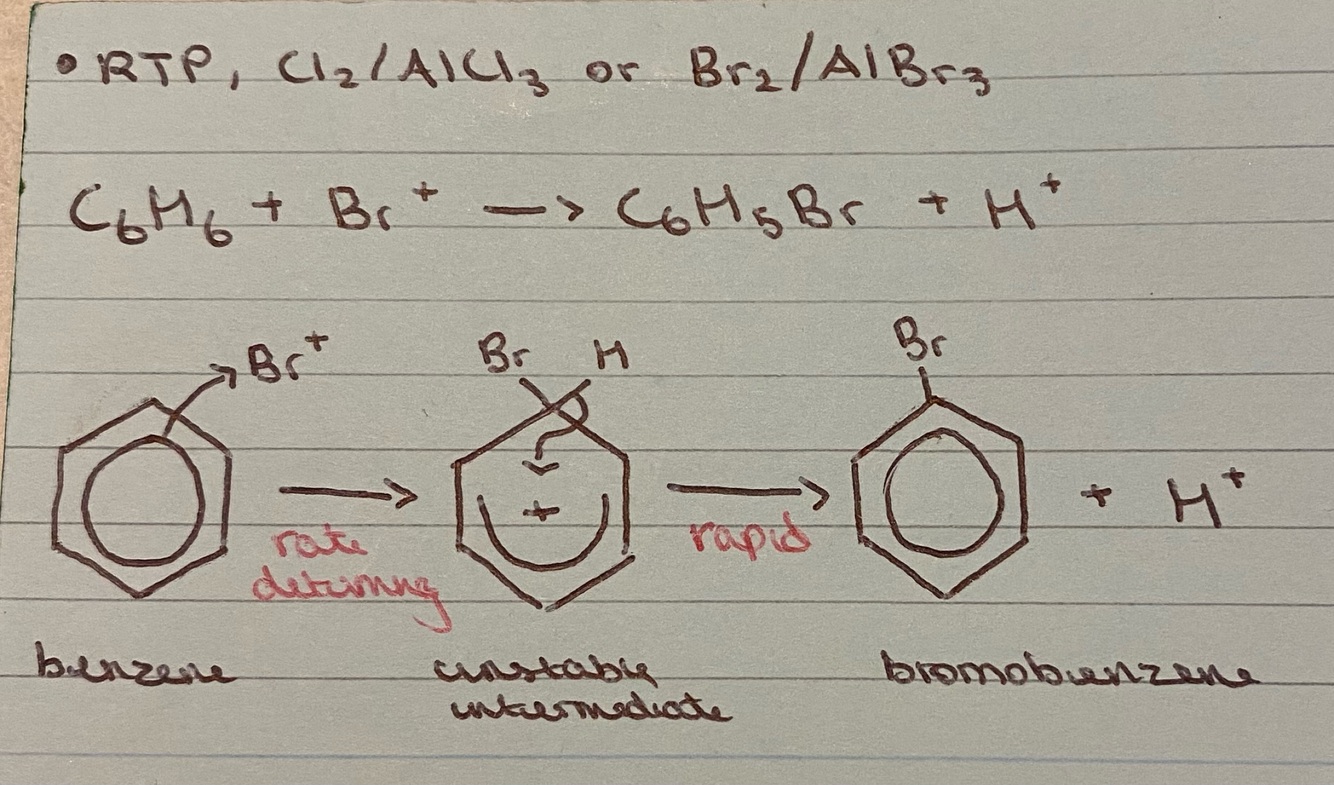
Conditions/reaction/mechanism for the halogenation of benzene
State why phenols are weak acids
• The H in the OH group can only partially dissociate to release H+ in aqueous solution
State why phenols cant react with carbonates
• Because phenols are weak acids so cannot react with a weak base like a carbonate • Only reacts with hydroxides
State the three reactions of phenols
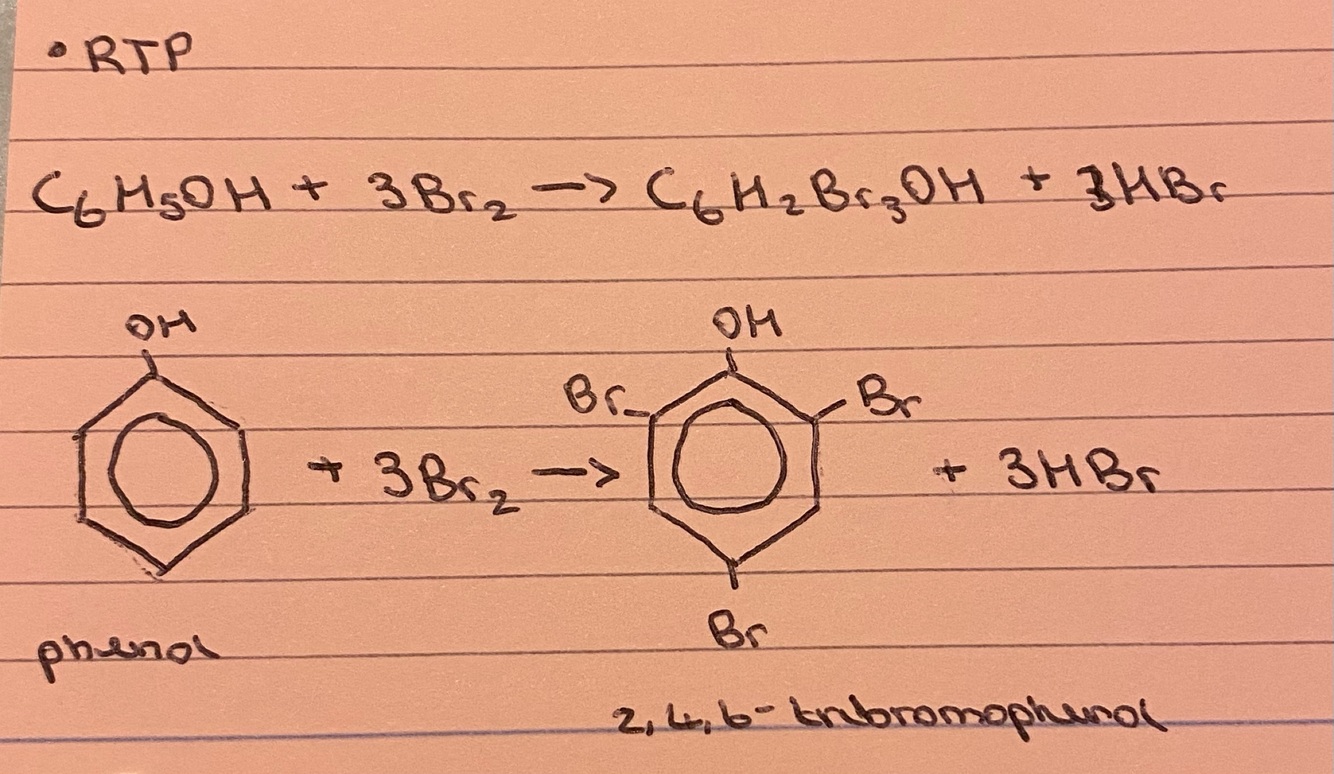
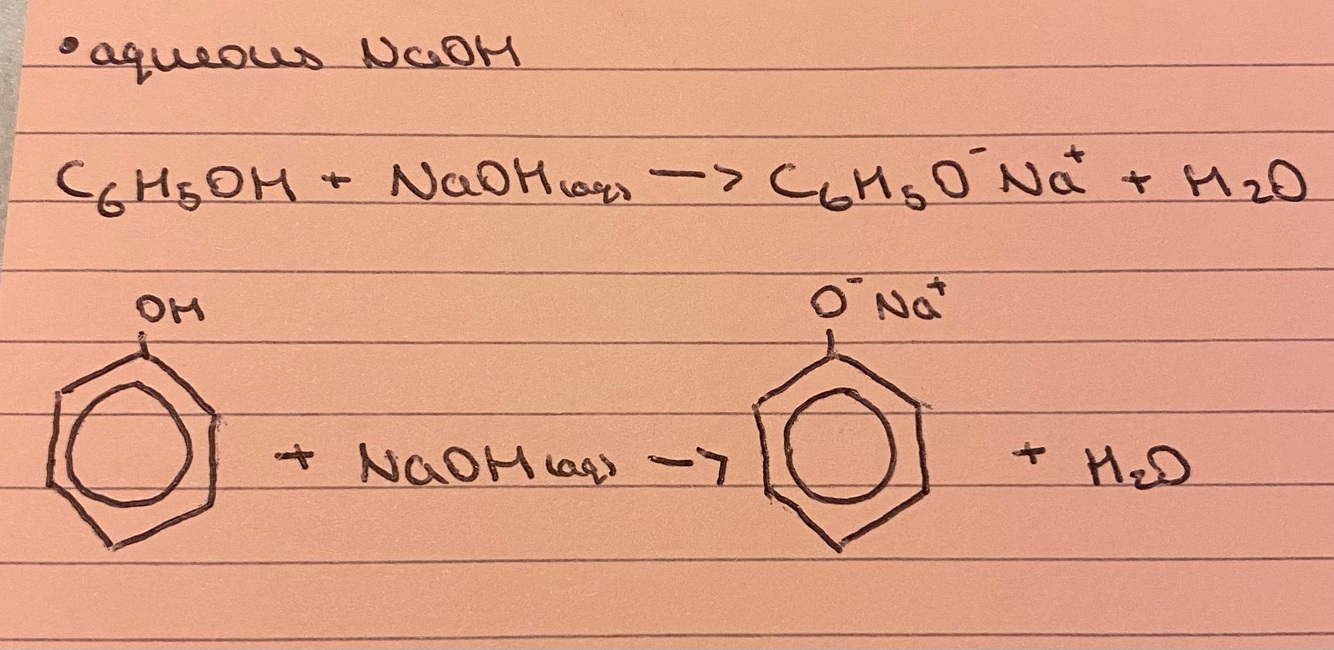
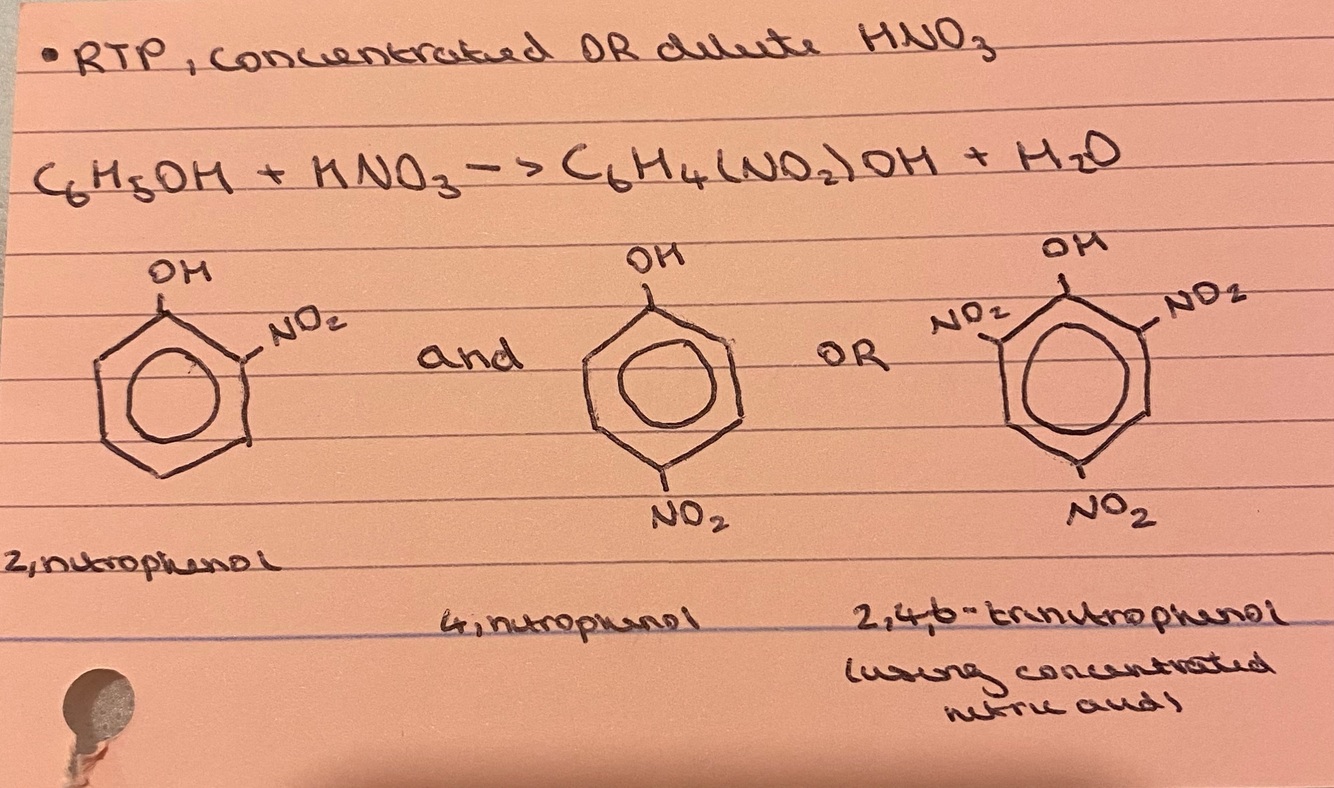
1) Bromination of phenols to form 2,4,6-tribromophenol 2) Phenols with NaOH to form sodium phenoxide 3) Nitration of phenols to form a mixture of 2-nitrophenol and 4-nitrophenol (depending on HNO₃ concentration)
Conditions/reaction for the bromination of phenols
Conditions/reaction for phenols with NaOH
Conditions/reaction for the nitration of phenols
State which atom groups on an aromatic ring cause a 2- and 4- directing affect
• OH • NH2 • (electron donating groups)
State which atom group causes a 3- directing affect
• NO2 • (electron withdrawing groups)
Explain why the relative ease of electrophilic substitution is easier for phenols compared to benzene
• The phenols p-orbital electrons are donated to the π system of the aromatic ring • The π system of the aromatic ring now is more nucleophilic/electron dense • The ring becomes more susceptible to electrophilic attack as it can induce dipoles in nonpolar molecules better
State the three reactions of carbonyl compounds
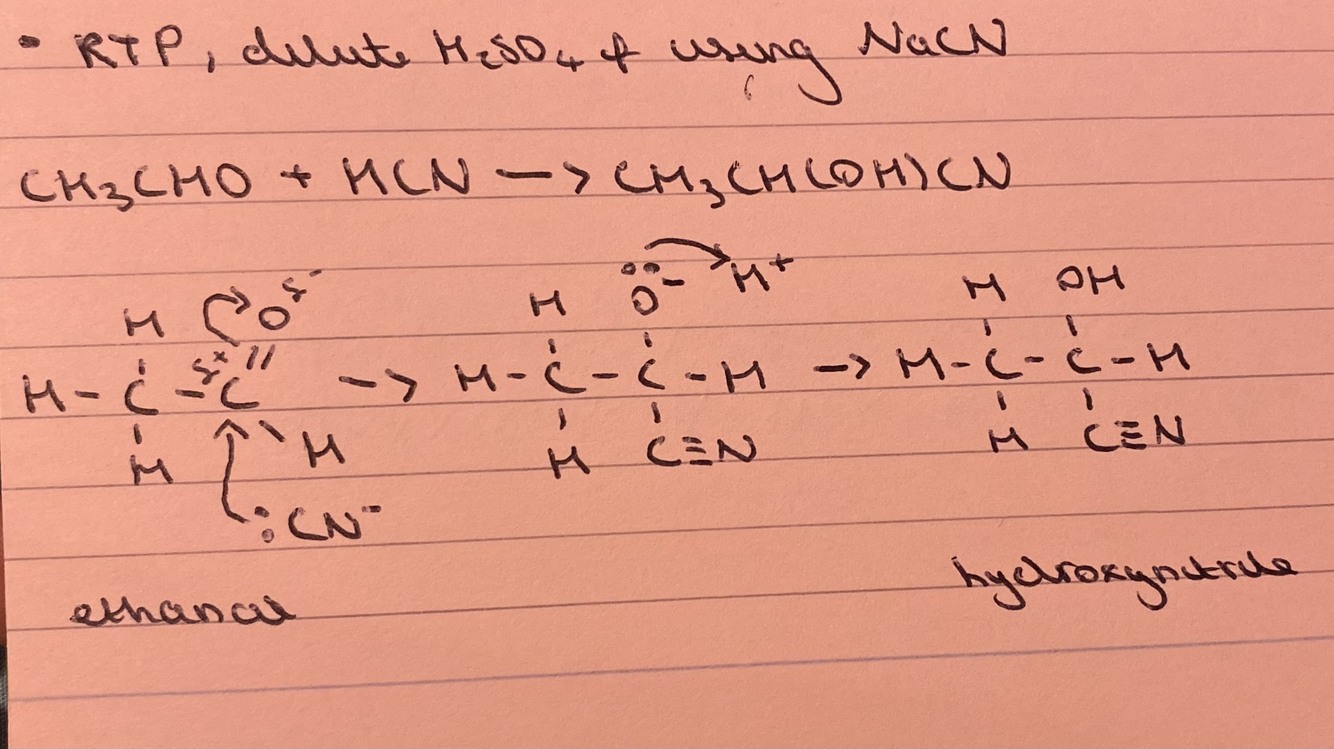
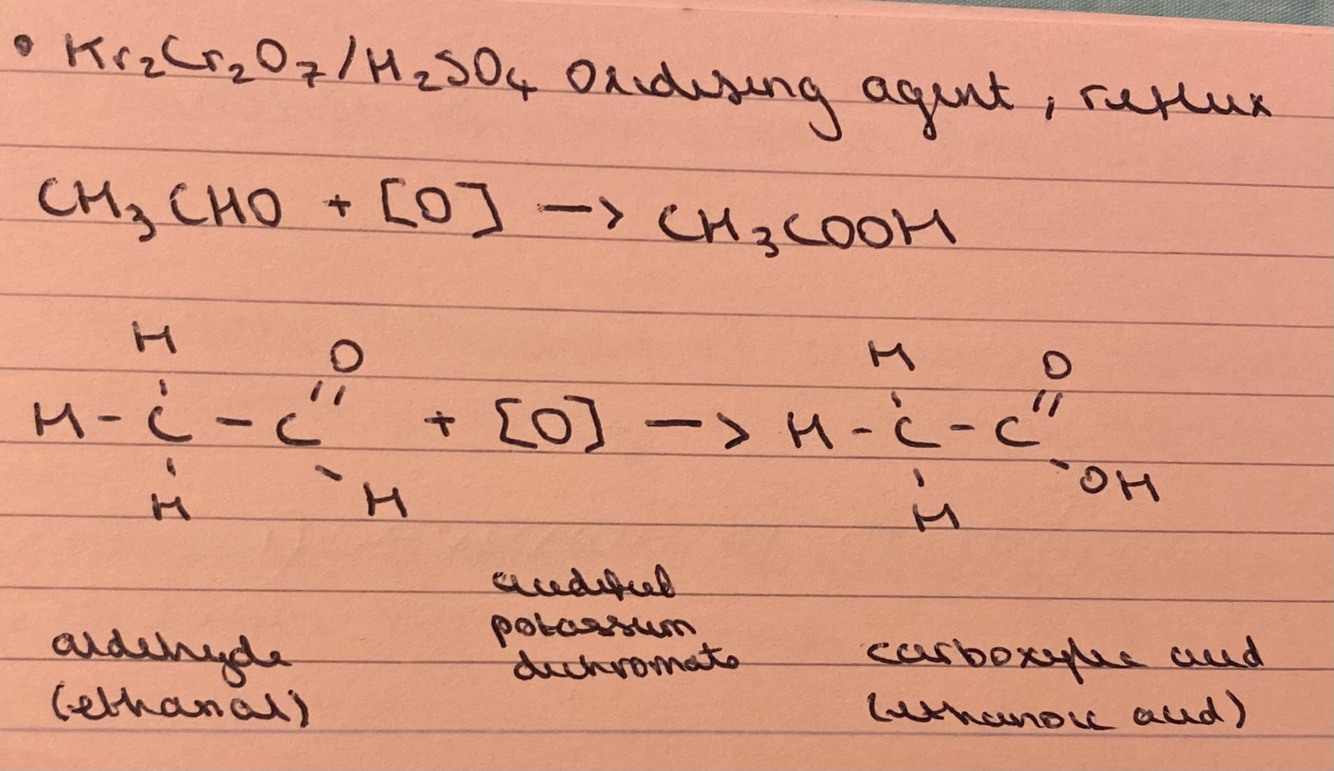
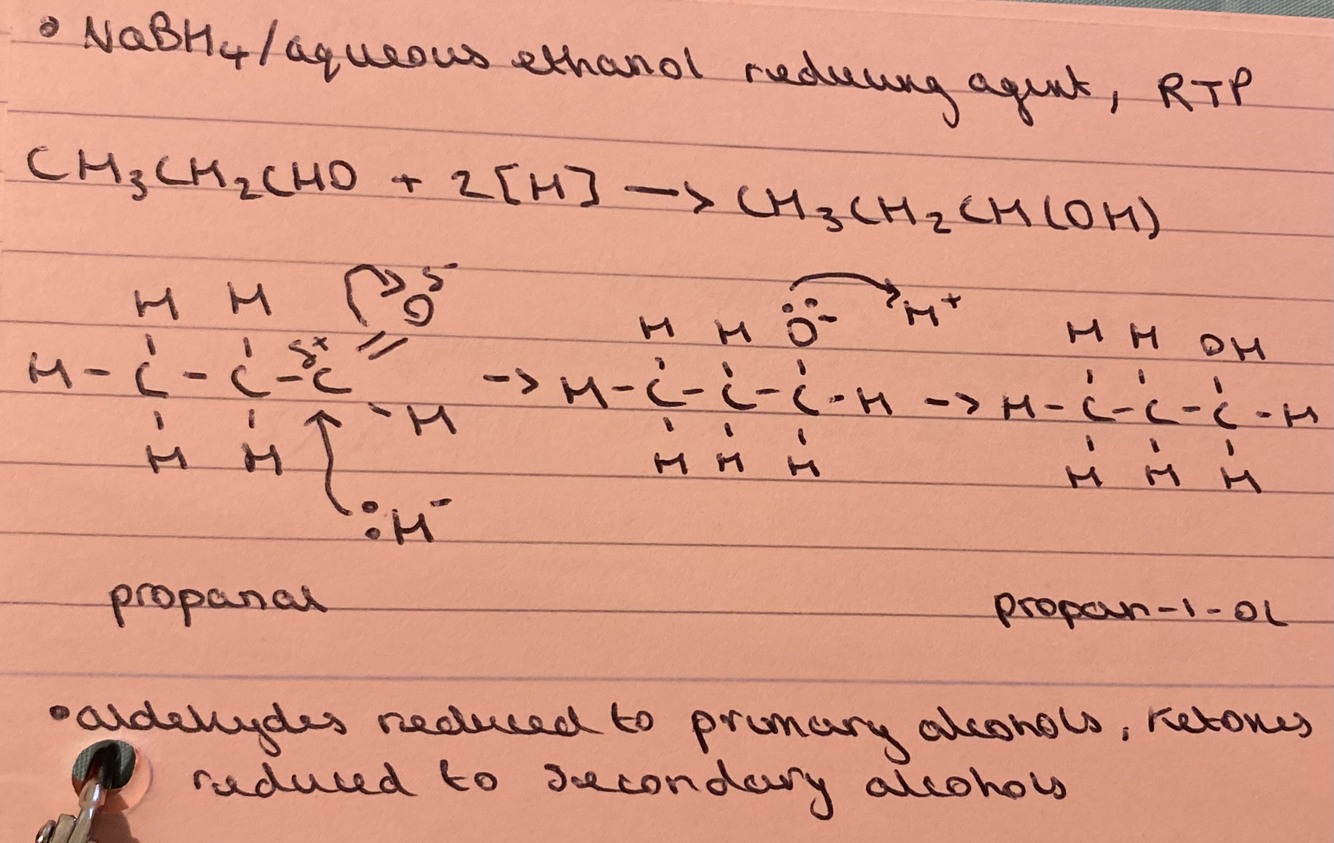
1) Oxidation of aldehydes to form carboxylic acids 2) NaBH₄ reduction of carbonyl compounds to form primary/secondary alcohols 3) HCN addition to carbonyl compounds to form hydroxynitriles
Conditions/reaction for the oxidation of aldehydes
Conditions/reaction/mechanism for carbonyl compounds with NaBH₄
Conditions/reaction/mechanism for carbonyl compounds with HCN