Ch13 Alkenes
No description yet. This curated deck is ready for daily study.
Card preview (24)
What is an alkene?
Alkenes are unsaturated hydrocarbons that contain at least 1 C=C bond (functional group). Alliphatic alkenes w/ 1 = have general formula CnH2n Alkenes can be branched, cyclic and contain 1+ double bond.
What is an alkene?
Alkenes are unsaturated hydrocarbons that contain at least 1 C=C bond. Alliphatic alkenes w/ 1 = have general formula CnH2n Alkenes can be branched, cyclic and contain 1+ double bond.
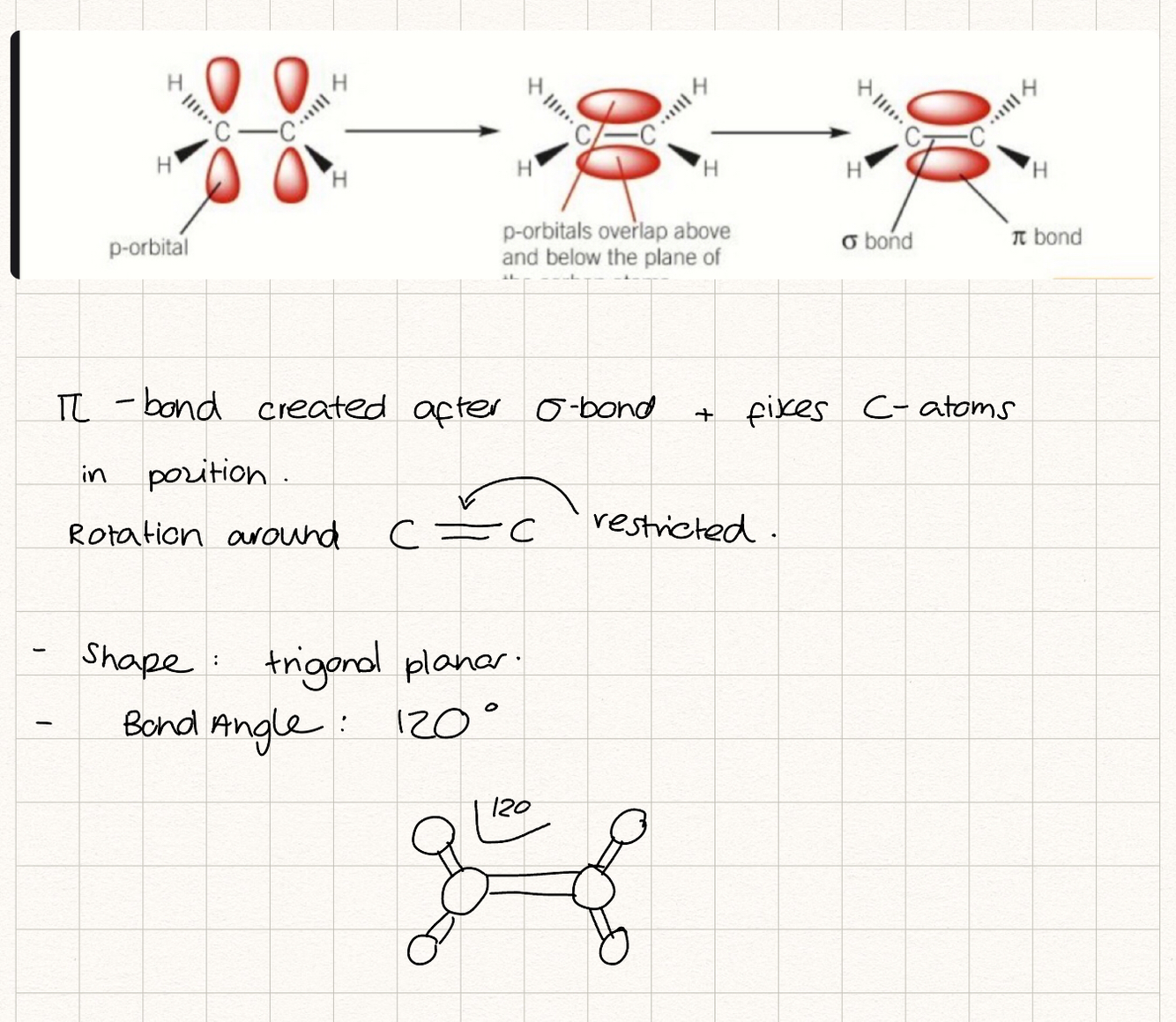
Explain sigma + pi bond Explain the formation of the double bond in alkenes:
C=C double bond is comprised of a sigma bond (σ) and a pi bond (π). σ bond: formed by overlap of orbitals directly between bonding carbon atoms. π bond: formed by sideways overlap of adjacent p-orbitals above and below bonding C atom.
Define Stereoisomers:
Stereoisomers are compounds with the same structural formula but different arrangement of atoms in space.
Why do E/Z stereoisomers occur?
E/Z isomerism around C=C arises due to the restricted rotation around double bond which fixes the group attached to each C atom in position. Rigidity of double bond due to π bon’s electron density being concentrated above and below the plane of σ bond.
What conditions permit the occurence of an E/Z isomer?
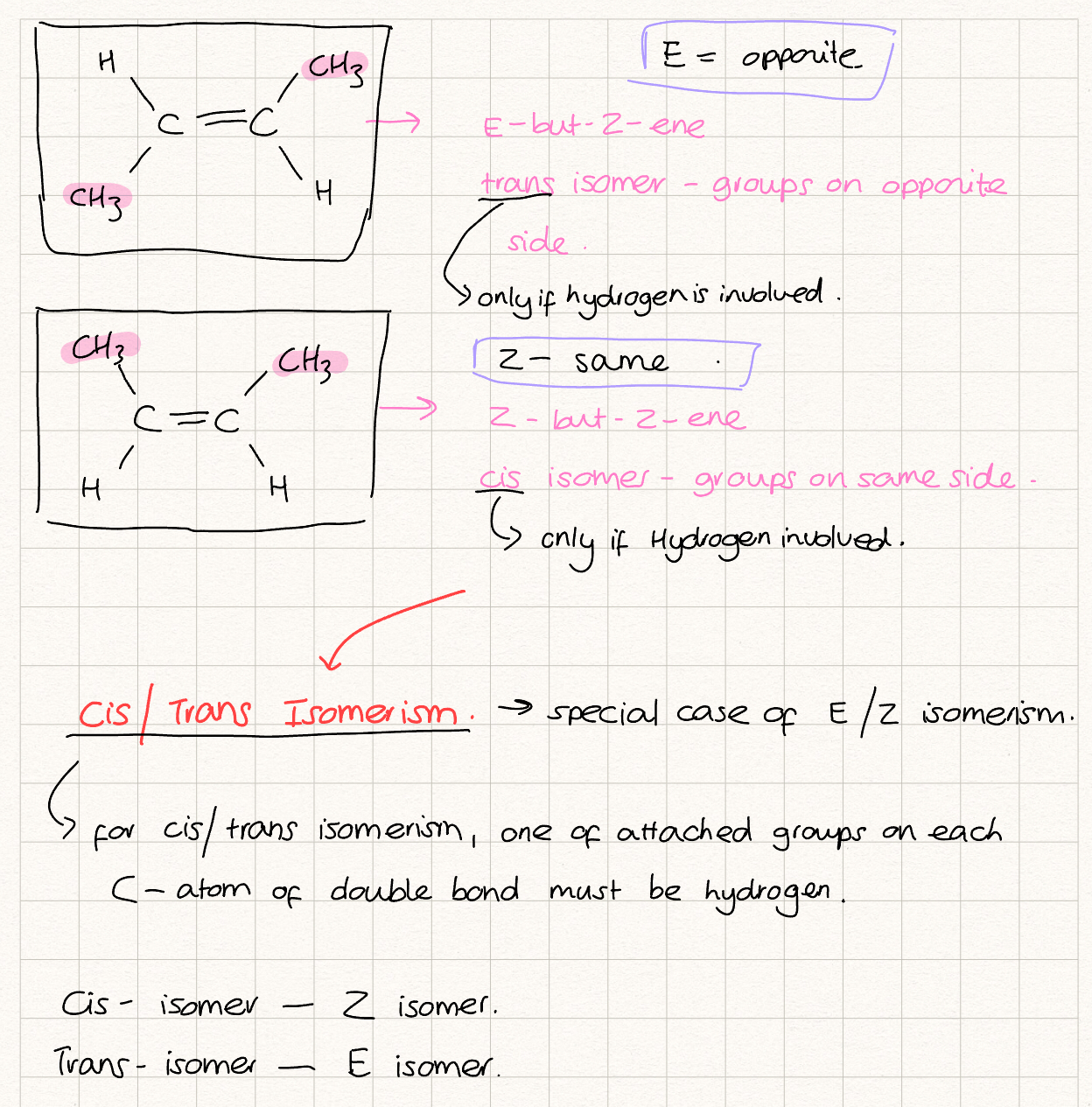
2 conditions must be met: 1. C=C double bond 2. different groups attached to each C atom of double bond.
Describe E/Z isomerism:
Why are alkenes more reactive than alkanes?
Alkenes are more reactive because the π bond is weaker than σ bond, as π requires less energy to break. When alkenes react, π bond breaks but σ bond remains intact.
What kind of reaction do alkenes undergo?
Alkenes undergo electrophillic addition reactions
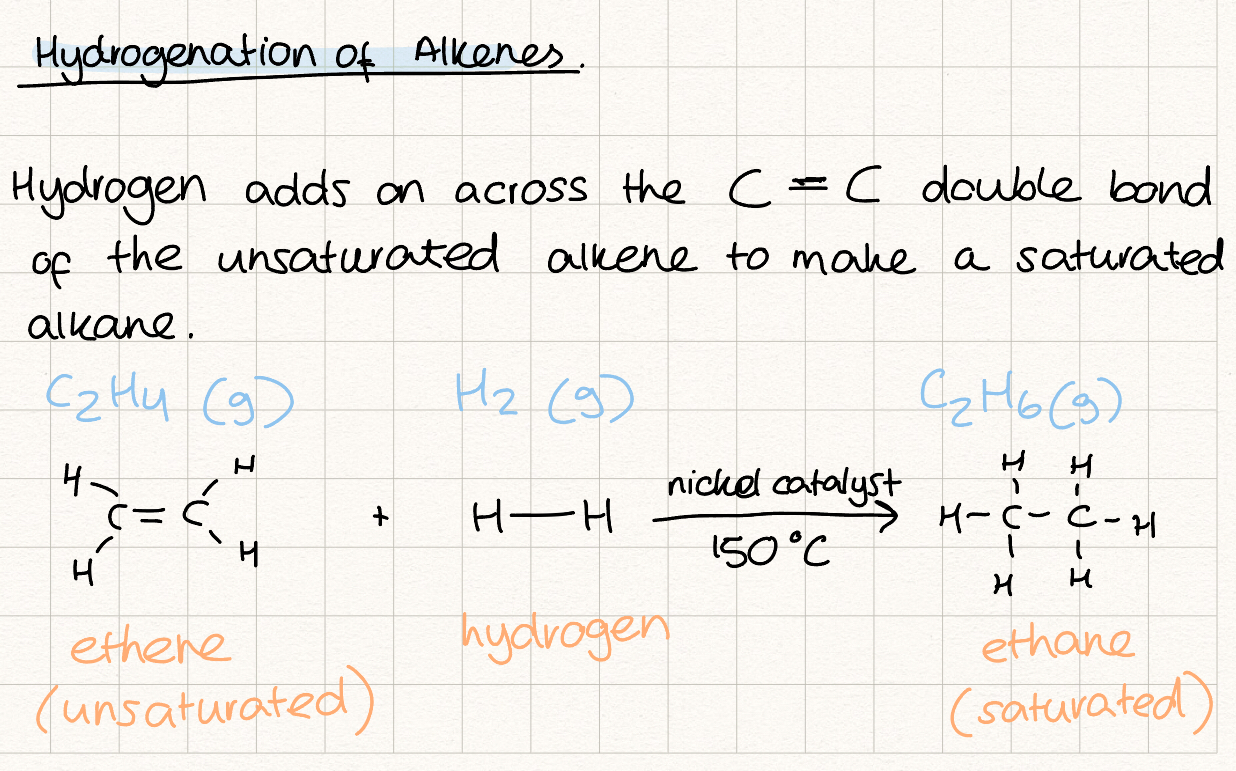
draw Describe the hydrogenation of alkenes:
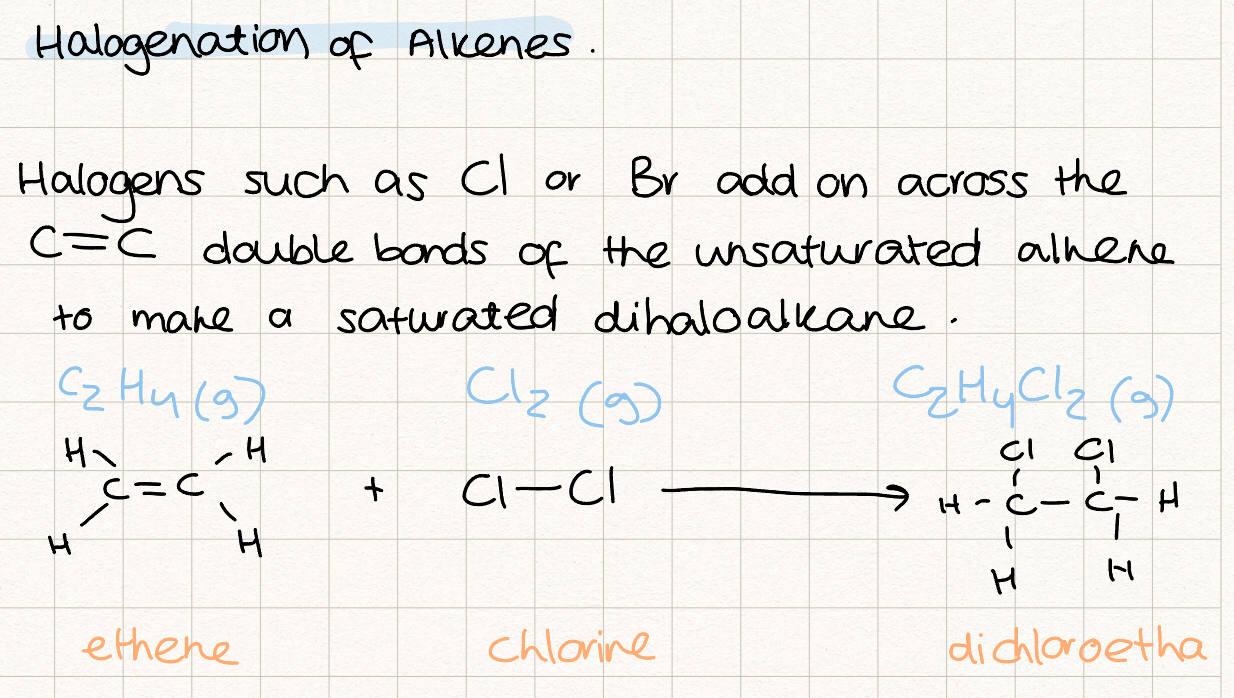
Describe the halogenation of alkenes:
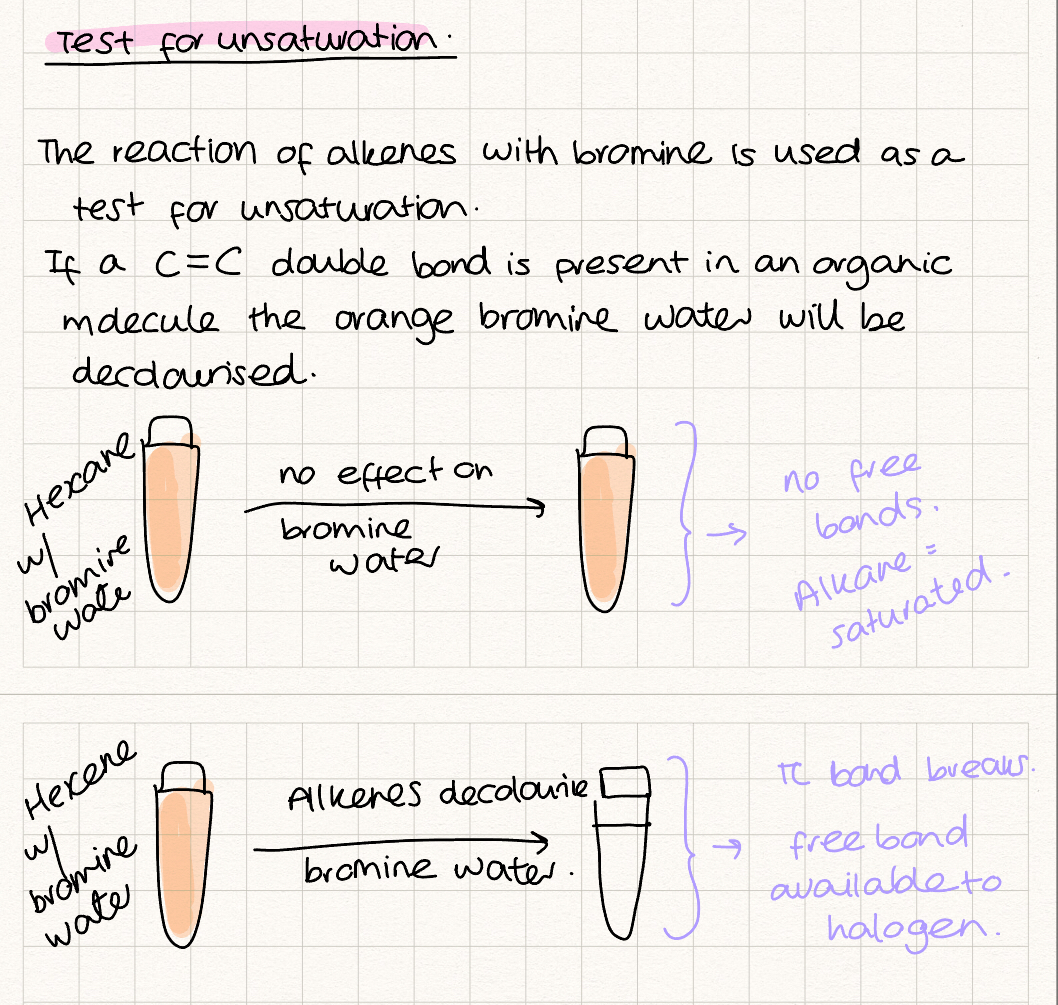
What is the test for unsaturation in alkenes?
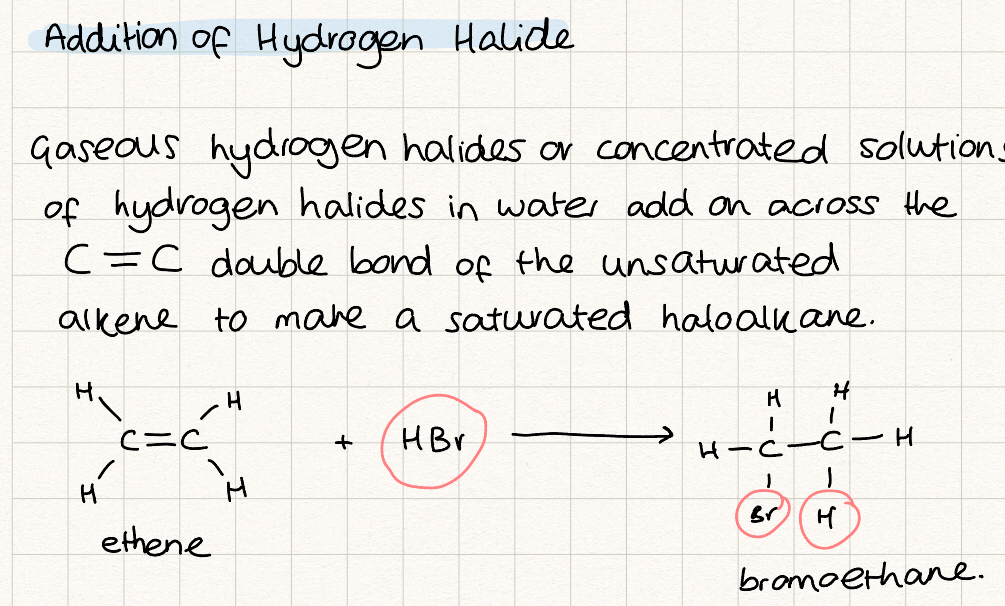
Describe the addition of hydrogen halide to alkenes:
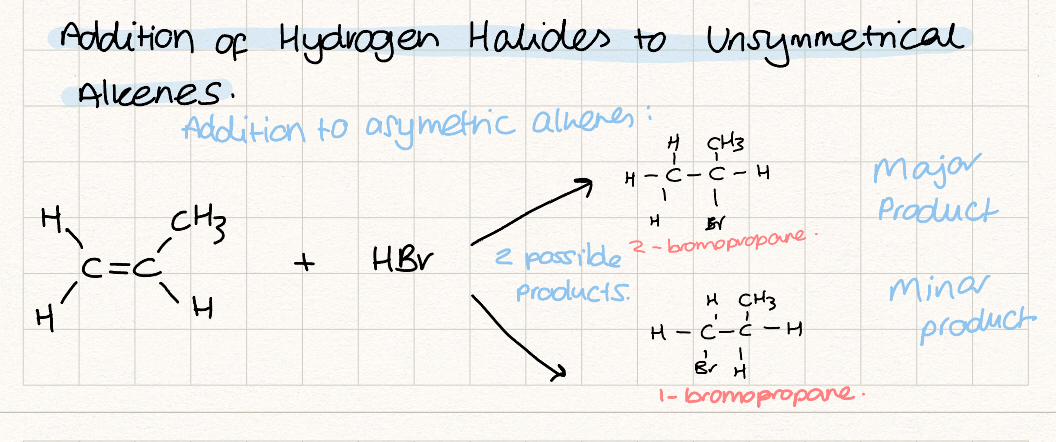
Describe the addition of hydrogen halide on unsymmetrical alkenes:
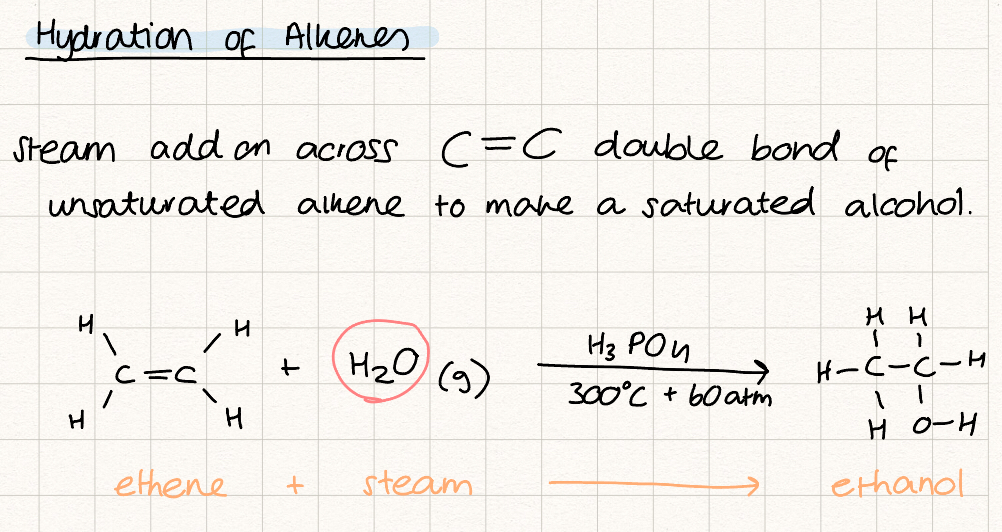
Describe the hydration of alkenes:
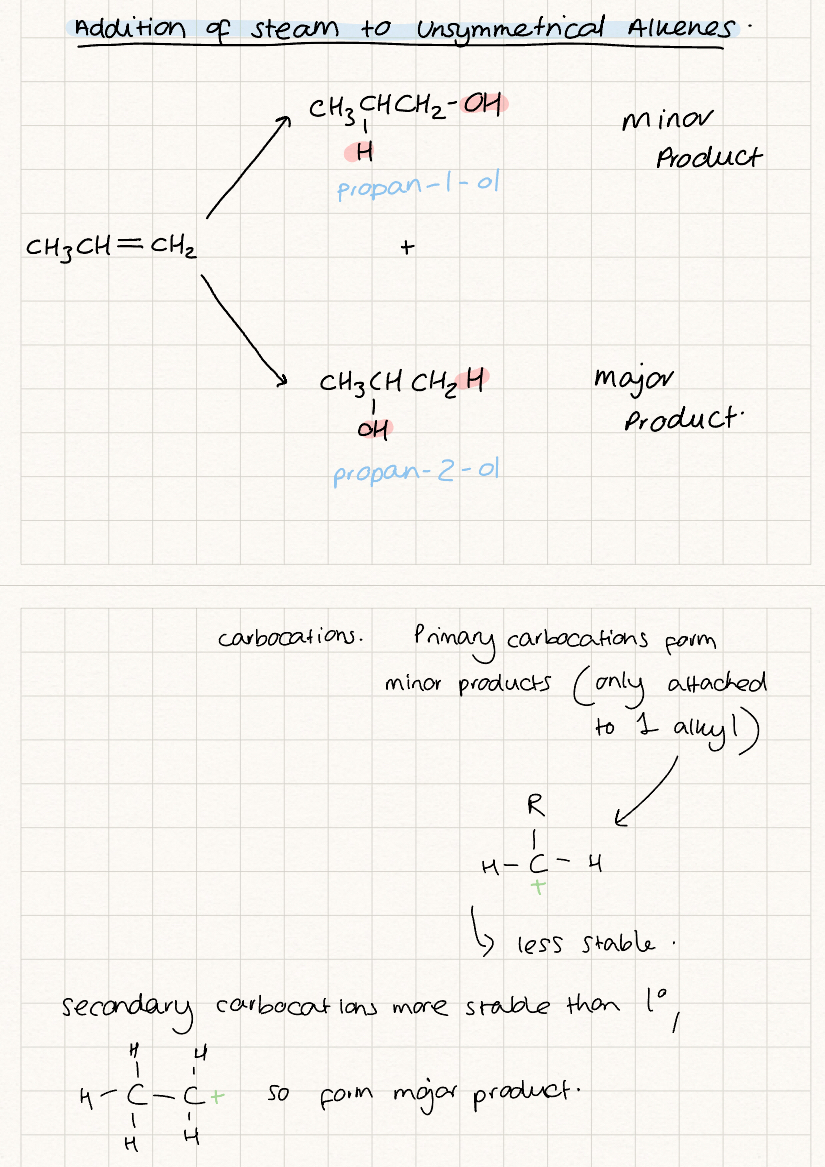
Describe the addition of steam to unsymmetrical alkenes:
Define ‘Electrophiles’:
Electrophiles - electron pair acceptors. Usually + ions/molecules where one of the atoms has partial positive charge.
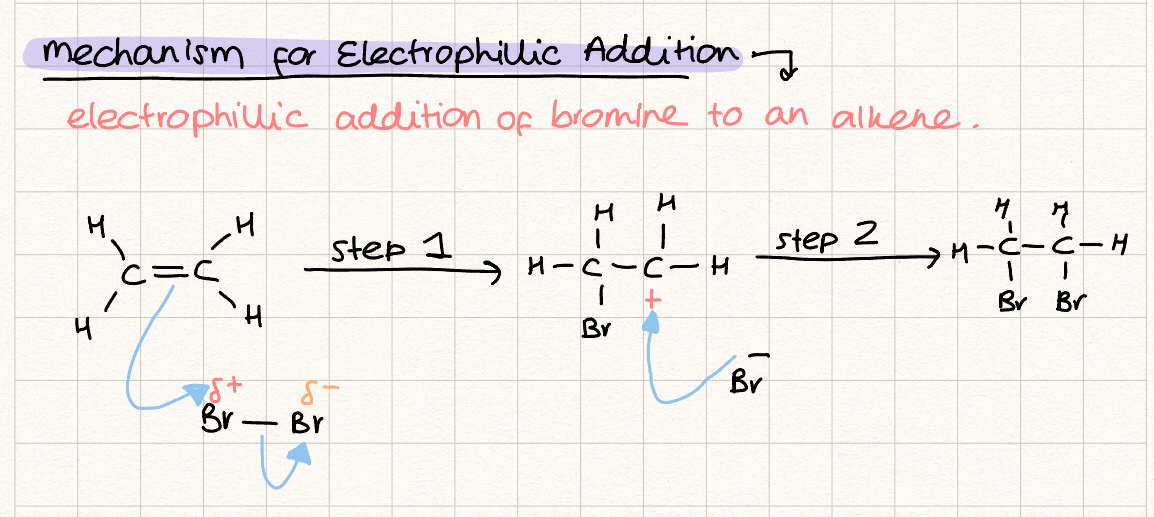
Draw the mechanism for electrophillic addition of bromine to an alkene:
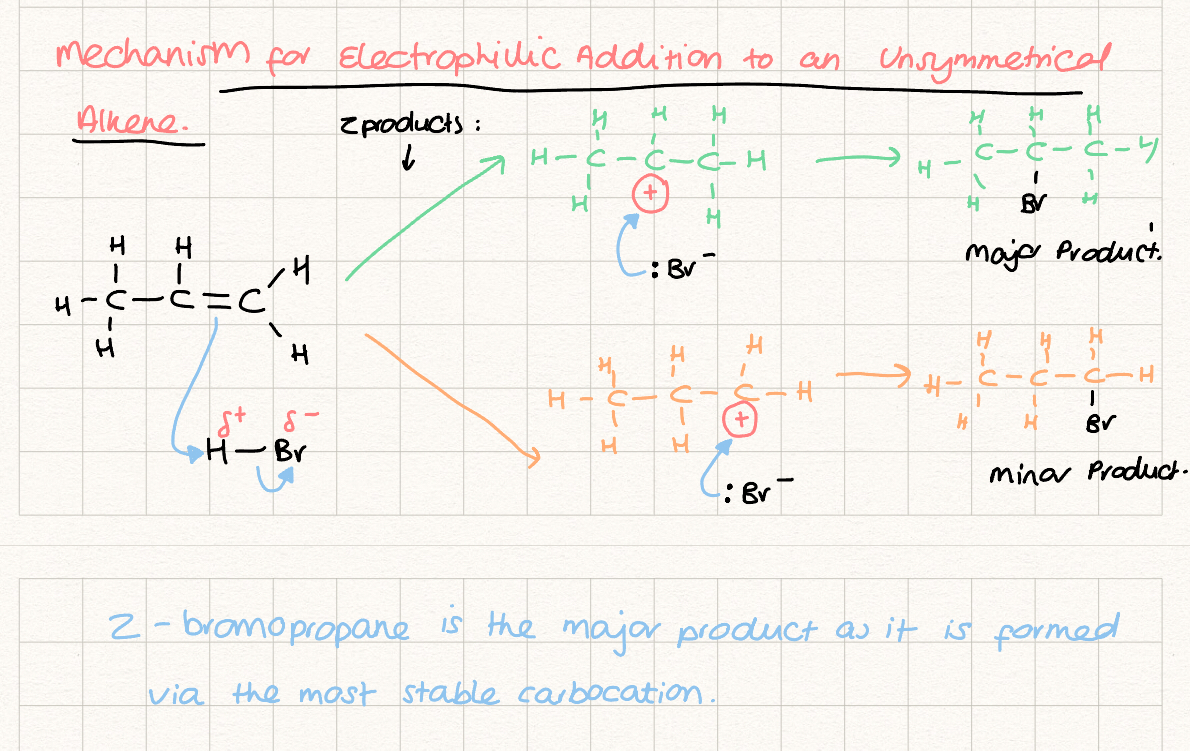
What is Markownikoff’s Rule of carbocation?
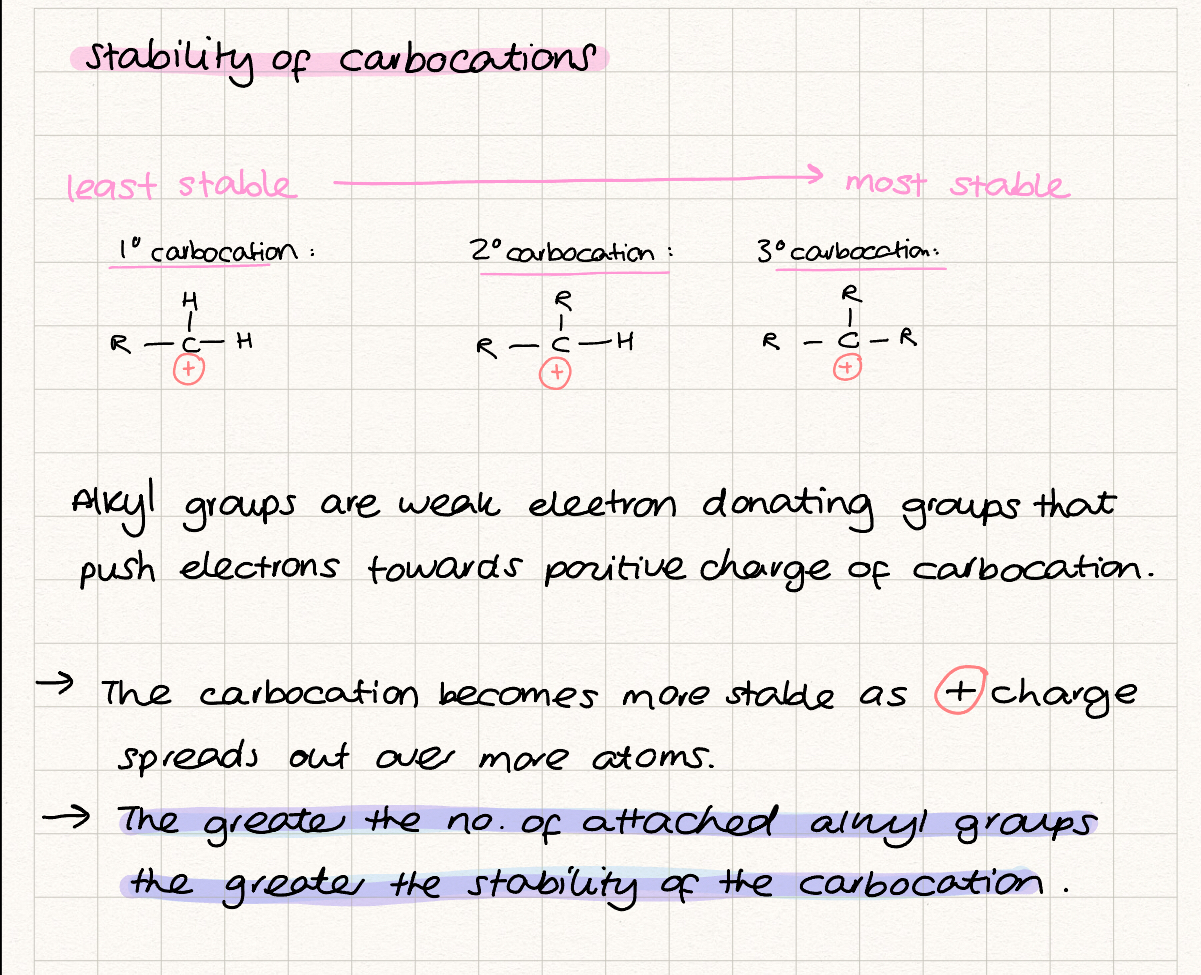
When an unsymmetrical alkene reacts with an unsymmetrical molecule, there are 2 possible isomeric products. 1st step of mechanism- carbocation is formed as intermediate (stage) The major product will be formed from more stable carbocation
What are the 3 different classifications of carbocations?
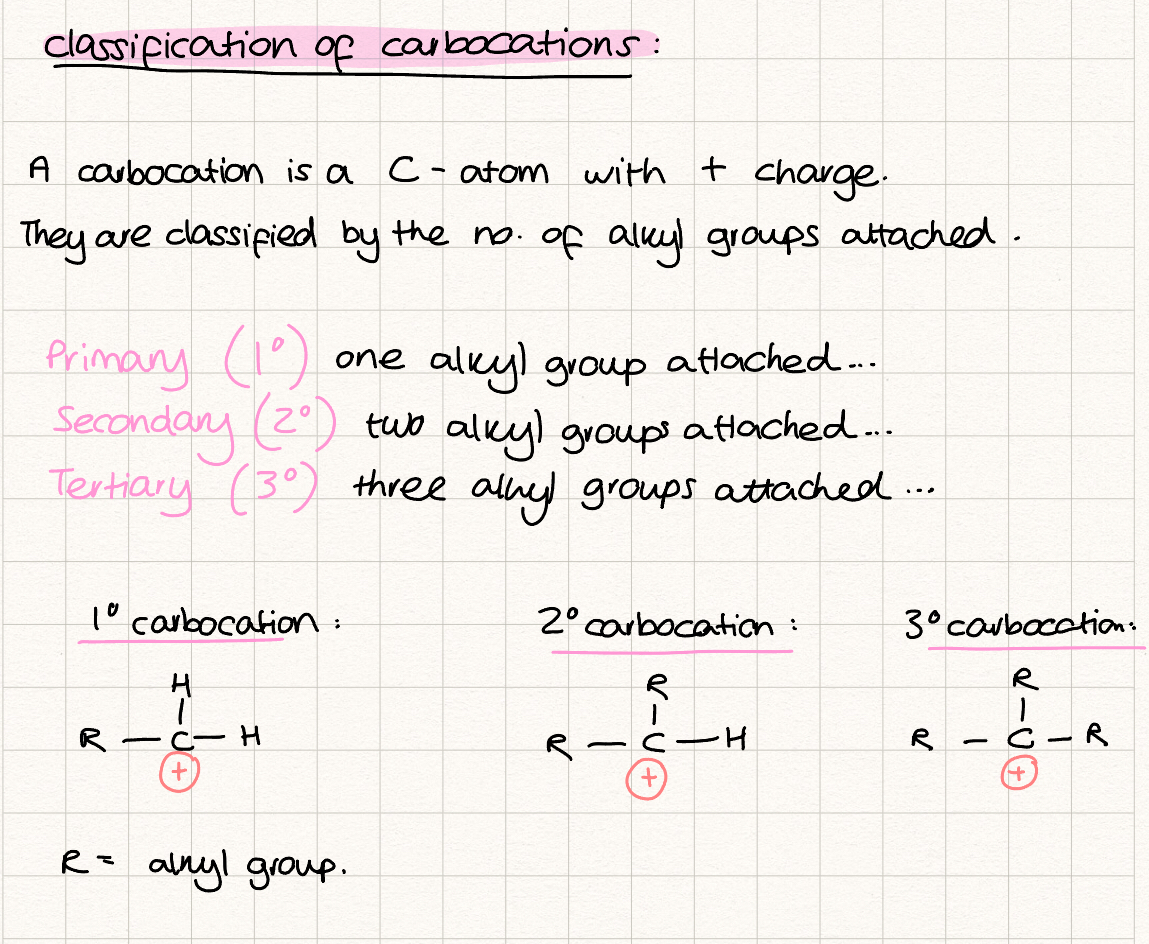
Describe and explain the differing stability of carbocations:
Draw the mechanism for electrophillic addition of an unsymmetrical molecule to an unsymmetrical alkene:
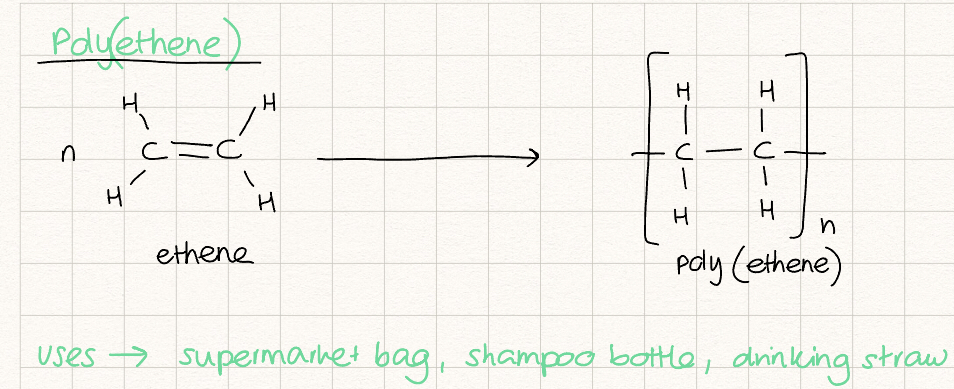
What is addition polymerisation?
• Polymerisation is carried out at high temperatures and pressures using catalysts. • A polymer is a large molecule formed from many thousands of repeat units of smaller molecules known as monomers. • Place bracket around one unit and add ‘n’ next to it for repeating units.
What is the structure and different uses of Poly(ethene)