Topic 15.1 Transition Metals
No description yet. This curated deck is ready for daily study.
Card preview (24)
Transition metals outline
• Variable oxidation states • Partially filled d orbitals • Lost electrons; s orbitals removed first • Similar properties: atomic radius, high density, high melting point/boiling point • Form complexes • Make coloured ions in solution • Good catalyst
Complexes
• Central ion surrounded by ligands • Ligands: H2O, Cl-, NH3, OH- (monodentate) • Dative covalent bond • Bidentate (eg. NH3CH2CH2NH2 lone pairs on each side) • Octahedral: H2O, NH3, OH- • Tetrahedral: Cl- • Co-ordination number is the amount of ligands silver: 2 platinum: 4
Coloured ions
• In transition metals • Ligands cause d orbitals to split • Some electrons will be in a higher energy levels • Ions can be colourless if no electrons to exite (eg. zinc- completely filled d orbitals)
Square planar
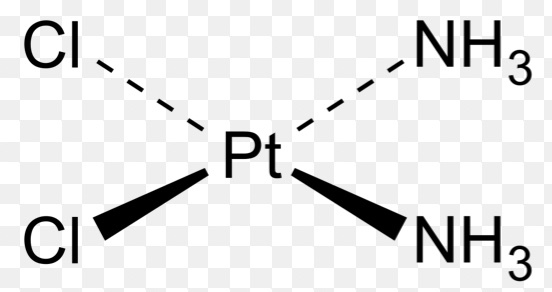
• 90° • cis-platin (hair loss symptom- administer in small doses) • platinum • nickel
Ligand substitution
• Exchange ligands • eg. Haem –> multidentate, Fe Oxygen substituted by carbon monoxide
Amphoteric metal hydroxide
Cr(OH)3(H2O)3 + 3H+ —> [Cr(H2O)6]3+ (?) Cr(OH)3(H2O)3 + 3OH- —> [Cr(OH)6]3- + 3H2O (acts as acid-donates protons(?)) • ability of a species to react with both acid and bases.
Chelete effect
• Positive entropy- more favourable (higher the entropy, the more favourable it is). • Greater entropy change, greater Gibbs free, more favourable.
Characteristics of transition metals
• Hard solids • Have high mpt/bpt • Can act as catalysts • Form coloured ions and compounds • Form ions with different oxidation numbers • Form ions with incompletely-filled d-orbitals
Symbols and equations with ligands
• The relatively small size of transition metal ions enables them to attract electron-rich species more strongly, including the water molecules present in aqueous solutions. • These water molecules are attracted to the transition metals are attracted to the transition metal ions so strongly that they form a specific number of bonds, usually 6. • These electron-rich species that can form dative bonds in the same way, are called ligands. The complete formulae are called complexes (complex ions). • The total number of dative bonds around the metal ion is called the coordination number.
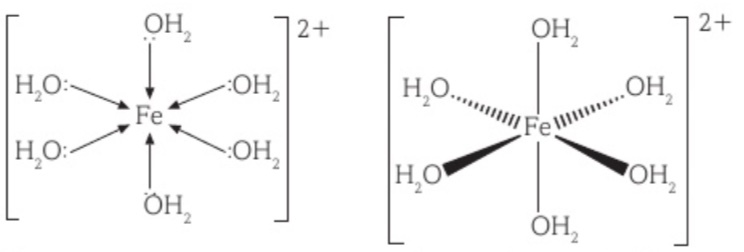
Examples of ligands
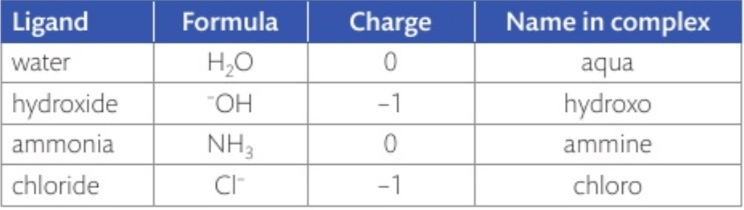
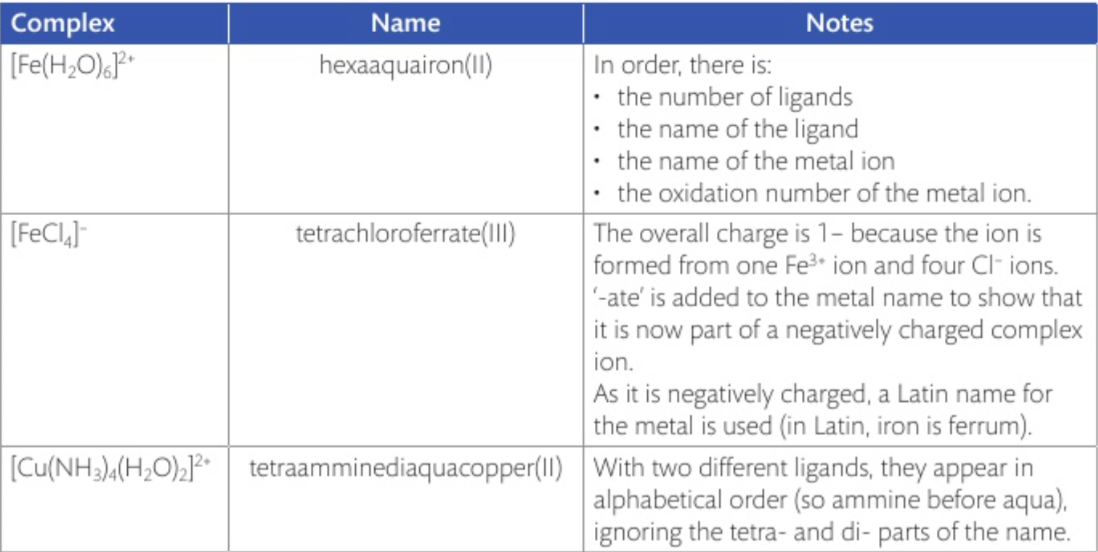
Naming complexes
Colour depends on electrons in 3d energy levels
If one of the electrons in the lower energy level absorbs energy from the visible spectrum, it can move to the higher energy level (‘excited’ state). - When an electron moves to a higher energy level, the amount of energy it absorbs depends on the difference in energy between two levels- the bigger the energy difference, the more energy the electron absorbs.
Predicting shapes if complexes: using VSEPR theory
Count the number of electrons donates by the ligands.
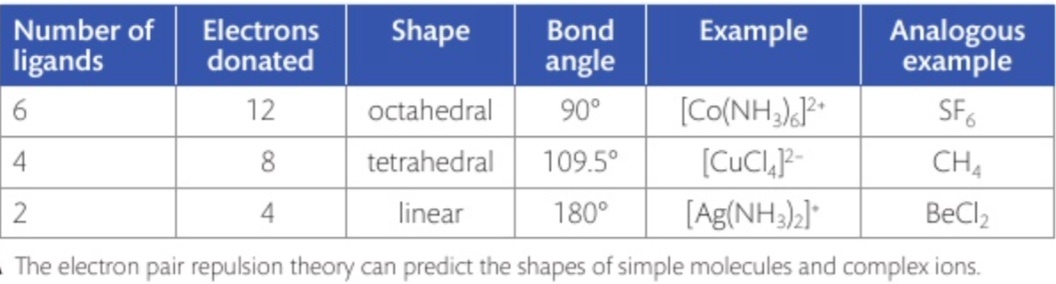
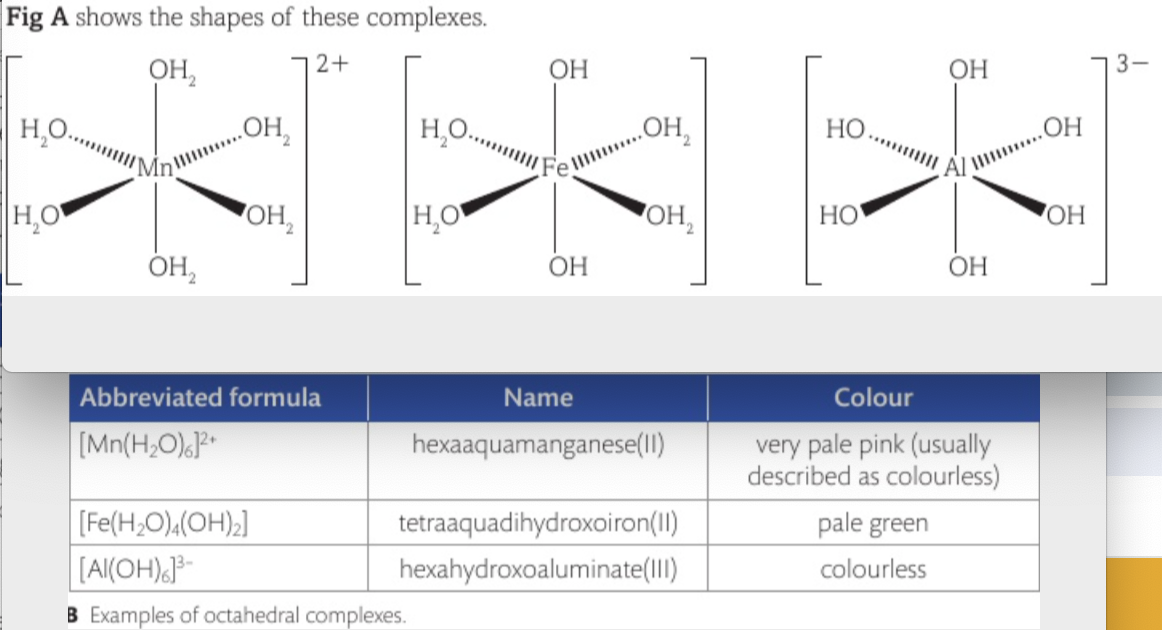
Predicting the shapes of complexes: octahedral complexes
• The most common ligands in most octahedral complexes are water, ammonia and the hydroxide ion. • Although these ligands have different numbers of lone pairs of electrons, each ligand uses only one lone pair to forma coordinate bond with a transition metal ion. • As they contain six ligands, the complexes are sometimes described as having six-fold coordination.
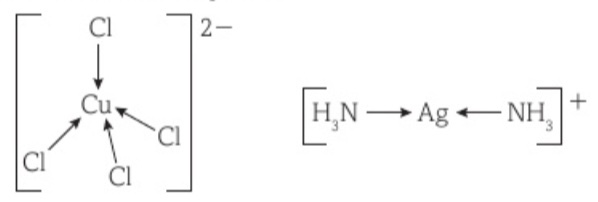
Predicting the shape of complexes: Tetrahedral and linear complexes
• The only tetrahedral complexes needed are chloride ions. • Chloride ions are much bigger than water etc so there is insufficient room around the central metal ion for six chloride ions to act as ligands. • The only linear complex needed is the reactive ion present in Tollen’s reagent (ammoniacal silver nitrate). • The Ag+ ion has only two ligands.
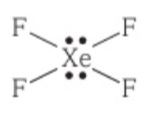
Predicting the shape of complexes: Square planar molecules
• Example of a square planar shape is xenon tetrafluoride (XeF4). • The four bonding pairs are in a plane, with four fluorine atoms at the corners of a square • Bond angle: 90°
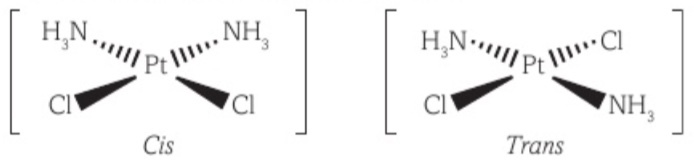
Predicting the shape of complexes: Cis-platin
• Four ligands in this complex form a square planar shape, and not a tetrahedral shape. • Effective treatment for some types of cancer.
Cis-trans isomers
• Cis-platin and trans-platin isomers • Consist of: a platinum(II) ion, two chloride ligands and two ammonia ligands. • The cis- prefix indicates that identical ligands are next to each other. • The trans- prefix indicates that they are opposite to each other
Denticity
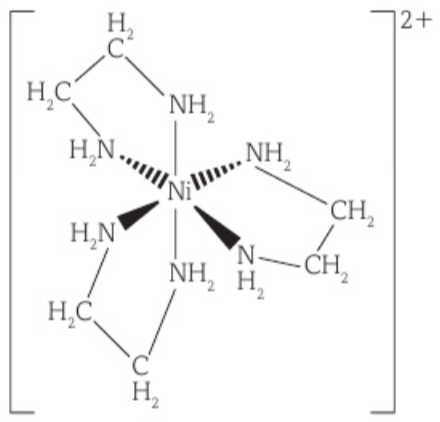
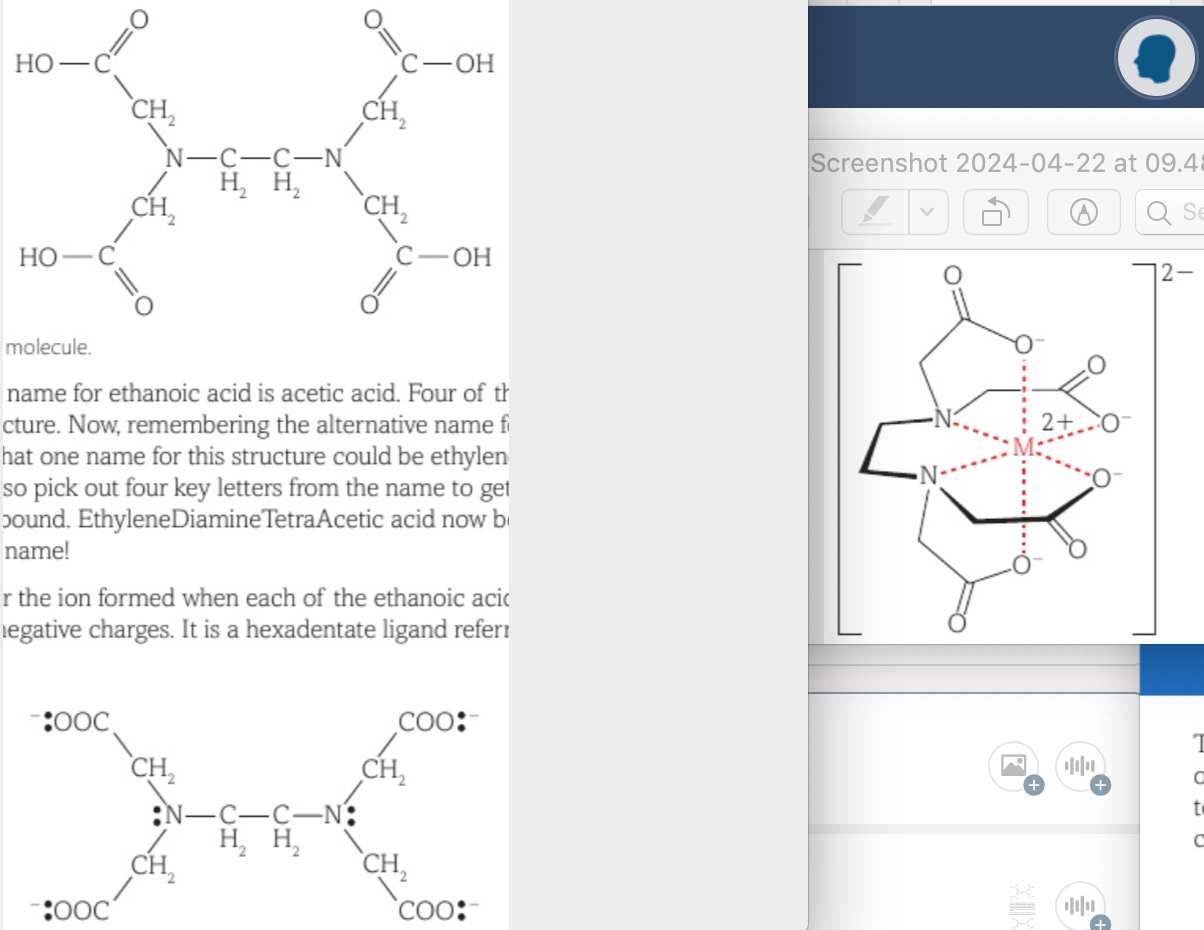
• Monodentate ligands: ligand uses one pair of electrons on one atom to form the dative bond with the metal ion. • Bidentate ligand: has two atoms, each of which uses a one pair of electrons to form a dative bond with the metal ion. • Multidentate ligand: a ligand with several atoms, each of which uses a lone pair of electrons to form a dative bond with metal ion.
Bidentate ligands
When it acts as a bidentate ligand, it uses the lone pair of electrons on each nitrogen atom to attach to the metal ion.
Multidentate ligands
The stability of complexes
• The ‘stability’ refers to the stability of two complexes in which the number of ligands has changed. • Ligand exchange reactions lead to an increase in stability of the products compared to the reactants, and so formation of the products is favoured. • When a mono dentate ligand is replaced by a multi dentate ligand, the increase in stability is even greater.
Haemoglobin and oxygen transport
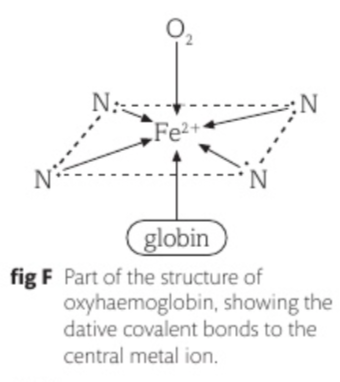
In a haem group 4 n atoms hold Fe2+ ion by forming dative bonds in the square planar structure. - Fifth dative bond from protein to Fe2+ ion. - Oxygen binds by becoming ligand to Fe2+. - Reversible reaction as bond is weak.
Haemoglobin and carbon monoxide
• Lone pair on carbon that forms ligand. • Strong bond between carbon and oxygen so takes oxygen from Fe2+. • Ligand substitution. • Non reversible reaction. • Once the carboxyhemoglobin is formed, the dative bond is so strong that it doesn’t break easily. • Haemoglobin + carbon monoxide –> carboxyhaemoglobin (whereas: Haemoglobin + oxygen ⇌ oxyhaemoglobin).