20 - CARBOHYDRATES AND NUCLEIC ACIDS
No description yet. This curated deck is ready for daily study.
Card preview (21)
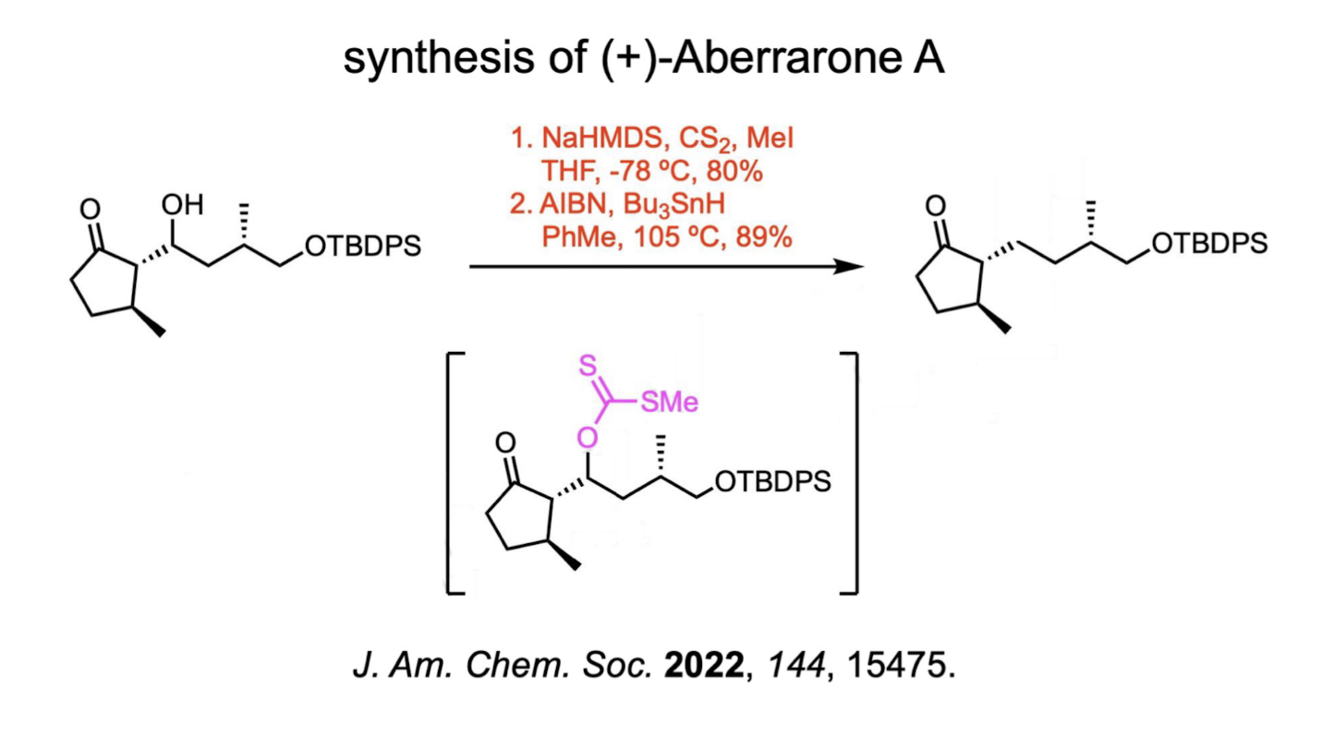
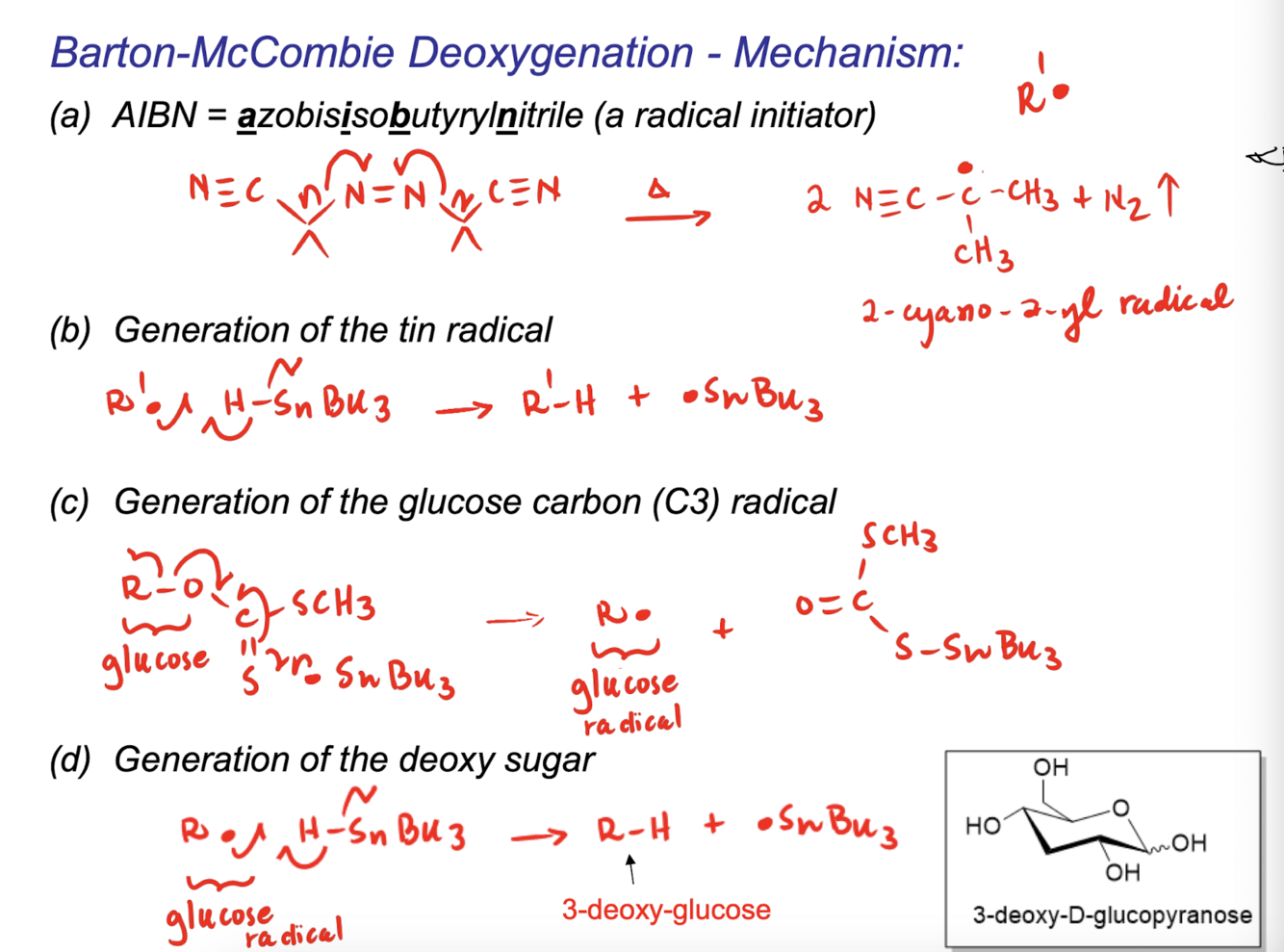
what is that Barton McCombie Reaction
deoxygenation replace the C-O bond by a C-H bond

synthesis of (+) Aberrarone A
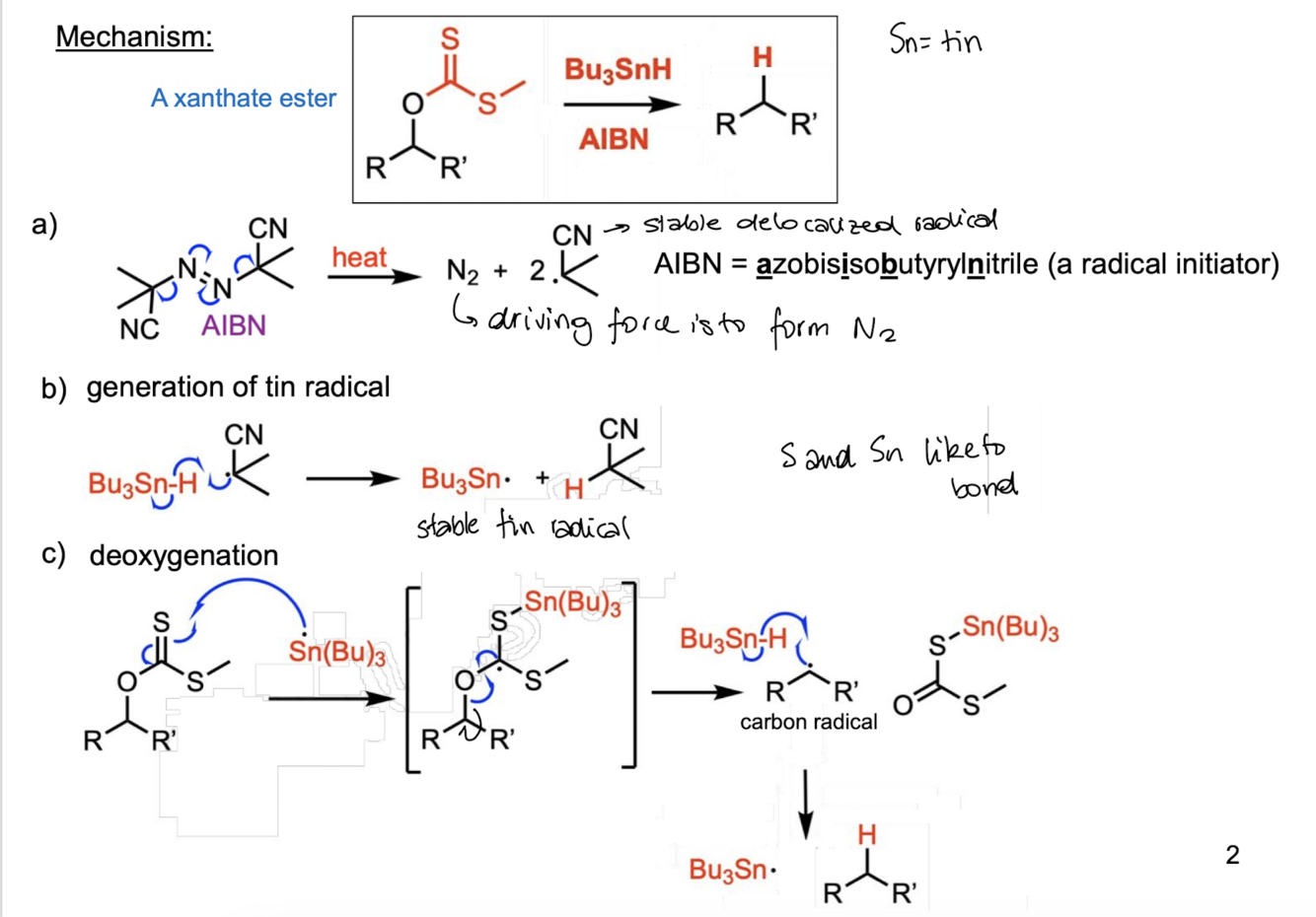
what is the mechanism of the Barton McCombie Reaction
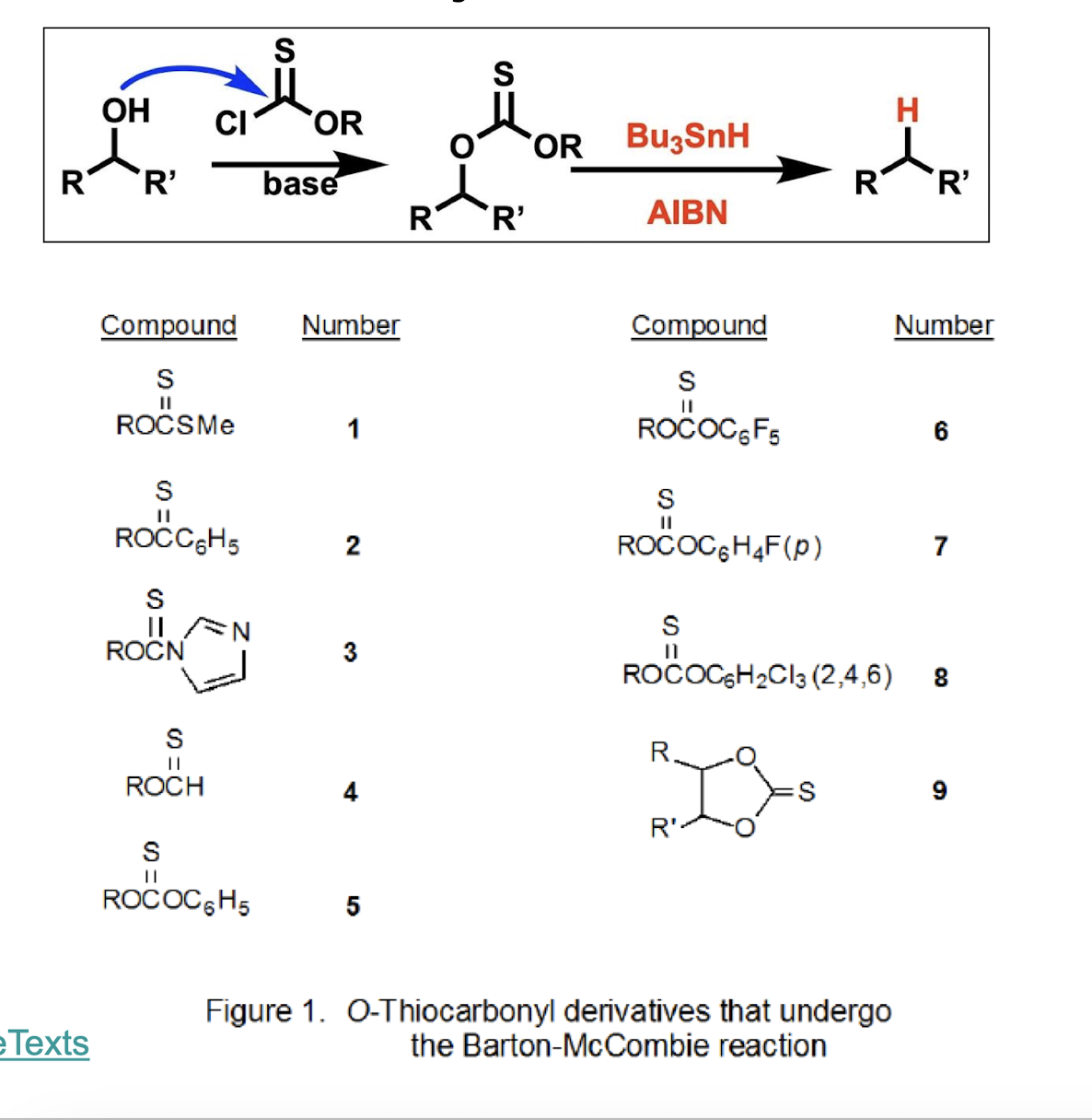
what are some other o-thiocarbonyl derivates that undergo the Barton McCombie reaction
how is glucose deoxygenated at C3
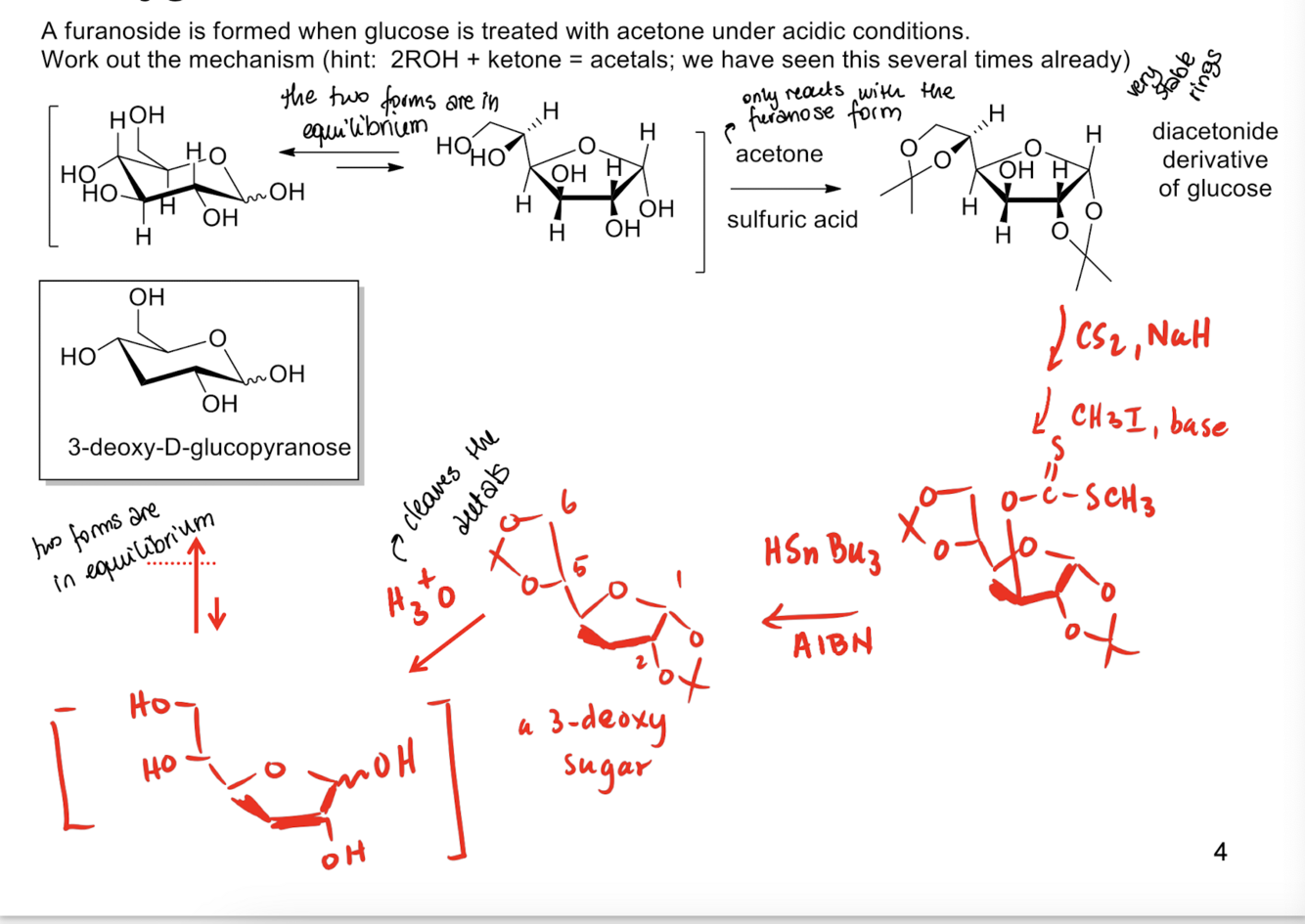
mechanism of deoxygenation of glucose at C3
how does deoxygenation happen naturally
happens by ribonucleotide reductase make DNA from RNA RR is hyperactive in cancer cells, because they have the pressure to make more DNA to divide more this could be a target for potential cancer treatment
vitamin C function
vitamin C is made from D-glucose in plants humans do not have the enzymes to make vitamin C so we must obtain i from the diet vitamin C is antioxidant: slows down the oxidation of other molecules converts OH radicals to water made
how is vitamin C made from D-glucose
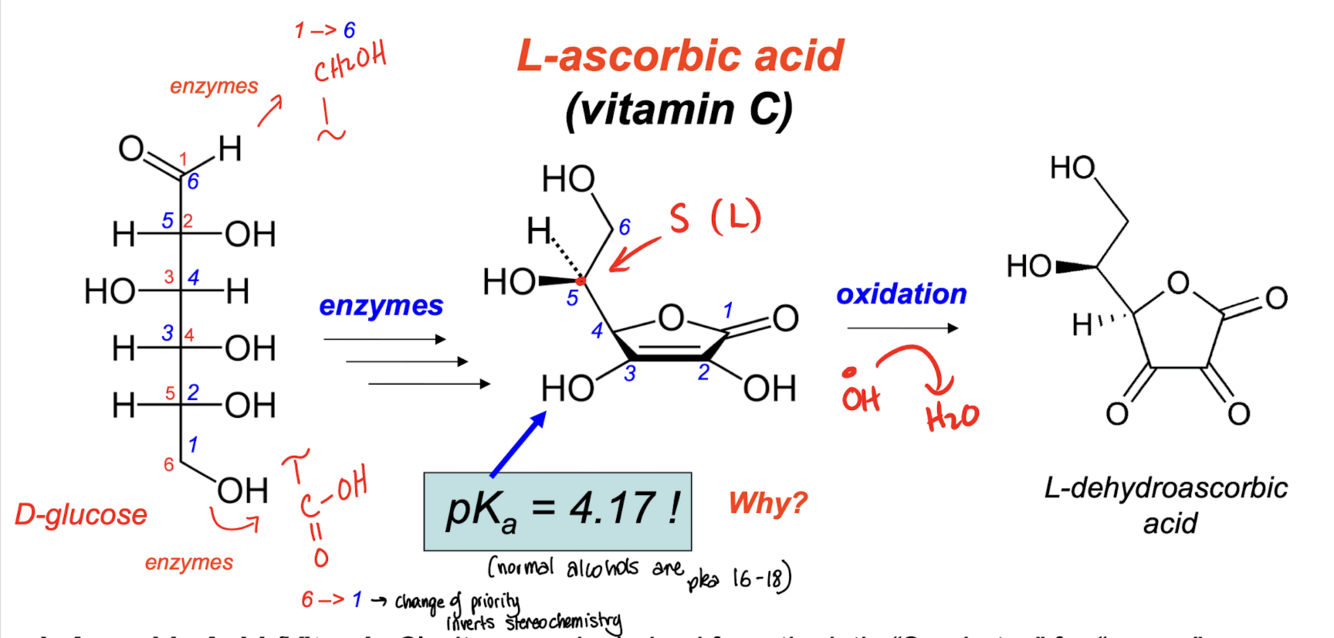
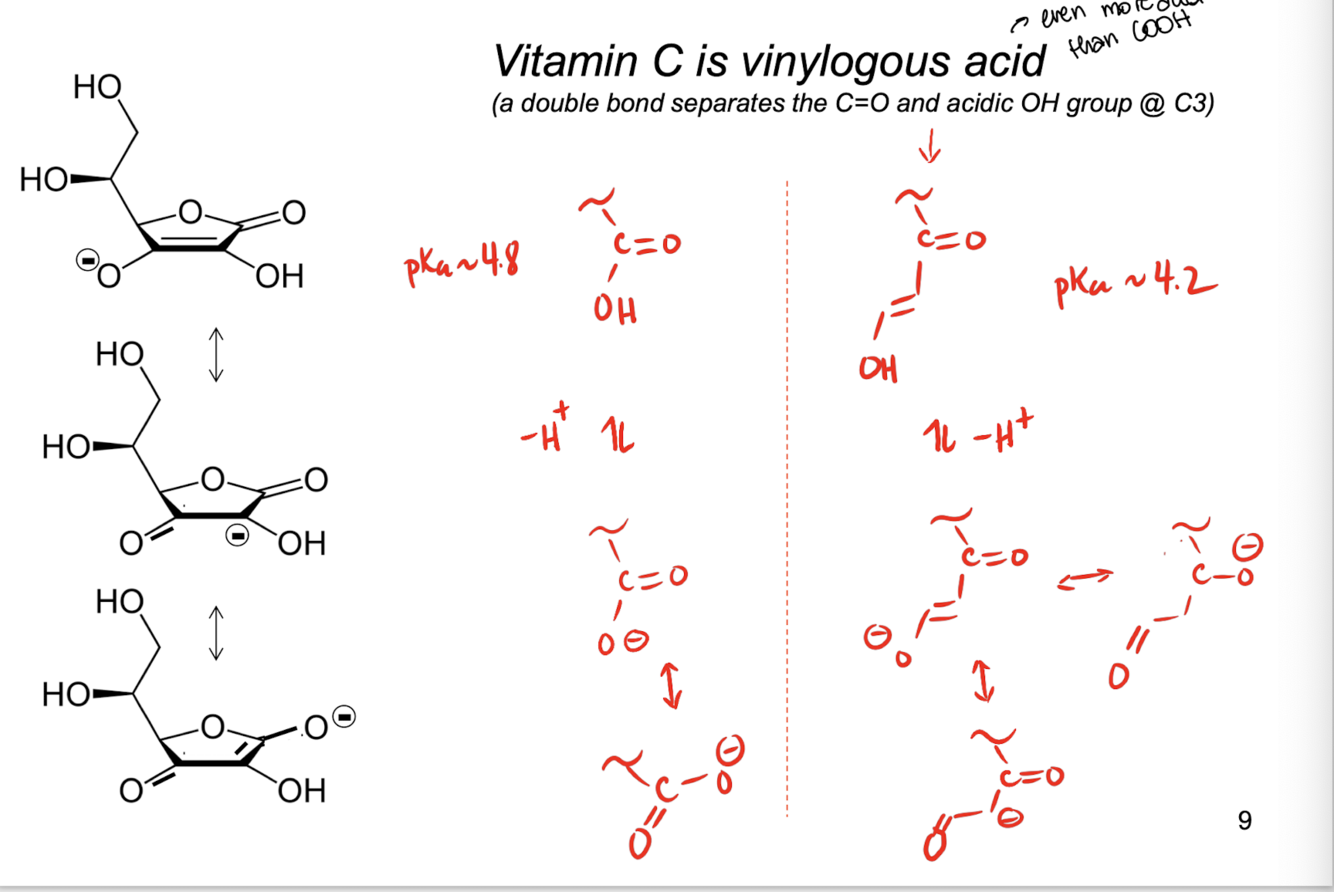
why is the C3 OH on vitamin C more acidic than the C2 OH group?
more possible resonance structures due to the fact that vitamin C is a vinylogous acid (a double bond separates the C=O and the acidic OH group on C3 more acidic than just a normal COOH this drops the pKa down to 4.17
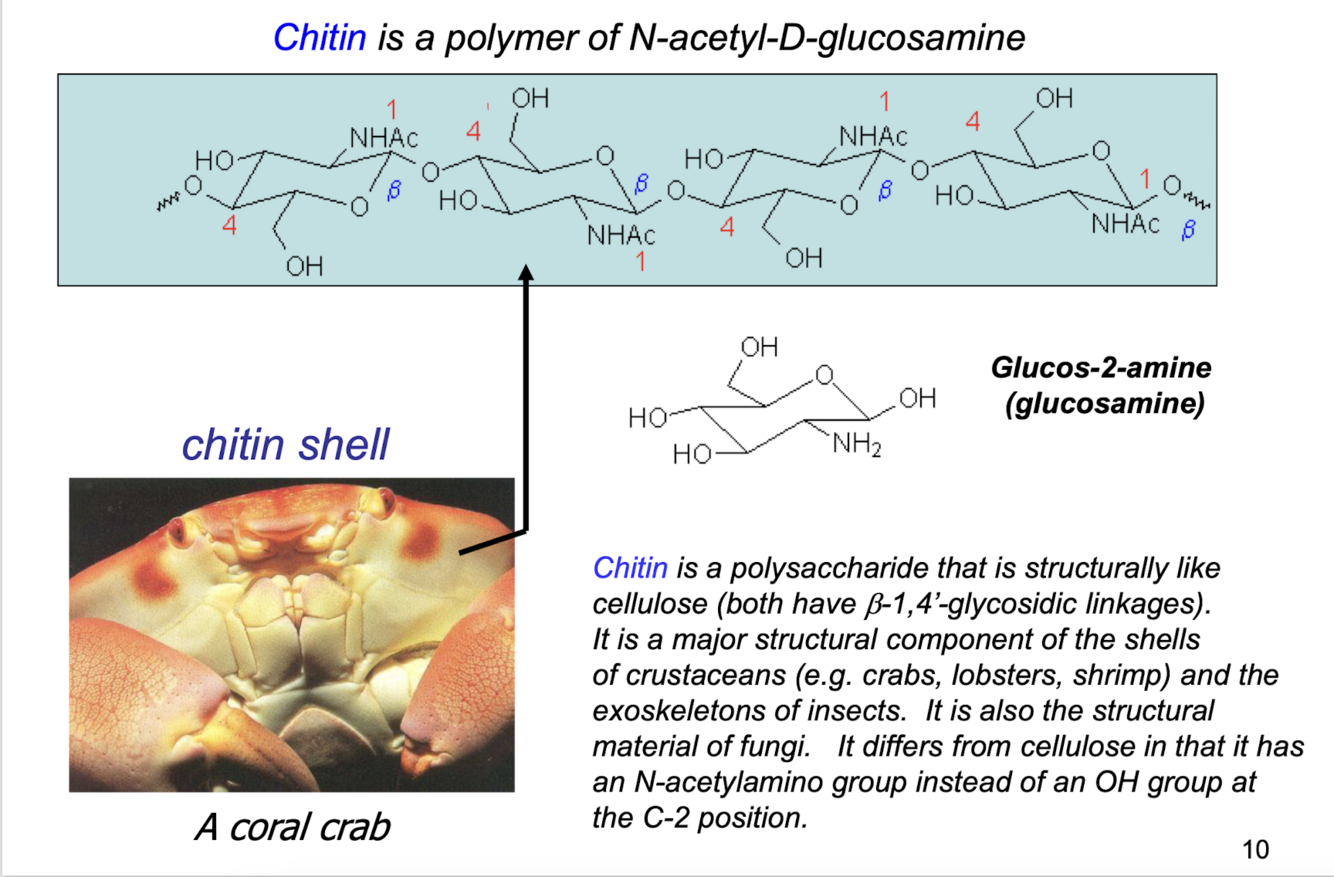
chitin structure and characteristics
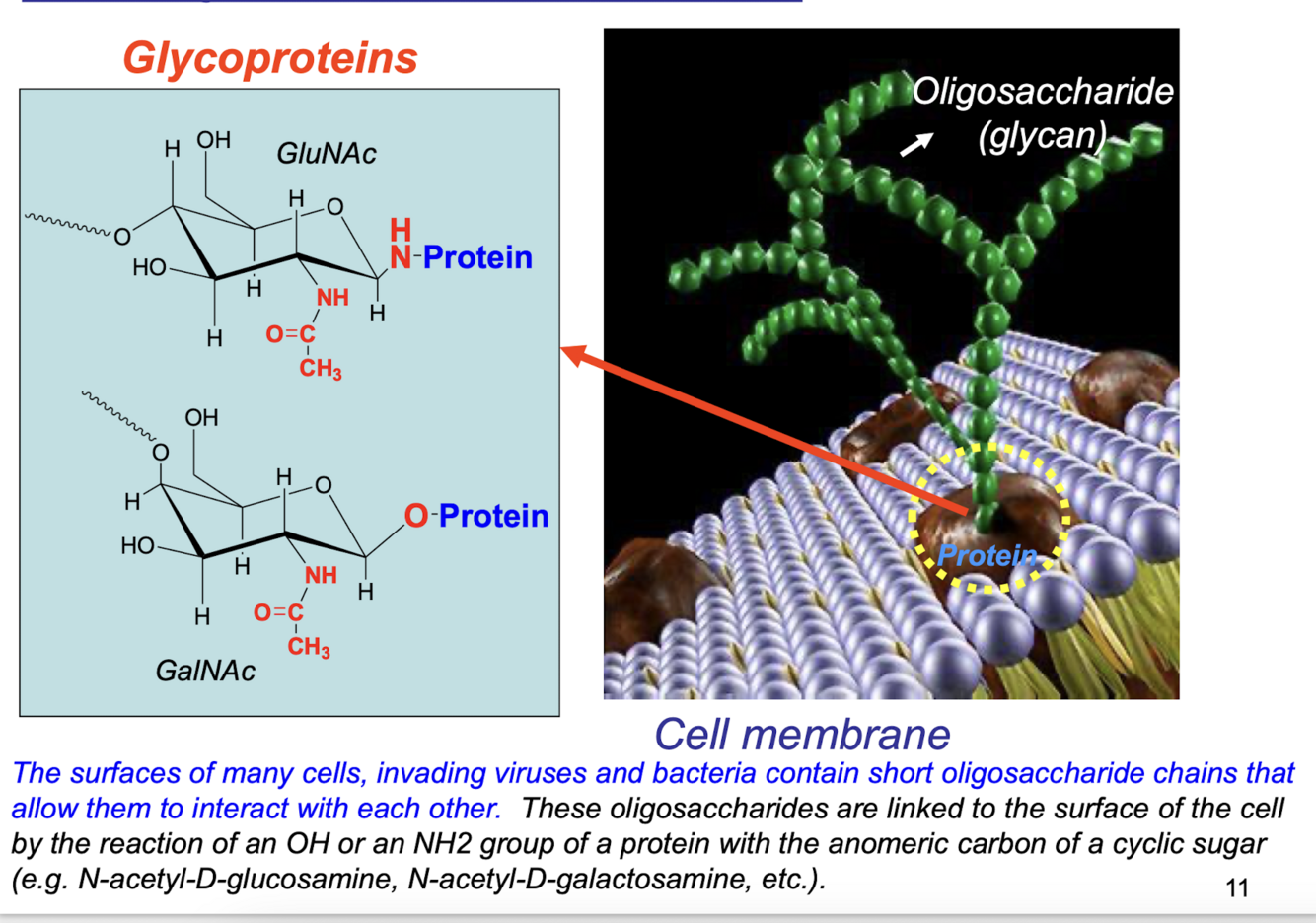
carbohydrates on cell surfaces
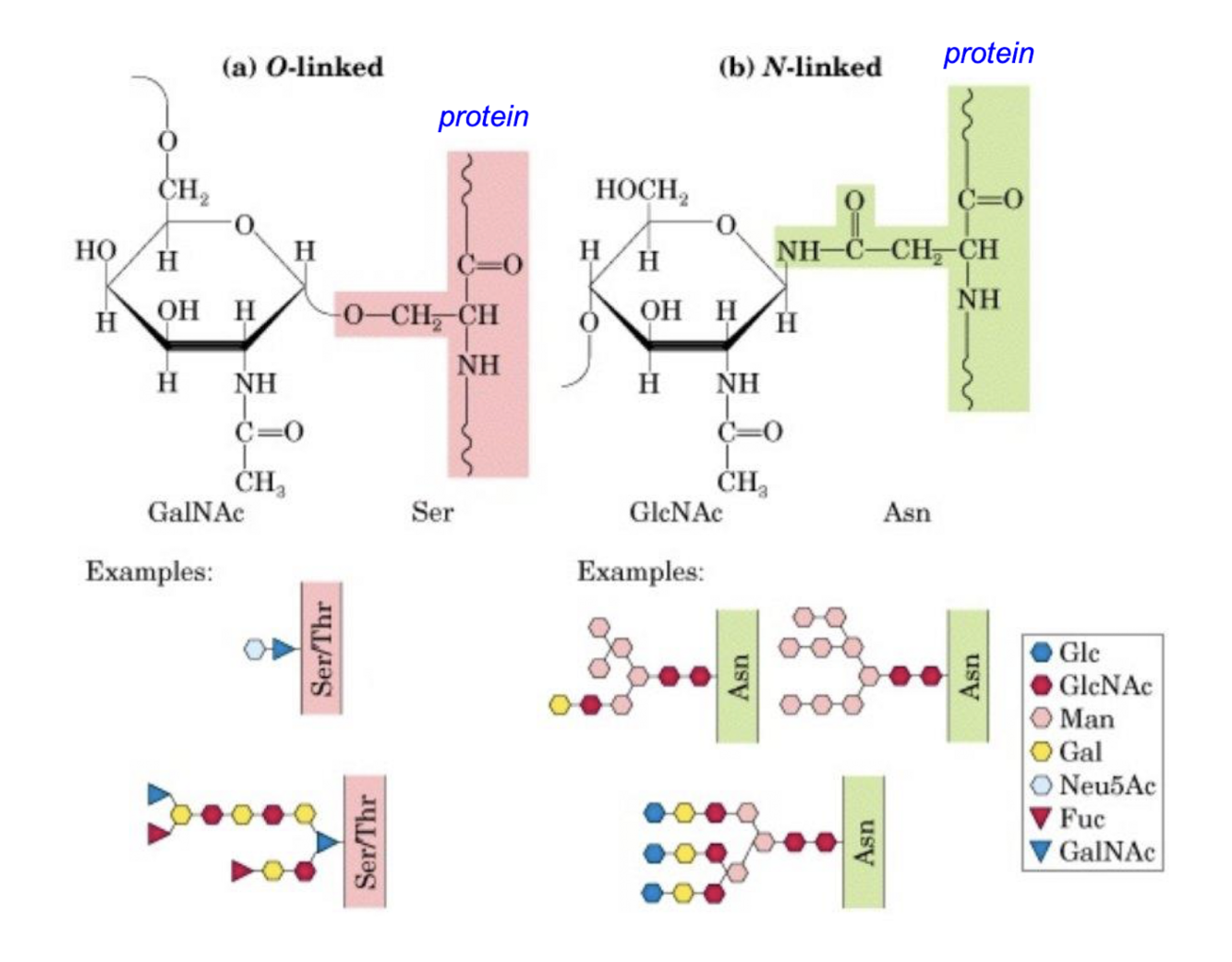
what are N and O glycoproteins linked to?
N: linked to asparagine O: linked to serine/threonine
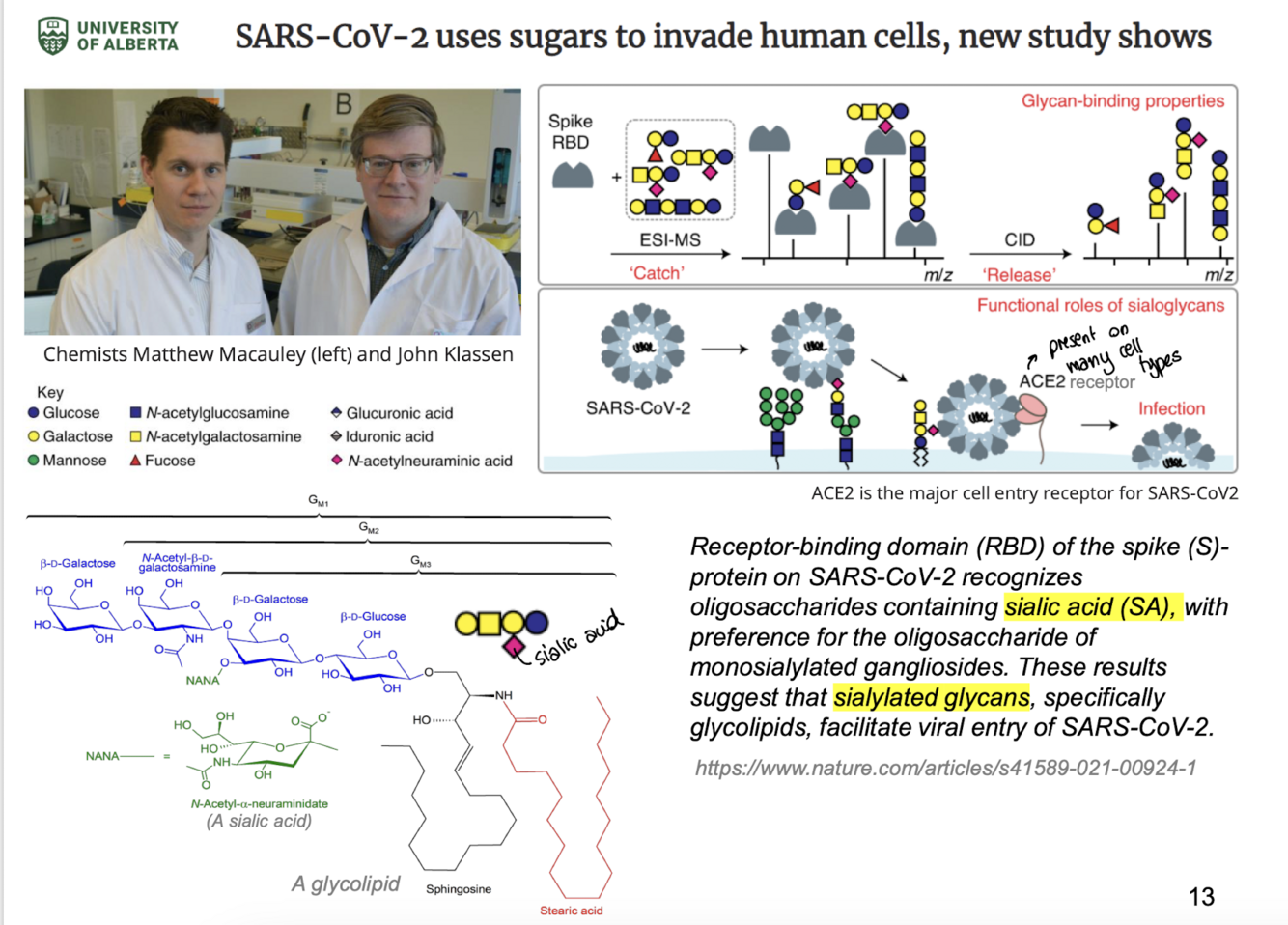
SARS-CoV-2 and sugars
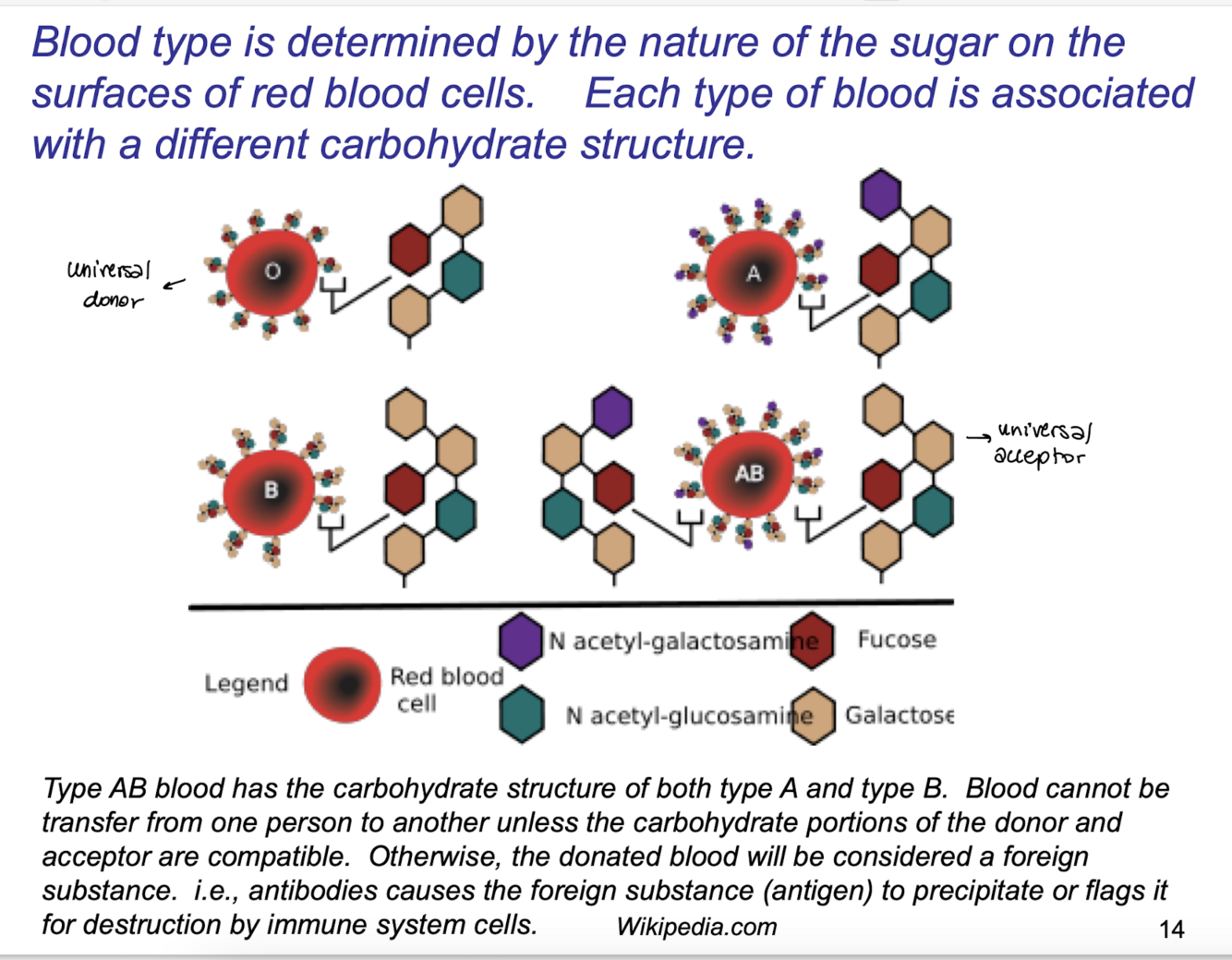
blood type and sugars
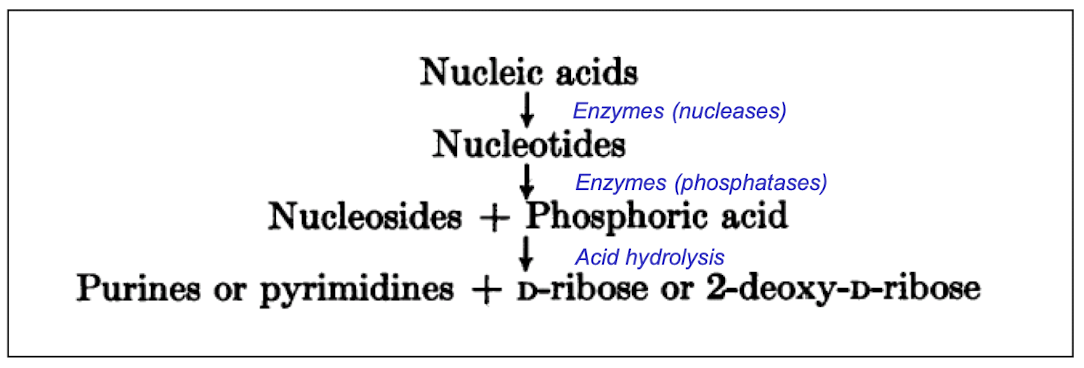
how did Alexander R. Todd analyse the structure of DNA and RNA
through hydrolysis
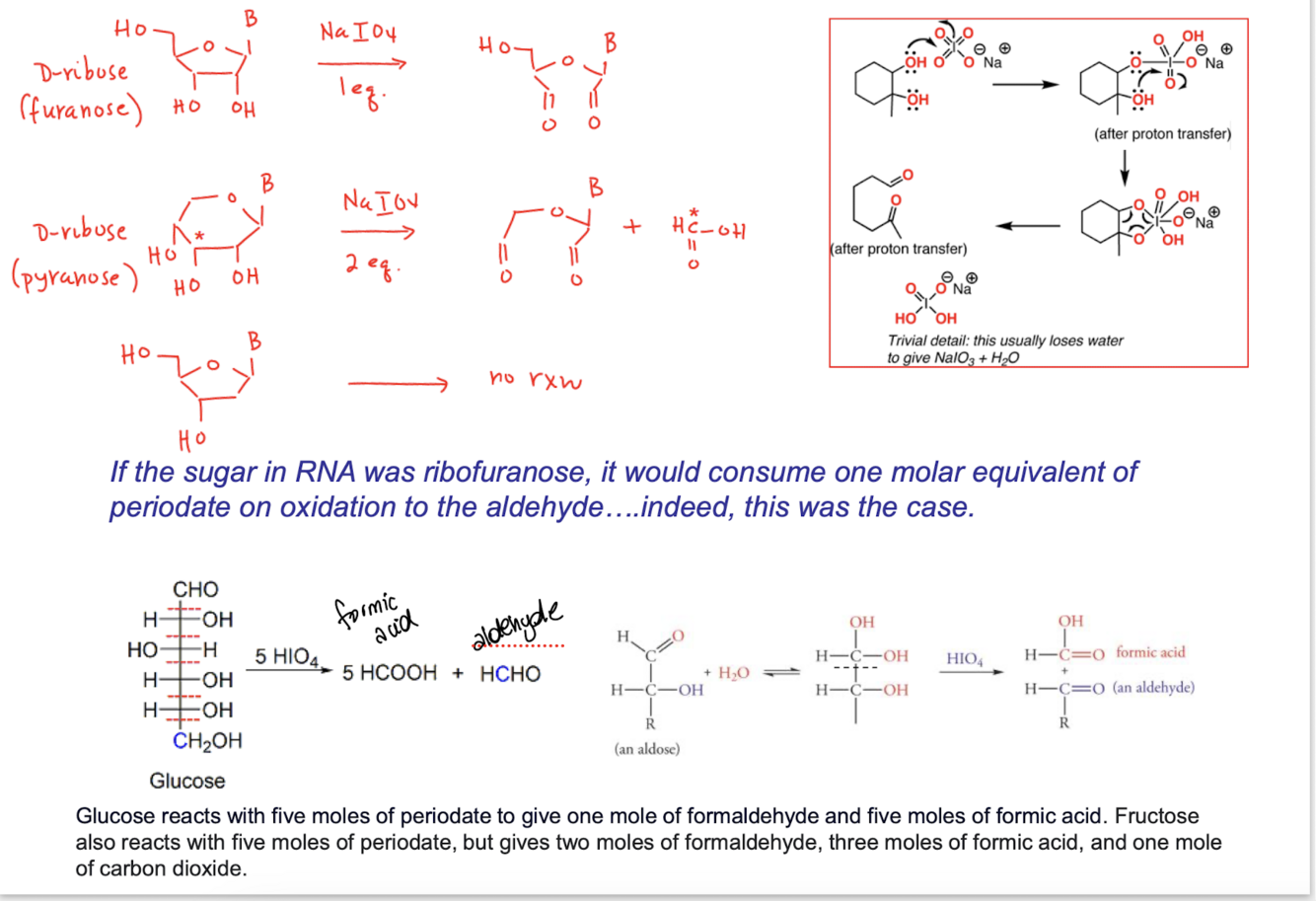
how to determine whether the sugar was furanose or pyranose
what is the pKa of the phosphate on DNA/RNA
pKa=1.5
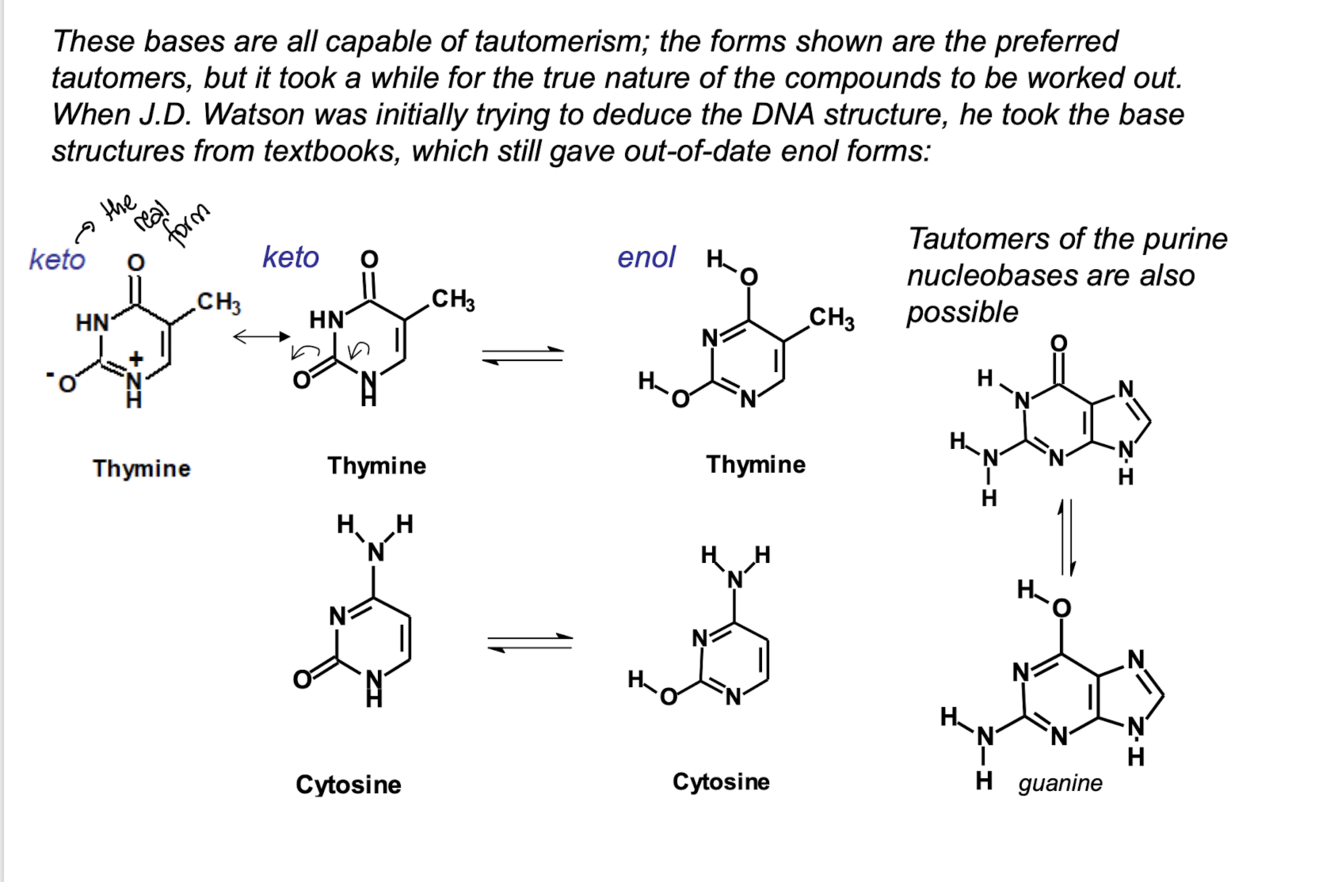
what are the forms of the bases and what is the most stable form?
keto and enol keto is the true form
what interaction do bases have inside the helix
the bases stack on top of each other pi-pi interaction van der wall interactions stabilise the helix
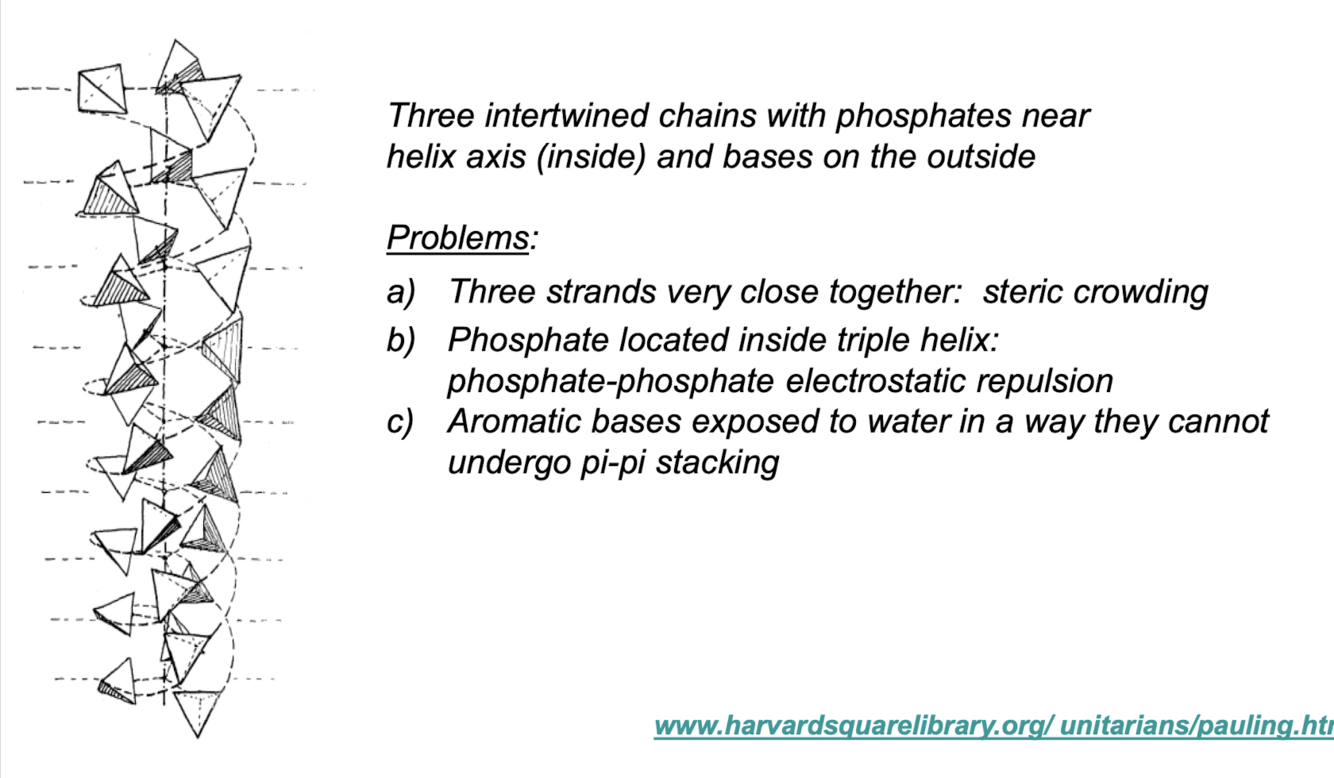
structure of DNA proposed by pauling and why it was wrong