1.4 - Periodic table
No description yet. This curated deck is ready for daily study.
Card preview (8)
How are elements in the periodic table arranged in?
Elements are arranged on the periodic table in order of increasing atomic number Each element has one proton more than the element preceding it This is done so that elements end up in columns with other elements which have similar properties
What are periods?
The table is arranged in vertical columns called groups and in rows called periods Period: These are the horizontal rows that show the number of shells of electrons an atom has and are numbered from 1 - 7
What are groups?
Group: These are the vertical columns that show how many outer electrons each atom has and are numbered from 1 – 7, with a final group called group 0 (instead of group 8)
What is electron configuration?
We can represent the electronic structure of atoms using electron shell diagrams Electrons orbit the nucleus in shells and each shell has a different amount of energy associated with it The further away from the nucleus, the more energy a shell has Electrons first occupy the shell closest to the nucleus which can hold a maximum of 2 electrons When a shell becomes full of electrons, additional electrons have to be added to the next shell The second shell and third shell can hold 8 electrons each The outermost shell of an atom is called the valence shell and an atom is much more stable if it can manage to completely fill this shell with electrons
What are the characteristics of non metals and metals
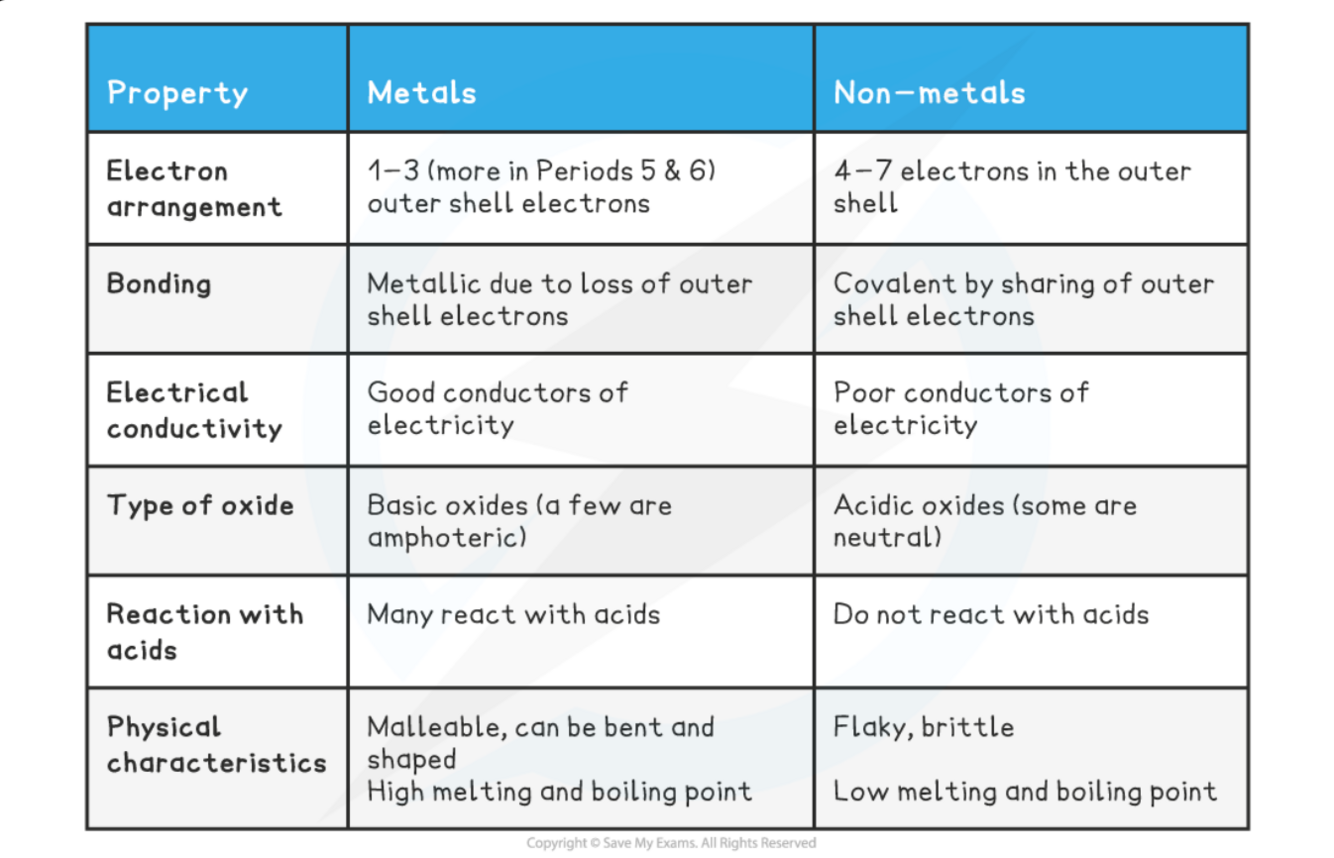
Where are non metals on the periodic table
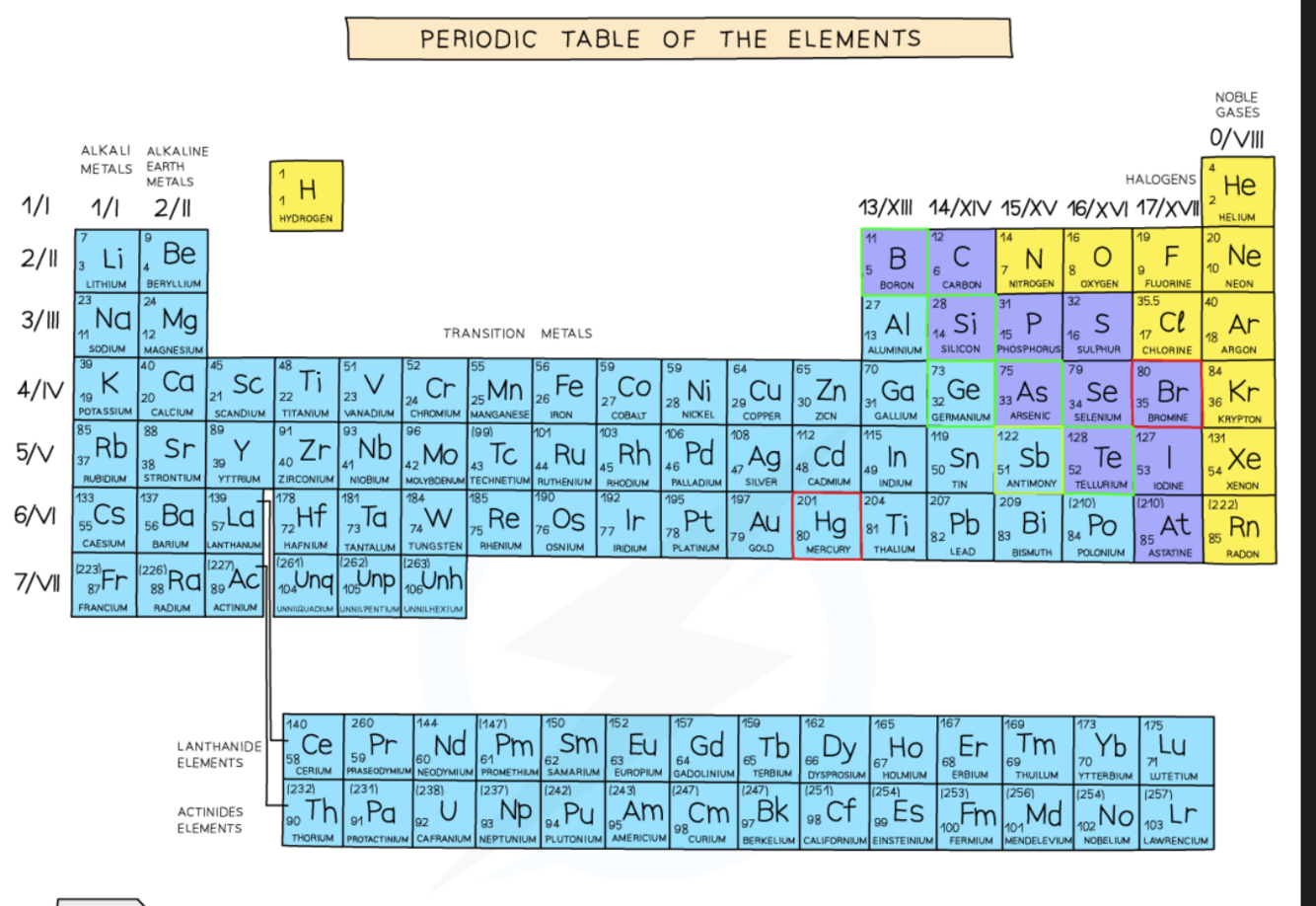
Why do elements in the same group share similar chemical properties?
Elements in the same group in the periodic table will have similar chemical properties This is because they have the same number of outer electrons so will react and bond similarly The group number of an element which is given on the periodic table indicates the number of electrons in the outer shell (valence electrons) By observing the reaction of one element from a group, you can predict how the other elements in that group will react By reacting two or more elements from the same group and observing what happens in those reactions you can make predictions about reactivity and establish trends in reactivity in that group
Why are noble gases unreactive?
The elements in group 0 of the periodic table are called the noble gases They are all non-metal, monatomic (exist as single atoms), colourless, non-flammable gases at room temperature The group 0 elements all have full outer shells of electrons; this electronic configuration is extremely stable Elements participate in reactions to complete their outer shells by losing, gaining, or sharing electrons The Group 0 elements do not need to do this, because of their full outer shells which makes them unreactive and inert