Freshwater Systems
No description yet. This curated deck is ready for daily study.
Card preview (24)
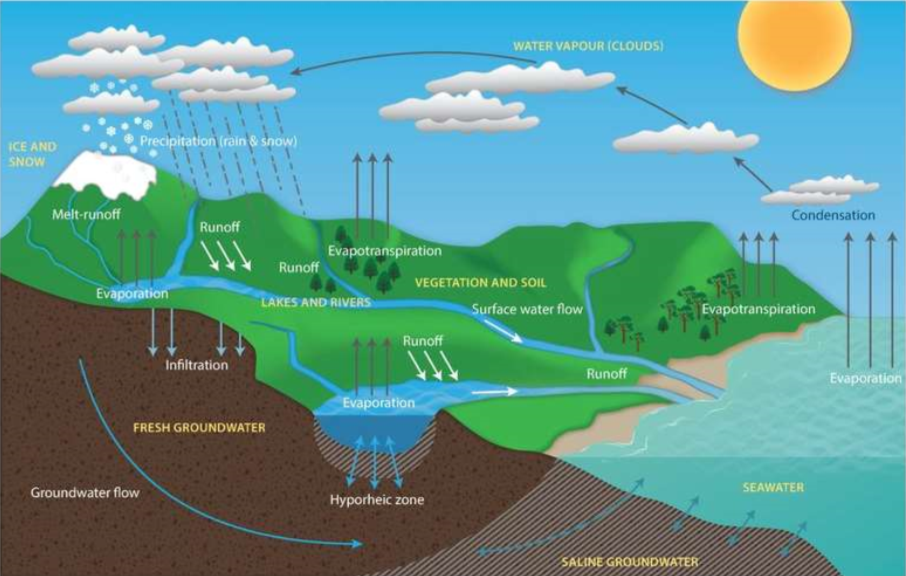
What are the 4 states of water in the hydrological cycle?
• Ice/snow • Precipitation • Condensation • Water vapor
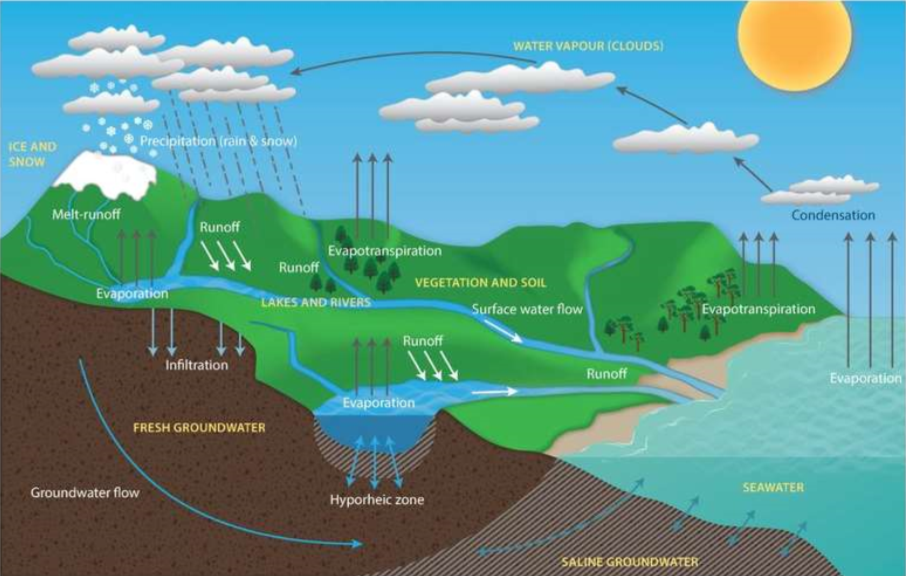
What is the 4 ways water is transported in the hydrological cycle?
• Evaporation • Runoff • Infiltration • Transpiration
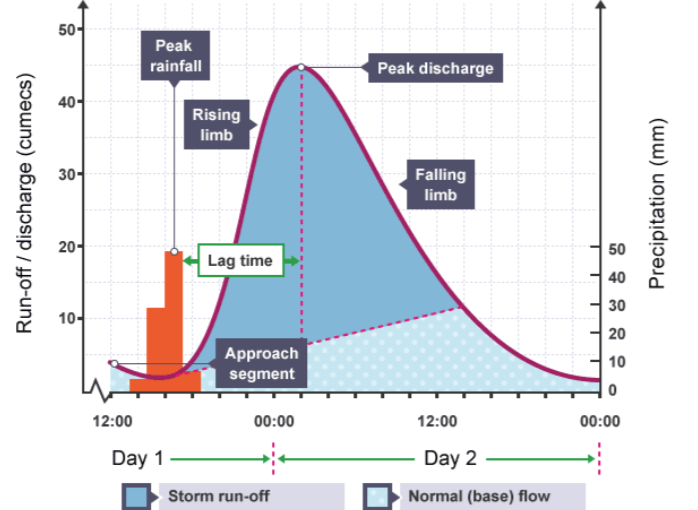
What is a way to visualise how water flow in a drainage basin, (particularly river runoff) is impacted by meteorlogical and physical characteristics is
plotting a hydrograph
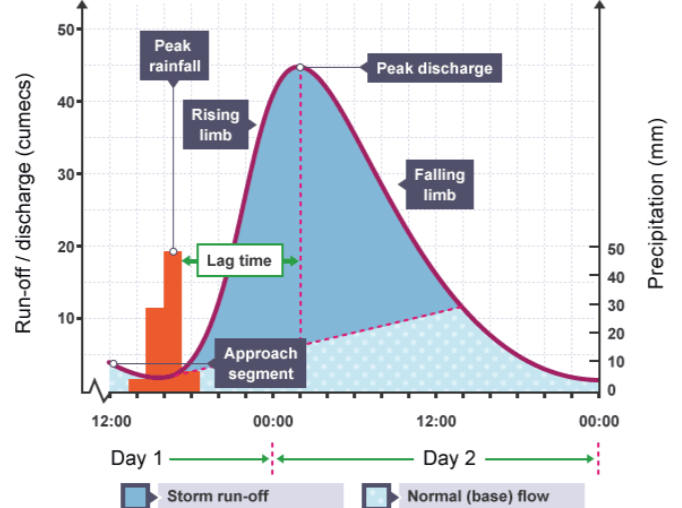
What does the bars and the line represent in a hydrograph?
• a bar chart showing rainfall (usually from a storm) • A line graph showing discharge before, during and after the rainstorm
What is meant by: Peak rainfall, base flow, and rising limb
Peak rainfall - maximum amount of rainfall Base flow - the ‘normal’ discharge of the river Rising limb - the increase in discharge on a hydrograph
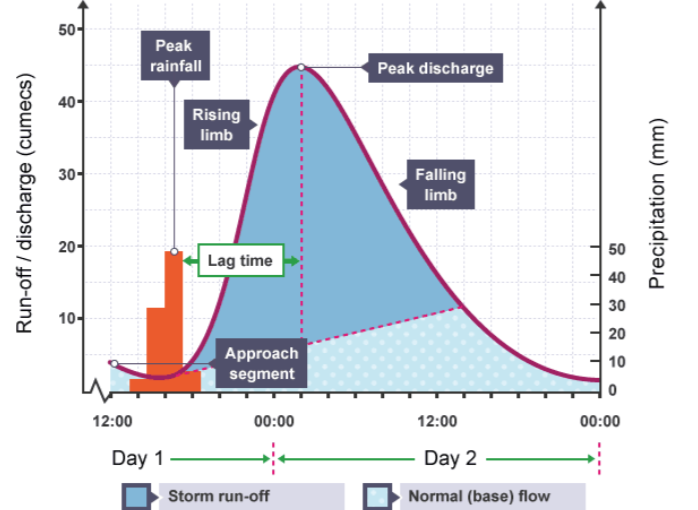
What is meant by: Peak discharge, lag time and falling limb
Peak discharge - when the river reaches its maximum flow Lag time - the time taken for the water to find its way to the river (difference between peak rainfall and peak discharge) Falling limb - the return of discharge to normal/base flow on a hydrograph
How is Precipitation (P) and Evaporation (E) affected by altitude
Precipitation - increases with altitude Evaporation decreases with altitude
discharge (Q) is determined by
Q = P-E Hence altitude will determine an areas hydrology (3-4x more runoff in the alps compared t lower lying areas of europe
Mountainous areas are also important because they provide water over the longer term through…
glacial melt water
Freshwater ecosystems are particularly sensitive to warming because
Water quality and quantity are influenced by atmospheric temperature e.g. air temp determines the chemical reactions due to volumes of dissolved O₂
Why will climate change impact where water is carried and stored?
Chanes in water storage/regimes are impacted by temperature: precipitation, snow melt, runoff soil moisure discharge
How does temperature affect atmospheric moisture?
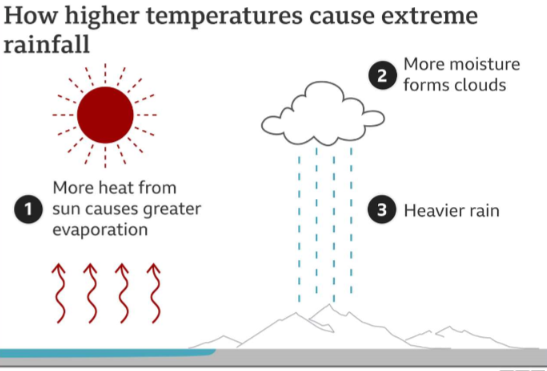
Water holding capacity of the atmosphere - for every 1°C warmer the air is, there is a 7% increase in atmospheric water holding capacity
If atmospheric mositure and warming a positively correlated, why does global precipitation instead increase due to warming?
Evaporation increases exponentially with temperature (increased evaporation from oceans in particular)
apart from anthropogenic global warming, how else are freshwater systems impacted on by humans
modification (over recent decades freshwater biodiversity loss has exceeded both terrestrial and marine species) Which can affect the adaptive capacity of species
What is the suggested global trend in precipitation due to climate change?
Climate models predict a strengthening of existing precipitation patterns with wetter areas getting wetter and drier areas becoming more arid With the wetter areas being: high latitudes and some tropical regions And the drier areas being: western north America, middle east and northern China
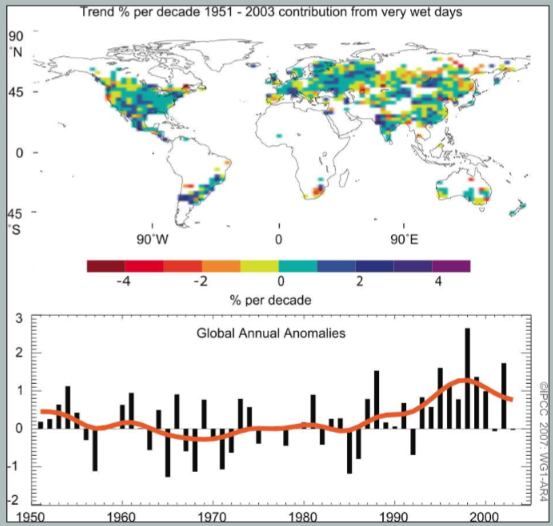
What is happening to the total number of wet days globally due to climate change
Increasing numbers of wet days Fuelled by europe and N.America (more extremes)
How does precipitation affect runoff
increased surface runoff
How is stream flow being affected by climate change?
• Increasing stream flow in the arctic • Earlier spring peak flows • Increased winter base flow (N.Hemisphere, snow fed river basins)
How are Lakes being affected by climate change?
• Warming of lakes • Increased/decreased lake levels • Reduction in ice cover • Changes in net water availability (precipitation-evaporation)
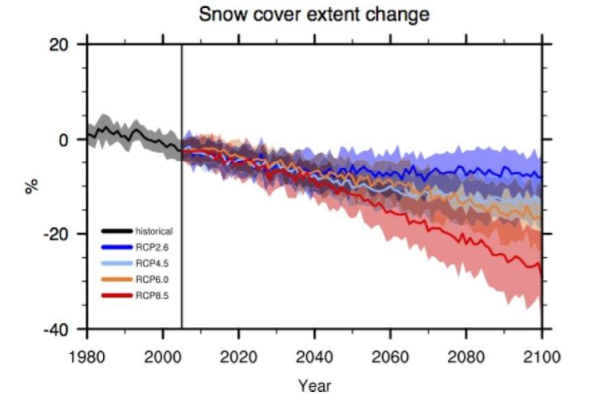
Northern Hemisphere spring snow cover has decreased since 1974 How does this affect rivers?
Less snow cover as a result, will mean less discharge into the river Also affect seasonality in terms of, ealier spring peak flow, increased winter base flow and decreased summer flows
How does glacial retreat affect surface runoff and rivers?
Glacial retreat increases summer flows (runoff) initially but decreases in the longer term (limiting water storage) Similarly increases seasonality in the flow of river too, with higher peak flows and lower base flows
Increasing precipitation intensity and increasing westerly weather patterns during winter over europe leads too…
…very rainy low pressure systems that trigger floods But causes drought in the summer due to ealier snow melt
What are the 4 main global trends associated with water which we will see with climate change?
• Increased rainfall • Increased evapotranspiration • Increased runoff • Reduced soil moisure
What was the Australian Millennium drought (2000-2009)
Between 2000-2009 Australia experienced an intense drought that contributed to a decline in the economy from failing agriculture by 0.5%