Cell Integrity
No description yet. This curated deck is ready for daily study.
Card preview (23)
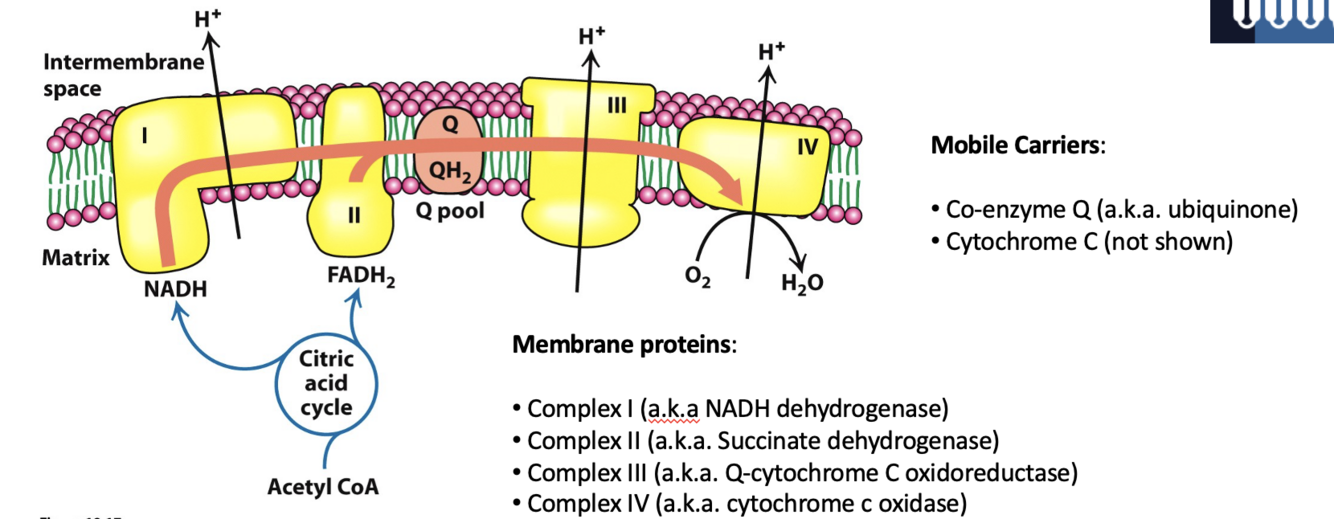
Where does OxPhos take place within the mitochondrium?
Inner membrane, through ETC
How many complexes are found in ETC?
4 Complexes + 2 Mobile Carriers
What is the name of Complex I?
NADH Dehydrogenase
What is the name of Complex II?
Succinate dehydrogenase
What is the name of Complex III?
Q-cytochrome C oxireductase
What is the name of Complex IV?
Cytochrome C Oxidase
What are the mobile carriers of ETC?
Coenzyme Q (Ubiquinone) Cytochrome C
What is the role of oxygen in OxPhos?
Last electron acceptor - oxidise NADH and FADH2
Which complexes in ETC pump protons from the matrix into the intermembrane space?
Complexes I, III and IV
Which complexes do NADH and FADH2 donate electrons to?
NADH - Complex I FADH2 - Complex II
Where is cytochrome c found?
In between Complexes III and IV
Presence of which element in ETC complexes allows NADH and FADH2 to donate their electrons?
Iron (Fe)
How is it possible to pass electrons from one complex to another?
It is energetically favourable as electrons progress along the chain, they lose energy
How is oxygen allowed to accept electrons from Complex IV?
A more positive E0 implies a higher tendency to accept electrons

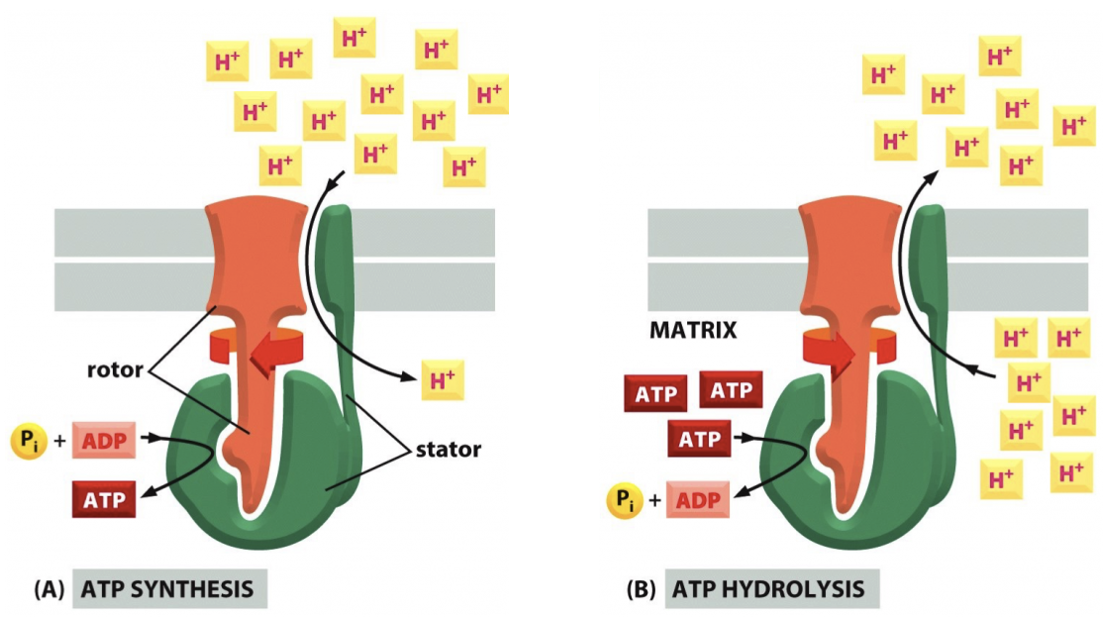
What are the components of ATP synthase and their locations?
F0 - membrane bound F1 - Projecting into the matrix
What are the subunits of F0 and F1 of ATP synthase?
F0 - a, b, c F1 - α, β, γ
What are the 2 functions of ATP synthase?
Why are cyanide (CN) and azide (N3) considered poisons?
They bind with high affinity to the ferric (iron III) form of the haem group in complex IV blocking the flow of electrons through ETC and stopping ATP production
Why does malonate’s close resemblance to succinate make it a metabolic poison?
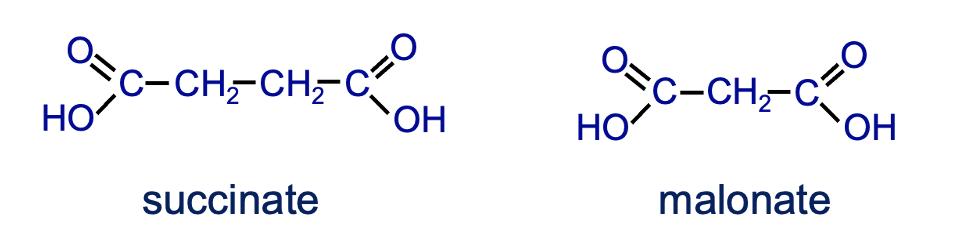
Acts as a competitive inhibitor of succinate dehydrogenase (complex II) - effectively slowing down the flow of electrons from succinate to ubiquinone by inhibiting the oxidation of succinate to fumarate
Why is DNP fatal?
It allows protons to pass the membrane bypassing ATP synthase, uncoupling proton flow from ATP synthesis
What is non-shivering thermogenesis?
Activation of UCP-1 which bypasses ATP synthase, in newborns, to release energy of proton flow as heat energy due to a drop in core body temp
How does Rotenone interfere with the ETC?
Inhibits the transfer of electrons from Complex I to Coenzym Q
What is the name of the antibiotic that interferes with ATP production and what’s the mechanism?
Oligomycin - binds to the stalk of ATP synthase blocking the flow of protons through the enzyme