Chapter 18- Reaction of Aromatics (Part 3- After Exam 2)
No description yet. This curated deck is ready for daily study.
Card preview (20)
What is the inducive effect?
substituents donate/withdraw electron density through s-bonds to/from aromatic ring -I = withdraw +I = Donate Same goes with resonance (+R/-R)
What are the three classifications of substituents?
1) Ortho, Para directing Activators 2) Meta directing Deactivators 3) Ortho, Para directing Deactivators
What are some Meta Directing Deactivators?
NO2 NR3 CN O=CR SO3H CO2H CHO O=COR
What are some Ortho-Para directing Deactivators?
Br F I Cl
What are some Ortho-Para directing Activators?
R Ar OR NH3 NHCOCH3 OH
What is the major product and why?
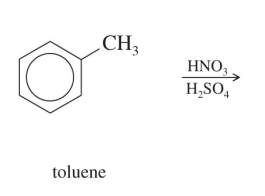
o-nitrotoluene (60%) The methyl group is an activator
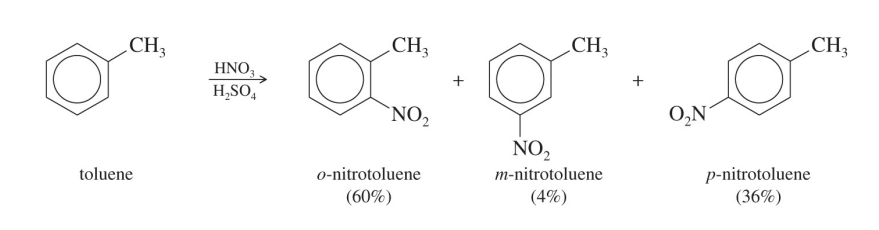
What type of additions are favored and why?
Ortho and para additions are favored/preferred because their resonance structures include tertiary carbocation.
What position on a ring is the major product when a methoxy group is on the reactant?
The methoxy group donates electron density via resonance (so stronger activator than alkyl) para is the major, due to the ortho positions being more sterically hindered
What is a methoxy group classified as?
Activating through resonance
What is a Nitro group classified as?
A deactivating group
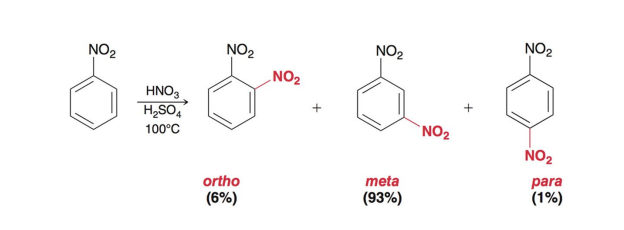
In a reaction, what position on the ring is the major product when a nitro group is involved?
Meta
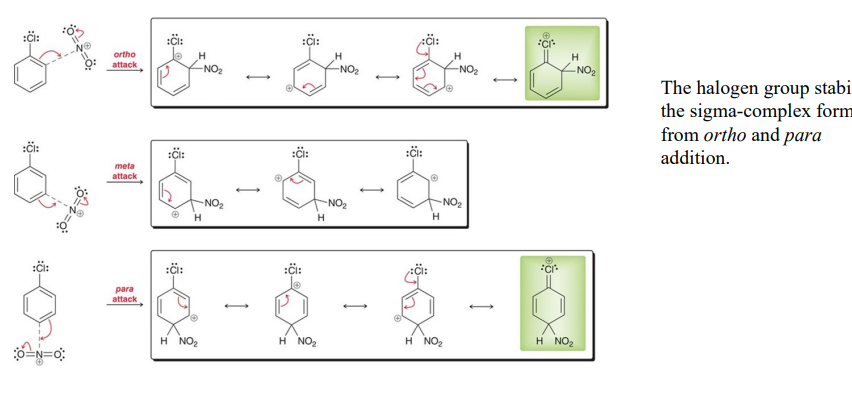
What position on a ring is favored when addition is being done on a ring with a halogen substituent?
Ortho and Para (through resonance)
When proposing a synthesis, what is the order that should be kept in mind?
When proposing a synthesis, typically introduce activators (strong then weak) first, then deactivators (weak then strong) to the aryl ring.
If the directing effects of two substituents reinforce each other, what happens?
If the directing effects of two substituents reinforce each other, the predicted product predominates
If the directing effects of two substituents oppose each other, what happens?
If the directing effects of two substituents oppose each other, the more activating group dominates, but mixtures often result.
Does substitution occur between two substituents that are meta to each other?
No, too crowded
What happens when there is a bulky o,p- director and/or a bulky electrophile?
para substitution predominates
What product dominates in an monosubstituted ring?
Para
Where will substitution occur on a 1,4 disubstituted ring?
Less sterically hindered site
Where does substitution not occur on a 1,3 disubstituted ring?
Between the existing substituents