Ch 10 Alcohols
No description yet. This curated deck is ready for daily study.
Card preview (24)
synthesis gas
CO2 + 2 CO + 4 H2
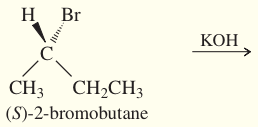
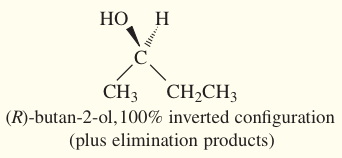
Nucleophilic Substitution on an Alkyl Halide Usually via the SN2 mechanism; competes with elimination. Inversion of stereochemistry.
Grignard reagent
The organomagnesium halides, of empirical formula R - Mg - X
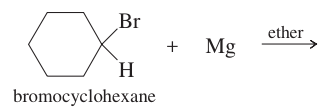
synthesis of a Grignard reagent


synthesis of a Grignard reagent


synthesis of a Grignard reagent

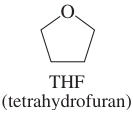
what kind of solvent is required to synthasise a Grignard reagent?
a solvent containing the ether funtional group
THF
describe the formation of the Grignard reagent
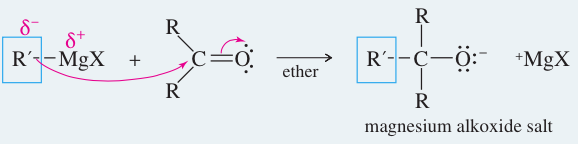
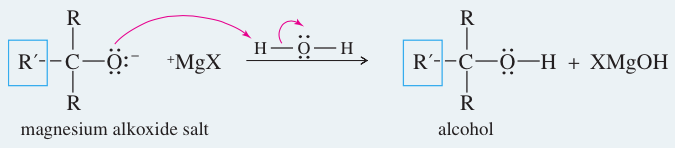
Grignard and organolithium reagents provide some of the best methods for assembling a carbon skeleton. These strong nucleophiles add to ketones and aldehydes to give alkoxide ions, which are protonated to give alcohols. Formation of the Grignard reagent: Magnesium reacts with an alkyl halide in an anhydrous ether solution.

Explain the first step in carbon skeleton formation using a pre-made Grignard or organolithium reagent
Reaction 1: The Grignard reagent attacks a carbonyl compound to form an alkoxide salt.
Explain the second step in carbon skeleton formation using a pre-made Grignard or organolithium reagent
Reaction 2: After the first reaction is complete, water or dilute acid is added to protonate the alkoxide and give the alcohol.
How would you form a primary alcohol?
Addition of a Grignard reagent to formaldehyde

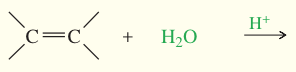
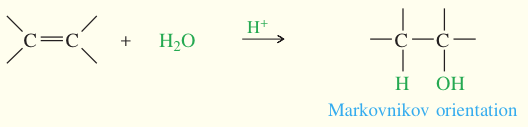
Acid-catalysed hydration. Markovnikov orientation, syn addition.
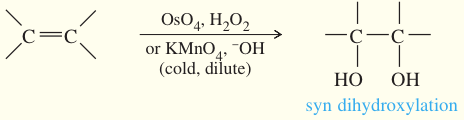
convert alkene to epoxide (diol), syn addition
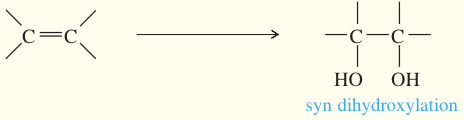
Syn Dihydroxylation. Osmium tetroxide (OsO4) and peroxides (H2O2) -or- Potassium permanganate (KMnO4) and hydroxide ion (-OH) (cold, dilute)
Convert an alkene to an alcohol with Markovnikov orientation.
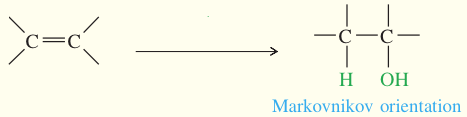
Acid-catalysed hydration.
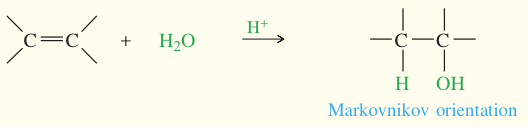
convert an alkene to an alcohol with Markovnikov orientation, anti addition.
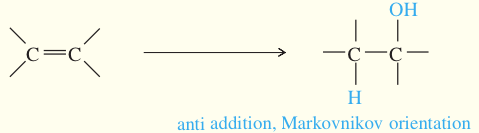
Oxymercuration–demercuration. Hg(OAc)2 + H2O.

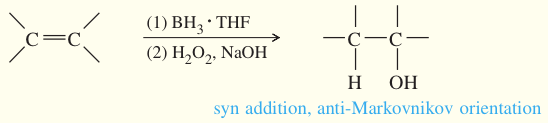
convert an alkene to an alcohol, anti-Markovnikov orientation, syn addition.
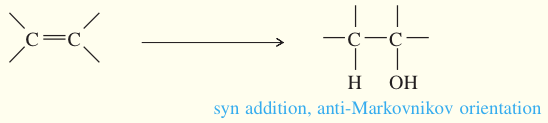
Hydroboration–oxidation with peroxides. (1) BH3 •THF, (2) H2O2, NaOH
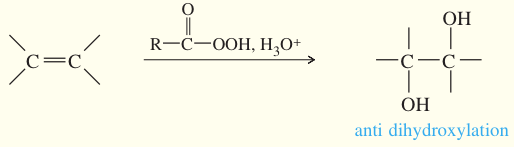
convert alkene to epoxide (diol), anti addition
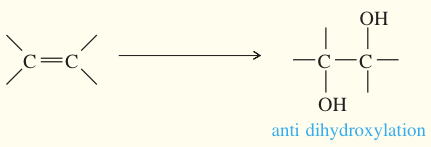
Anti Dihydroxylation. peroxy acid (HCO3H) and hydronium (H3O+)
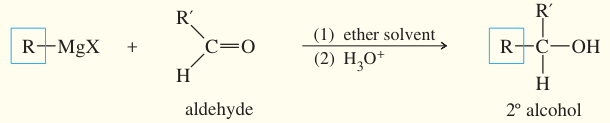
convert grignard into a secondary alcohol with one additional carbon
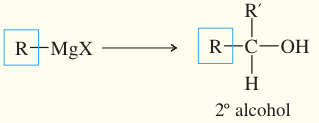
Addition of a Grignard or organolithium reagent to an aldehyde. (1) ether, (2) hydronium (H3O+)
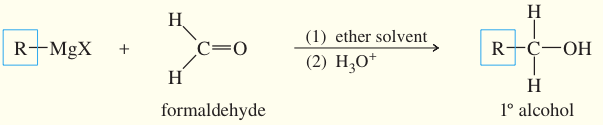
convert grignard into a primary alcohol with one additional carbon
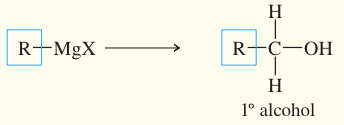
Addition of a Grignard or organolithium reagent to formaldehyde. (1) ether, (2) hydronium (H3O+)
convert grignard into a tertiary alcohol with one additional carbon, with one of the final three R groups derived from the grignard reagent.
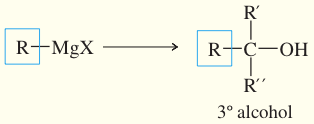
Addition of a Grignard or organolithium reagent to a ketone. (1) ether, (2) hydronium (H3O+)

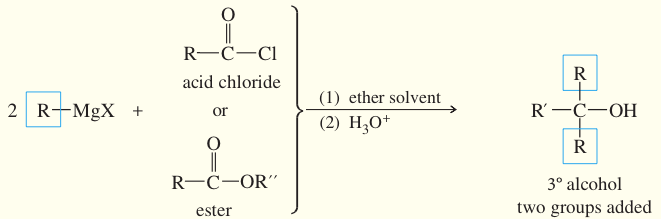
convert grignard into a tertiary alcohol with one additional carbon, with two of the final three R groups derived from the grignard reagent.
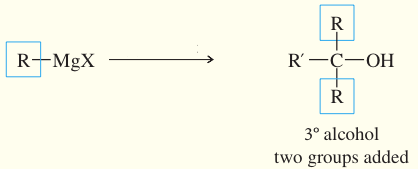
Addition of a Grignard or organolithium reagent to an ester or acid halide (Cl shown). (1) ether, (2) hydronium (H3O+)
aldehyde to alcohol with no extra carbons added
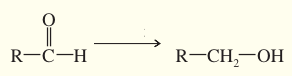
NaBH4 (mild sauce) or LiAlH4 (hot sauce)
ketone to alcohol with no extra carbons added
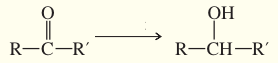
NaBH4 (mild sauce) or LiAlH4 (hot sauce)