week 2
No description yet. This curated deck is ready for daily study.
Card preview (24)
cardiac output (CO) =
heart rate x stroke volume
with activity, what happens to HR, SV, CO, SBP, DBP
• HR: goes up • SV: goes up • CO: goes up • SBP: goes up • DBP: stays the same
MABP =
• DBP + 1/3(SBP-DBP) • usually between 65-110 • average arterial pressure during a single cycle • in general, need MABP > 60 mmHg to sustain organs
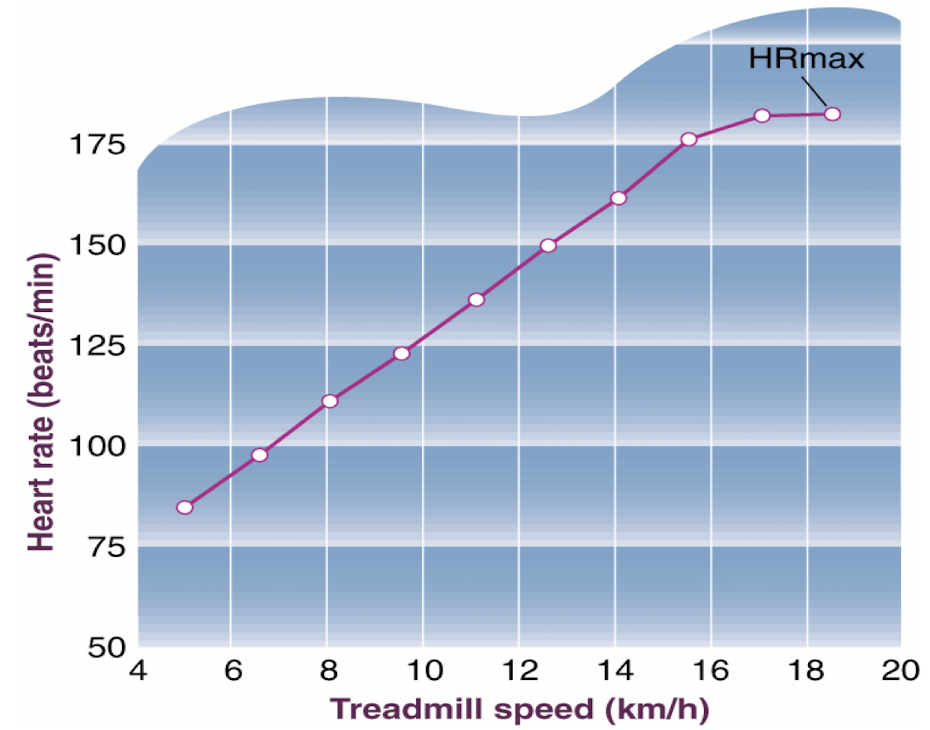
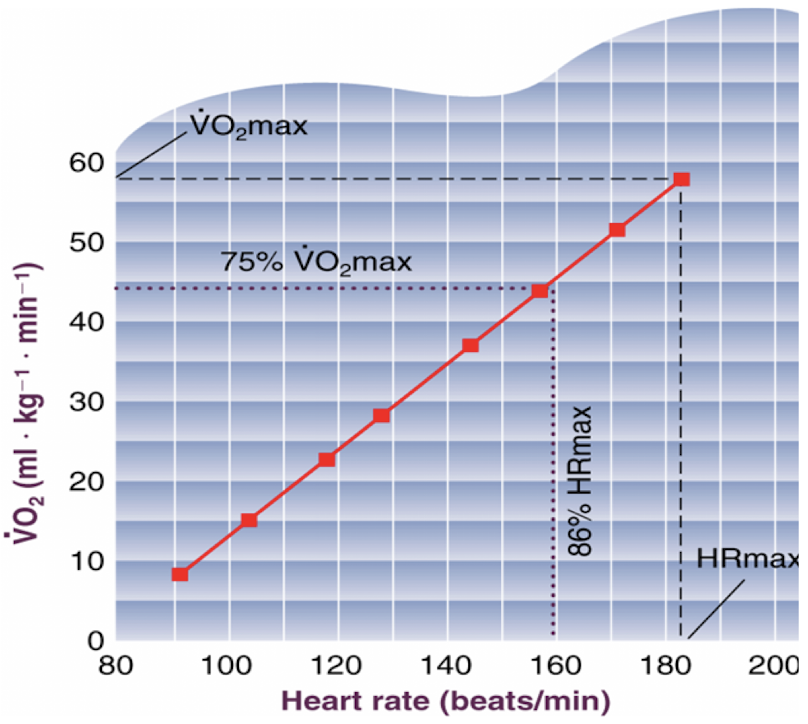
relationship between heart rate and intensity of workload
• fairly linear
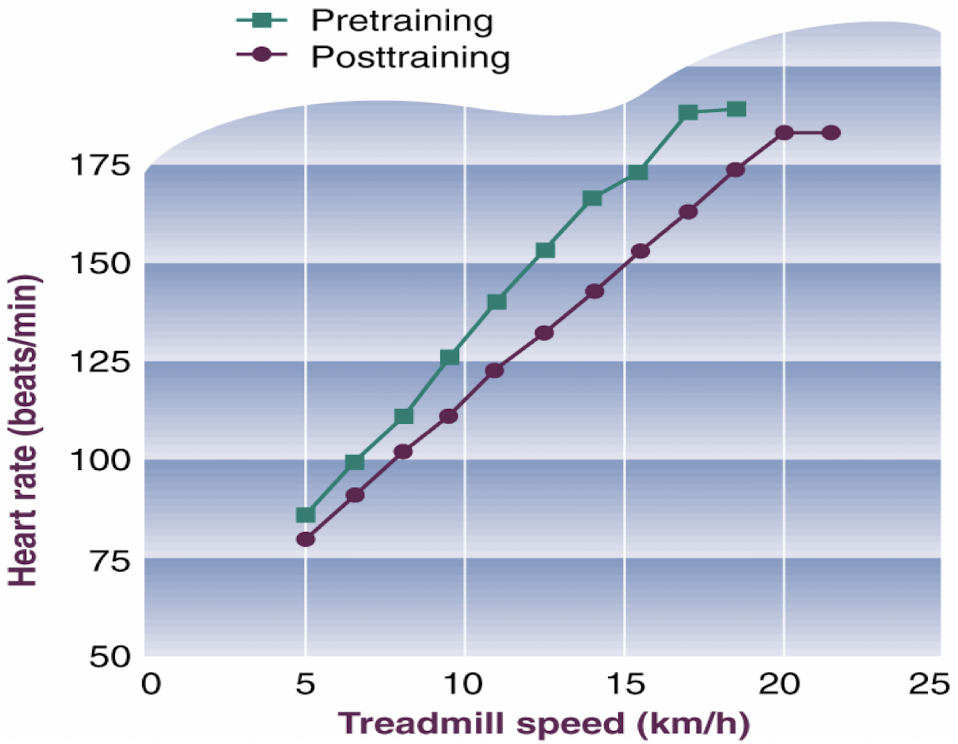
heart rate and training
• with a given workload, HR with training will be less than before trianing period
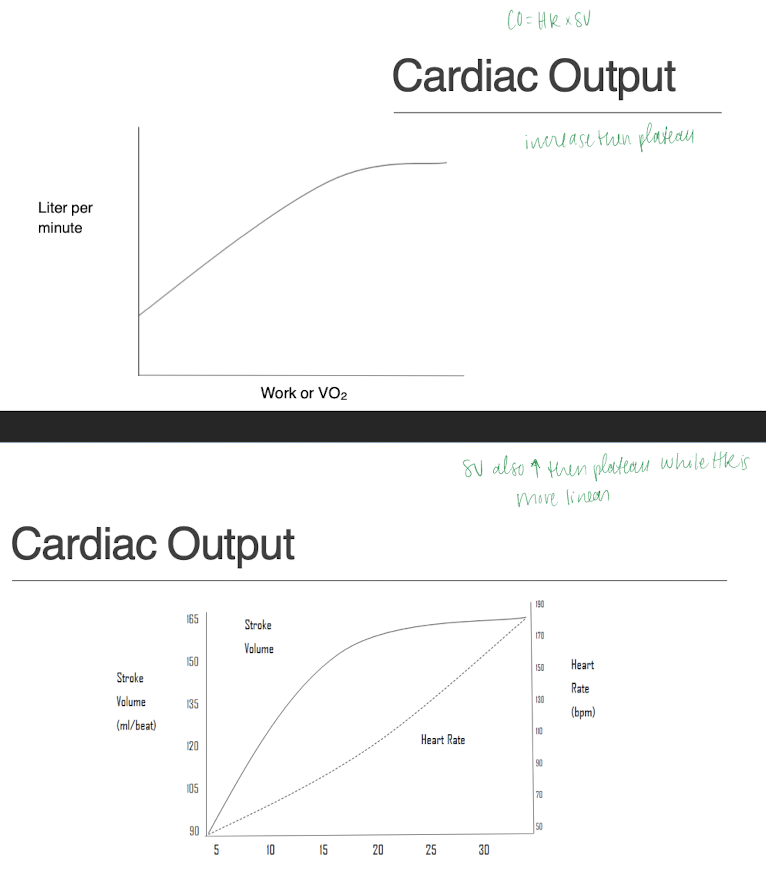
cardiac output will [ ] then [ ]
• increase then plateau • SV will also increase then plateau while HR is more linear CO = HR x SV
HR, VO2, and increasing work
• relationship between VO2 and HR allows prediction of VO2 with HR
pathologies affecting the heart
• coronary artery disease • angina: typically 1-15 minutes - longer can be prelude to HA • chronic angina: long-lasting, stable, brought on by exercise/stress/heavy meal, regular over months and years • unstable angina: can happen at rest, most serious - can signal future HA • angina causes myocardial ischemia, dysrythmias, but less likely to cause a HA in itself because. HA is due to blockage
questions to ask patients with heart pathologies
• ask if they feel better or worse when activity is stopped • takes 3 nitros in 10 minutes if they take nitroglycerine • call if no change or call to let dr know about episode if they feel better
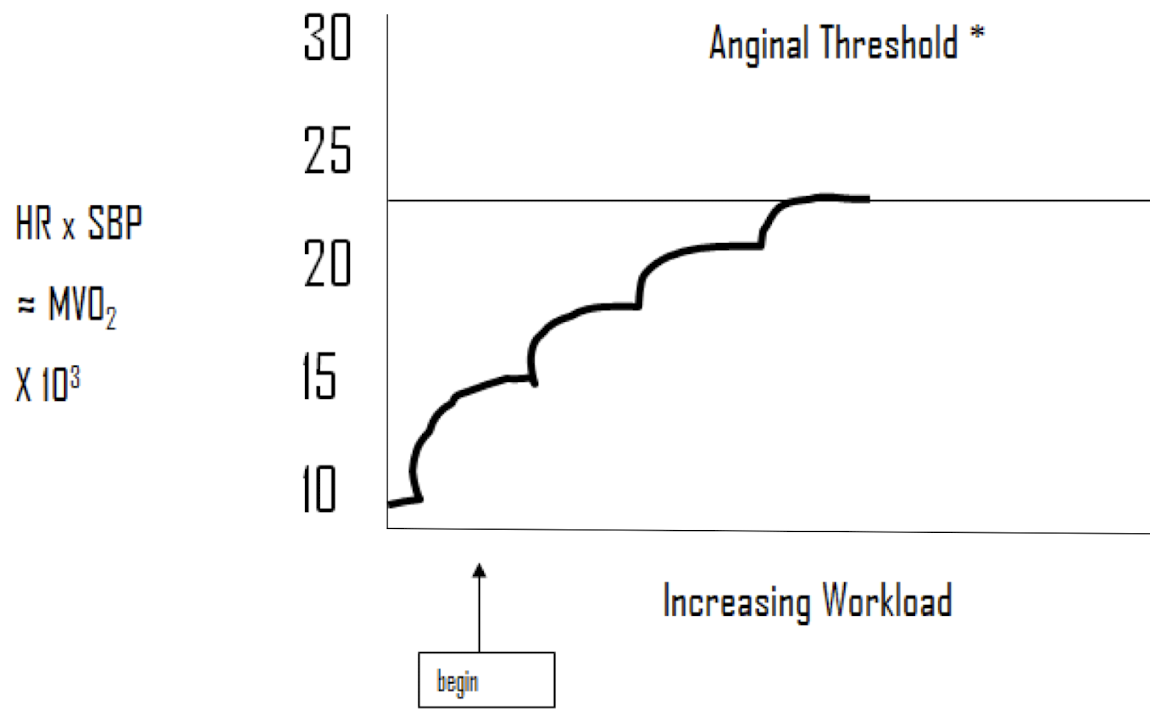
double product - relation to anginal threshold
• HR x SBP = “double product” AKA rate-pressure product • equivalent to heart’s workload or VO2
how many patients will be able to change anginal threshold value
• < 5% - fairly fixed • but what can we do to improve performance knowing we won’t change where the actual line is drawn? • we can lower HR and SBP by slowly increasing work and intensity of exercise to allow conditioning • if HR and SBP don’t go up as much, can shift curve to the right
angina scale
• rating of chest pain • 3+ warrants stopping exercise

atrial fibrillation
• 5% of adults over 65 have A-fib • greater risk for throwing clots: will be on coumadin/anticoags to decrease risk • > 50% of adults > 65 years have dysrhythmias • pulse rate does not work with pt with dysrhythmia: a-fib (need stethoscope to measure HR) • uncontrolled a-fib > 100 BPM HR • controlled a-fib up to 100 BPM HR
more pathologies affecting heart
• congestive heart failure: swelling, difficulty breathing, weight gain (need rest, diet, meds, modified daily activities) • coronary artery disease • hypertension • dysthymians - atrial vs ventricular (more severe and serious) • valvular insufficiency/stenosis • myocarditis • cardiomyoptahy: inflamed heart muscle (1. dilated is most common with enlarged heart cavities 2. hypertrophic 3. restrictive)
assessment of function of the heart as PTs
• HR (drugs) • BP • double product (HR x SBP) • EKG rate/rhythm and ST-level • angina • lightheadedness EKG rate is differential for heart problem
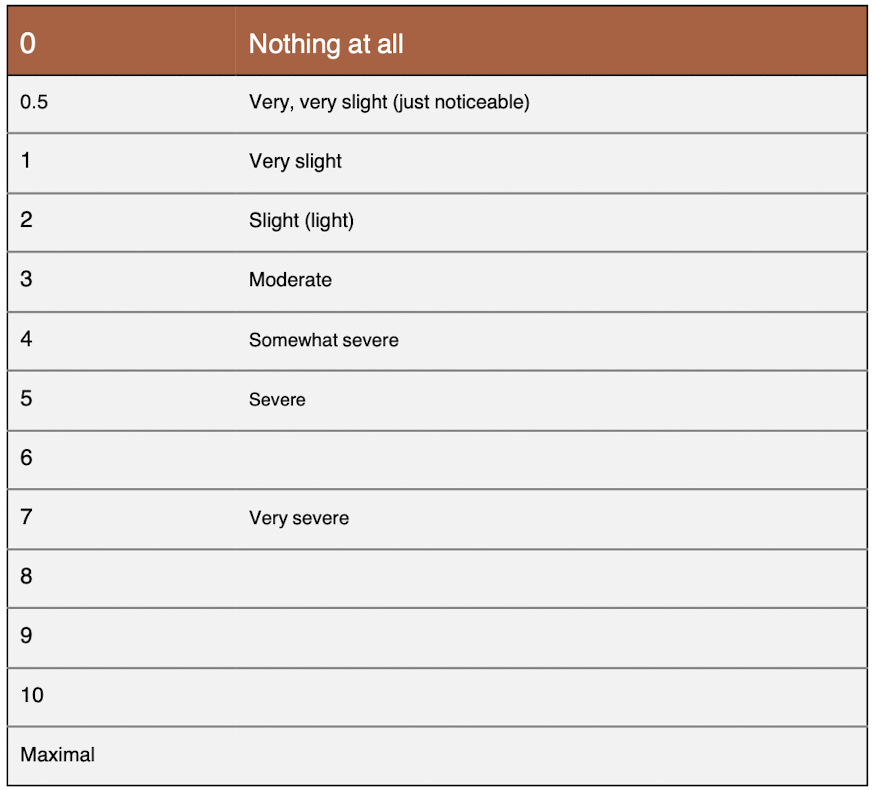
borg dyspnea scale
• want 4-6 or 12-14 target for pulmonary rehab
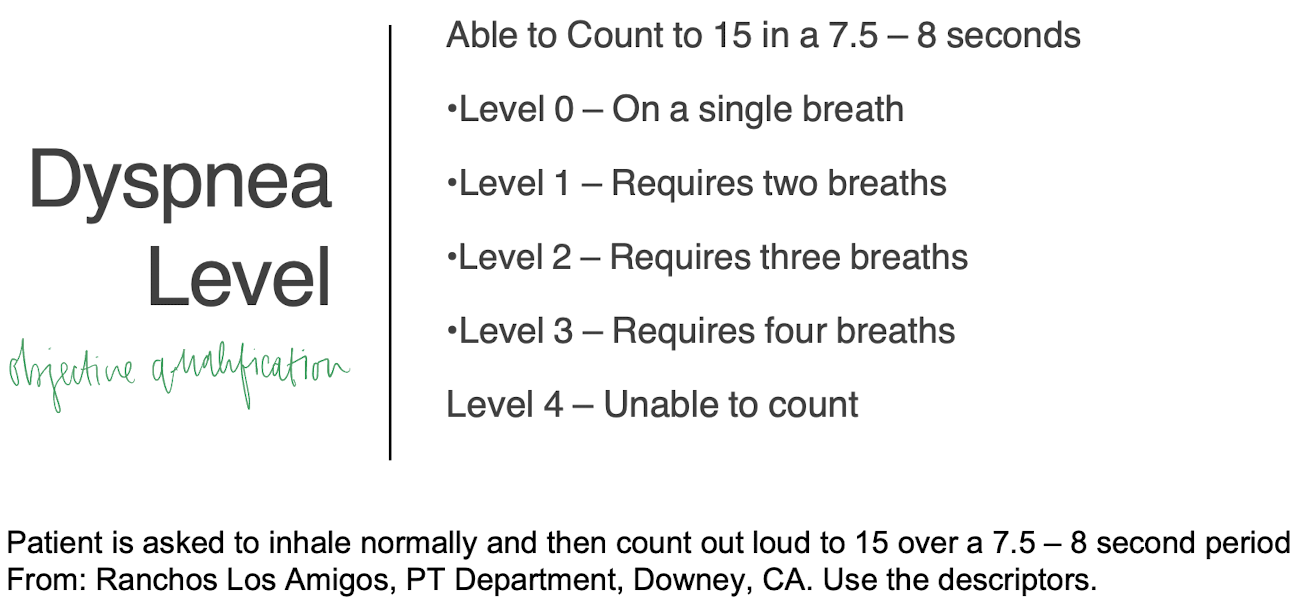
dyspnea level – objective qualification
i-STRONGER tool kit
• goal: 2-3 sets x 8 to FAILURE • progress: > 8 reps • ADLs, transfers, dishwasher loading • tricep dips, bicep curls, wall push-ups • weighted vests
3 categories of exercise
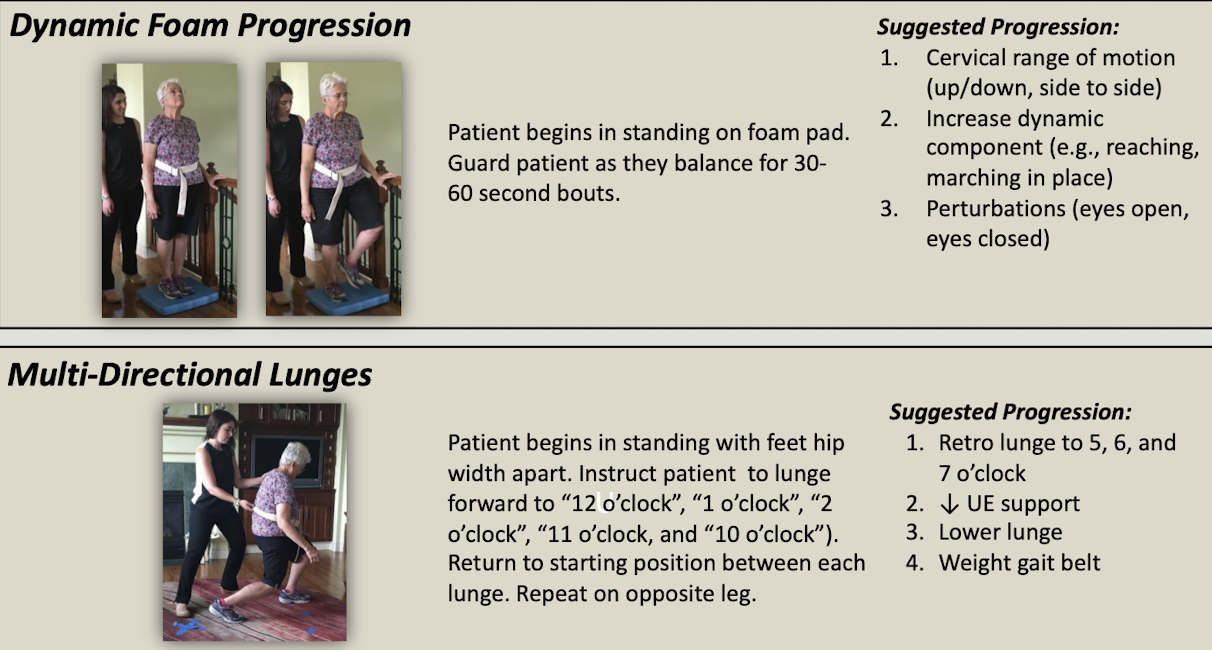
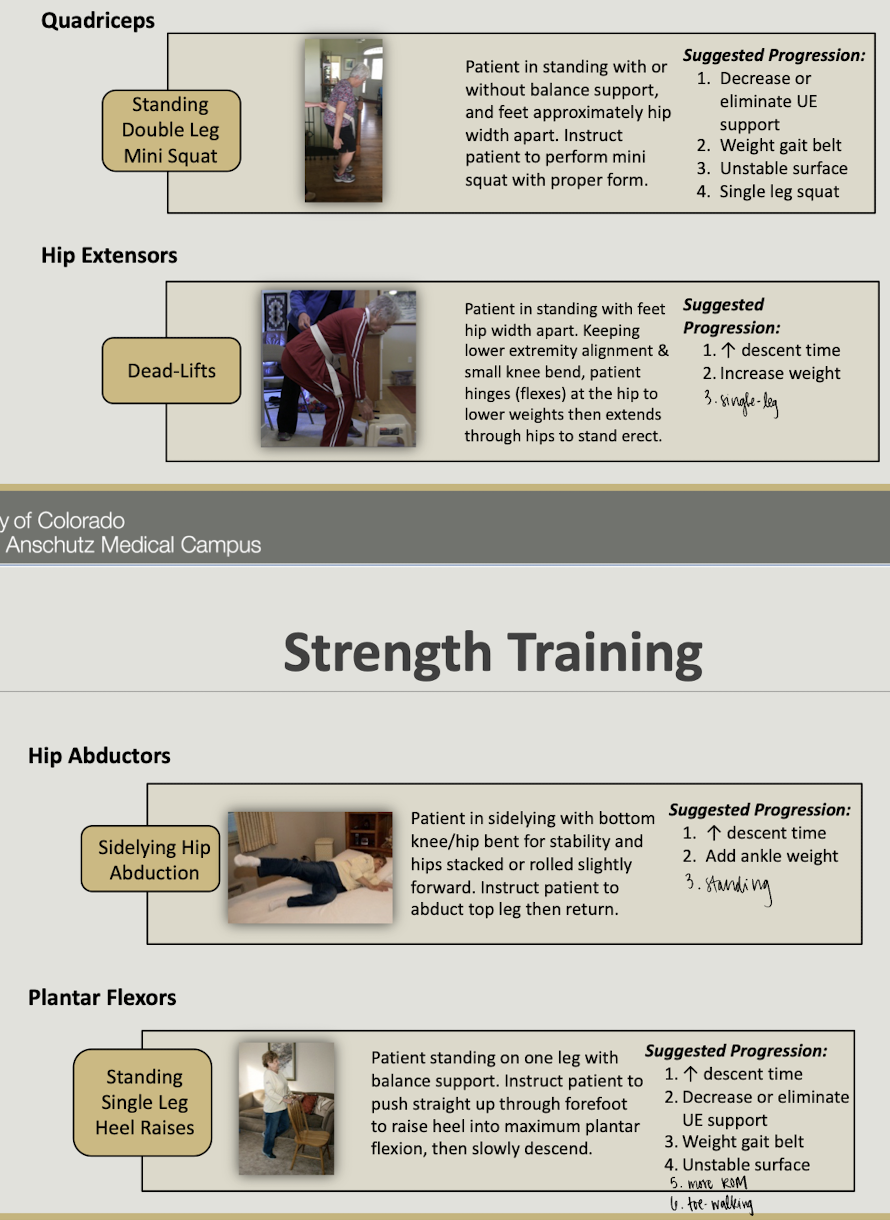
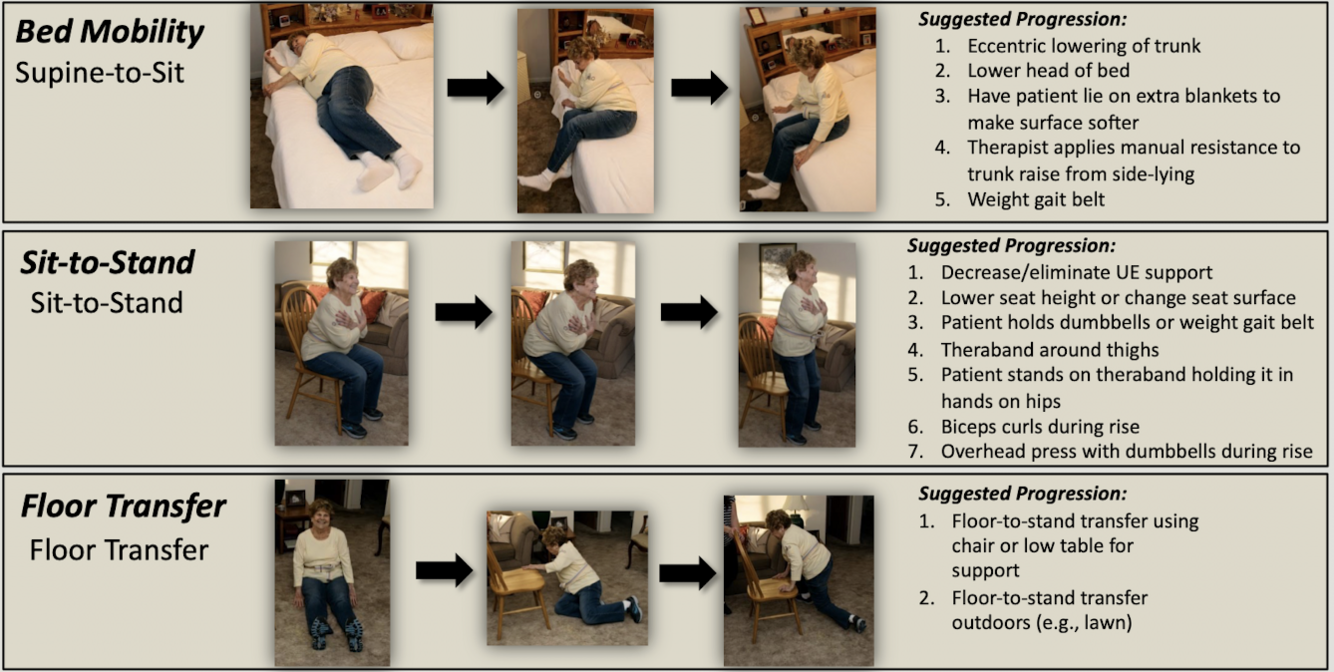
• strength training: usually isolated muscle groups • therapeutic activities and transfers: crossover with OT • neuromotor training - balance and gait: how can you combine with strength training
strength training LE
therapeutic activities and transfers
functional bridging progression
• supine bridges • suprine bridges with weights or 5 sec hold at top • bridges with marching at top • bridges with marching and weight or 5s hold at the top • bridges with knee extension • bridges with knee extension and weight or 5s hold at the top
neuromotr training
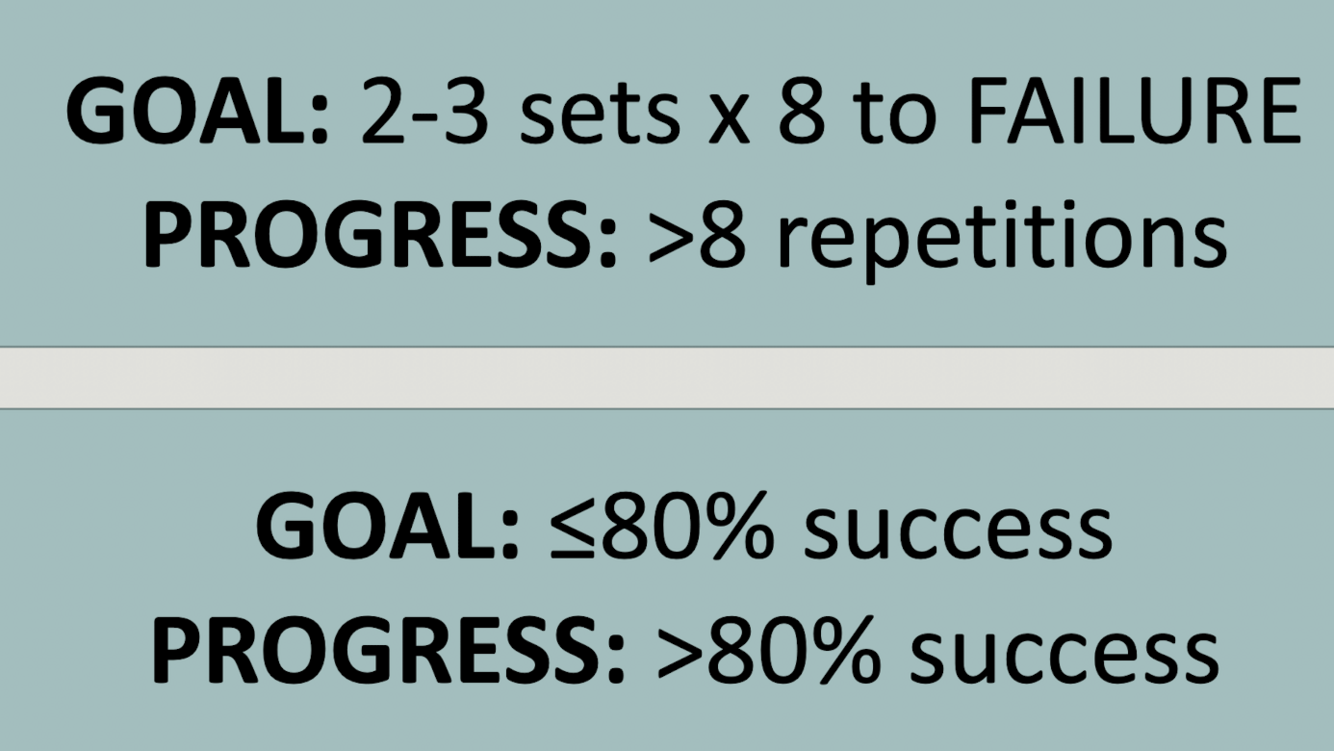
neuromotor training balance progression