Module 5 Physical Chemistry and Transition Elements
No description yet. This curated deck is ready for daily study.
Card preview (24)
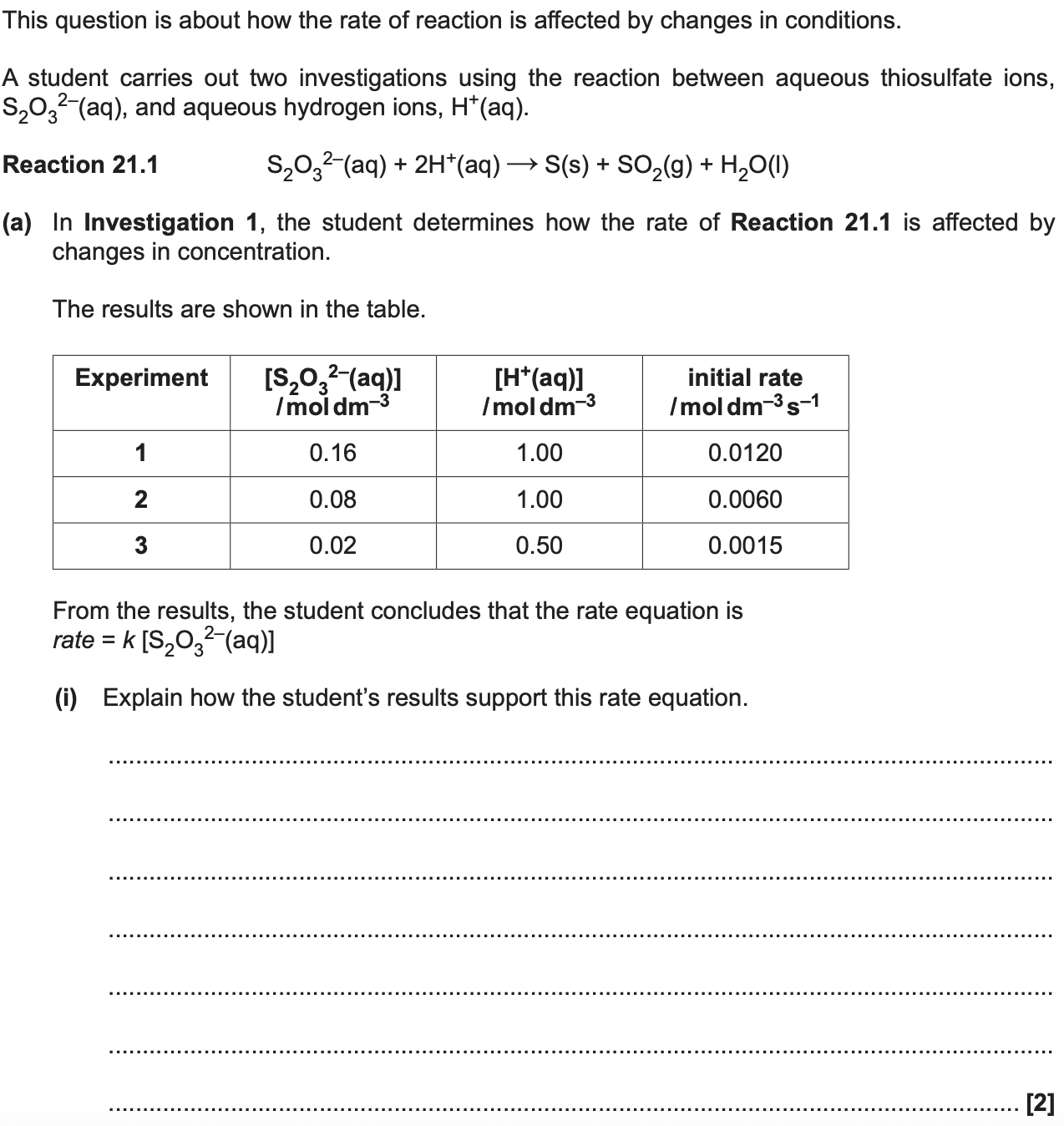
Module 3 Rate of reaction
The change in concentration of reactants to products per unit time (mol dm S-1)
The rate equation
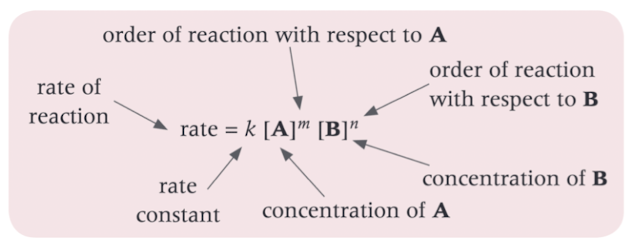
Explain the relationship between the value of K and rates
The larger the value of K, the faster the rate
What does the order of reaction show?
How concentration of reactants affects rate of reaction
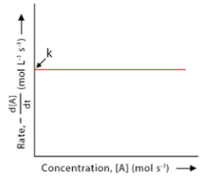
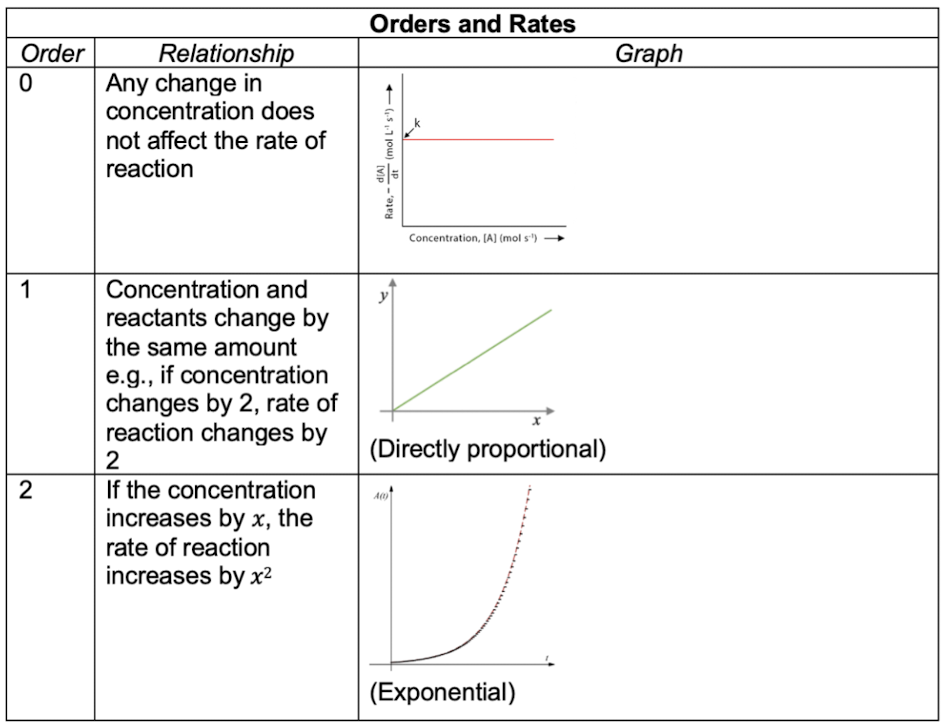
Order 0
Any change in concentration does not affect the rate of reaction
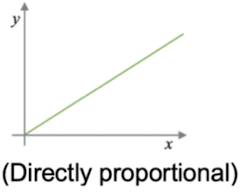
Order 1
Concentration and reactants change by the same amount e.g., if the concentration changes by 2, the rate changes by 2
Order 2
If the concentration increases by 𝑥, the rate of reaction increases by 𝑥2
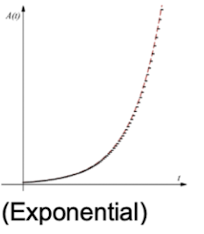
Summarise the relationships between all of the orders and the rates
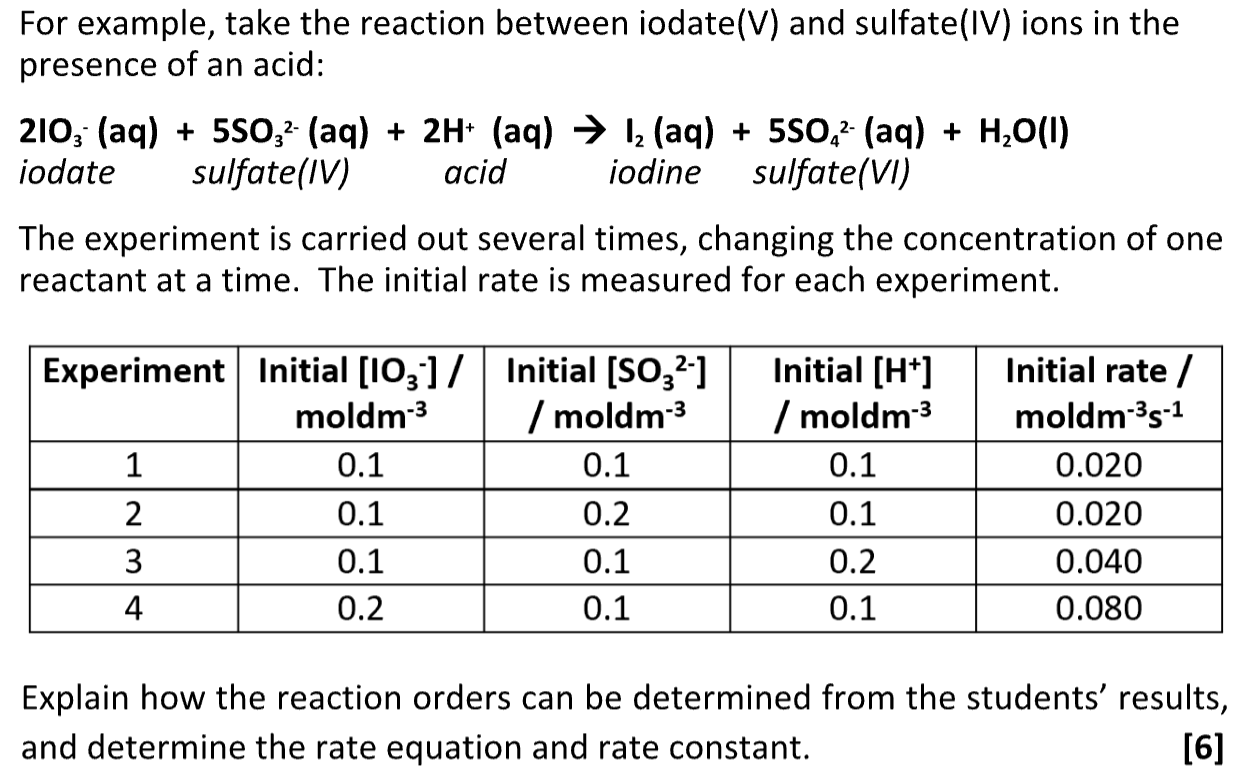
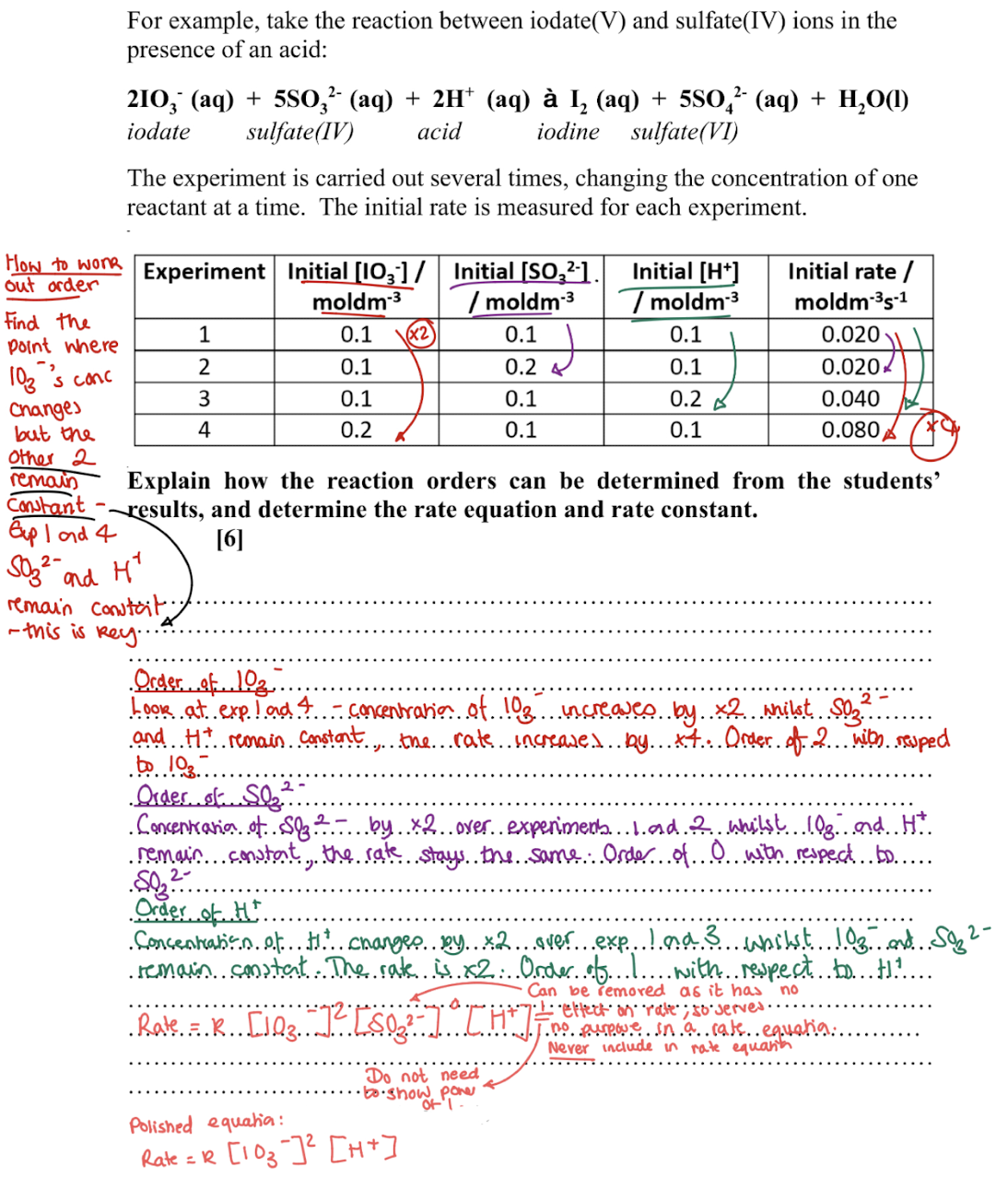
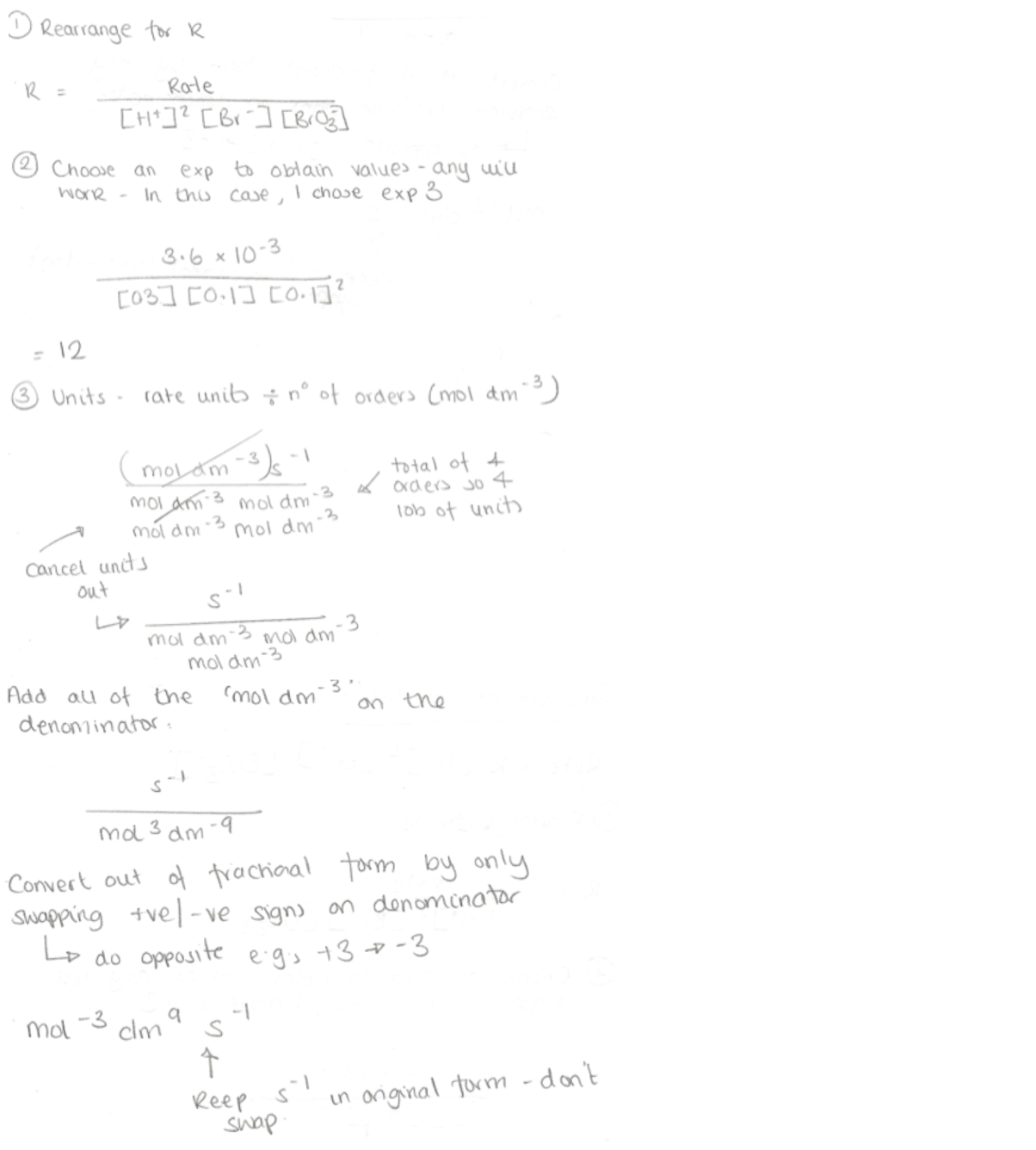
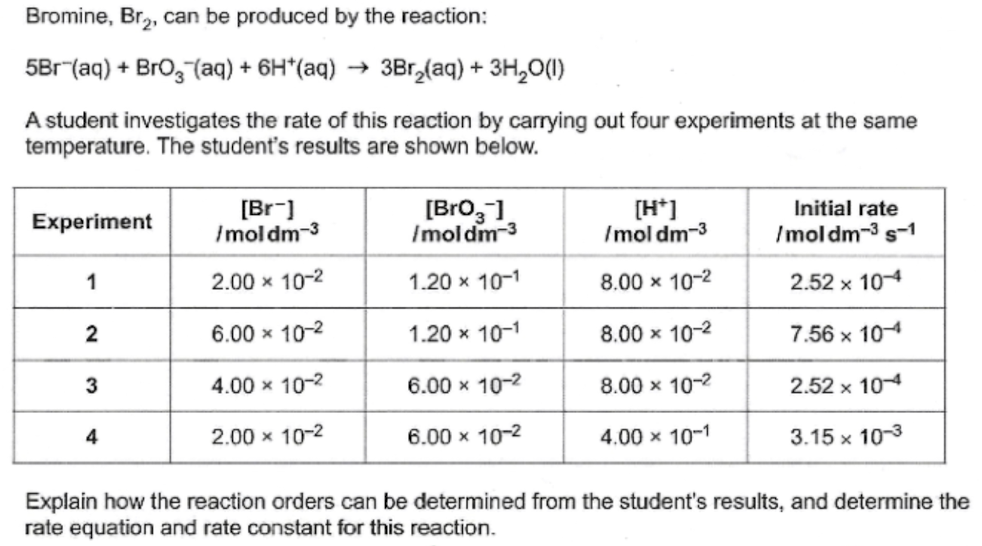
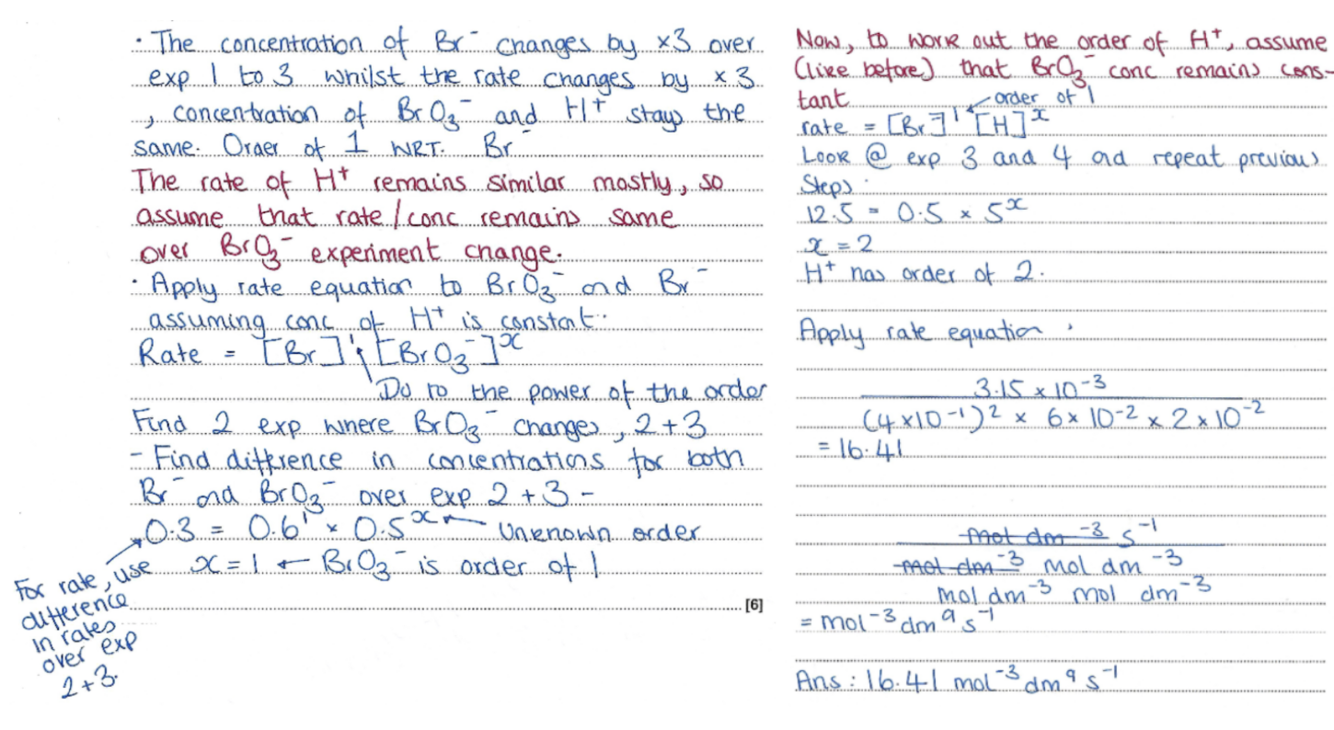
Determine the correct units in the rate equation provided.

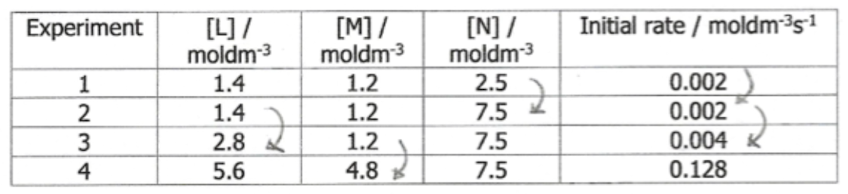
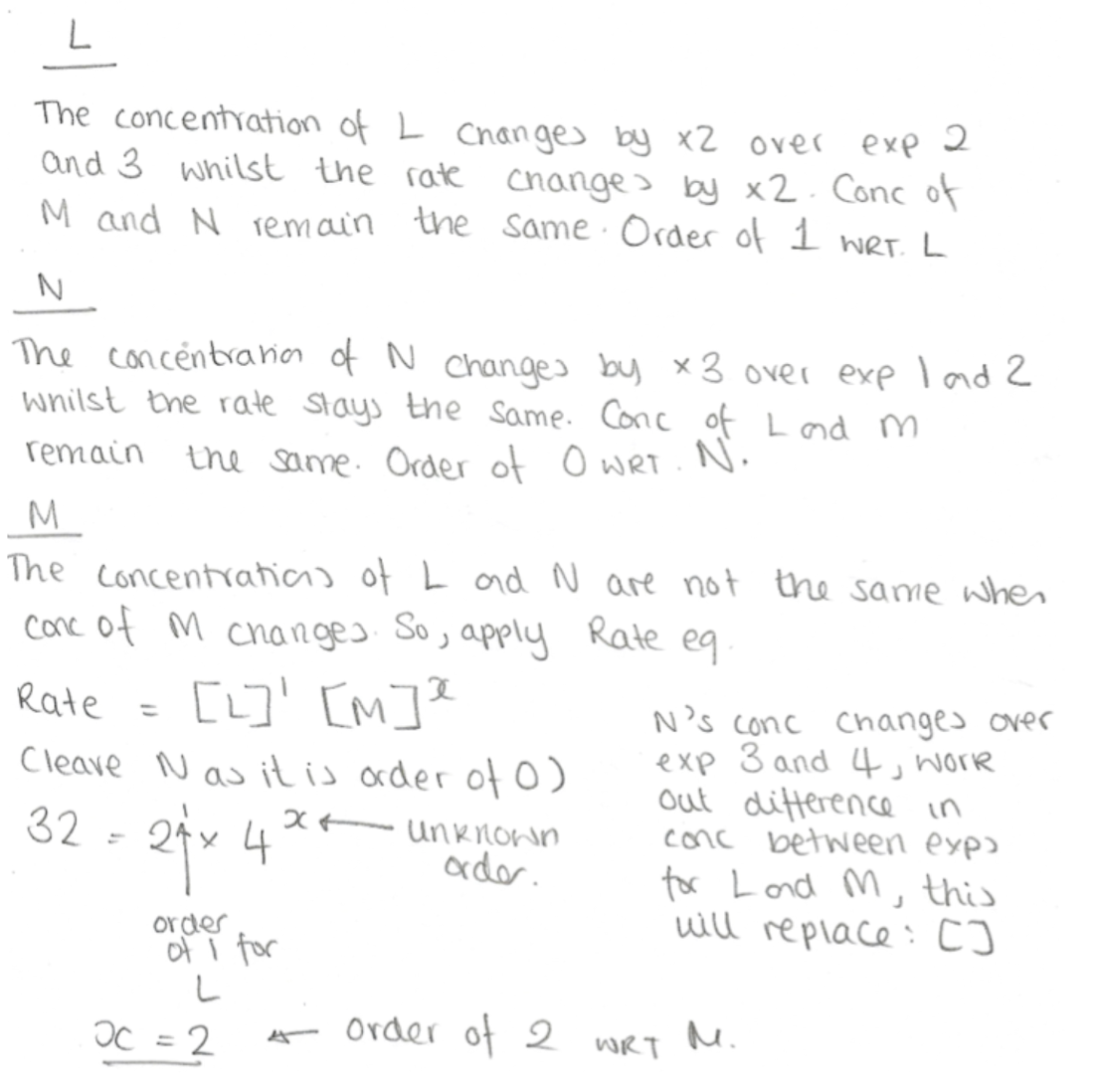
Work out the orders for each reactant in the table provided.
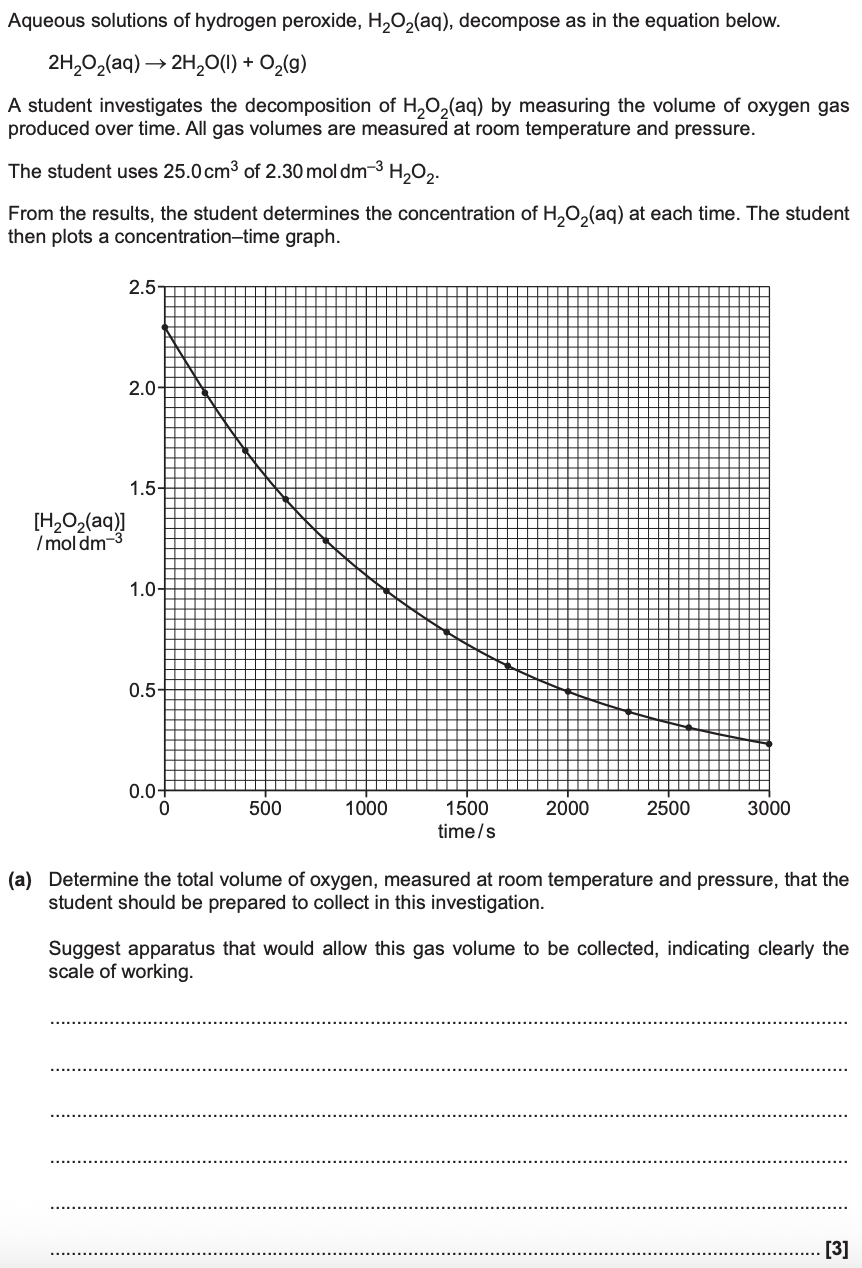
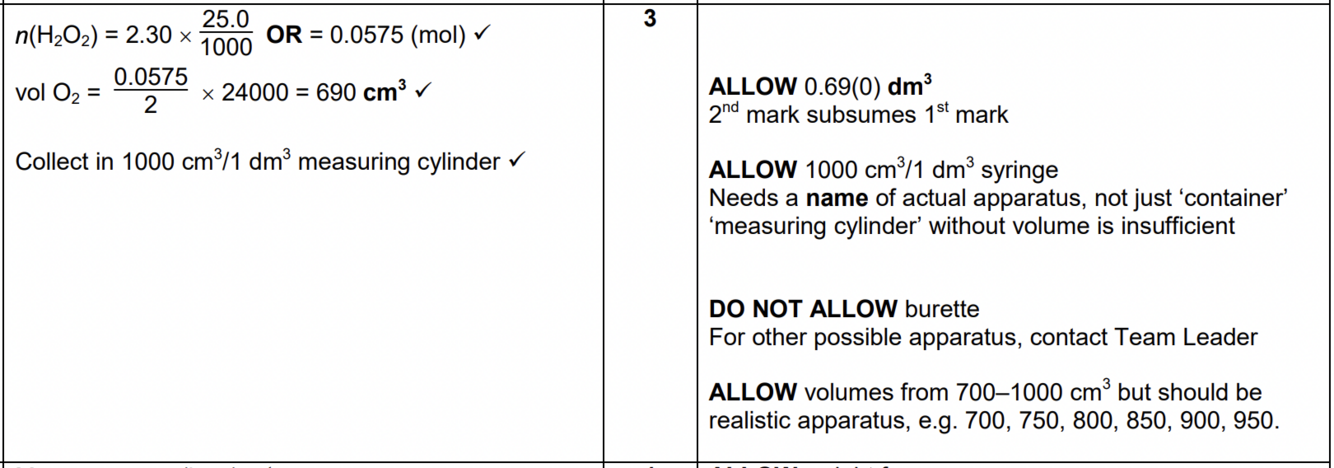
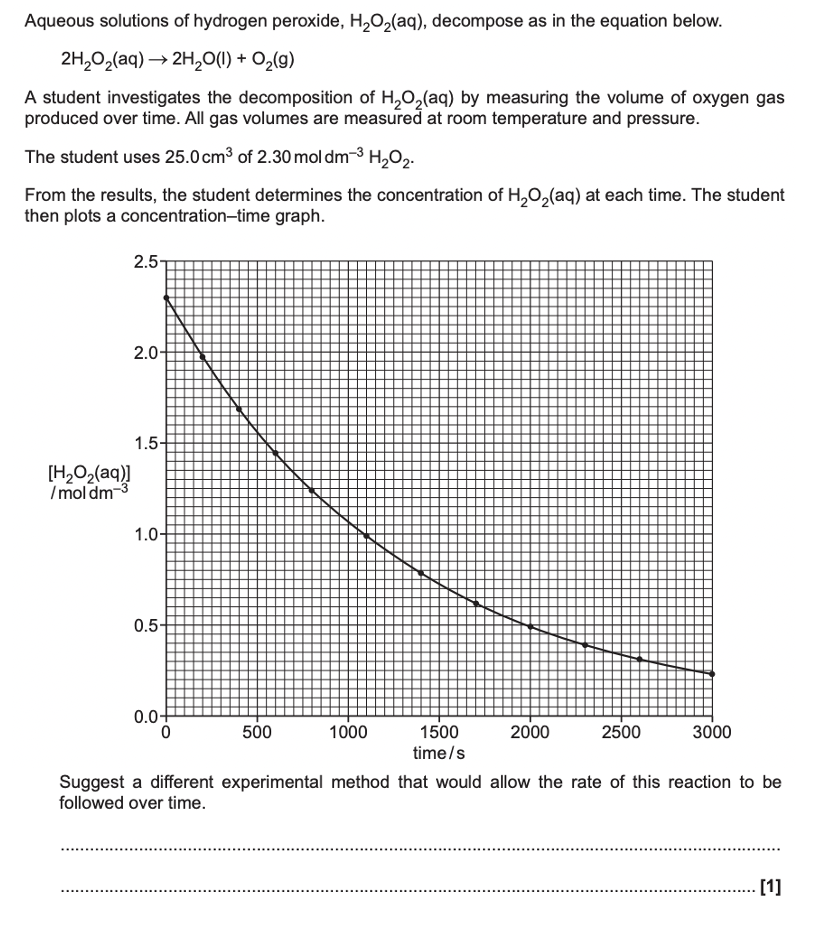
Measure mass (loss) ALLOW weight for mass ALLOW take samples and titrate (remaining H2O2)
Descibe (using mark scheme specific points) why the rate changes overtime in a reaction.
• Concentration decreases • Fewer frequent successful collisions • Reaction stops
Half-life
The time taken for the concentration of a reactant to half
Why is half-life a better indicator of the order of a reaction than making assumptions of the graph?
Less subjective
Explain how the order of a reactant is determined from the half-lives
If the half-lives are constant e.g., 28,32,30, then it is an order of 1 with respect to the reactant
x reacts with an acid. Determine the order of reactant x from the half-lives below. 134, 176, 224, 543
Unable to determine Remember the exam will only ask you to determine an order of 1
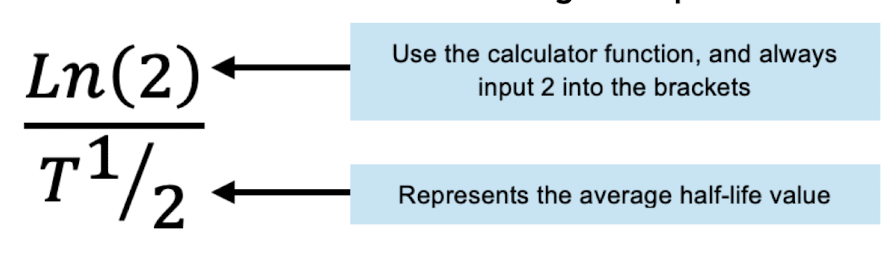
Which expression can be used to caulcate the rate constant/K from a half-life/concentration-time graph?
The order of a reaction with repsect to H₂O is zero. Explain why (1)
H₂O in excess (1)
Fill in the gap If a reactant is in excess, it will have no effect on the (1)
(1) Rate of reaction
What happens to the half-life of a reaction if the concentration of reactants is doubled?
No effect - it always halves at the same rate