11.3 Nuclear Magnetic Resonance Spectroscopy
暂无描述。系统推荐的高质量记忆内容,适合每天坚持背诵学习。
卡片预览 (24 张)
what type of nuclei have magnetic moments
those with odd mass numbers, odd atomic numbers, or both (aka odd protons or odd neutrons)
nuclear magnetic resonance spectroscopy
based on the fact that certain atomic nuclei have magnetic moments that are oriented at random when such nuclei are placed in a magnetic field, their magnetic moments tend to align with or against the direction of the applied field
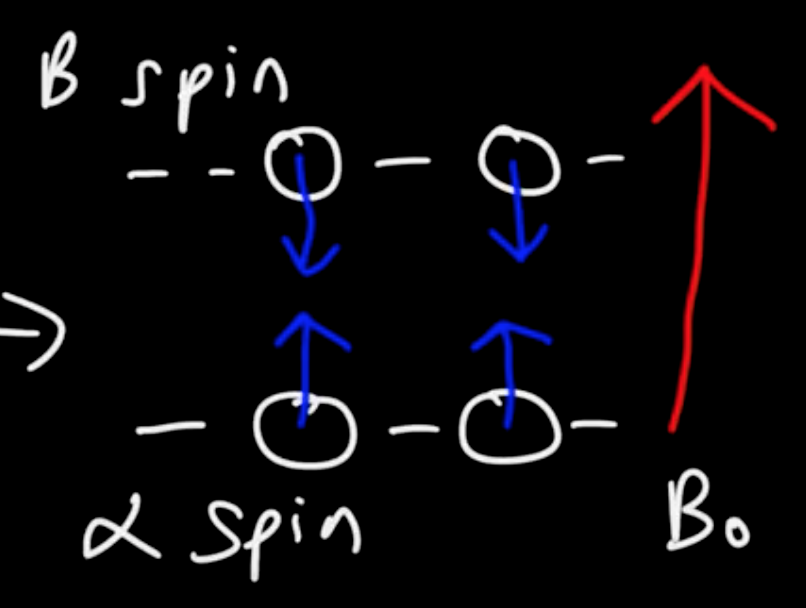
alpha state
the lower energy state of nuclei with magnetic moments that are aligned with the field
beta state
the higher energy state of nuclei once irradiated with uses that match the energy gap between the 2 states
magnetic resonance imaging
a noninvasive diagnostic tool that uses proton NMR multiple cross sectional scans of the patients body are taken, and the various chemical shifts of absorbing protons are translated into specific shades of grey produces a picture that shows the relative density of specific types of protons
NMR spectra are generally plotted as…
frequency vs absorption of energy
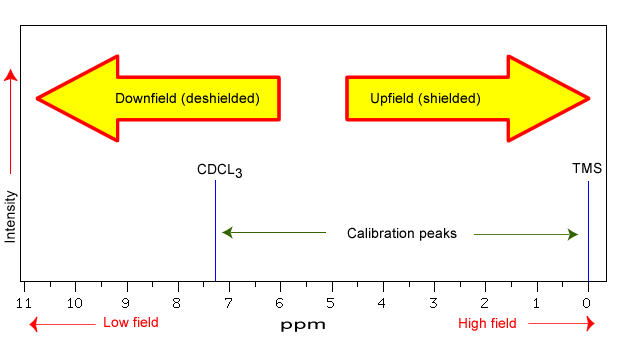
standardized NMR spectrum plot (as seen on MCAT)
chemical shift plotted on x-axis
chemical shift units
parts per million (ppm) of spectrophotometer frequency
H-NMR
NMR used to study H nuclei (protons) the only type of NMR tested by the MCAT
alpha spin state
when the magnetic field of the protons align against the external magnetic field applied lower energy than beta spin state
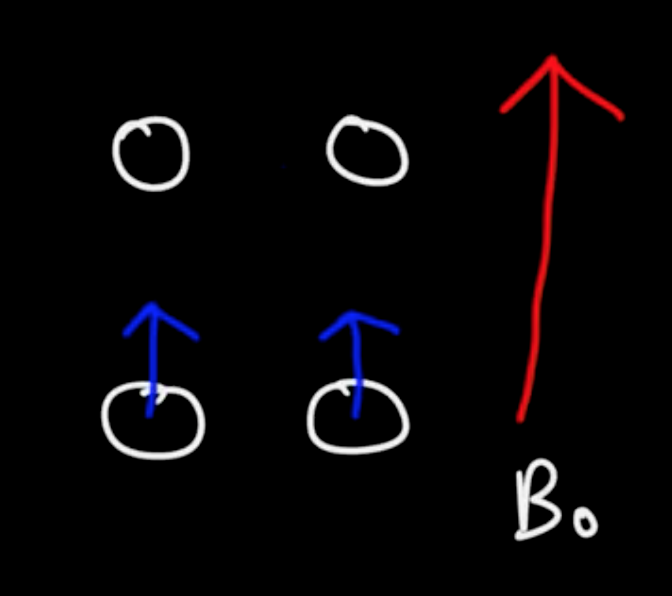
beta spin state
when the magnetic field of the protons align against the external magnetic field applied
NMR spectroscopy
measures the alignment of nuclear spin with an applied magnetic field, which depends on the magnetic environment of the nucleus itself used for determining the structure/connectivity of a compound, including functional groups
how are NMR spectra calibrated?
using tetramethylsilane (TMS), which as a chemical shift of 0 ppm TMS is used because it has one of the “most upfield” positions due to the electron-DONATING properties of the S atom; making it VERY shielded
higher chemical shifts are located _____ (downfield/upfield)
downfield
lower chemical shifts are located _____ (downfield/upfield)
upfield
each unique group of protons…
has its own peak
integration
the area under the curves/peaks proportional to the number of protons contained under the peak
deshielding
when electron-withdrawing groups pull electron density away from the nucleus, allowing it to be more easily affected by magnetic field moves a peak further downfield
n+1 rule: how many peaks will Ha have
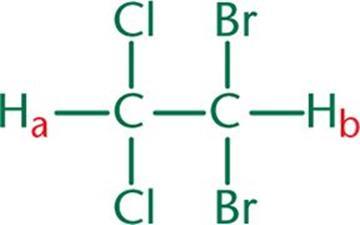
Ha is connected to one other hydrogen that is 3 bonds away so it will have 1+1 = 2 peaks
n+1 rule: how many peaks will Ha have
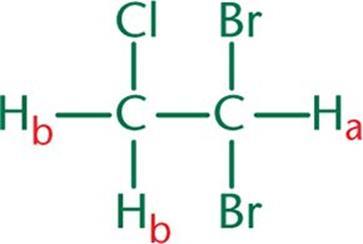
Hb is connected to two other hydrogens that are 3 bonds away so it will have 2+1 = 3 peaks
n+1 rule
if a proton has n protons that are 3 bonds away, it will be split into n+1 peaks (BUT do NOT include protons attached to N or O)
spin-spin coupling (splitting)
occurs when 2 protons close to one another have an effect on the other’s magnetic environment results in the splitting of peaks into doublets, triplets, and multiplets, depending on the environment
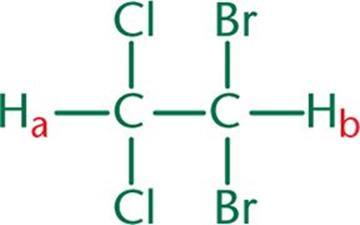
general ppm of aldehydic hydrogens
between 9 and 10 ppm
general ppm of carboxylic acid hydrogens
between 10.5 and 12 ppm