Milk Peoduction
No description yet. This curated deck is ready for daily study.
Card preview (14)
Calf Heath Issues
• Calf Scours (caused by bacteria) • Pneumonia (caused by respiratory disease) • both can be prevented by maintains clean and sanitary conditions and insuring adequate colostrum intake
Cow Health Issues
• Mastitis • Ketosis • Milk Fever • Rebreeding
What is Mastitis?
• inflammation of the udder which is caused by a bacterial infection • number one cause of economic loss
What is Keotosis?
• energy shortage due to metabolic problems (not enough energy) • normally seem 4-6 weeks after parturition
What is milk fever?
• low blood calcium causing muscle weakness at/near calving • rebreeding difficulties during lactation
Stages of Lactation
Stage One: Early Lactation (1-100 days) Stage Two: Mid Lactation (100-200 days) Stage Three: Late Lactation (200-305 days) Stage Four: Dry period
Stage One: Early Lactation
• first 100 days are most important (set the stage for remainder of the lactation period) • time and production level at which a cow peaks determines her potential • rule of thumb: for each 1lb increase at peak lactation, add 200 lbs to total • problems involve physiological stress due to high energy demand
Stage Two: Mid Lactation
• production can be expected to decrease 7% a month • average milk stage should be at least 80% of stage one • cows should recover body weight, increase butterfat in milk, decrease dry matter intake 5-7% month after peaking DMI • probes : cows to to rebred at time of positive energy balance, if not, milk production drops
Stage three: Late Lactation
• milk production will continue to decline along with feed intake • cows gain weight to support growing fetus and replenish lost tissue • young cows (1st lactation) are still growing • match grain intake to milk production • feed extra nutrients
Drying off
• reasons to dry off 1. Allows time for tissue repair 2. Allows cow to regain body condition 3. Completes development of calf in uterus • nutritional needs are decreased • fetus continues to grow and dry Mayer intake starts to decrease • energy balance declines during last 30 days of gestation
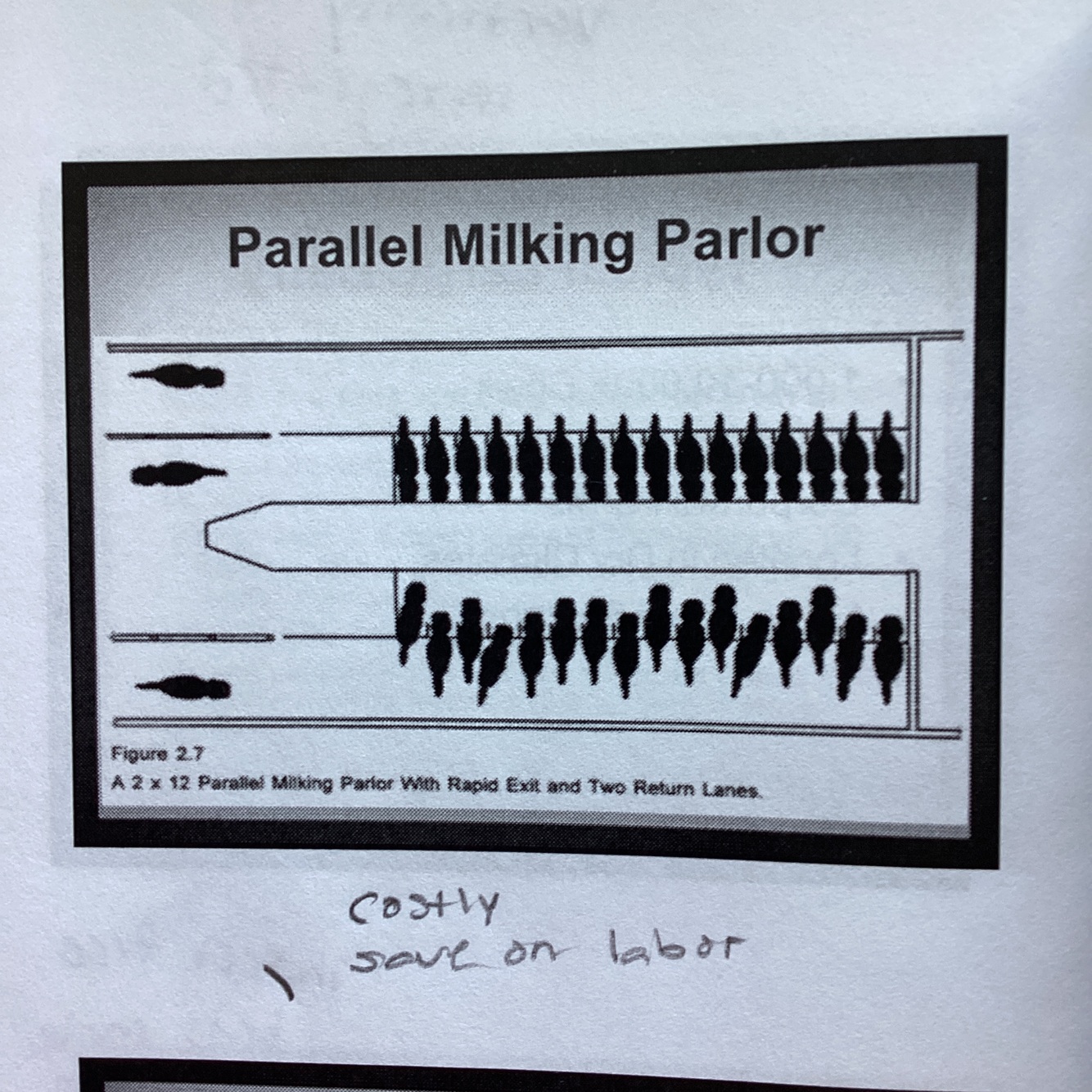
Parallel Parlor
• 90 degree angle facing away from operator • access to the udder between rear legs • use rapid exit stall fronts and dual return lanes
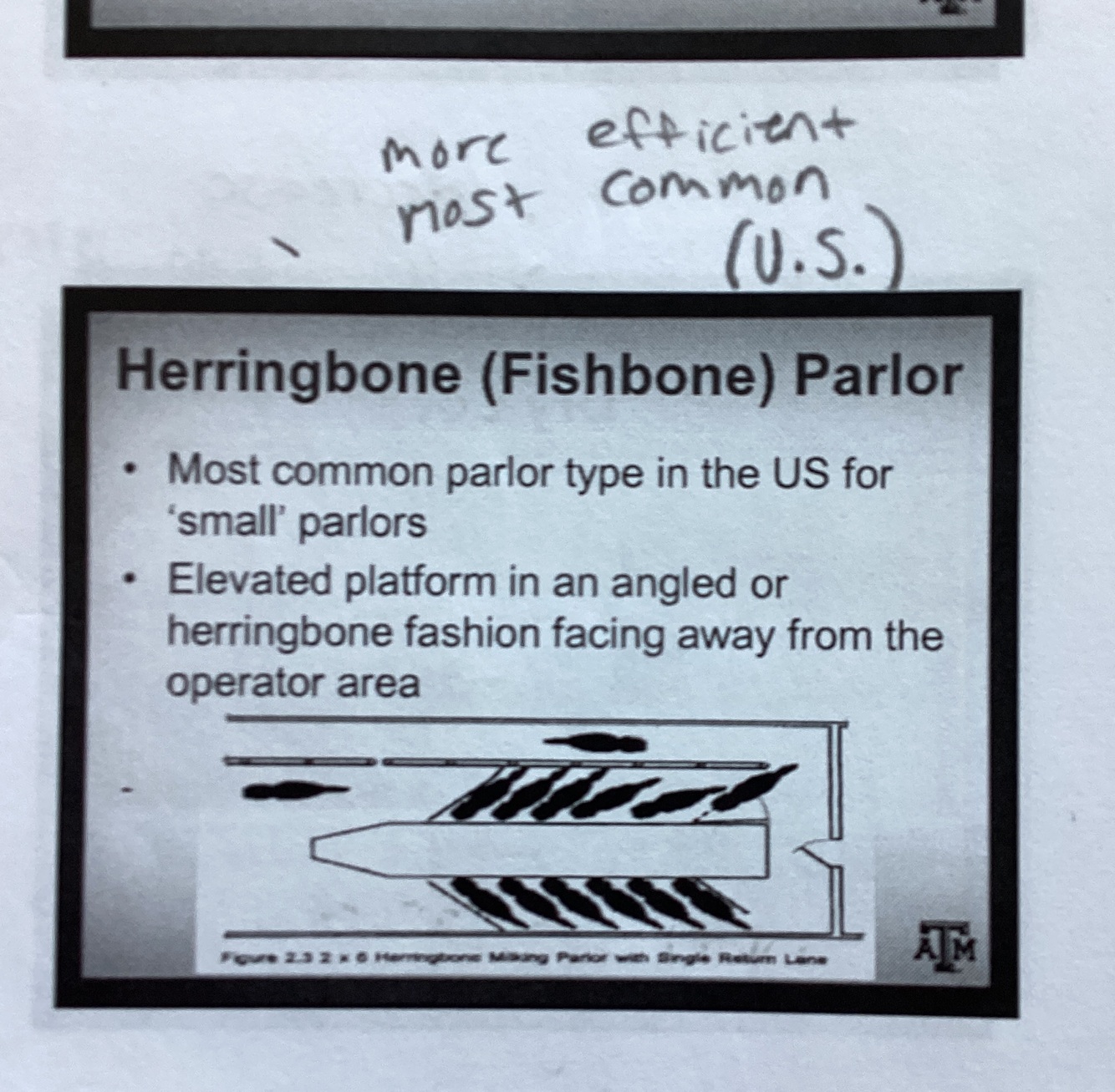
Herringbone (Fishbone) Parlor
• most common parlor type in “small” U.S. parlors • elevated platform in an angled or herringbone fashion facing away from operator area
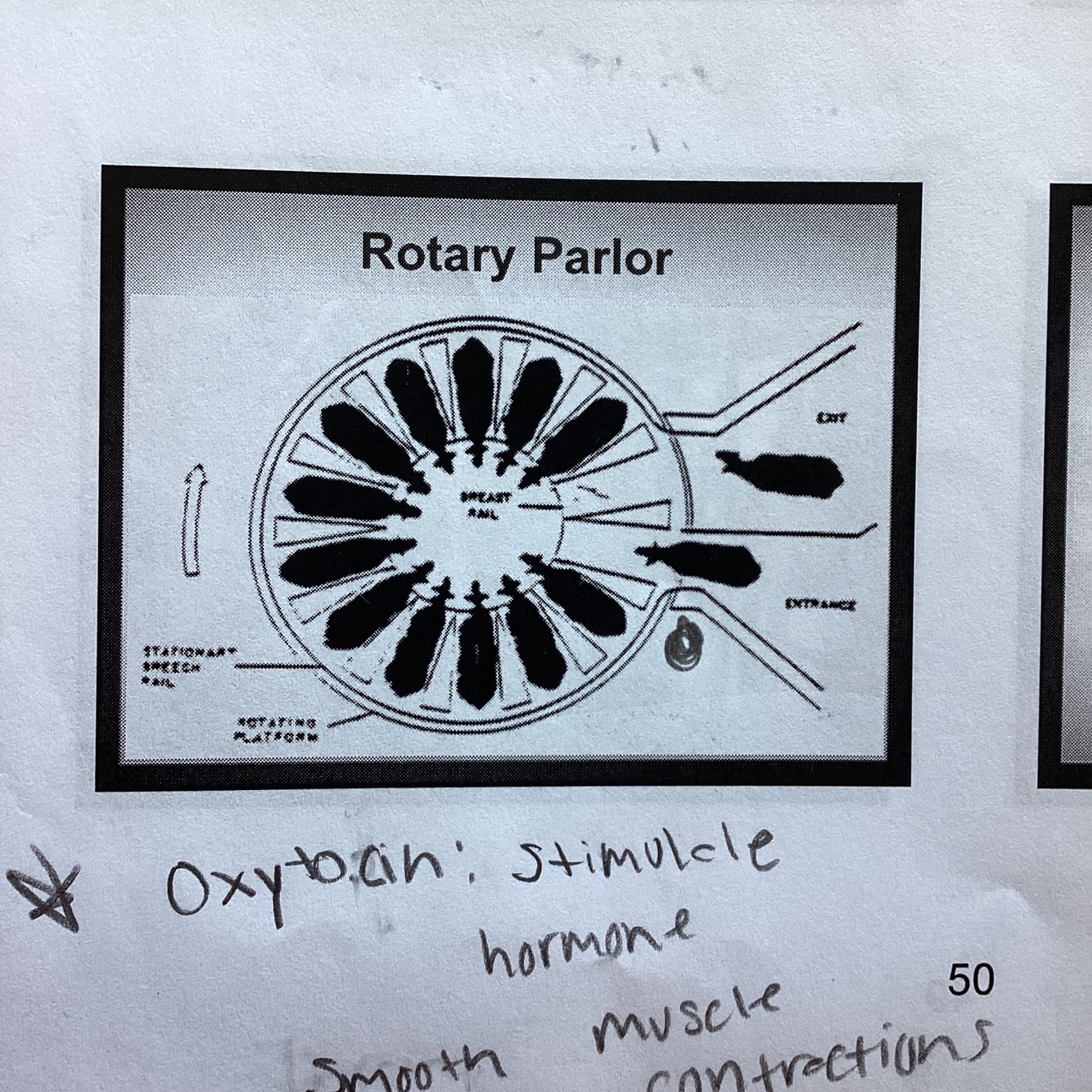
Rotary (Carousel) Parlor
• largely automated • regimented and uniform • three operators (one for unit attachment, onto to detach units/apply teat dip, one to tend any problems) • best for larger herds
Robotic/Automatically/Voluntary Milking System
• cows get to rest, eat, and socialize when they desire at 2.5 to 3 times per day, on average, at a time that suits their schedule