Unit 19 - human influence on ecosystems
No description yet. This curated deck is ready for daily study.
Card preview (12)
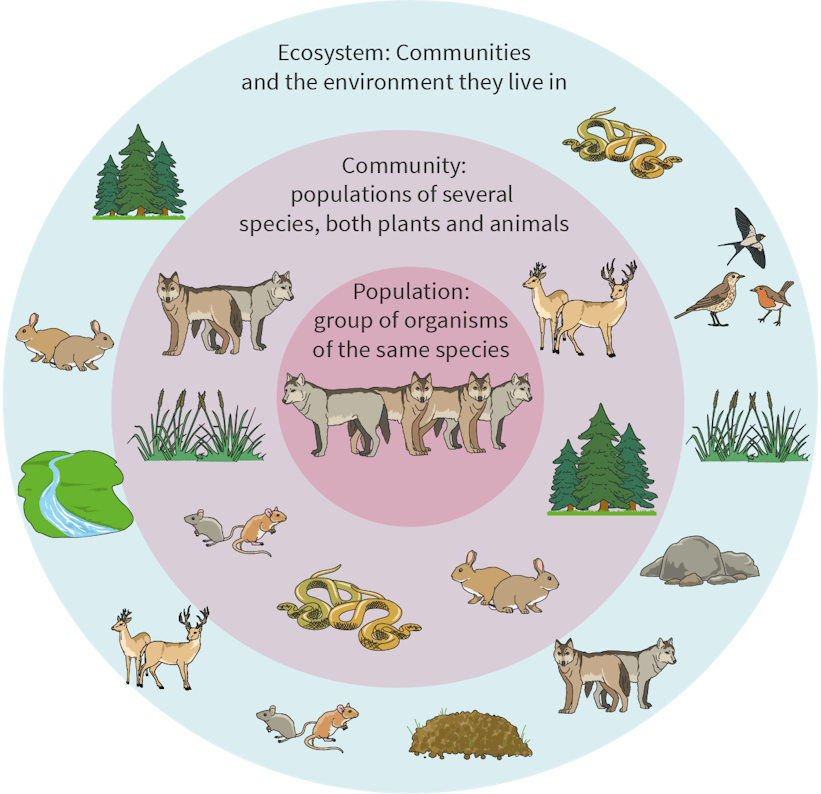
Population
Group of organisms of one species living in the same area, at the same time
Species
Group of similar organisms that can reproduce to produce fertile offspring
Community
All the populations of different species in an ecosystem
Ecosystem
A unit containing the community of organisms and their environment, interacting together. Includes non-living objects that organisms interact with as part of their lives.
Biodiversity
Number of different species that live in an area
Habitat
Place where an organism lives/interacts with its surroundings
3 human activities that cause habitat destruction
• Increased use of land for food crops, livestock & housing • Extraction of natural resources like oil & minerals which causes pollution & changes the landscape. E.g. removing stones from quarries (deep holes) or extraction of sand from riverbeds which may change course of river. • Freshwater & marine pollution like oil spills, untreated sewage, careless rubbish disposal & heavy metal runoffs.
Explain 5 consequences of deforestation
• Reduced biodiversity - forests (especially rainforests) have very high biodiversity, and trees act as the primary producers for many foodwebs, and provide a space to live. • Flooding - tree loss affects the water cycle as the amount of water vapour released into the atmosphere via transpiration decreases, which leads to less rainfall. No/less roots or trees to hold or bind soil ;no or less water absorbed by the roots/trees. Increase in runoff/ (increase in) deposition of soil into rivers ; • Loss of soil - vegetation’s roots keep the soil in place and reduce erosion by wind & rain. Water can easily erode exposed soil, potentially causing landslides. Removal of trees can also lead to huge dust storms as wind picks up loose soil. • Extinction of species - some species are unable to migrate to other places when their habitat is destroyed, so they struggle to find food, mates & shelter in a fragmented habitat. • Increase in CO2 in atmosphere - fewer trees means less photosynthesis, which leads to increase in CO2 concentration in atmosphere. Burning trees releases additional CO2
Erosion
Process by which topsoil is washed/blown away, reducing its fertility
Main cause of deforestation
Trees in forests are cut down to be used for fuel or as timber for building.
Explain the 6 causes of endangerment/extinction of species
• Climate change - changing in long-term weather patterns, such as temperature increases or droughts, may cause species that cannot adapt to the new climate to become extinct • Hunting - killing animals for food, materials or recreational purposes • Introducing species - arrival of a foreign species can disrupt balance of ecosystem, as it may compete with local/native species for nutrients or be a predator that kills them • Overharvesting - harvesting more of a resource than can be produced again can lead to there being not enough individuals in an area for a viable breeding population. • Habitat destruction • Pollution
Explain 4 ways endangered species can be conserved
• Monitoring & protecting species and habitat - migration routes, behavioral & habitat changes, and feeding & mating activities can be studied to understand the threats to species and allow more effective protection. • Education - raise local’s/people’s awareness & understanding of species & habitats along with the need to conserve them. Can put pressure on organisations. • Seed banks - contains samples of seeds from many plant species. Provides resources that can be used to develop new varities of plants. • Captive breeding - planned breeding of animals in zoos/wildlife parks to increase number of individuals in population. Takes a lot of space & time, but can encourage people to value these animals, which can lead to supporting of conservational programmes or donations to wildlife charities