Unit 5: Networks and Web Technologies
No description yet. This curated deck is ready for daily study.
Card preview (21)
What is a network?
A network is two or more computers connected together that can transmit data.
What is Physical topology?
Physical topology is the physical layout of the network.
What is Logical topology?
Logical topology is the way in which data flows around a network.
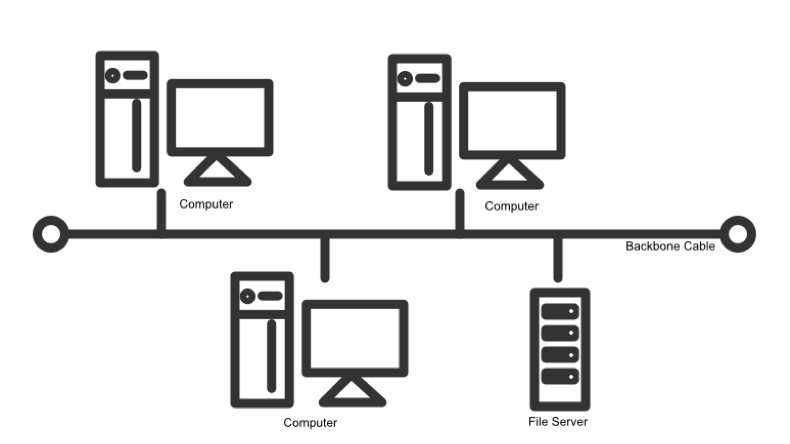
Describe Bus topology.
A network topology where all terminals (devices) are connected to a backbone cable
What is the main advantage of Bus Topology?
Cheaper to set up, doesn’t require any additional hardware.
Name 3 disadvantages of Bus Topology
• If the backbone cable fails, the entire network gets disconnected. • As traffic increases, performance decreases. • All computers can see the data transmission (insecure).
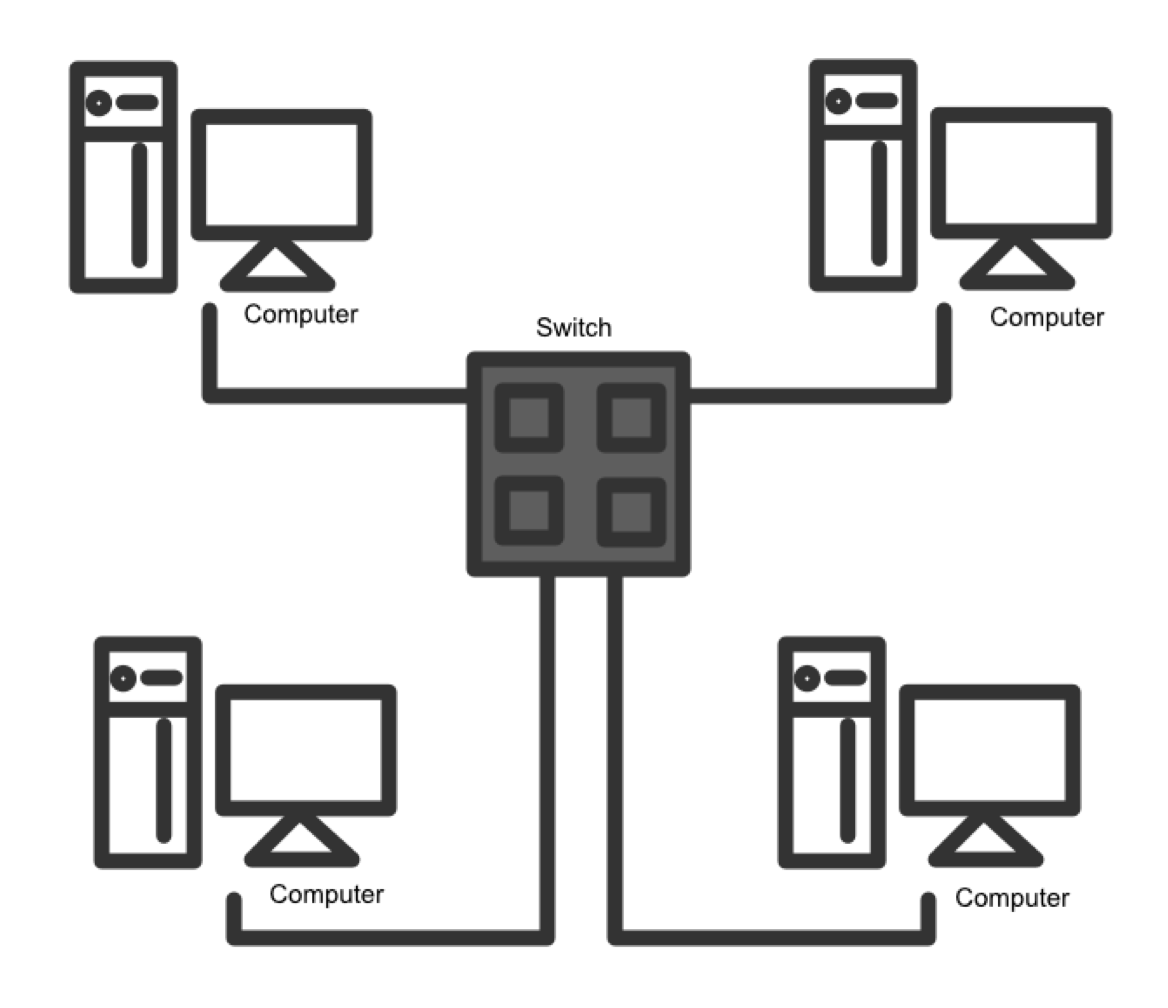
Describe Star Topology.
A network topology which uses a central node (switch/computer) to direct the flow of data, MAC (Media Access Control) addresses identify each device.
Name 3 advantages of Star Topology.
• Performance is consistent even if network is being heavily used. • If one cable fails, only that station is affected. • It’s easy to add new stations.
Name 2 disadvantages of Star Topology.
• Expensive due to switch and cabling. • If the central switch fails, the rest of the network fails.
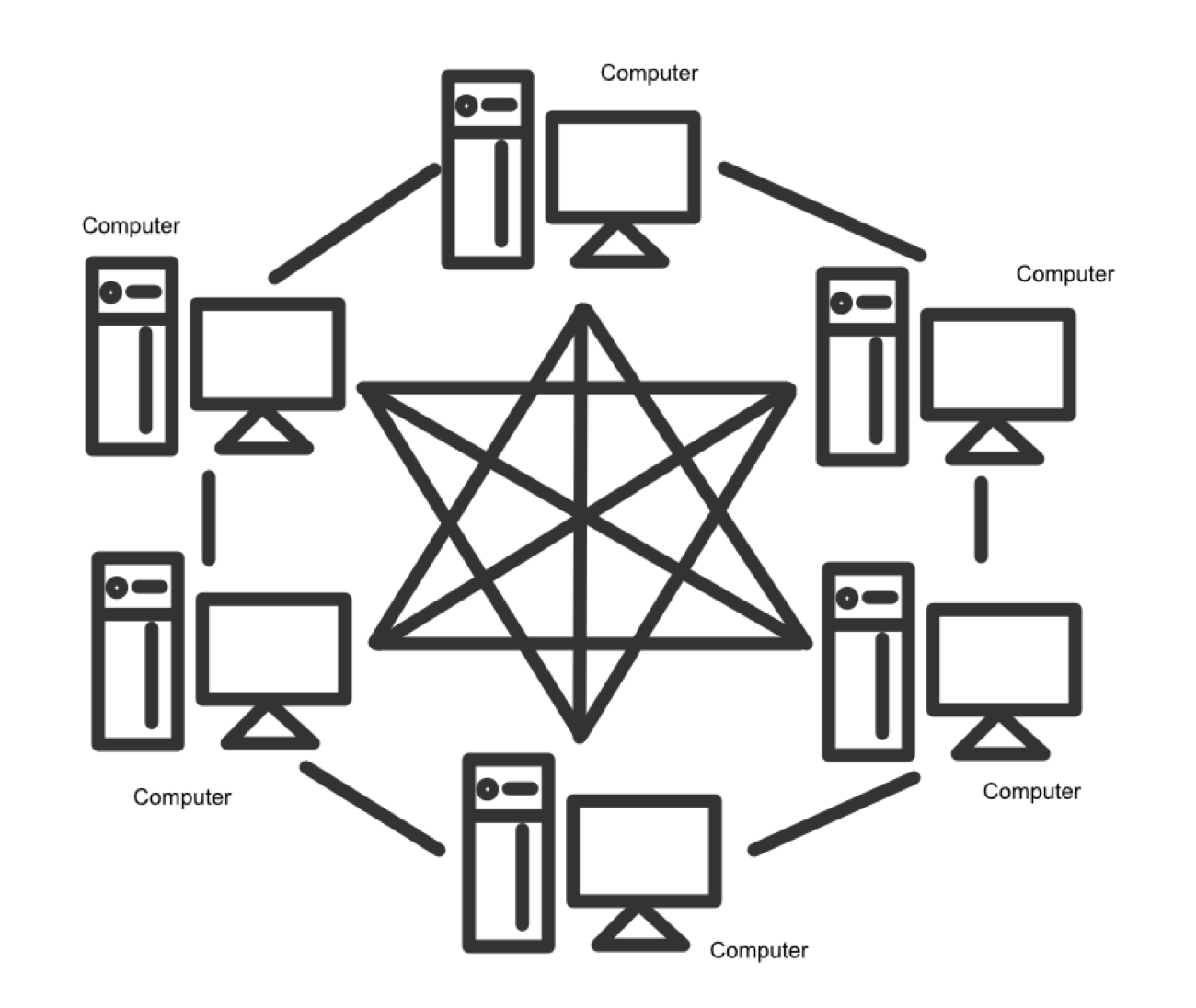
Describe Mesh Topology.
§A network topology where every node is connected to every other node. Most commonly found with wireless technology such as Wi-Fi.
Name 3 advantages of Mesh Topology.
• No cabling cost (wireless). • As nodes increase, the reliability and speed of network becomes better. • Faster since nodes don’t go through a central switch.
Name 2 disadvantages of Mesh Topology.
• You have to purchase devices with wireless capabilities. • Maintaining the network is difficult.
What is a protocol?
A protocol is a set of rules defining how two computers communicate with each other. Protocols are standard so that all devices have a designated method of communicating with each other, regardless of manufacturer.
Name 4 examples of commonly used protocols.
• HTTP (Hypertext Transfer Protocol) • TCP/IP (Transmission Control Protocol / Internet Protocol) • POP (Post Office Protocol) and IMAP (Internet Message Access Protocol). • FTP (File Transfer Protocol)
How is the Internet structured?
The Internet is a network of networks which allows computers on opposite sides of the globe to communicate with each other. Continents are connected to each other using large international backbone cables. Many of these pass underwater, linking continents to one another.
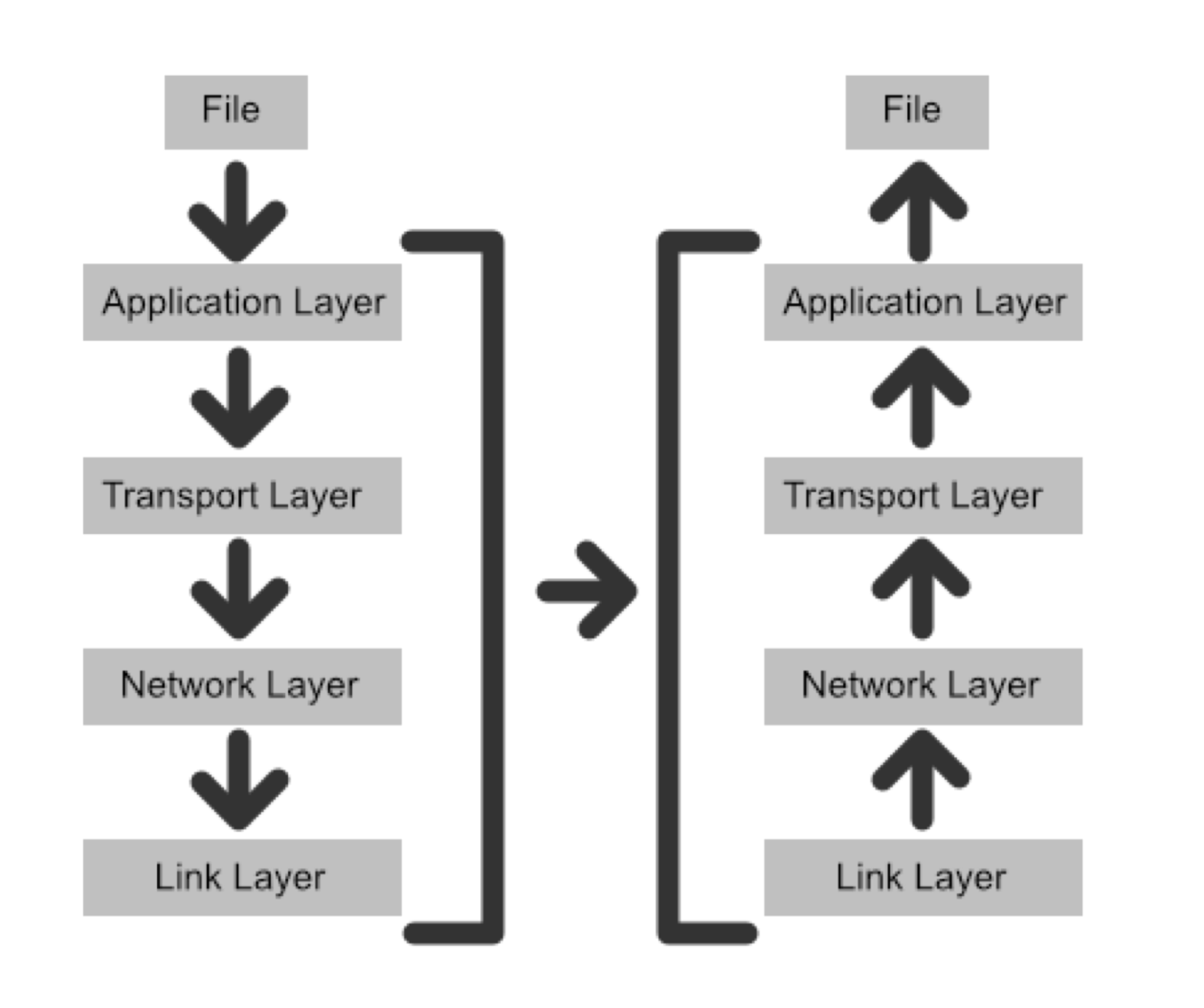
What are the 4 operation layers in the TCP/IP Stack?
• Application Layer • Transport Layer • Network Layer • Link Layer
Describe the purpose of the Application Layer in the TCP/IP stack.
The application layer specifies what protocol needs to be used in order to relate the application that’s being sent. For example, if the application is a browser then it would select a protocol such as HTTP, POP3, FTP, etc.
Describe the purpose of the Transport Layer in the TCP/IP stack.
The transport layer uses TCP to establish an end-to-end connection between the source and recipient computer. The transport layer splits data up into packets and labels these packets with their packet number, the total number of packets the original data was split up into and the port number being used for communication. If any packets get lost, the transport layer requests retransmissions of these lost packets.
Describe the purpose of the Network Layer in the TCP/IP stack.
The network layer adds the source and destination IP addresses. (The combination of the IP address and the port number is called a socket address.) Routers operate on the network layer and use the IP addresses to forward the packets. The sockets are then used to specify which device the packets must be sent to and the application being used on that device.
Describe the purpose of the Link Layer in the TCP/IP stack.
The link layer is the connection between the network devices, it adds the MAC address identifying the Network Interface Cards of the source and destination computers (or router if the device is on another network).
Explain the differences between LANs and WANs.
• A LAN is a local area network and a WAN is a wide area network. • A LAN is a network spread over a small geographical area while a WAN is typically spread over a large geographical area. • A WAN usually requires extra telecommunication hardware owned by third-parties. • An example of a LAN would be the network in a home, school, or office. • An example of a WAN is the Internet.