Content OC
No description yet. This curated deck is ready for daily study.
Card preview (24)
electron domain: 4
geometry: linear bond angle: 180 hybrid.: sp
electron domain: 3
geometry: trigonal planar bond angle: 120 hybrid.: sp2
electron domain: 2
geometry: tetrahedral bond angle: 109.5 hybrid.: sp3
single bond
one sigma
double bond
one sigma one pi
triple bond
one sigma two pi
determining greatest resonance contributer
the most stable will have a full octet on every atom the most stable will have the smallest number of charges the most stable will have neg. charges on the most electroneg. atoms and positive charge on the least electroneg. atoms
order of stability in newman projections
staggered > gauche > eclipsed axi
axial vs equatorial
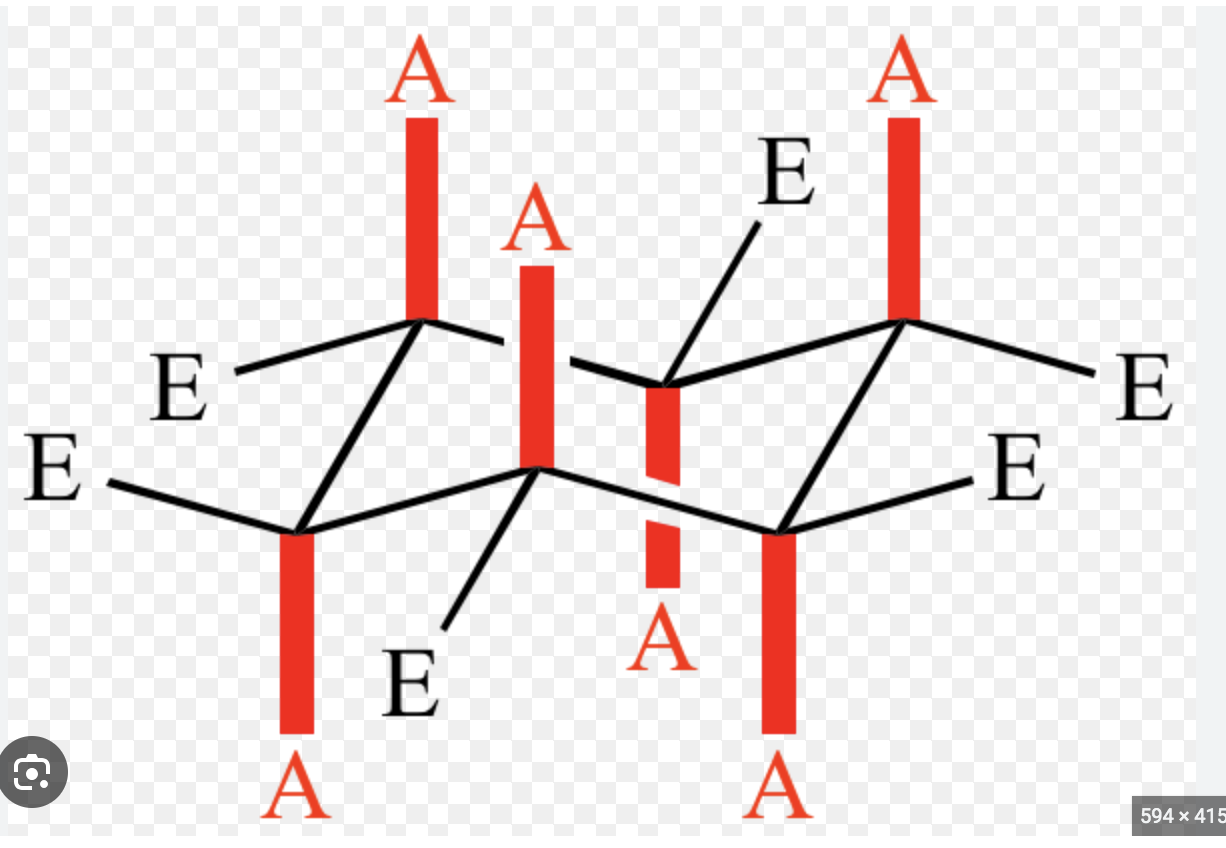
equatorial bonds are more ________
stable ( lower energy ) than axial place largest sub on equatorial to get greatest stability
cis
two subs. in the same direction
trans
two subs. in opposite direction
a lewis acid ______ electrons
accepts
a lewis base _______ electrons
donates
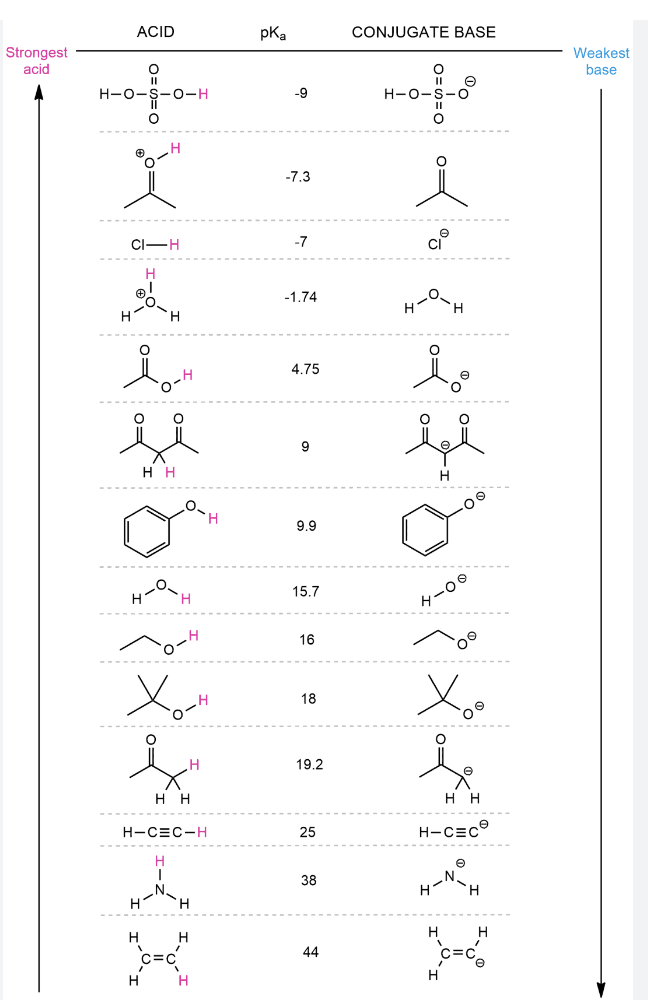
the stronger the acid, ______
the weaker/ more stable the conjugate base
the stronger the base, ________
the more stable/weaker the conjugate acid
pks for organic compounds
the more positively charged,
the more acidic
the more negatively charged,
the more basic
if all factors are about the same, then hydrogens acidity increases as the atom that it’s bonded to:
goes left to right across a row goes down a column
electron withdrawing groups increase
acidity
electron donating groups decrease
acidity
s-orbitals tend to be more electroneg., so the more “s” character :
the stronger the acid
C A R D I O
Charge: positively charged compounds are typically more acidic, negatively charged compounds are more basic Atom: the more electroneg./ larger the atom with a negative charge, the more acidic the hydrogen is Resonance: the more resonance stabilized the conjugate base, the stronger the acid Dipole Induction: electron withdrawing groups increase acidity, electron donating groups decrease acidity Orbitals: the more s-character an atom has, the more electroneg it is, and the more acidic hydrogens bonded to it will be sp3<sp2< sp