Recent and Long Term Changes in Climate
No description yet. This curated deck is ready for daily study.
Card preview (24)
IPCC reports creates a synoptic review of the current research on climate change What is the purpose of this report?
• To advance scientific knownledge about climate change caused by human activities examines all the relevant scienfic litrature • Including natural, economic and social impacts and risks • Contains projected changes in temperature, precipitation, droughts, sea levels, arctic sea ice etc
Define Climate
Average weather conditions in a particular area, over a particular time period (temperture, precipitation, radiation, wind speed, humidity - long time scale)
Define Weather
Atmospheric conditions in a particular area, over a particular time (temperature, precipitation, radiation, wind speed, humidity - shorter time scale)
What is climate change?
Changes in average weather in a particular area, over time
What is the relevancy of timescales to climate change?
Needs to be long enough to be a sensible average, and short enough to be relevant to animals (including humans) and plants
What is the Earth-Atmosphere energy balance?
• The balance between incoming energy from the Sun (shortwave) and outgoing energy from the Earth (longwave)
When the radiation flux is out of balance….
It causes the climate to change
Here is a list of ERF values What does ERF quantify?
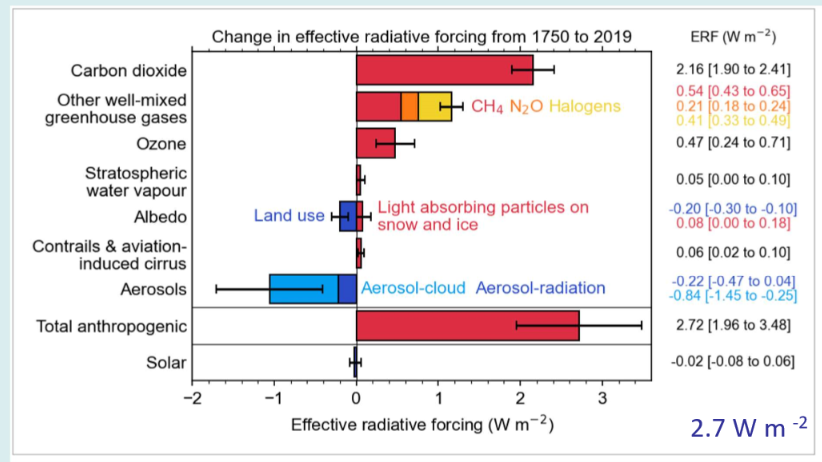
The effect of a process of Earth’s energy balance, relative to 1750 pre-industrial baseline It’s a globally average value expressed in W/m²
Why can solar insolation change (longterm)?
• Changes in insolation caused by changes in the Earth’s orbit/axis (10-100ka cycles) • Called the Milankovitch cycles (change ±20%)
Why can solar insolation change (shorterm)?
• Sunspots caused by changes in the magnetic pressure on the surface of the sun in association with decreases in the surrounding atmospheric pressure • 11-yr cycles • The warmer area around the sport gives out increased radiation, hence warming
How has land cover affected albdeo of this surface?
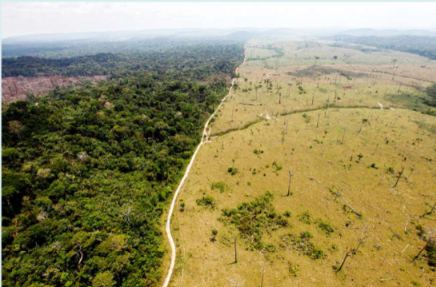
• Darker forest vs lighter crop lands (due to deforestation) • Resulted in colour of the surface to change • Hence more light would be refleced on the lighter side, leading to a cooling effect
How has land cover affected albedo on this surface?
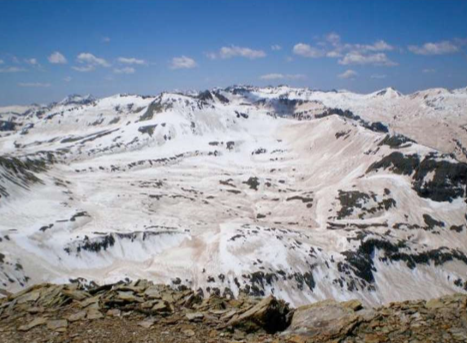
The black within the glacier is due to soot, which has been depoitted into the glacier Results in increased absorption due to darker colour (warming effect)
Which are the main 3 gasses which contribute towards global warming?
CO₂, CH₄, N₂O
How can aerosols affect clouds?
Aerosols can scatter/absorb solar radiation AND act as cloud condensation nuclei: more clouds for longer period
Name some natural aerosols
• Dust • Sea Salt • Sulphate from volcanoes
What are some Anthropogenic sources of Aerosols?
• Biomass burning • Sulphate from fossil fuel burning
What affect do volanoes have on climate?
• The increased debris and dust from a volcanic explosion will have a negative albdeo affect • Meaning more light is reflected and there will be cooling
“Climate” in this context generally means temperature (and CO₂) There are 3 main categories of timescales What are they?
• Instrumental records (350yrs max, but genrally less than 150yrs) • The past c.1000yrs (tree-rings, ice-cores etc) • Long-term variability on any timescale over which reliable data can be obtained (Lake sediments, ice cores, fossils etc)
John Tyndall (1860) discovered…
That different GHG will produce different amounts of warming measured by his radio spectrophotometer
What is the Keeling Curve?
• Daily measurements of CO₂ taken at the Mauna Loa Observatory in Hawaii • Daily fluctuations due to photosynthesis ceasing in the nightime • Record goes back to 1958
When was the first temperature record (Central England Temperature) compiled by Gordon Manley
In 1974
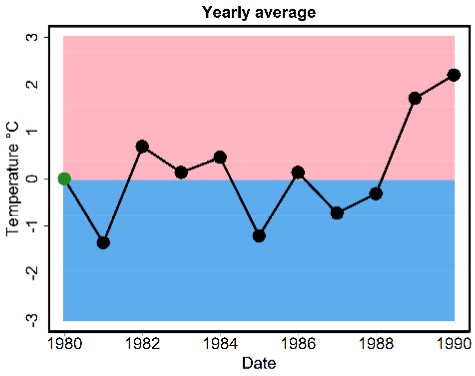
many intrumental temperature records can look like this due to background noise, and hence it can be difficult to observe any pattern How can this be overcome
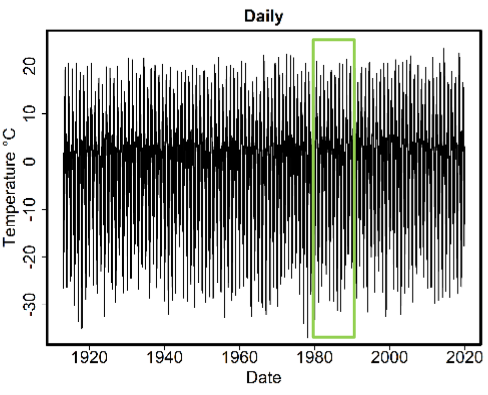
• By selecting a reference year (or period which has been average) • And subtracting it from each annual temperature measurements • Hence allows a trend to be worked out like this
What is the issue with past temperature data which has been measured using thermometers?
• Hard to read thermometers to an accurate degree (e.g. there has only been 0.8°C warming in past 150yrs) • Different countries may have different resources and different ways of doing things • Hence need for standardisation is important
Why is random error tolerable but systematic change not in records
• Radom error are tolerable, if you have a long enough record to make good averages (anomalies can be spotted easily) • Systematic changes over time must be identified and corrected if possible e.g. Urban heat island effect