Seeing Double: Biomembrane Structure
No description yet. This curated deck is ready for daily study.
Card preview (24)
What 2 macromolecules are biomembranes composed of in vivo?
lipids and proteins
What is the only macromolecule required to make an artificial biomembrane in vitro?
lipids
List the four functions of biomembranes.
• Compartmentalization • Insulation • Communication • Transport
Of the four functions of biomembranes, which ones are lipids responsible for?
• Compartmentalization • Insulation • Communication
Of the four functions of biomembranes, which ones are proteins responsible for?
• Communication • Transport
What is the general ratio of protein to lipids in biomembranes?
No set ratio. Varies depending on function.
Is there more lipid or protein in the biomembrane of a neuron (myelin sheath)?
More lipid - insulative properties
Is there more lipid or protein in the biomembrane of a mitochondrion (myelin sheath)?
More proteins
What are the three main roles of lipids in cells?
• Membrane Structure - compartmentalization • Chemical Signals - communication • Energy Storage
How many different types of lipid molecules does a fungal cell contain at any given time?
Around 1000
What are the 3 main classes of lipids in biomembranes?
Sterols Phosphoglycerides Sphingolipids
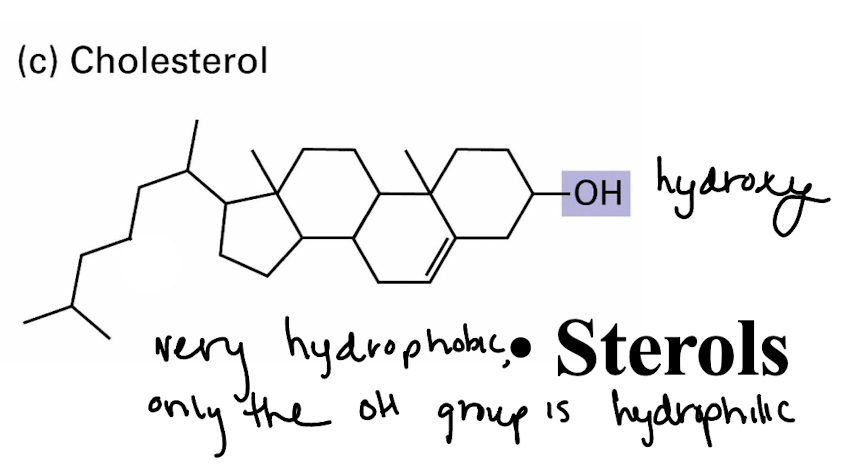
Describe cholesterol.
Sterol; generally very hydrophobic; only the hydroxy group is hydrophilic
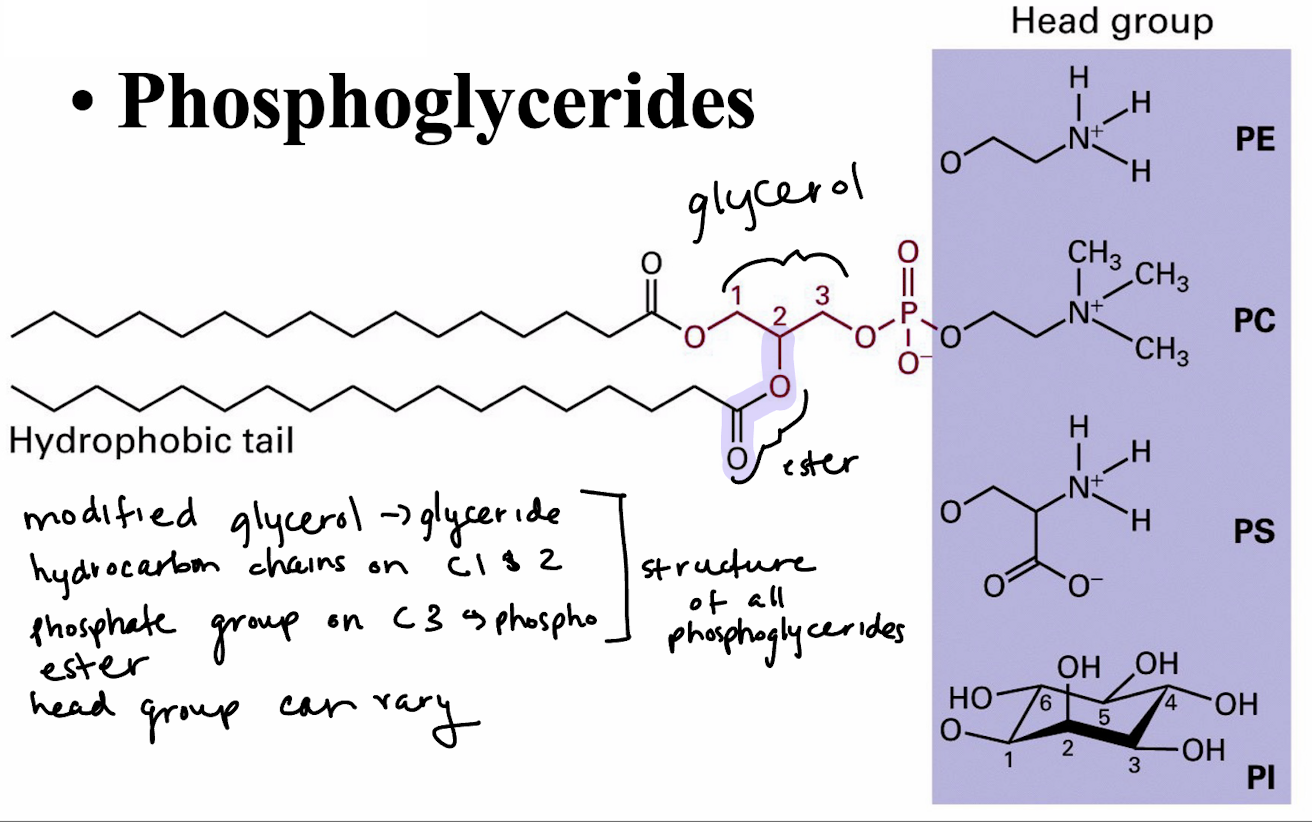
Describe the structure of all phosphoglycerides.
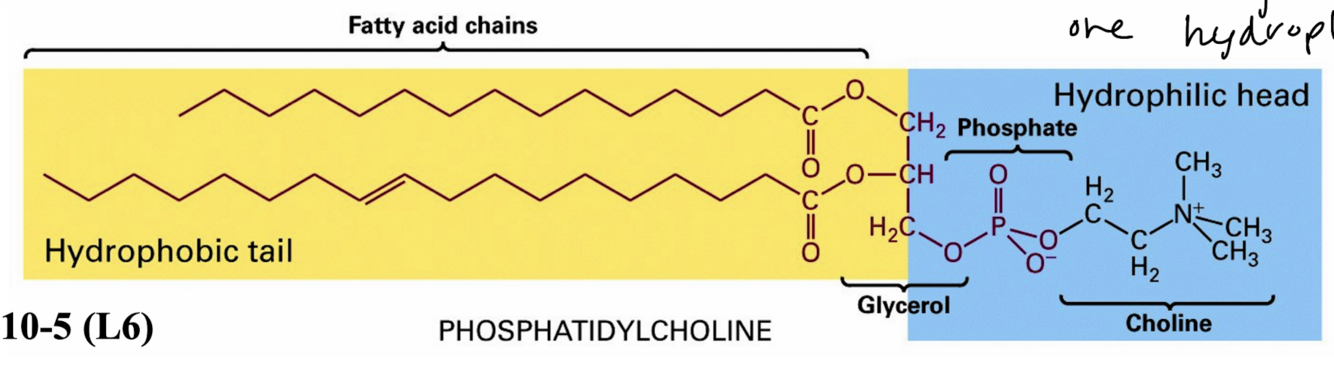
modified glycerol (glyceride) hydrocarbon chains on carbons 1 and 2 phosphate group on carbon 3 (phosphoester)
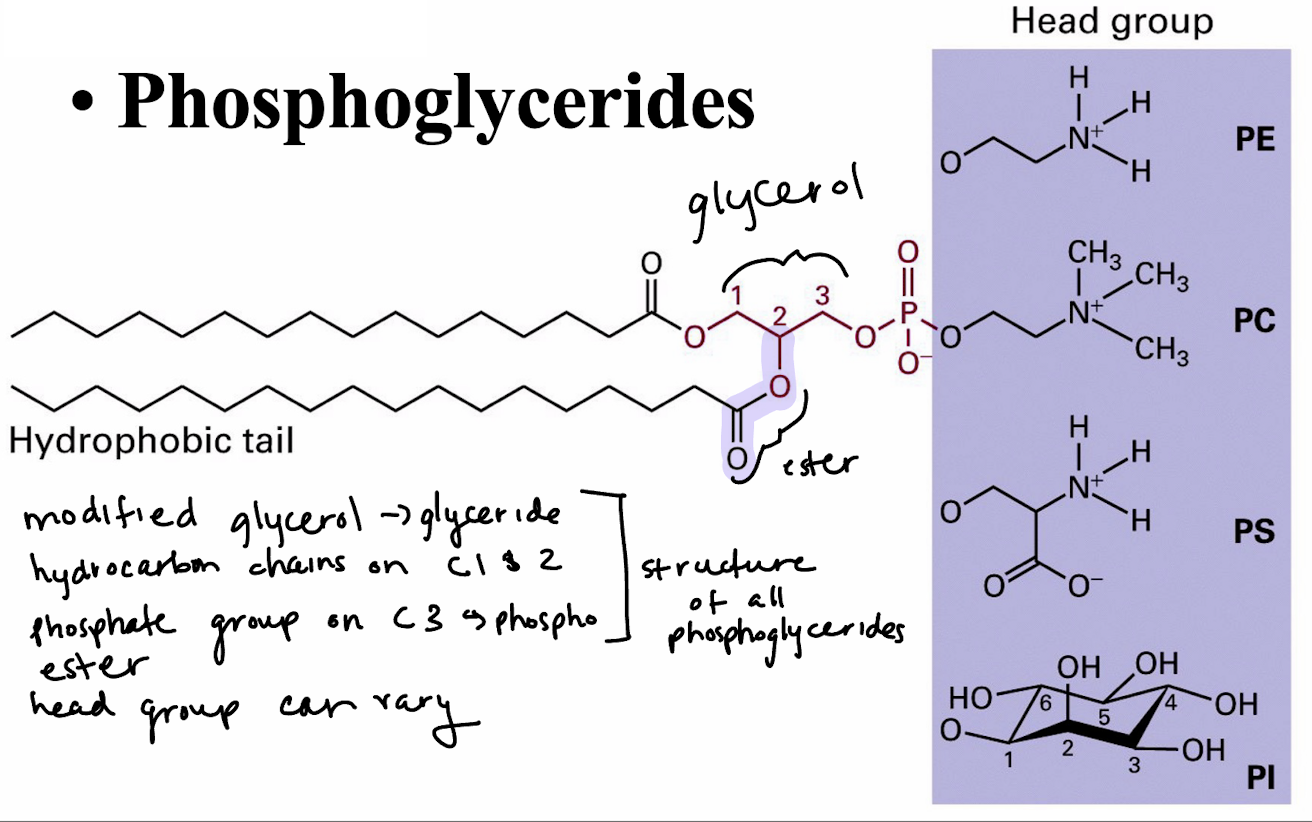
What is the only thing that varies in the structure of a phosphoglyceride?
head groups can vary
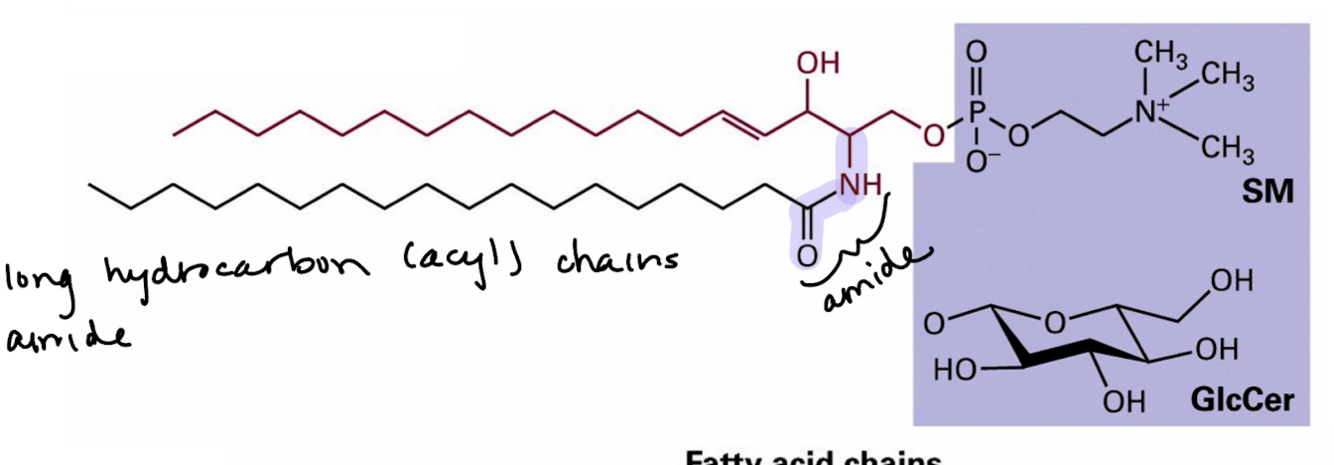
Describe the general structure of a sphingolipid.
Long hydrocarbon (acyl) chain Amide between the acyl chain and a head group
Which is hydrophobic in the biomembrane, the head or the tail?
Tail
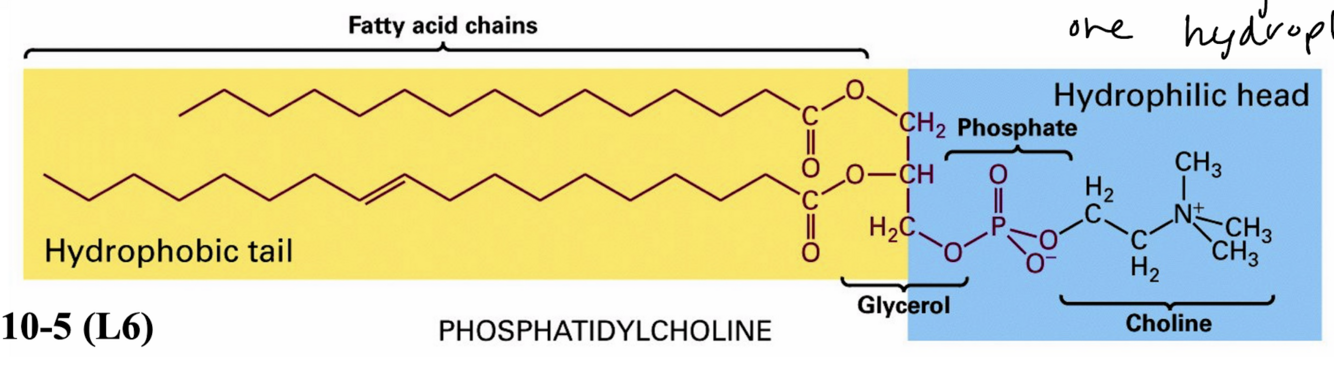
Which is hydrophilic in the biomembrane, the head or the tail?
Head
Where do phosphoglycerides come from?
fatty acids and glycerol
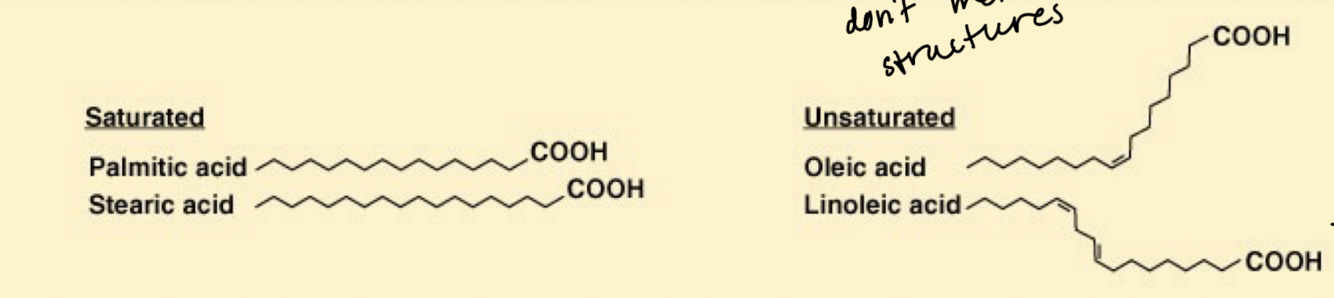
What is the difference between saturated and unsaturated?
Saturated molecules have all single bonds. Unsaturated molecules have at least one alkene and are kinked.
How do fatty acids attach to glycerol in phosphoglycerides?
a series of hydrolysis reactions
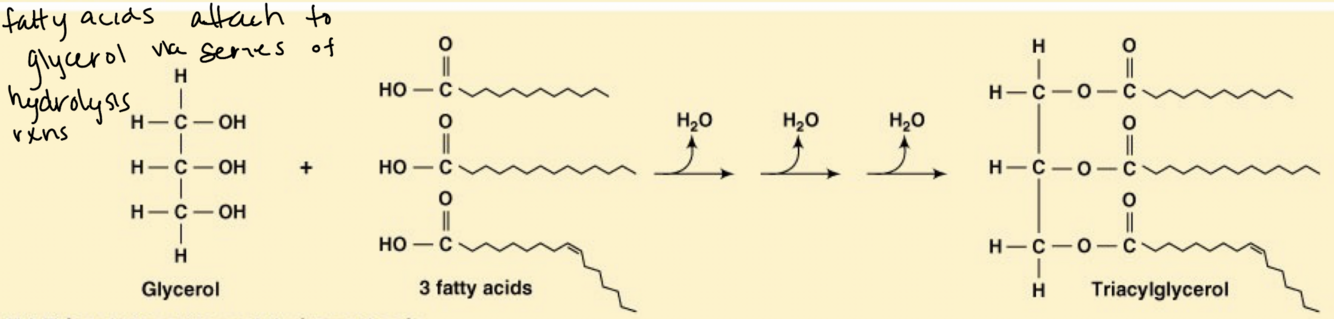
How are phosphoglycerides constructed?
• Fatty acids attach to glycerol with a series of hydrolysis reactions. • The side chain is removed from triglycerol and replaced with a phosphate group. • A head group (R group) is added to the phosphate.
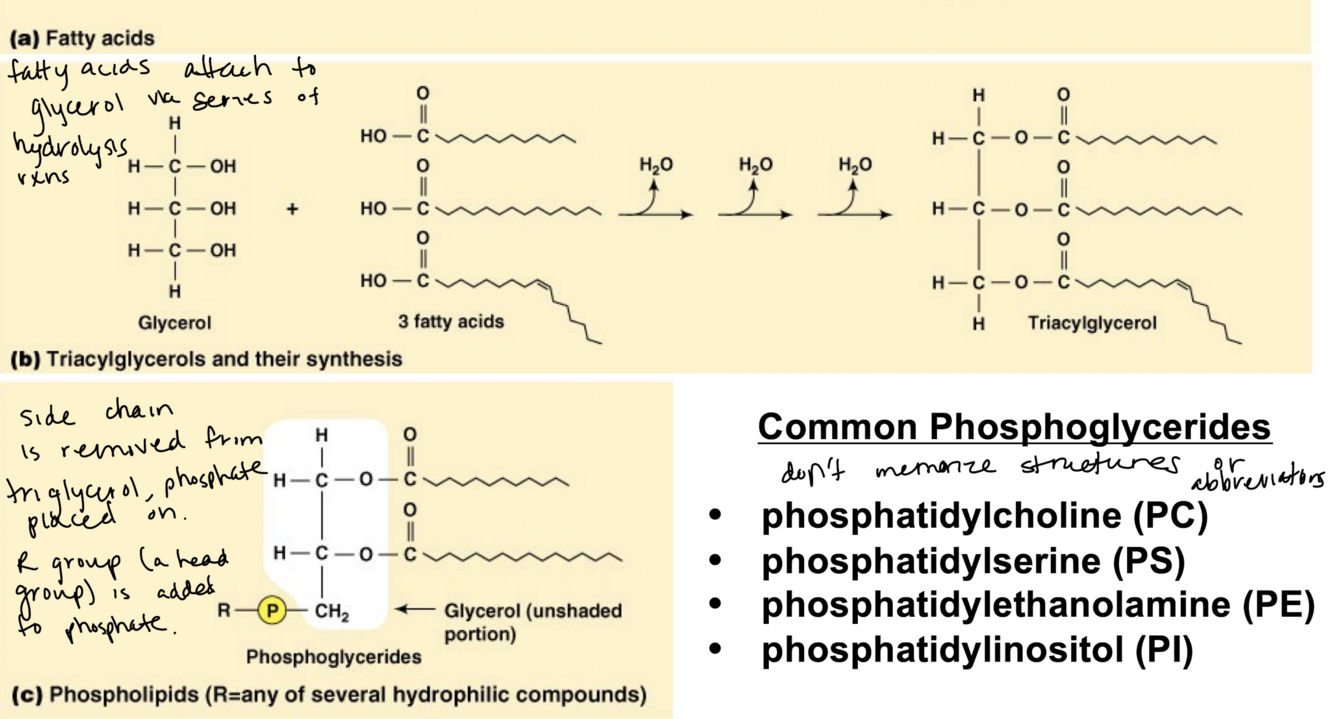
What are the four common phosphoglycerides?
phosphatidylcholine phosphatidylserine phosphatidylethanolamine phosphatidylinositol
Describe the solubility of sterols.
Soluble in nonpolar solvents (due to large hydrophobic regions). Weakly soluble in polar solvents (due to singular hydroxy group).
Do all sphingolipids have a phosphate group in their head group?
Some do, some don’t.