vitals and values
No description yet. This curated deck is ready for daily study.
Card preview (24)
heart rate
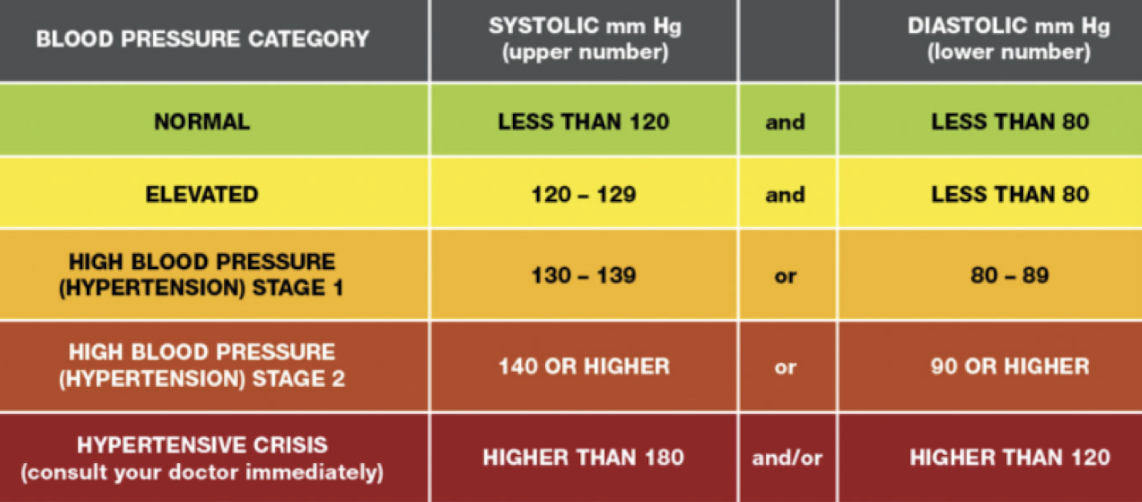
• RHR: adults 60-100, peds 76-85 • resting BP: women 110/70, men 120/80 • exercise max BP: with full monitoring 250/115. clinical 200/100-220/110 • resting RR 12-18 • distresting RR 20+
BP ranges
VO2 max (mL/min/kg)
• deconditioned middle age adults: 30-40 • conditioning (months): 45-55 • high level endurance athletes: 70 • high level cross country skiers: 80 • sedentary young adults: 45 • sedentary middle age adults: 35 • post MI: 22 (up ~20% with training) • severe pulmonary disease: 13
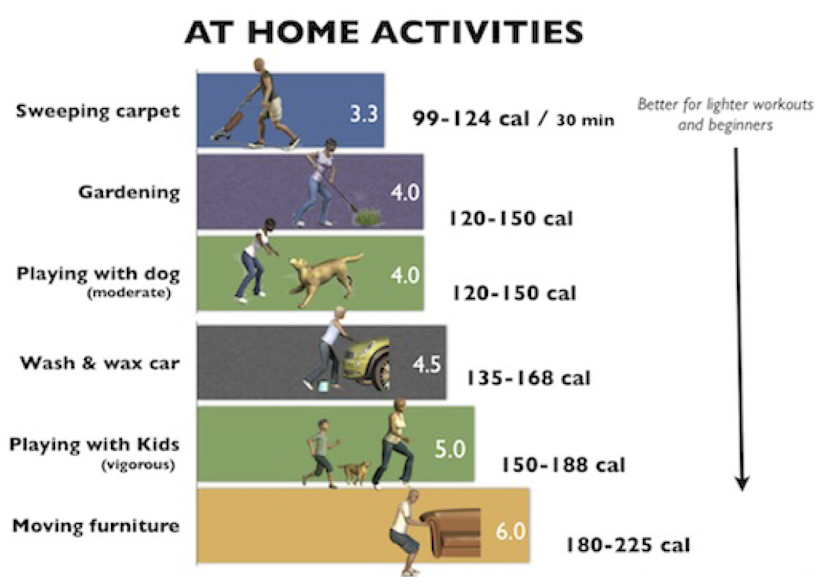
METS: metabolic equivalent measure of efficiency: increase VO2 to be more efficient
• 1 MET = 3.5 ml O2 consumed/kg body weight/min (VO2) • moderate exercise METS: • vacuuming: 3.5 METs • dancing: 6.5 METs • jogging: 7.0 METs • bicycling: 8 METs • running a 7 min mile: 14 METs
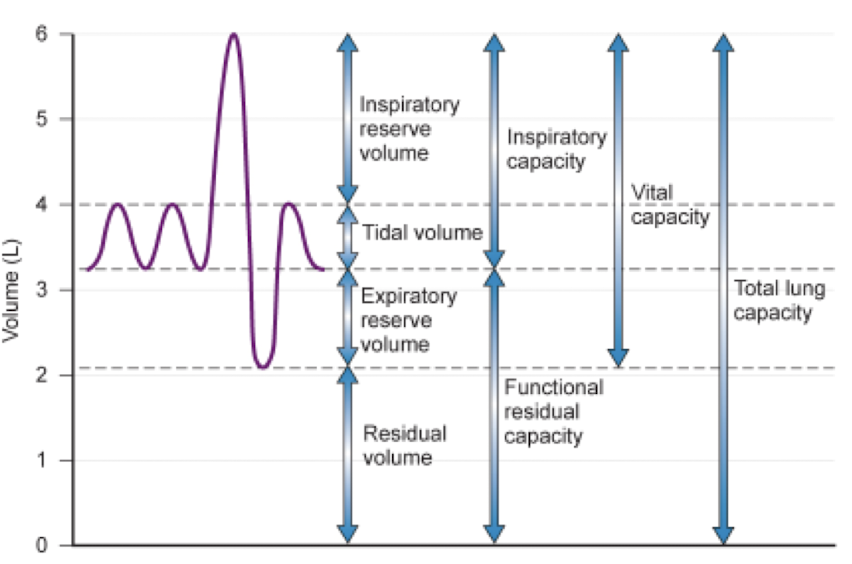
pulmonary function testing norms
• tidal volume: 0.5L at rest • forced vital capacity (FVC): 3-5L • forced expiratory volume (FEV1): 2.5-4: • FEV1/FVC: > 80% in health adults
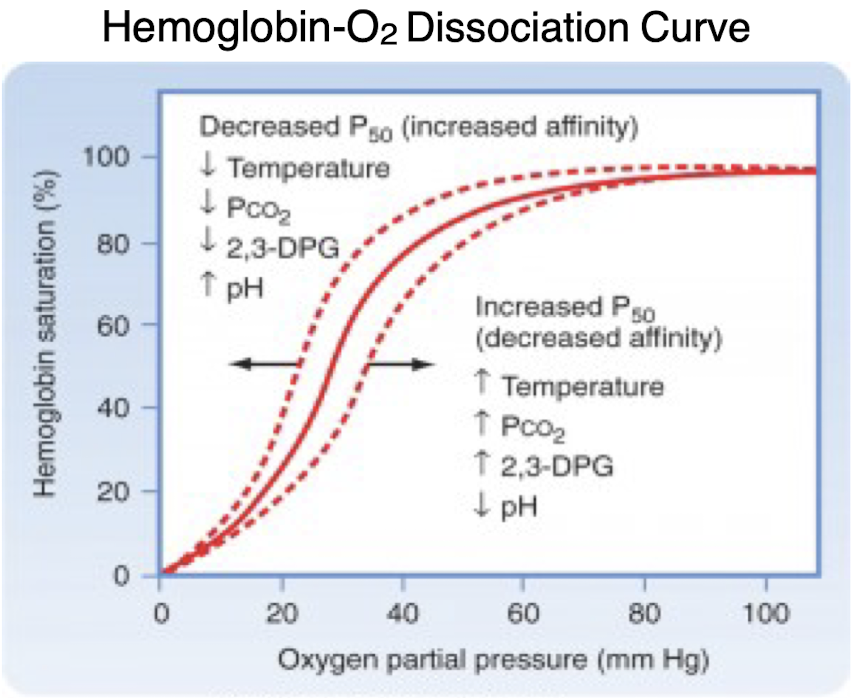
cardiopulmonary norms
• arterial blood gases (ABG) • pH: 7.40 (7.2-7.6) • pCO2: 35-455 mmHg • pO2: 80-100 mmHg • O2 saturation: 95-100% • ejection fraction: > 55%
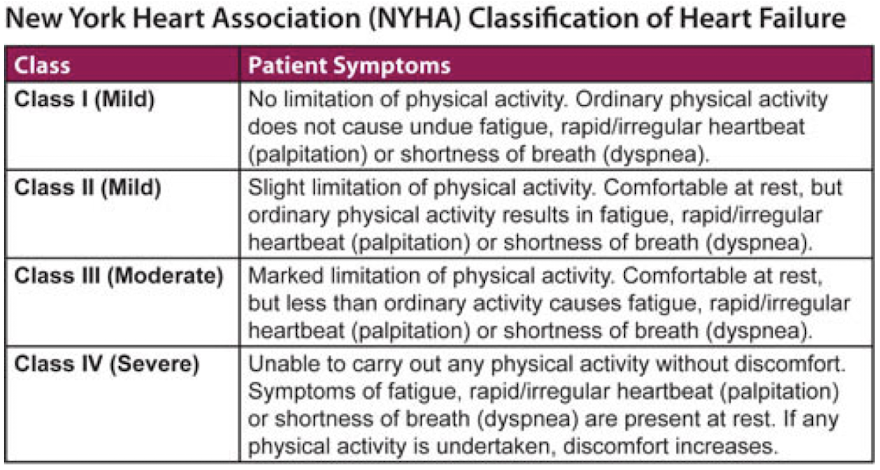
new york heart association (NYHA) classificaiton of heart failure
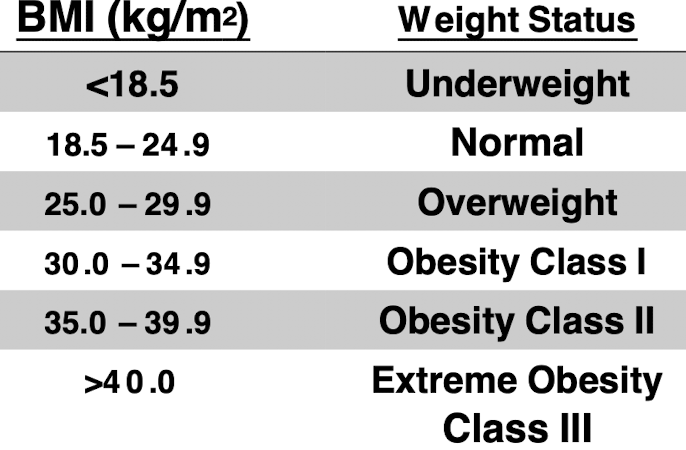
BMI and % body fat
• men percent body fat: 15-18% • women percent body fat: 22-25%
blood glucose levels
• normal: 60-100 mg/dL • pre-diabetic: 100-125 mg/dL • diabetic: 126+ mg/dL
oral glucose tolerance test
• normal: >140 mg/dL • pre-diabetic: 120-200 mg/dL • diabetic: > 200 mg/dL
blood glucose and exercise risk
• risk of hypoglycemia: < 100 mg/dL • able to exercise: 100-250 • warrants caution: > 250-300 mg/dL • no exercise: ketones in the urine
red blood cell count (mm^3)
• men: 4.7-5.5 10^6 mm3 • women: 4.1-4.9 10^6
white blood cell count (mm^3)
• exercise as tolerated: 3,900-11,000 • caution with exercise: < 3,900 with fever
hemoglobin (gm/dL)
• men: 14.4-16.6 • women: 12.2-14.7
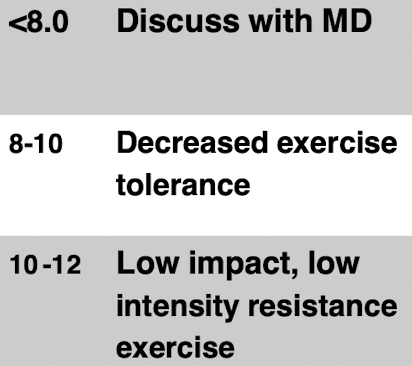
hematocrit % RBC
• males: 43-49% • females: 38-44%
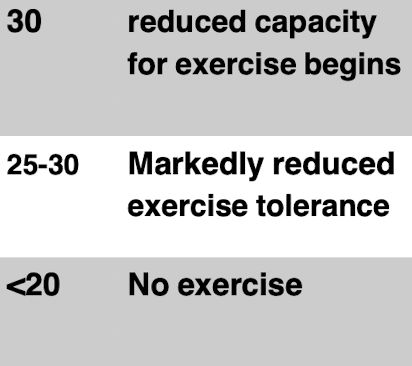
platelet counts (mm^3)
• normal: 150,000-400,000 • no exercise: < 10,000 and/or temp > 100.5 • no resistance, non-impact: 10,000-20,000 • low impact, resistance: >20,000
international normalized ratio (INR) INR in seconds
• 0.9-1.1: normal • 2-3: normal if on anticoagulation therapy • > 5: evaluation mobility and assess safety for discharge planning • > 6: discuss with MD
normal responses in vitals to exercise
• increased respiratory rate • rise in SBP • minimal or no change in DBP: up or down 10 mmHg • rise in heart rate: blunted by beta-blocker meds and age • following exercises: BP returns to within 10 mmHg and HR to within 10 BPM of resting
when to stop exercise with CV concerns
• SBP > 250 mmHg with EKG monitoring • SBP 200-220 mmHg without EKG monitoring • sudden drop in SBP > 10 mmHg • failure of SBP to rise • DBP > 115 mmHg with EKG monitoring • DBP 100-110 without EKG monitroing • decrease in HR below baseline
when to stop exercise with neurological concerns
• dizziness/lightheadedness • confusion • ataxia • shaking/tremors
when to stop exercise with integument concerns
• cyanosis or pallor • diaphoresis or cold/clammy skin
when to stop exercise with pain concerns
• leg cramps or severe claudication • chest/arm/jaw pain • moderate to severe angina
when to stop exercise with respiratory concerns
• moderate to severe dyspnea: unable to say 5 words • abnormal breathing pattern: wheezing, wet, stridor • drop in O2 sats > 10% below baseline or at < 88%: does not recover within 5 mins of rest
when to stop exercise with endocrine/GI concerns
• suspected hypoglycemic response • nausea or vomiting