Treatment of COPD
No description yet. This curated deck is ready for daily study.
Card preview (20)
What is COPD?
Chronic obstructive pulmonary disease Progressive airflow obstruction Not fully reversible No cure - only to reduce symptoms Caused by smoking
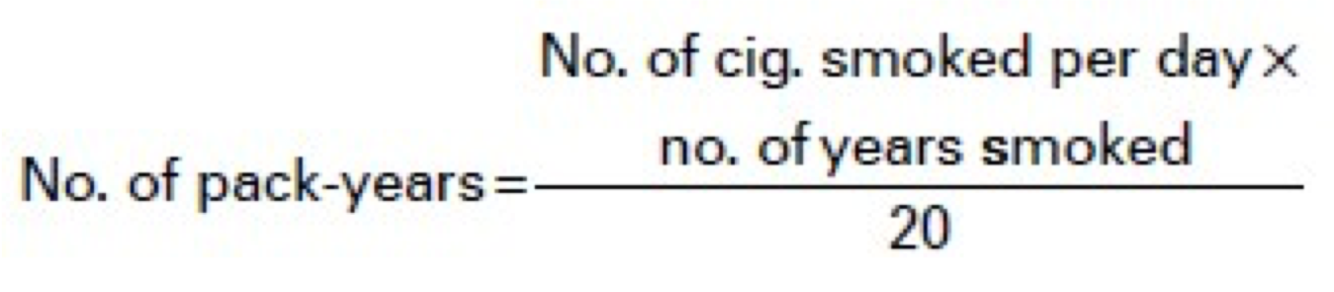
How do you calculate pack years?
> 20 = heavy smoker
The risk factors of COPD
Age Gender Occupation Air pollution Genetic factors Socio-economic status
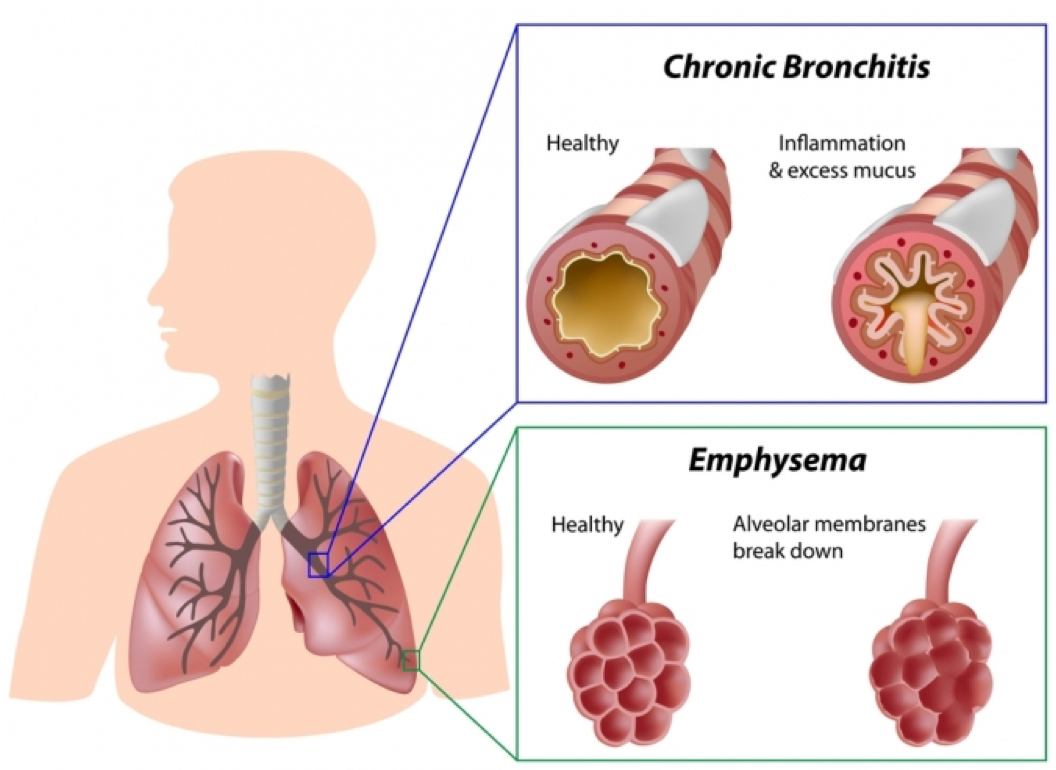
Pathophysiology of COPD
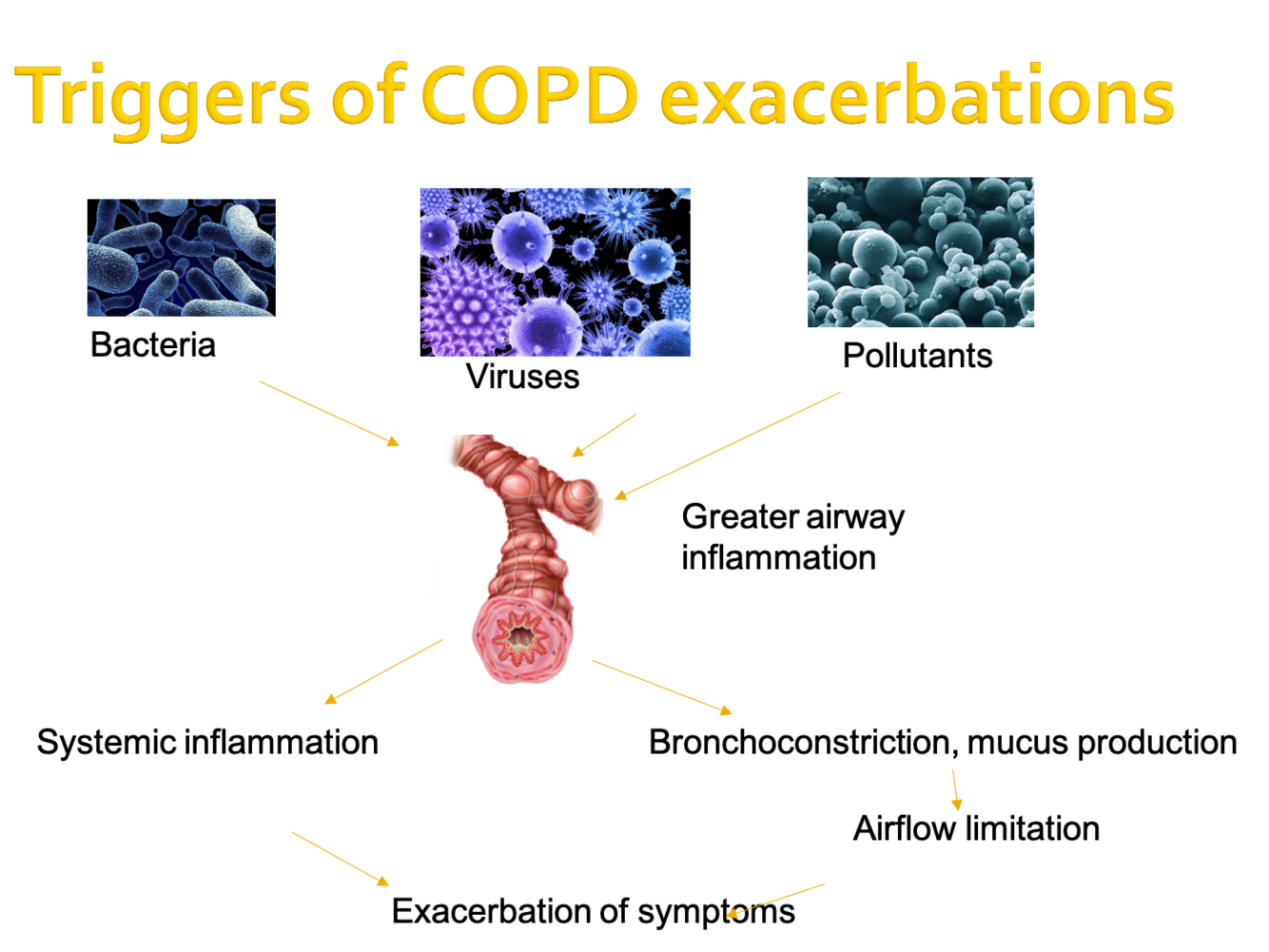
When breathing in particles or gases, it causes inflammation. Inflammation induces: • airflow limitation + trapping • mucus hypersecretion • gas exchange abnormalities
How do you diagnose COPD?
No single diagnostic test Rely on clinical judgement • Patient history (>35 years, risk factors - smoking) • Physical exam - signs + symptoms • Spirometer - confirms airflow obstruction (FEV1/FVC) • X-ray
What are the symptoms of COPD?
Breathlessness Chronic cough Regular sputum production Frequent winter chest infections Wheeze
What are the signs of COPD?
Older patient (>35 years) - onset of symptoms later in life Hyperinflated lungs (air trapped in lungs barrel chest) Wheeze/quiet sounds Pursed-lip breathing Peripheral oedema Cyanosis (blue lips = low O2 levels) Nicotine staining in fingers + nails Underweight
What is spirometry?
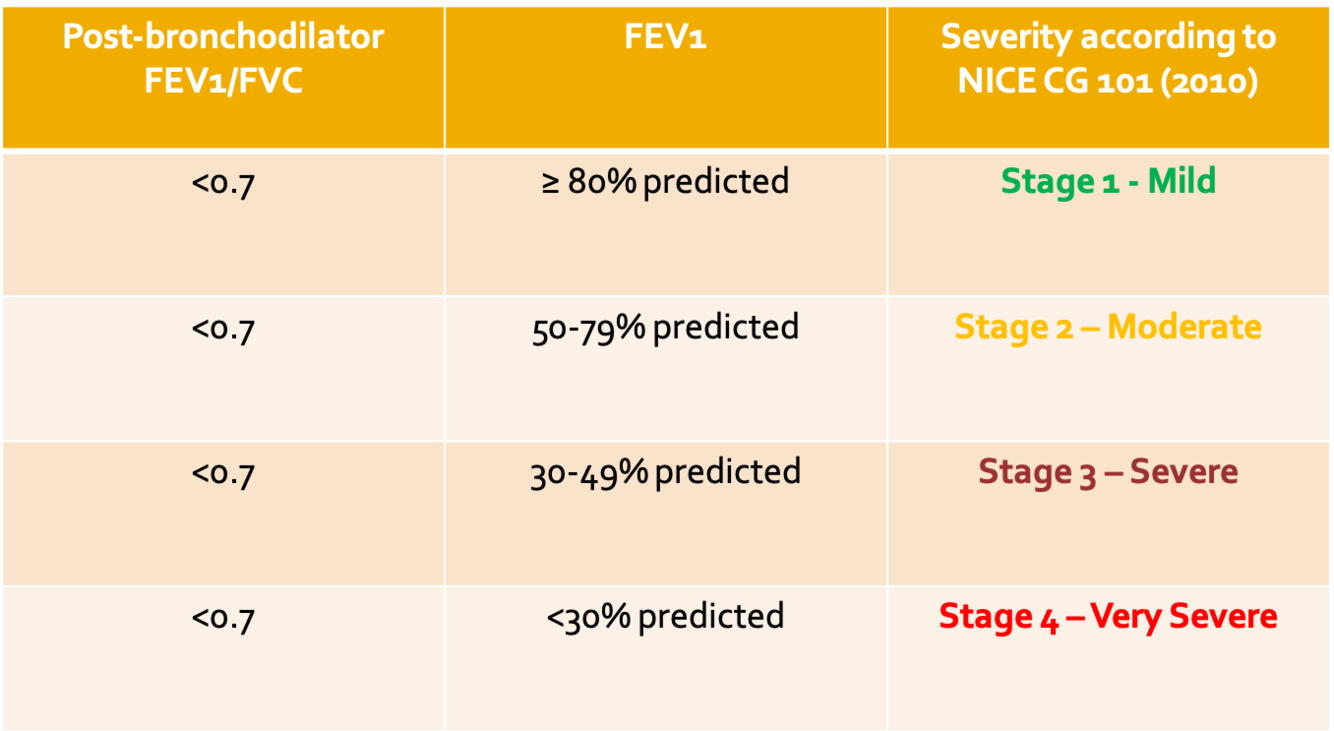
Measure the patient’s lung function It is performed at • time of diagnosis • to reconsider diagnosis after response to treatment FEV<strong>1</strong> - forced expiratory volume in one second FVC - forced vital capacity = maximum volume of air that can be exhaled from the lung Airflow obstruction = <0.7 ratio
Severity of airflow obstruction
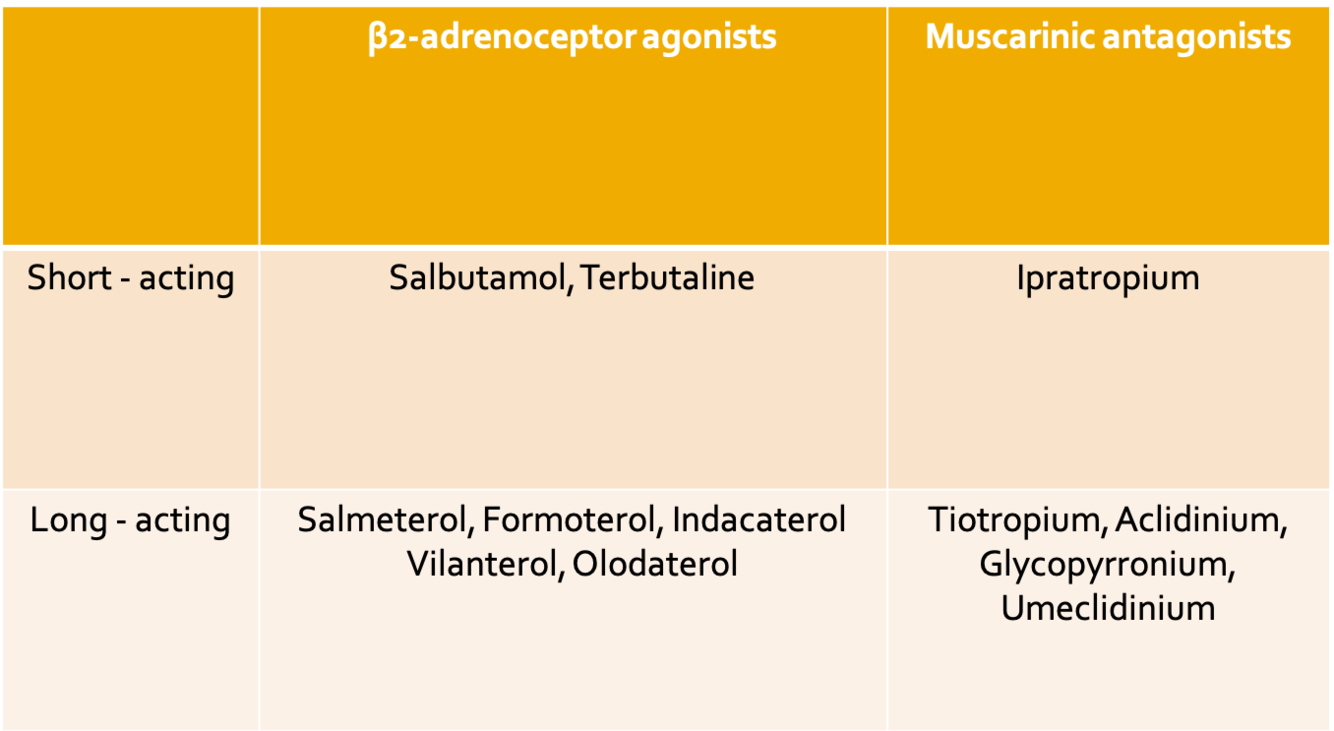
Name bronchodilators for the treatment of COPD
Inhaled corticosteroids
Reduce inflammation (do not modify long-term lung function decline) Benefit if FEV1 < 50% + frequent exacerbations • 2+ per year that require antibiotics/oral steroids None are currently licensed for use alone
Side effects of inhaled corticosteroids
Pneumonia Adrenal suppression Diabetes Osteoporosis
What to do before stepping up a patient’s therapy?
Patient’s inhaler technique Adherence to therapy Smoking status Attendance + pulmonary rehabilitation Signs of anxiety/depression
What is Theophylline?
Used after failure of previous treatment Anti-inflammatory Need to monitor plasma levels
What is LTOT?
Long-term oxygen therapy At least 15 hours/day Smokers
Other therapies for COPD
Vaccinations e.g. pneumococcal, influenza Mucolytics e.g. carbocysteine
What happens when COPD is exacerbated?
Worsening breathlessness Cough Increased sputum production Change in sputum colour Worsening peripheral oedema
Triggers of COPD exacerbations
How to manage exacerbations of COPD?
Bronchodilators - increase frequency Oral corticosteroids - prednisolone Antibiotics Oxygen
How to prevent exacerbations of COPD?
Give self-management advice Rescue packs Sputum colour