HL Further Anatomy - Skin System (7.1)
No description yet. This curated deck is ready for daily study.
Card preview (7)
structure of the skin (5)
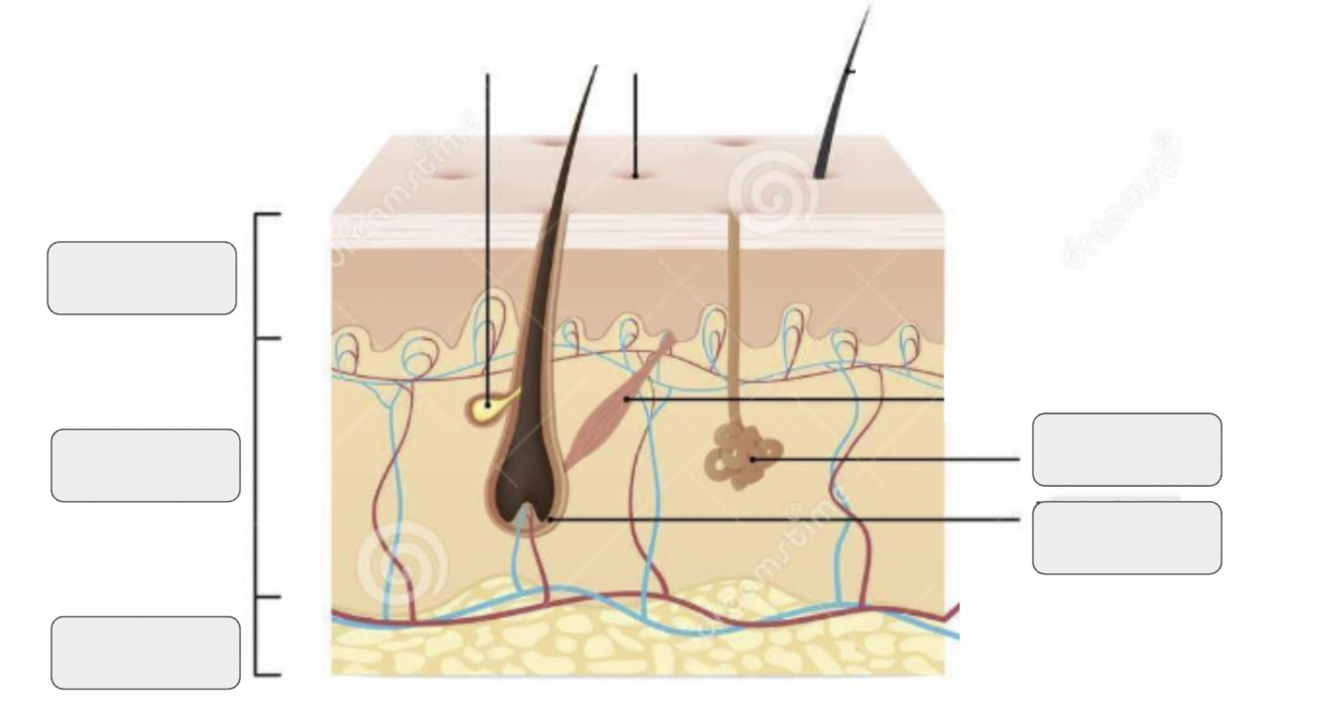
1.) epidermis 2.) dermis 3.) fat 4.) gland 5.) hair follicule
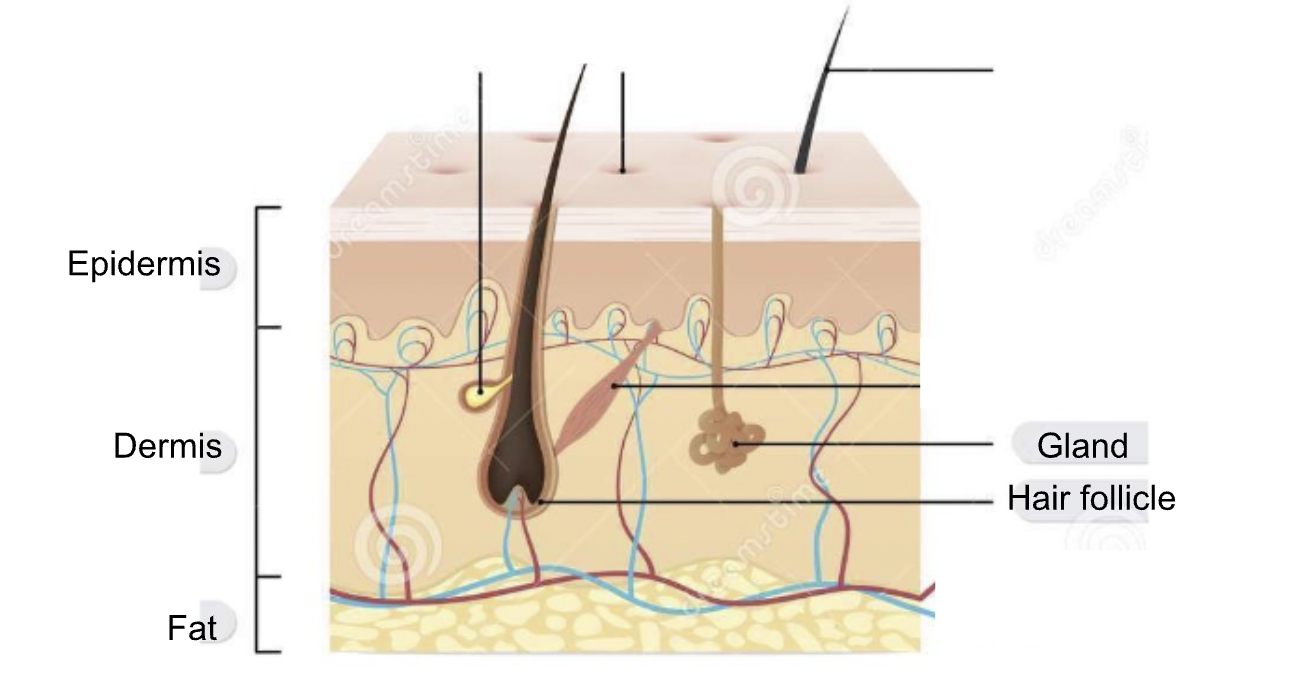
epidermis
top layer of the skin provides protection from the outside
dermis
second layer of the skin provides strength and flexibility
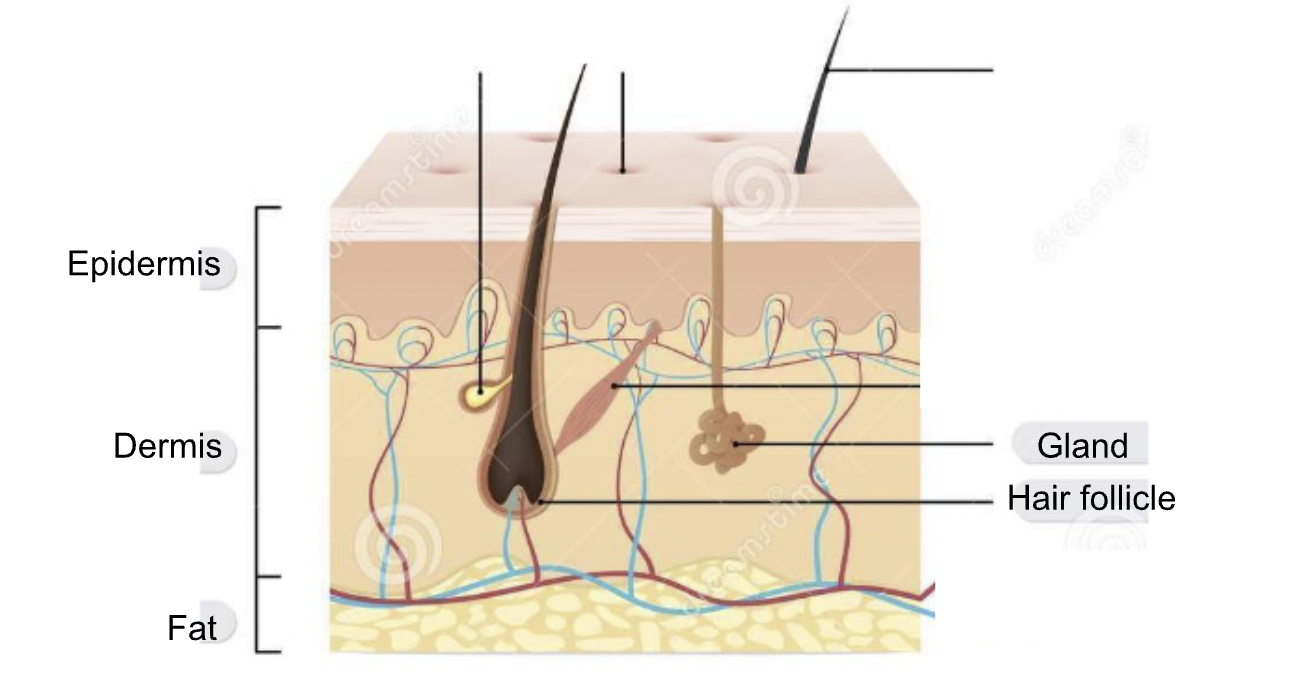
fat
bottom layer of the skin provides insulation and cushion
gland
produces sweat to regulate body temperature
hair follicule
• temp. control • sensation
functions of the skin (5)
• regulation of body temp What: Ability to maintain the body temperature within the safe range for humans (36.1ºC to 37.2ºC) How: * Sweating helps remove heat from the body through evaporation * Vasoconstriction - narrowing of the blood vessels in the skin which reduces blood flow to skin. This decreases heat loss by radiation to surroundings. * “Goosebumps” causes the hair follicles to stand up which traps in heat * Vasodilation - widening of the blood vessels to increase blood flow to skin. This increase heat loss to surroundings • Sensation What: Ability to feel temperature and pressure How: There are nerve endings in both the dermis layer and the hair follicles. Through movement of the hair follicles or contact with the skin these nerves are triggered • protection and immunity What: Protect against external pathogens (living things that can cause illness) and harmful substances How: * Absorbs harmful UV radiation to stop them from entering the body * Physical barrier that is impermeable (can’t be entered) to bacteria and viruses * Cuts and physical abrasions often stop at the skin layer • excretion What: Expel a waste product from the body, water, urea and uric acid How: Glands produce sweat which is mostly water but can also contain urea and uric acid • synthesis of vitamin d What: Converting Vitamin D into a useable form for the body (Vitamin D3) How: UVB light converts a pre-form of Vitamin D in the skin into Vitamin D. This can then go to the liver to be used