Oxidation of alcohols 24
No description yet. This curated deck is ready for daily study.
Card preview (21)
Give the reagent for this reaction.
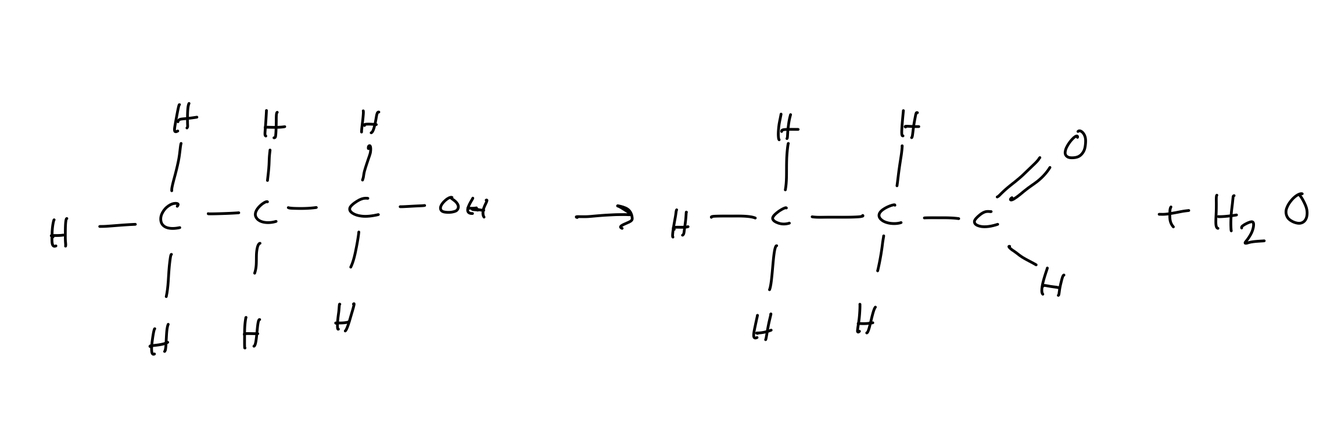
Acidified potassium dichromate (VI)
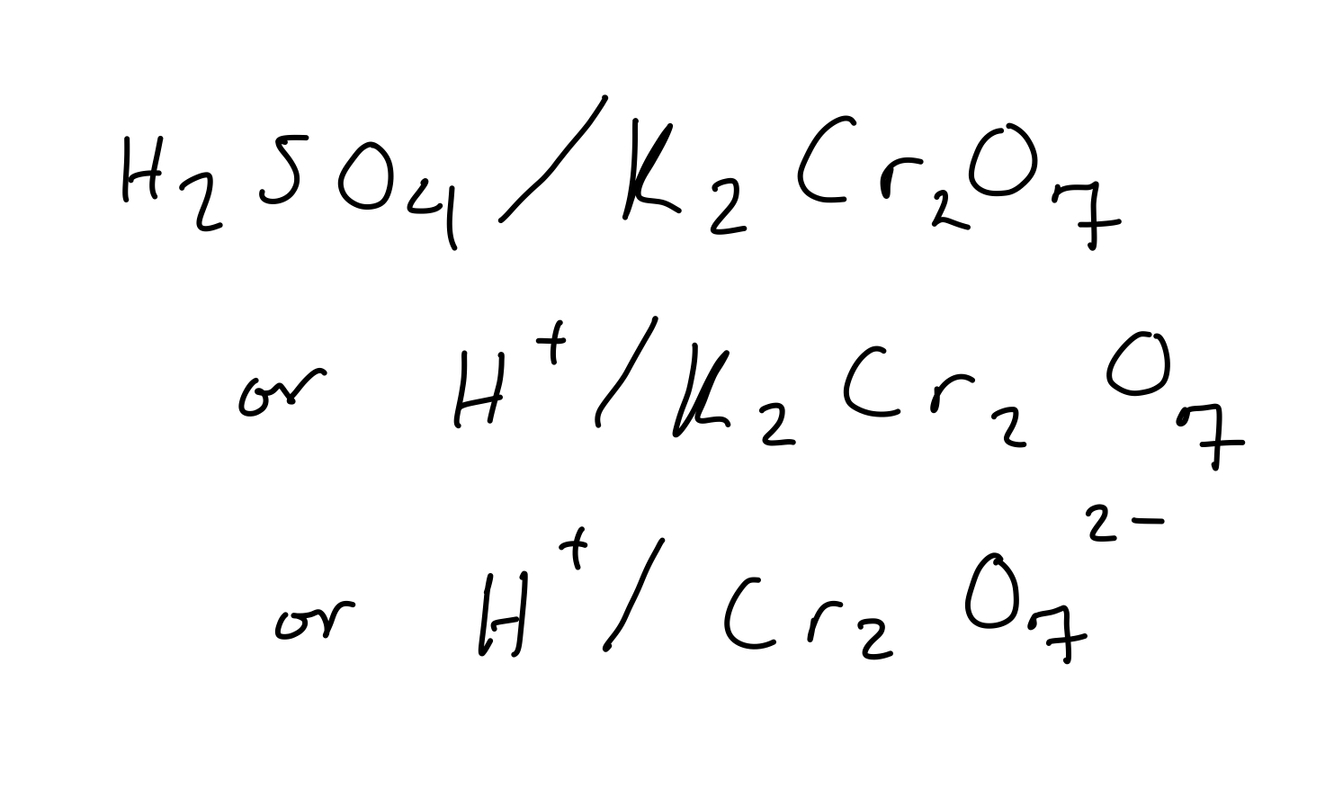
Give a balanced equation for this reaction. (Using distillation setup)
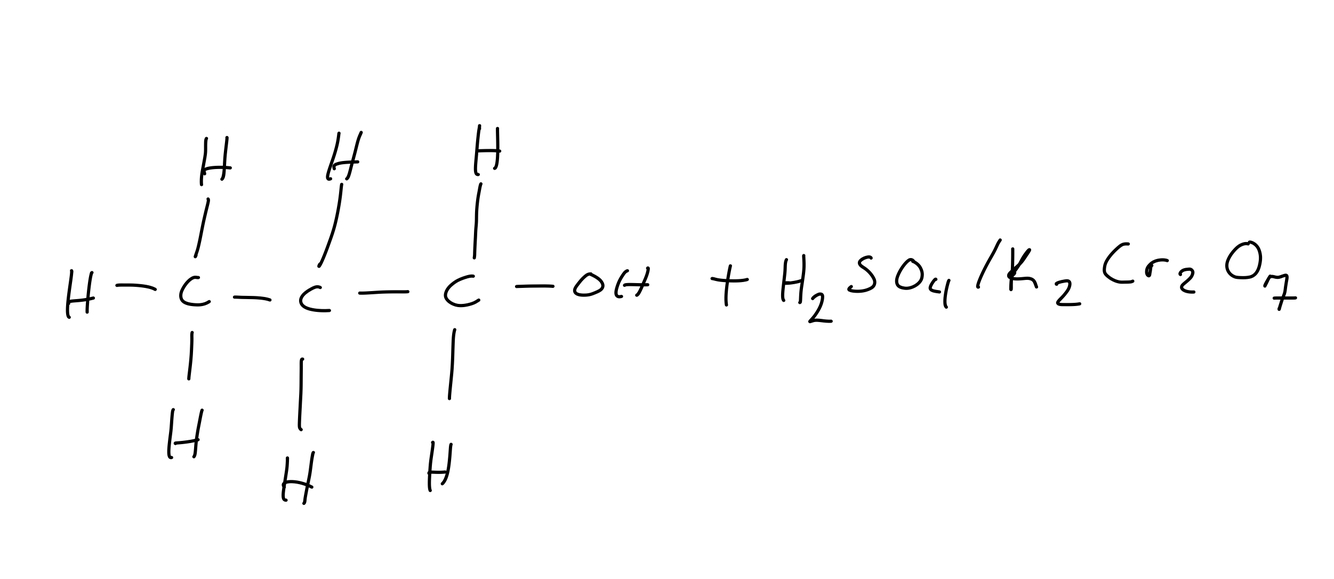
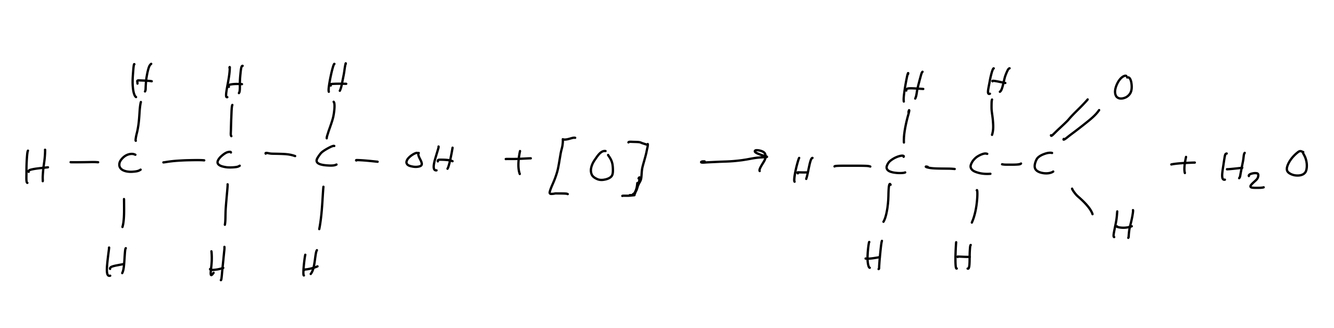
What is the essential condition for partial oxidation of a primary alcohol to an aldehyde?
Distillation setup only.
Write a balanced equation for this reaction. (Using reflux apparatus)
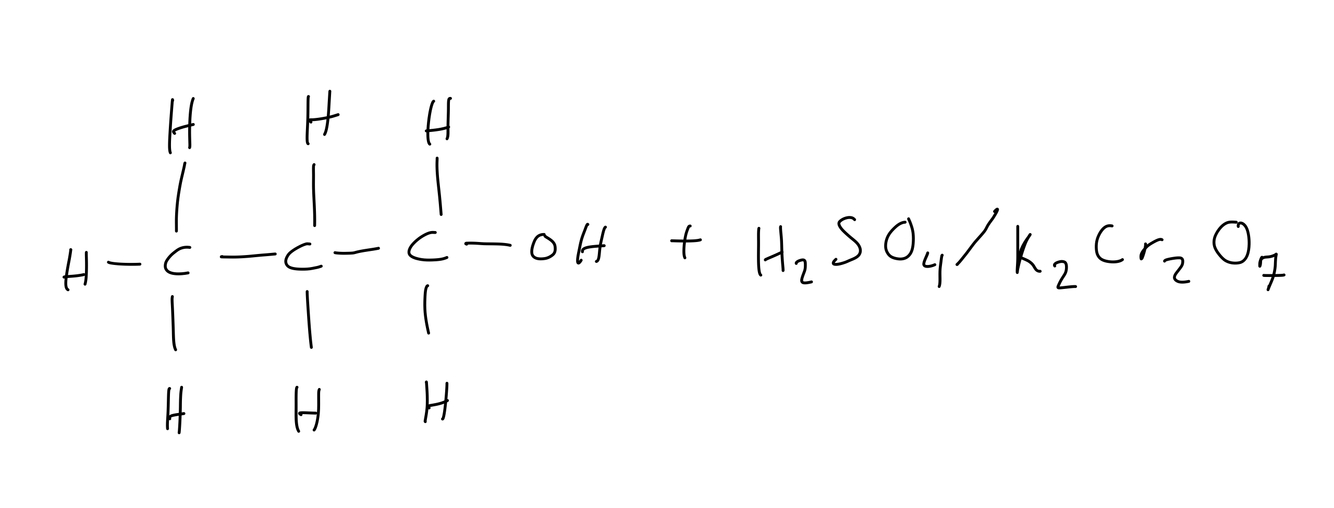
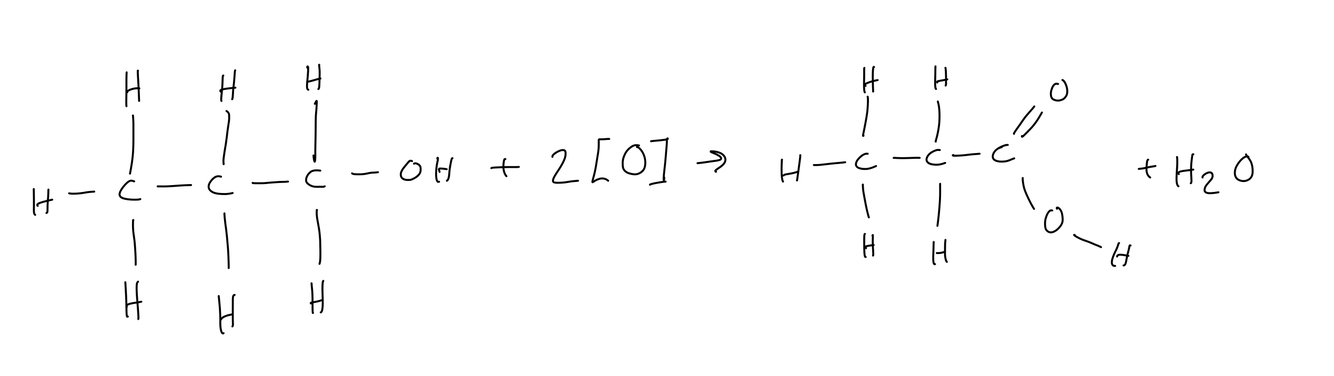
Write a balanced equation for this reaction.
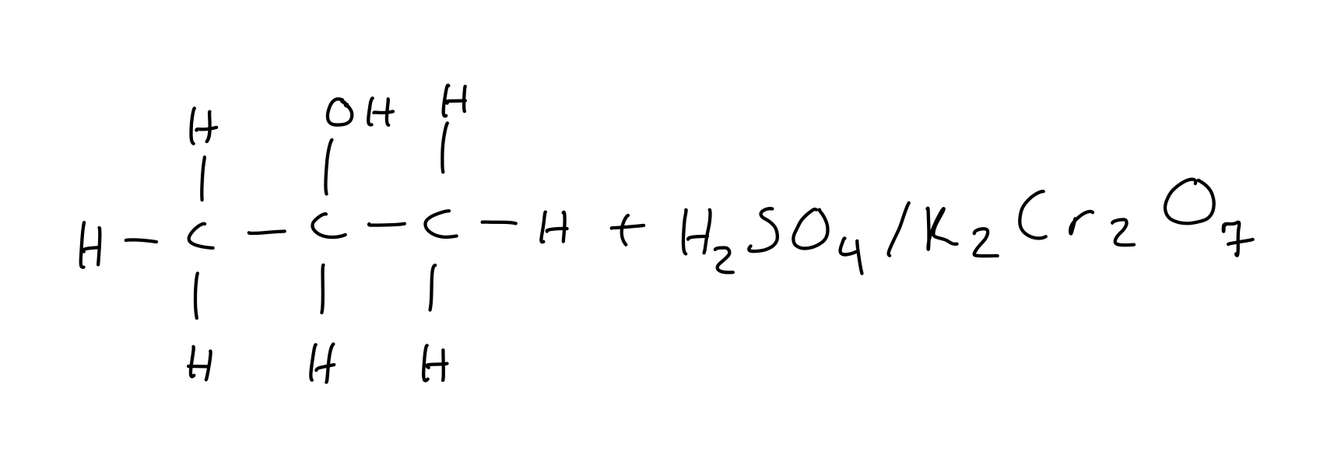
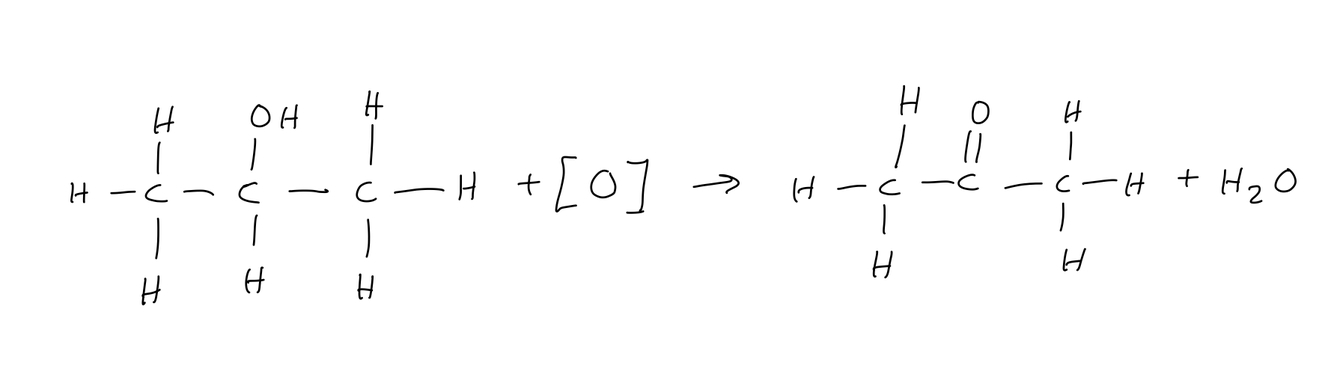
What is the essential condition for the complete oxidation of a primary alcohol to a carboxylic acid? Also, state the colour change observed.
Heating under reflux. Orange to green colour change observed.
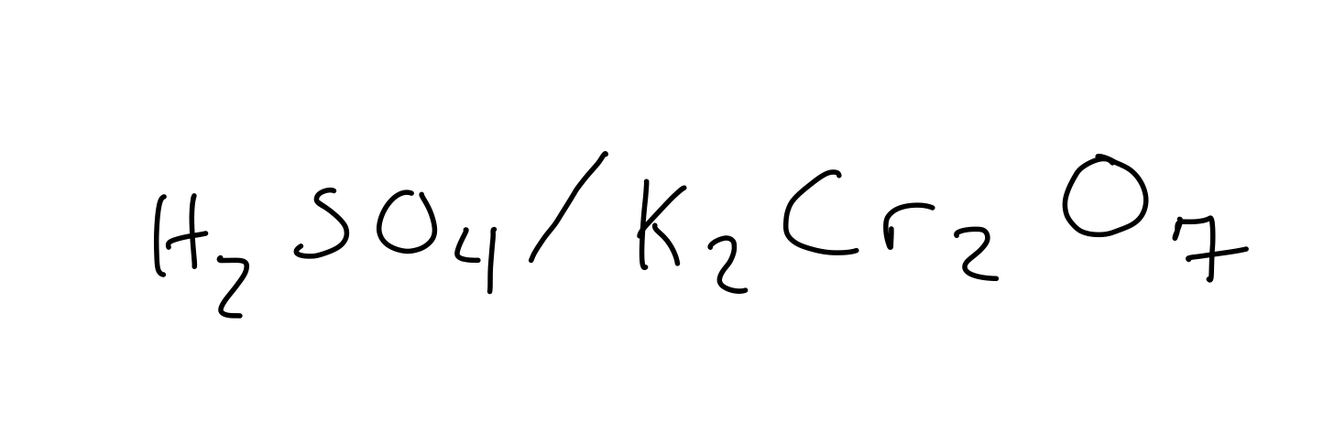
Name the reagent for this reaction.
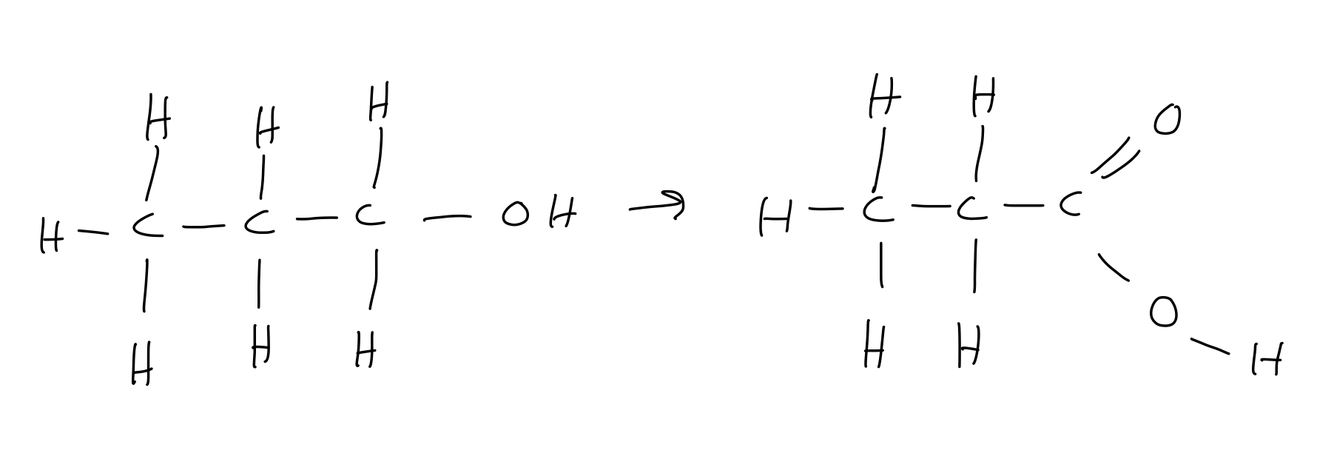
Acidified potassium dichromate (VI)
State the essential condition for the oxidation of secondary alcohols, and state the colour change observed.
Heating under reflux in order to increase reaction rate. colour changes from orange to green.
. Give a balanced equation of this reaction.
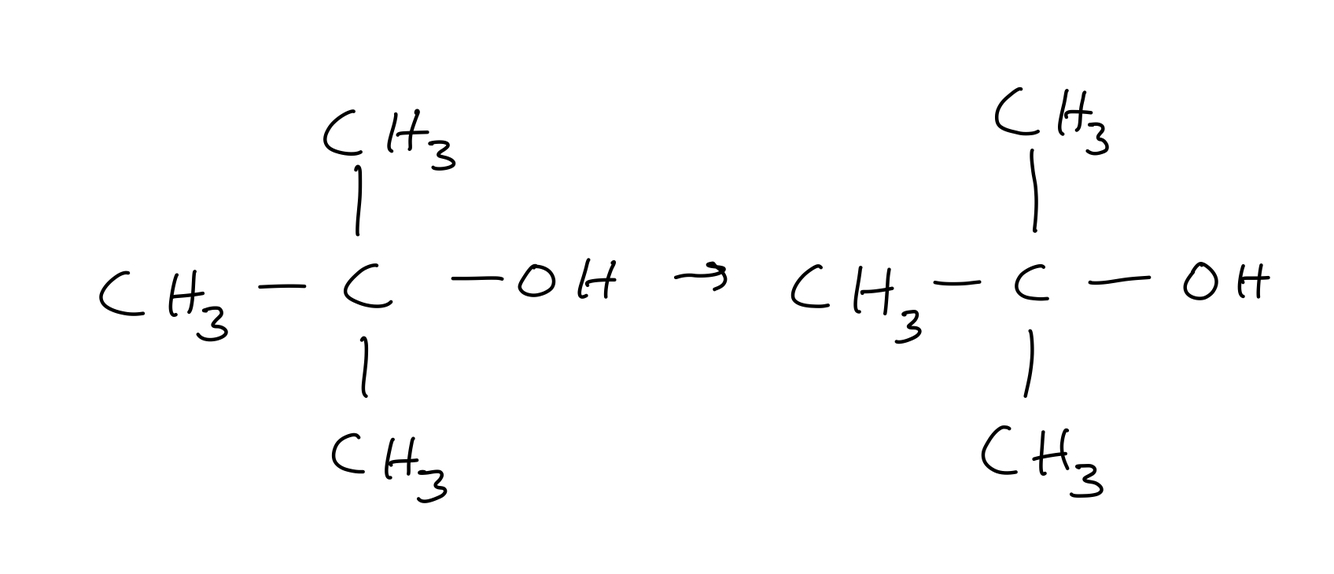
No reaction.
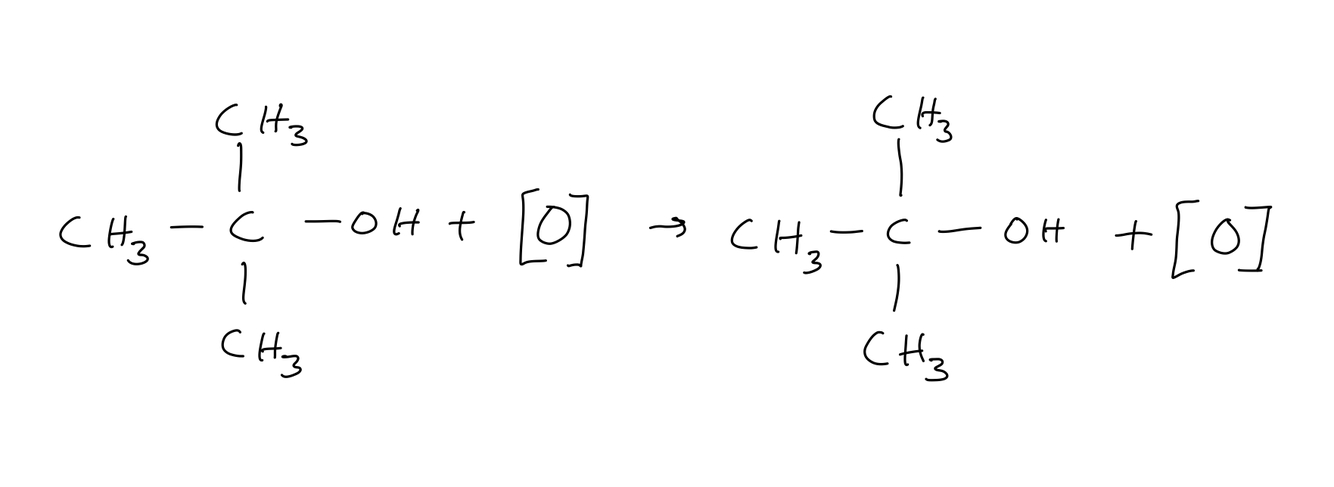
What are the essential conditions for oxidising a tertiary alcohol?
No essential conditions exist, as tertiary alcohols cannot be oxidised by adding acidified potassium dichromate- although they can be oxidised by burning.
Haloalkanes form alcohols in which two ways?
• aqueous alkali reagent • water reagent
Write an equation for the substitution reaction of 1-chloroethane with aqueous potassium hydroxide.
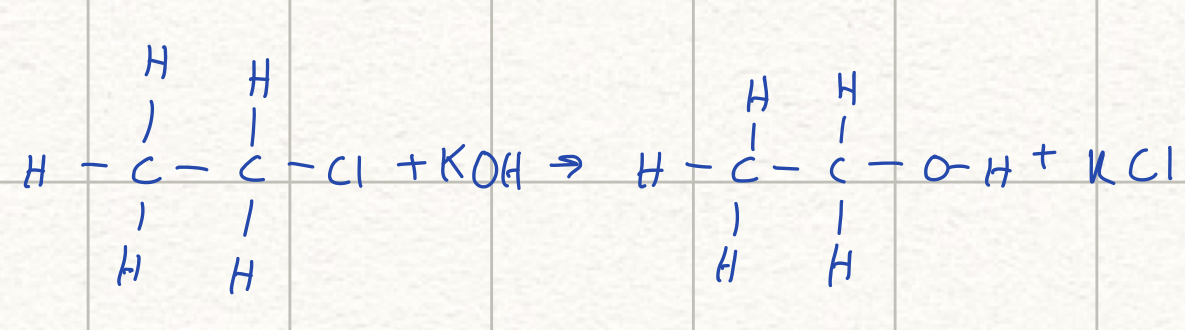
What are the conditions for the reaction of a haloalkane and alkali?
• aqueous solvent • heat under reflux
what’s a nucleophile?
Electron pair donor
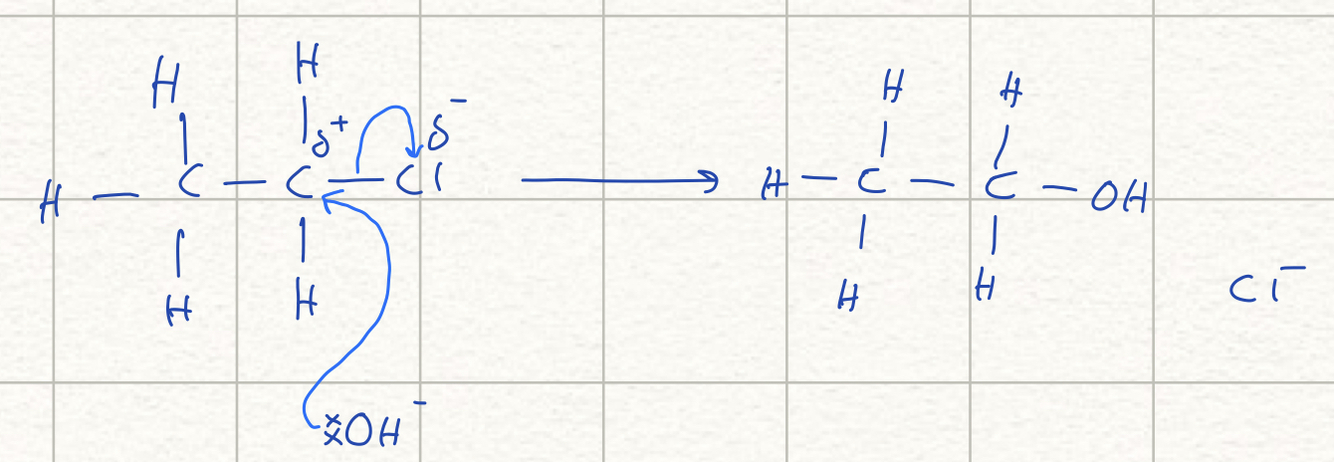
Write a mechanism for 1-chloroethane and potassium hydroxide
general equation for alcohol and sodium halide

Alcohol to Haloalkane reagent and catalyst
Sodium halide and acid/H+
What type of reaction takes place when an alcohol changes to a Haloalkane?
Substitution reaction
General equation for alcohol to Alkene (with conditions)
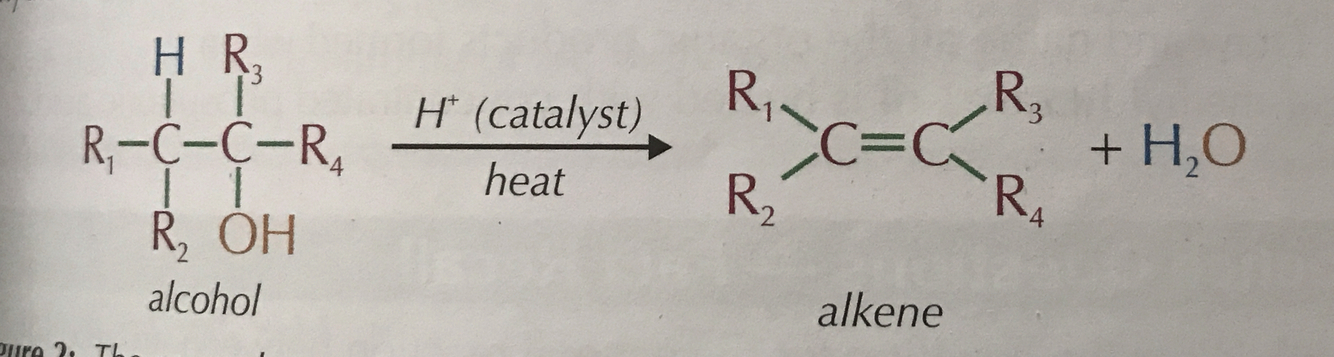
Reagent and conditions required for alcohol to alkene
Acid/H+ catalyst and heat
Equation for combustion of alcohol (C2H5OH +3O2)
