Organic Chem 2
No description yet. This curated deck is ready for daily study.
Card preview (24)
How do chemists put molecules together?
Esters, ether, and amides - chemical linkages!
Chemical Linkages
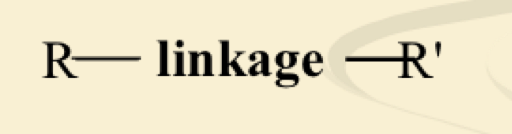
Molecules are made from two or more “large” groups and are linked by various bond types.
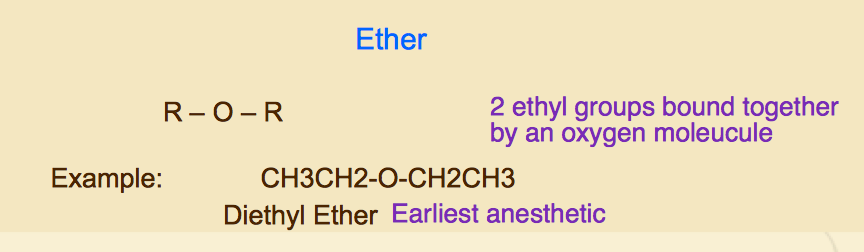
Ether
2 ethyl groups bound together by an oxygen molecule
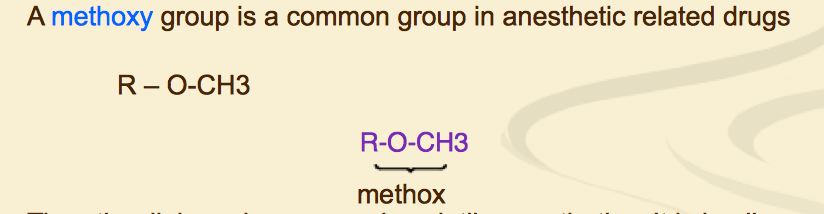
Methoxyl Group
The ether linkage is common in volatile anesthetics. What are its properties?
• It is in all except nitrous oxide and halothane. • It is a strong bond that is not easily broken. • It is not readily ionized, but will add a proton only in strong acid.
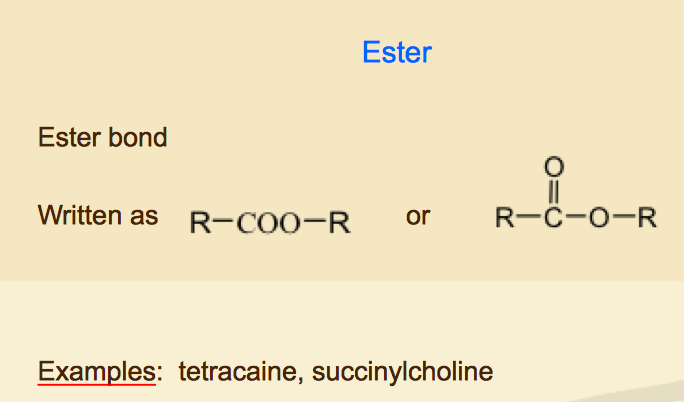
Ester Bond Properties
• An ester results from the addition of a carboxylic acid and an alcohol. • can be hydrolyzed (split by water). • Basic conditions catalyze ester hydrolysis and esterases hydrolyze esters in vivo.
Amide Properties
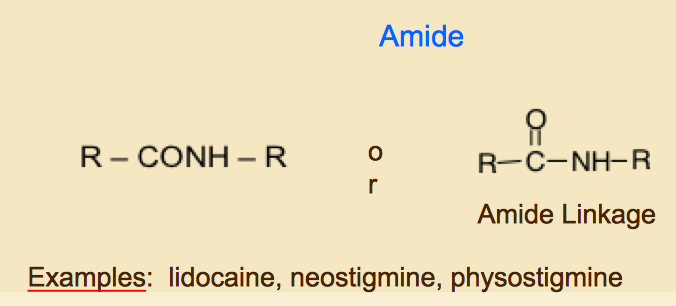
• results from the addition of a carboxylic acid and an amine. • similar to an ester. • Amide linkages are more resistant to hydrolysis than esters.
Geometric Isomers
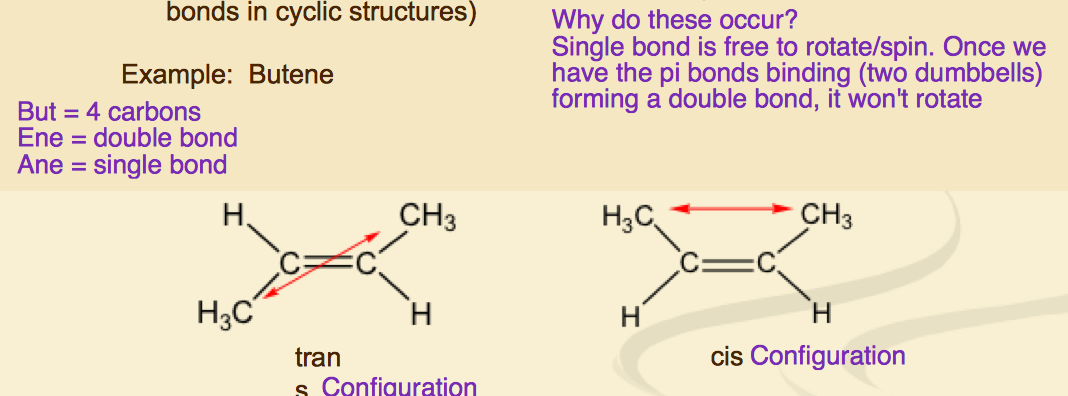
Arise from the fact that some bonds don’t rotate (double bonds and bonds in cyclic structures). The methyl groups are either on the same side (cis) of the double bond or across (trans) from each other
Unsaturated fatty acid cis state
cis - on the same side
Double bonds are prone to ______
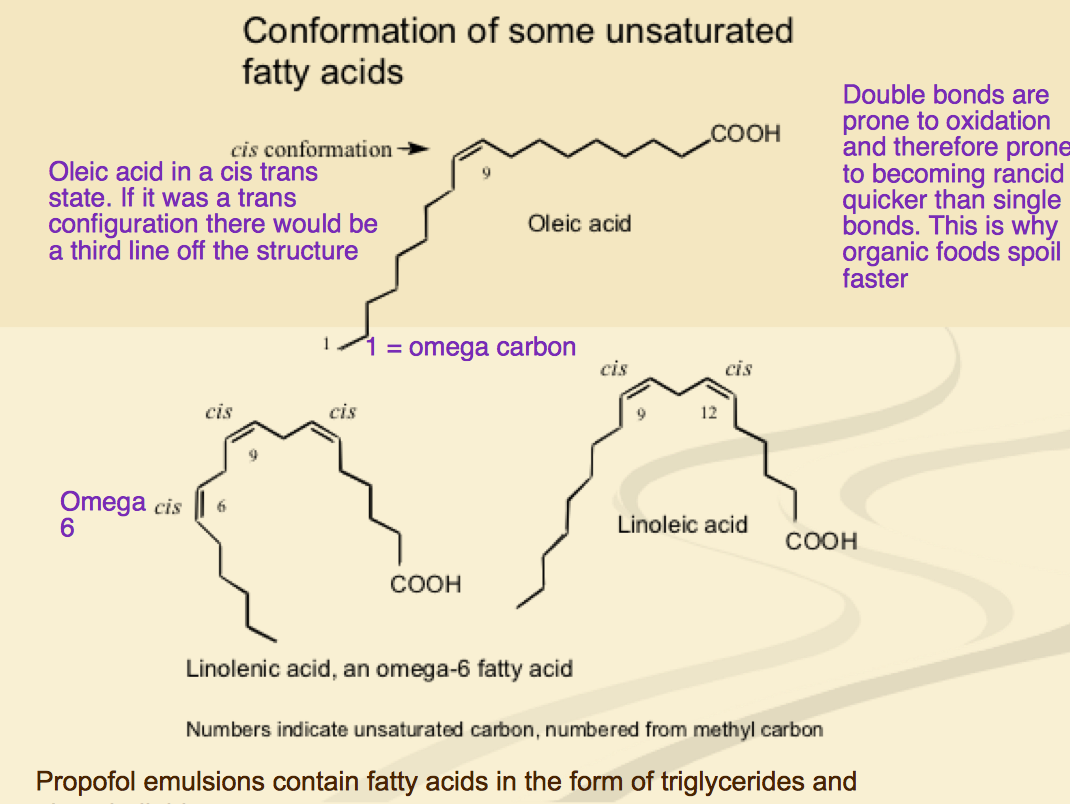
oxidation and therefore prone to becoming rancid quicker than single bonds. This is why organic foods spoil faster
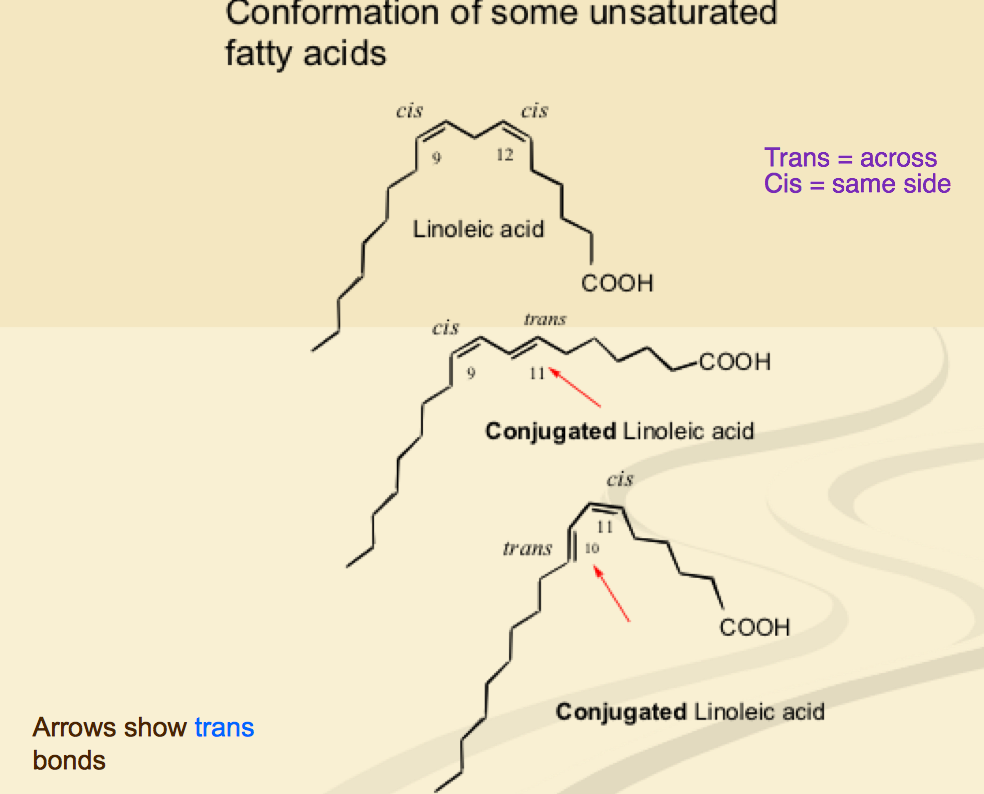
Unsaturated fatty acid trans state
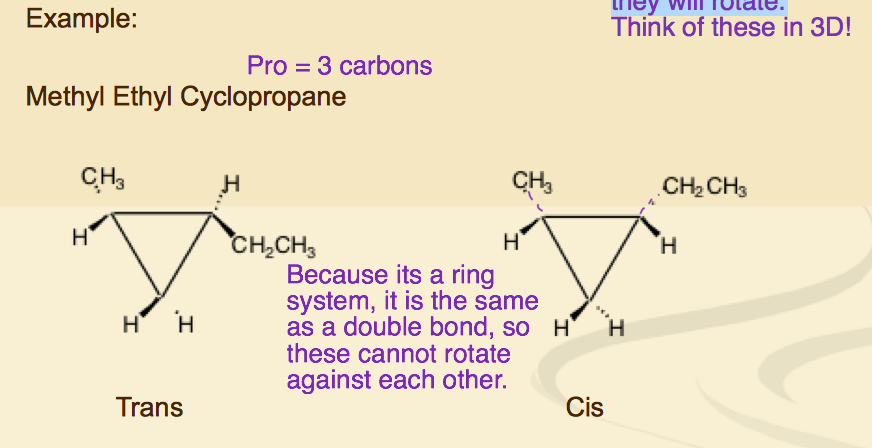
Cyclic geometric Isomers Properties
• The methyl and ethyl groups are either across from each other in relation to the cyclic structure or on the same side • The dotted bond means it is projecting back and the solid expanding bond means it is projecting forward • Geometric isomers can have double bonds causing cis and trans. Single bonds canNOT set up a geometric isomer because they will rotate.
Optical Isomers Properties
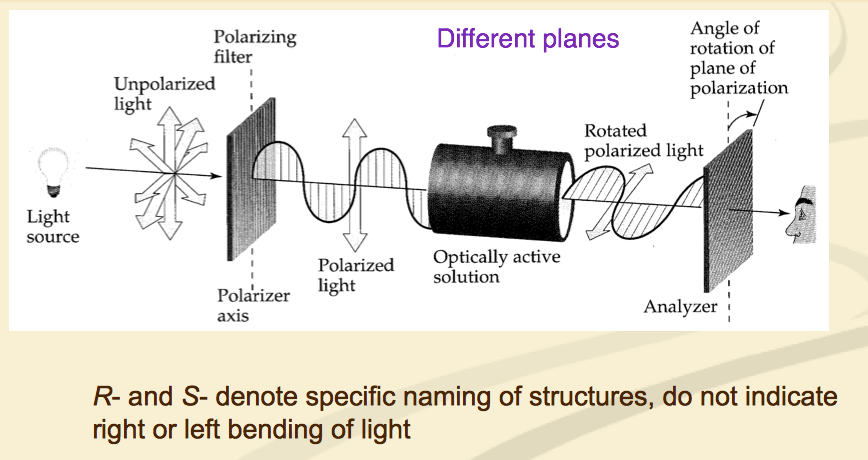
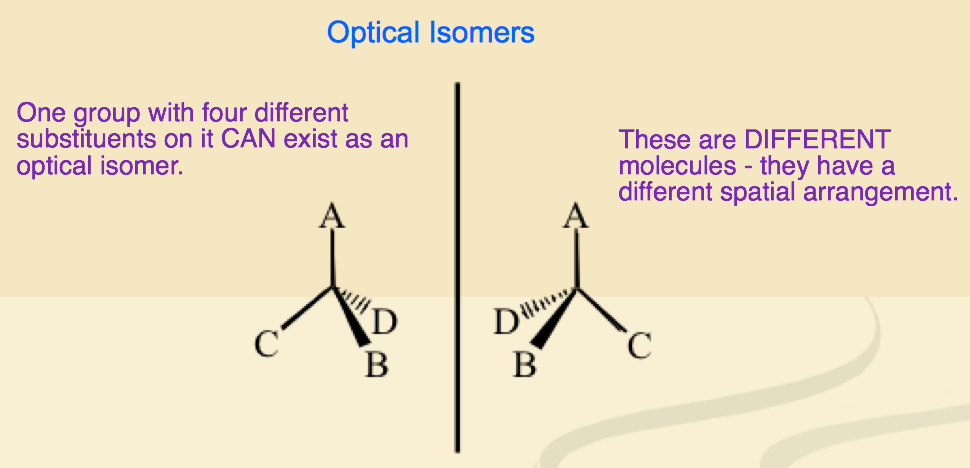
• Molecules with a chiral carbon (a carbon that has four different substituents attached) are non-superimposable on their mirror image. • Known as enantiomers • Each one of the pair of enantiomers r_otates polarized light_ in opposite direction
Each one of the pair of enantiomers rotates polarized light in opposite direction. Define dextro and levo isomers
Dextro Isomers - those that rotate light to the right (clockwise) (+) Levo Isomers - rotate light to the left (counterclockwise) (-)
Optical Isomer - Chiral Compound Properties
• exist as mirror images (enantiomers) • have a central atom with 4 different chemical groups bound to it (only requirement) • groups can be atoms or functional groups • chiral compounds can also be in cyclic molecules
Ionization
a group with a formal positive or negative charge
Ionization of Drugs
• has a major effect on ability of a compound to cross cellular membranes • Because membranes are mostly lipid, charged molecules do not cross readily. Lipophilic compounds will cross with ease. • Ionization is dependent on the pKa of a functional group of a molecule, and the pH of the environment it is in • body pH = 7.4, drug pH varies
Carboxylic Acids
are acidic because a negative charge (electrons) can delocalize within the carboxyl group.
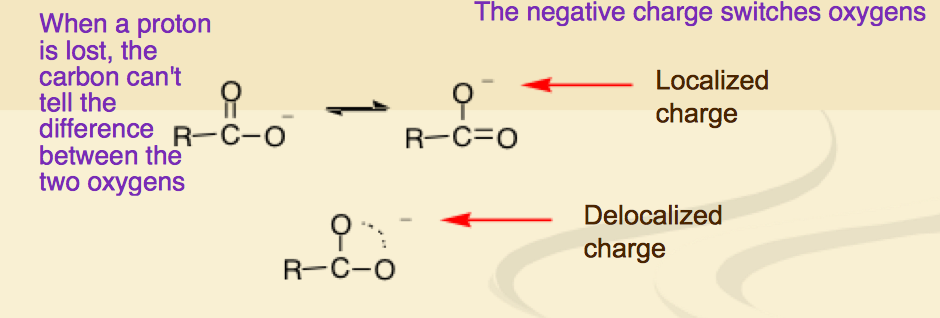
The more _____ a charge is on a molecule, the more likely it will associate with an oppositely charged ion.
localized
The more ______ a charge is on a molecule, the LESS likely it will associate with an oppositely charged ion.
diffuse
Acidity of Carboxylic Acids
The more electron withdrawing influence there is on a carboxylic acid functional group, the more readily it will give up a proton and become ionized. It becomes more acidic if it more readily gives up a proton.
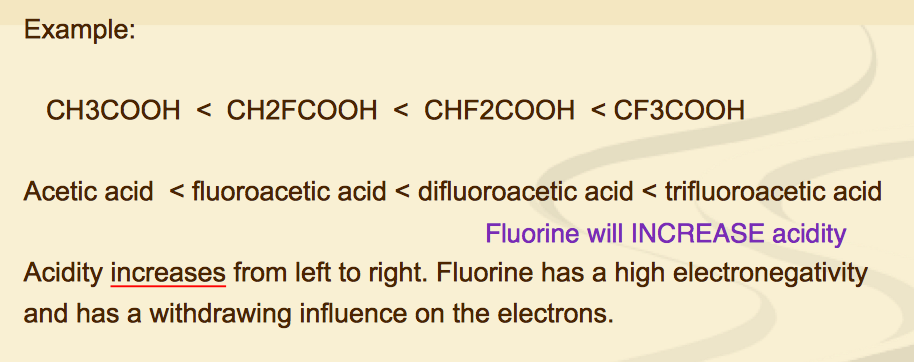
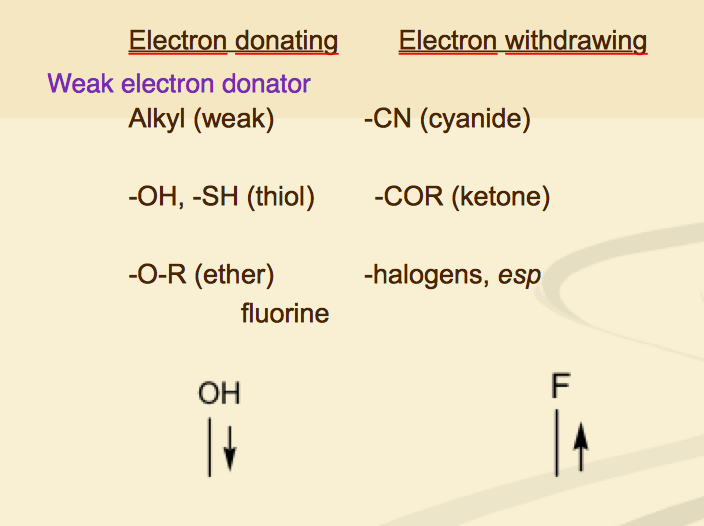
Ionization and electron donating or withdrawing properties of various groups
Ring structure of Piperidine (non-aromatic) ring
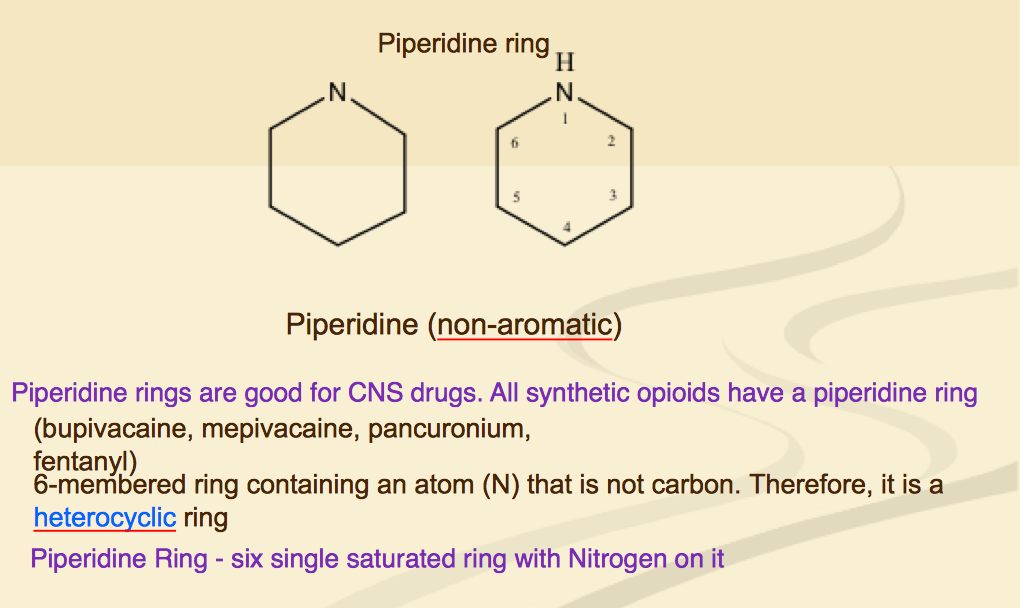
Heterocyclic Ring definition
6-membered ring containing an atom (N) that is not carbon