Chapter 10: Nitrogen and Phosphorus Containing Compounds
No description yet. This curated deck is ready for daily study.
Card preview (15)
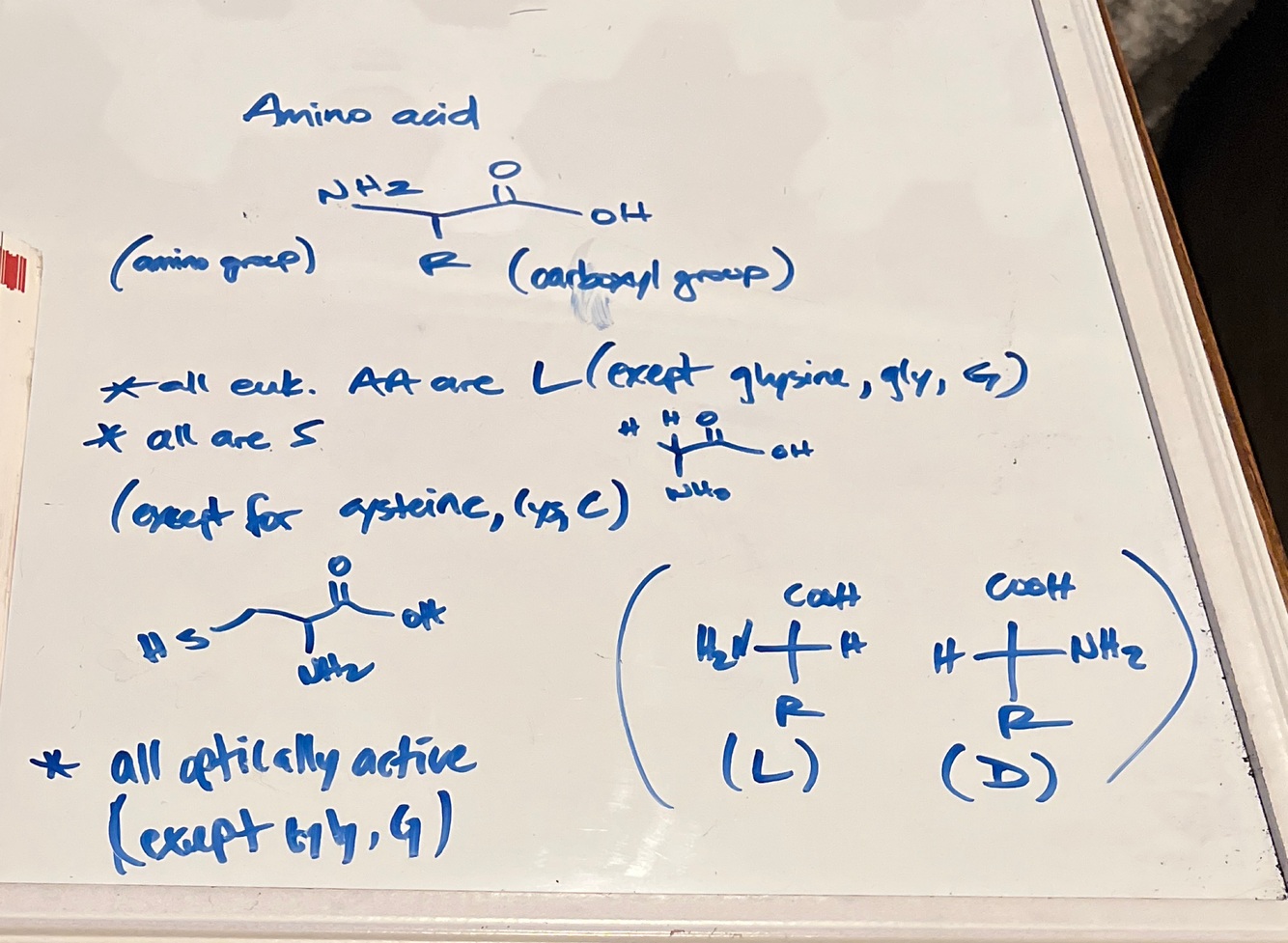
Amino acid L or R R or S Exceptions?
Amphoteric?
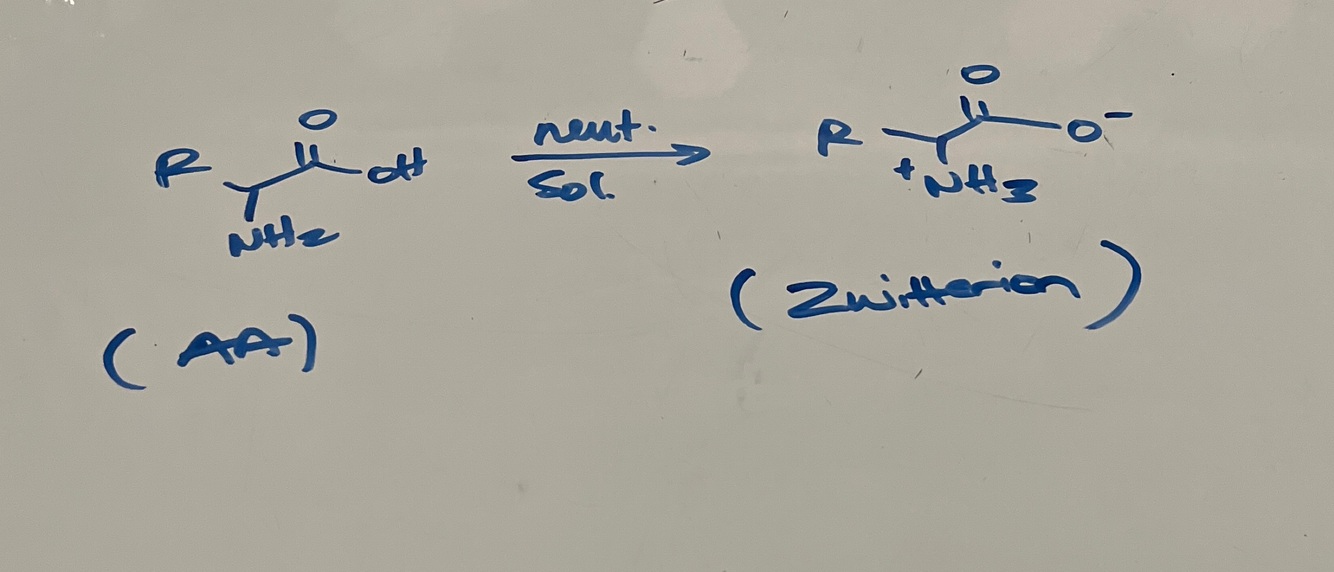
Act as both acids and bases
Zwitterion?
Dipolar ions due to multiple groups (can act as acid or base: amphoteric)
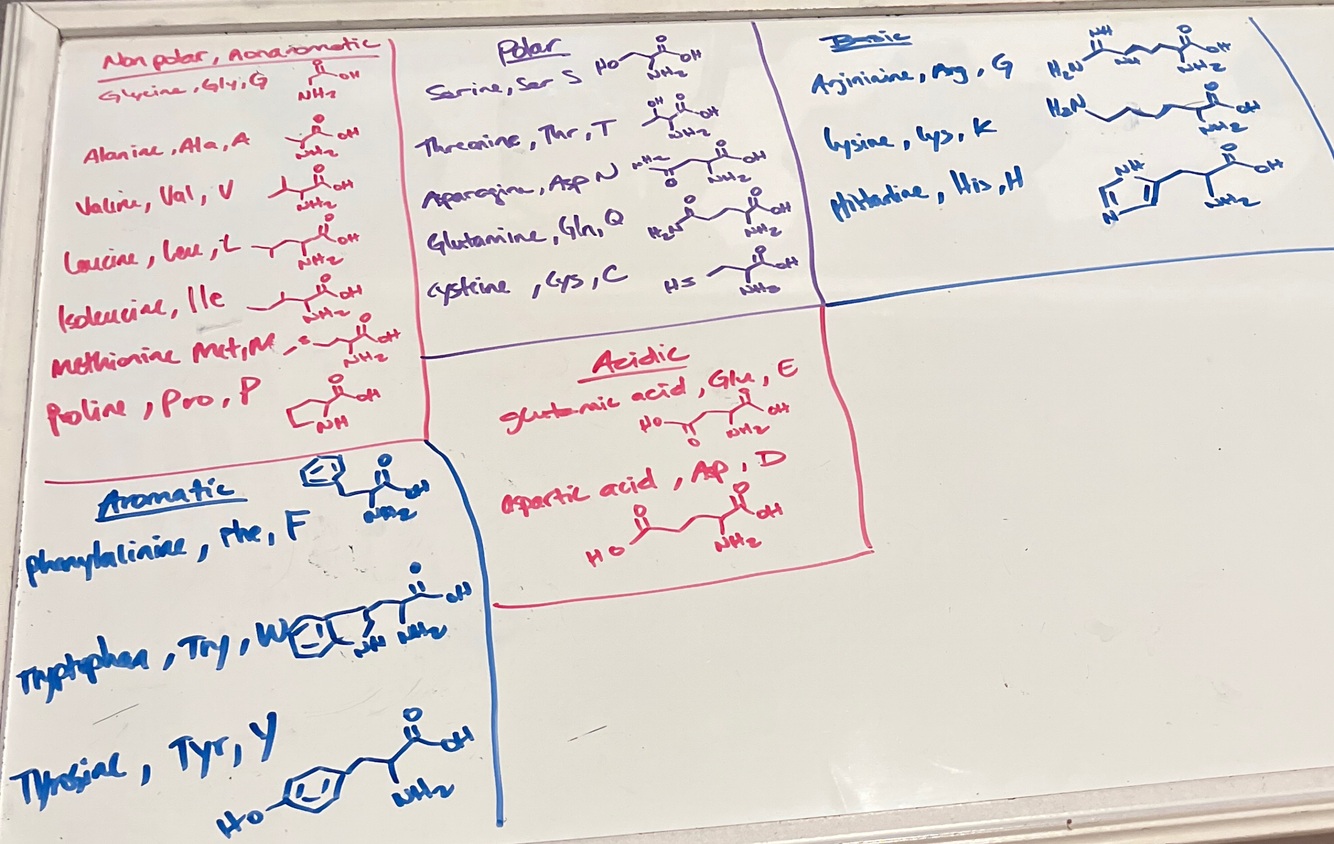
All 20 AA, names, abbreviations, structures, categories.
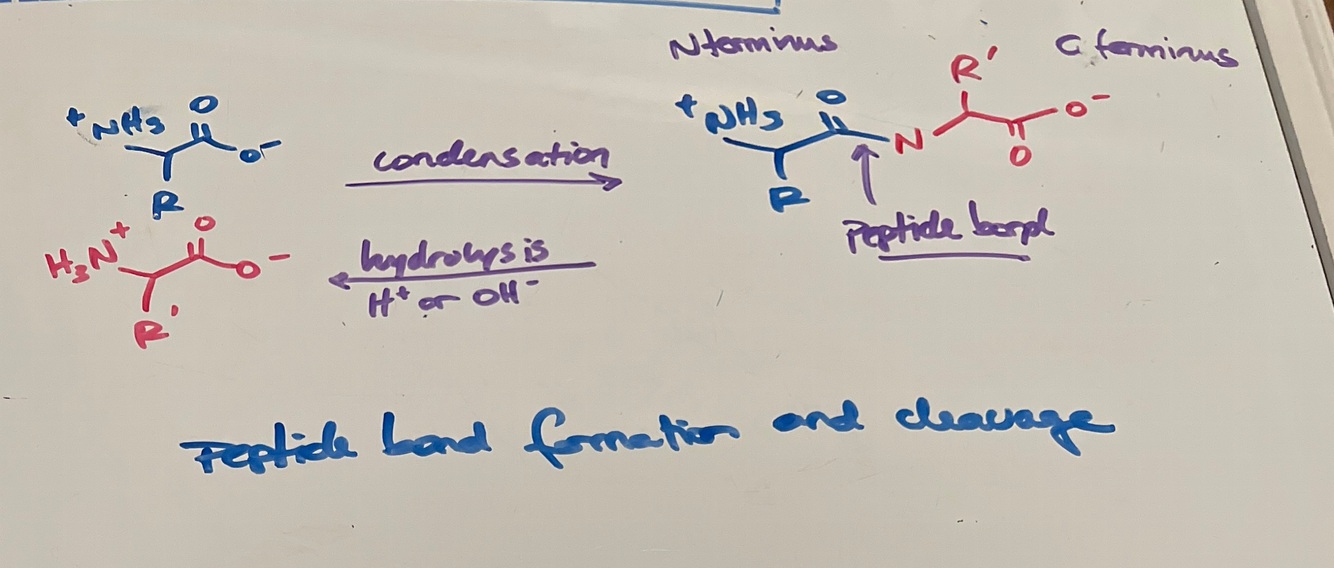
Peptide bond formation and hydrolysis. What kind of reactions are these?
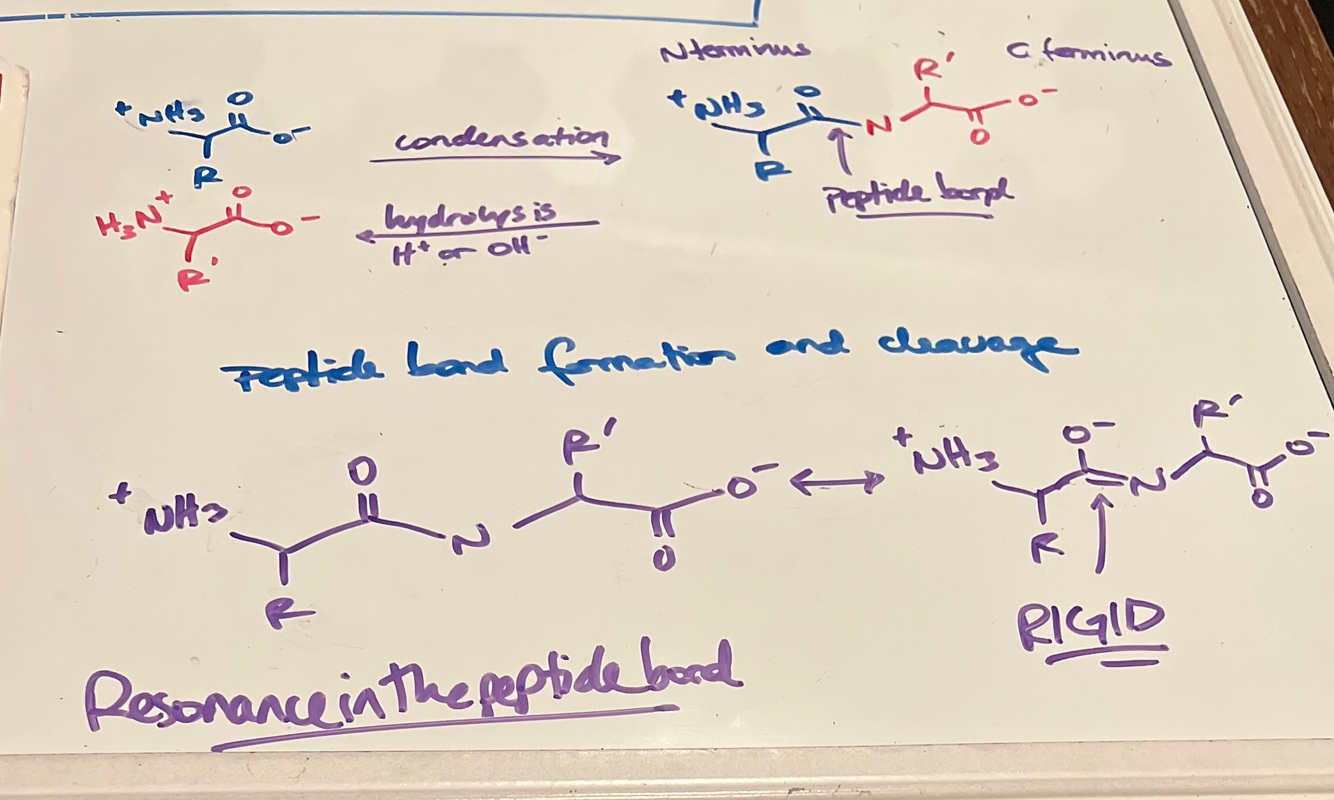
Why is rotation around a peptide bond rigid?
Resonance structures around the peptide bond.
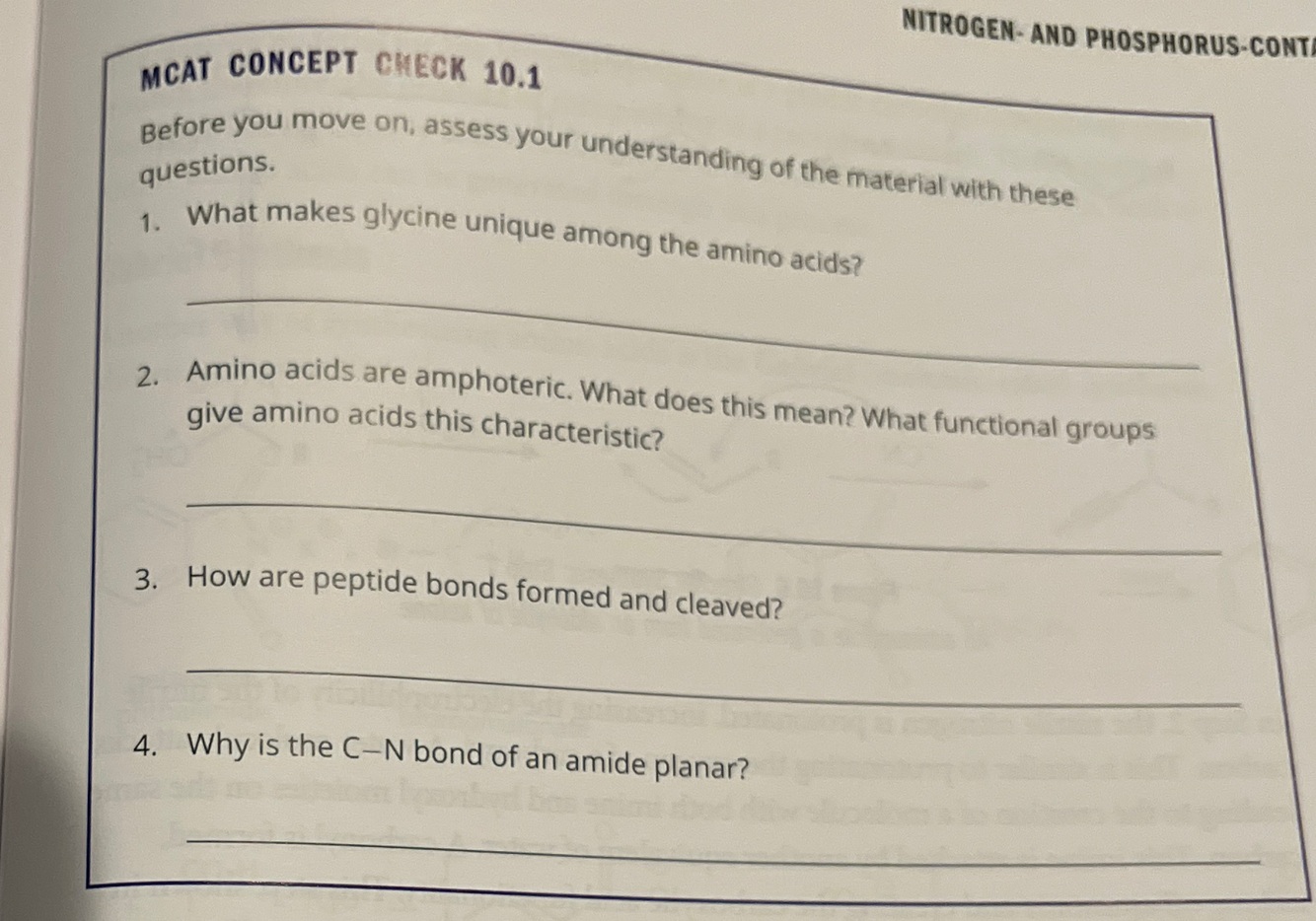
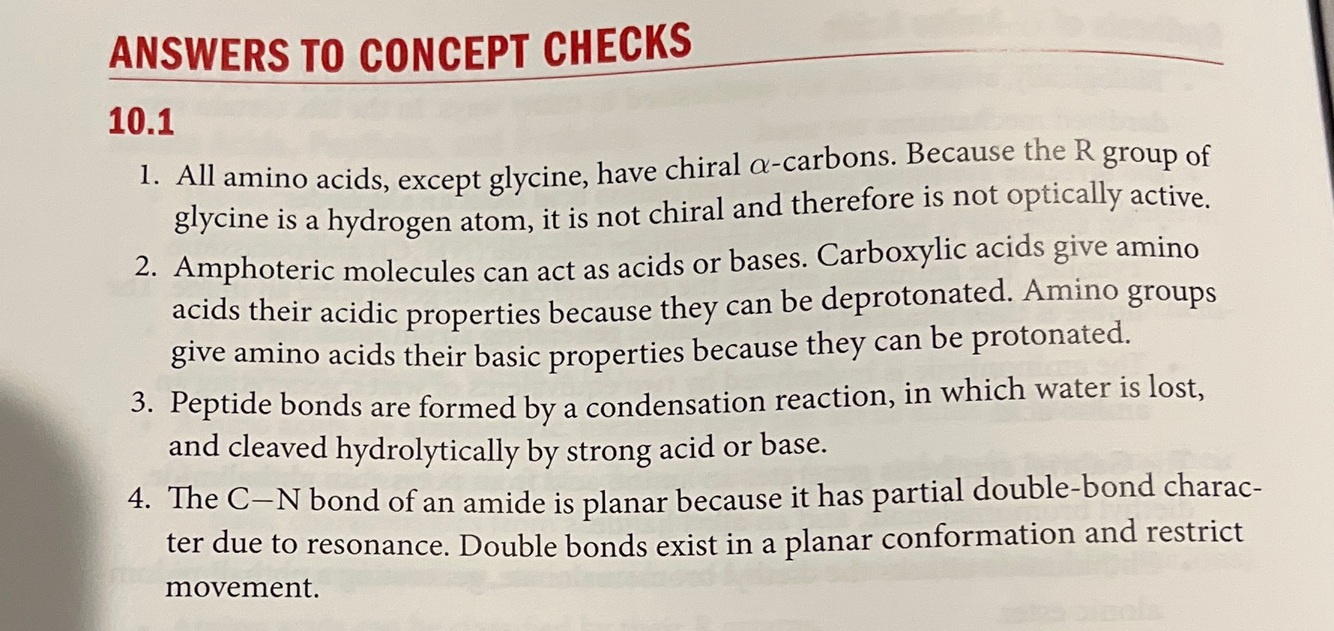
Concept check 10.1
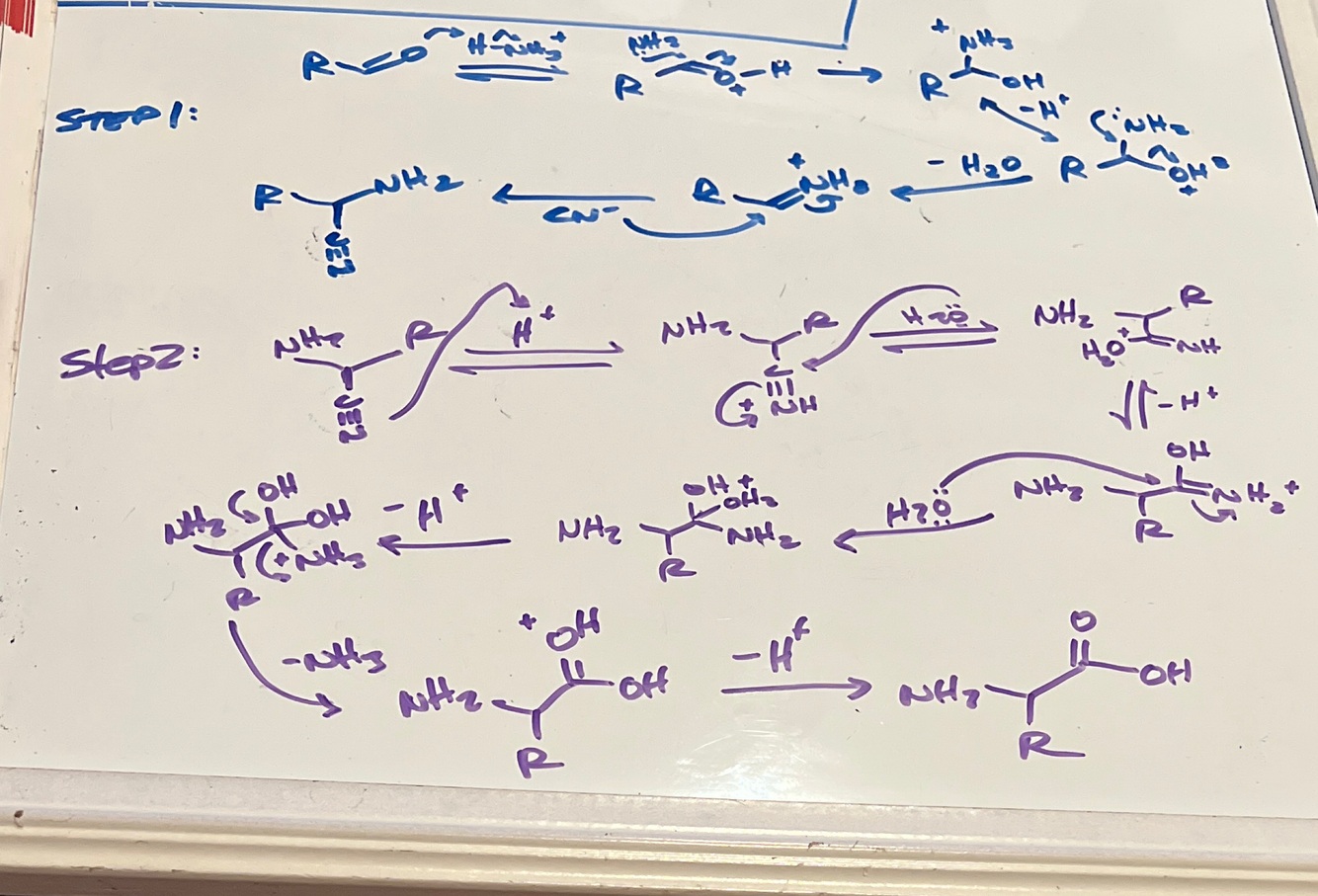
Strecker synthesis
Step one: Aldehyde, ammonium chloride, and potassium cyanide, makes amino nitrile from aldehyde or ketone. Step two: protonate nitrile nitrogen (similar to protonating oxygen of carbonyl). Water attacks, making imine and hydroxyl moieties on same carbon. Then water attacks imine, forming carbonyl, kicking off ammonia and creating carboxylic acid. Facilitated by acid and accelerated by heat. Both Gabriel and strecker start with a planar molecule, so makes a racemic mixture of L and D amino acids
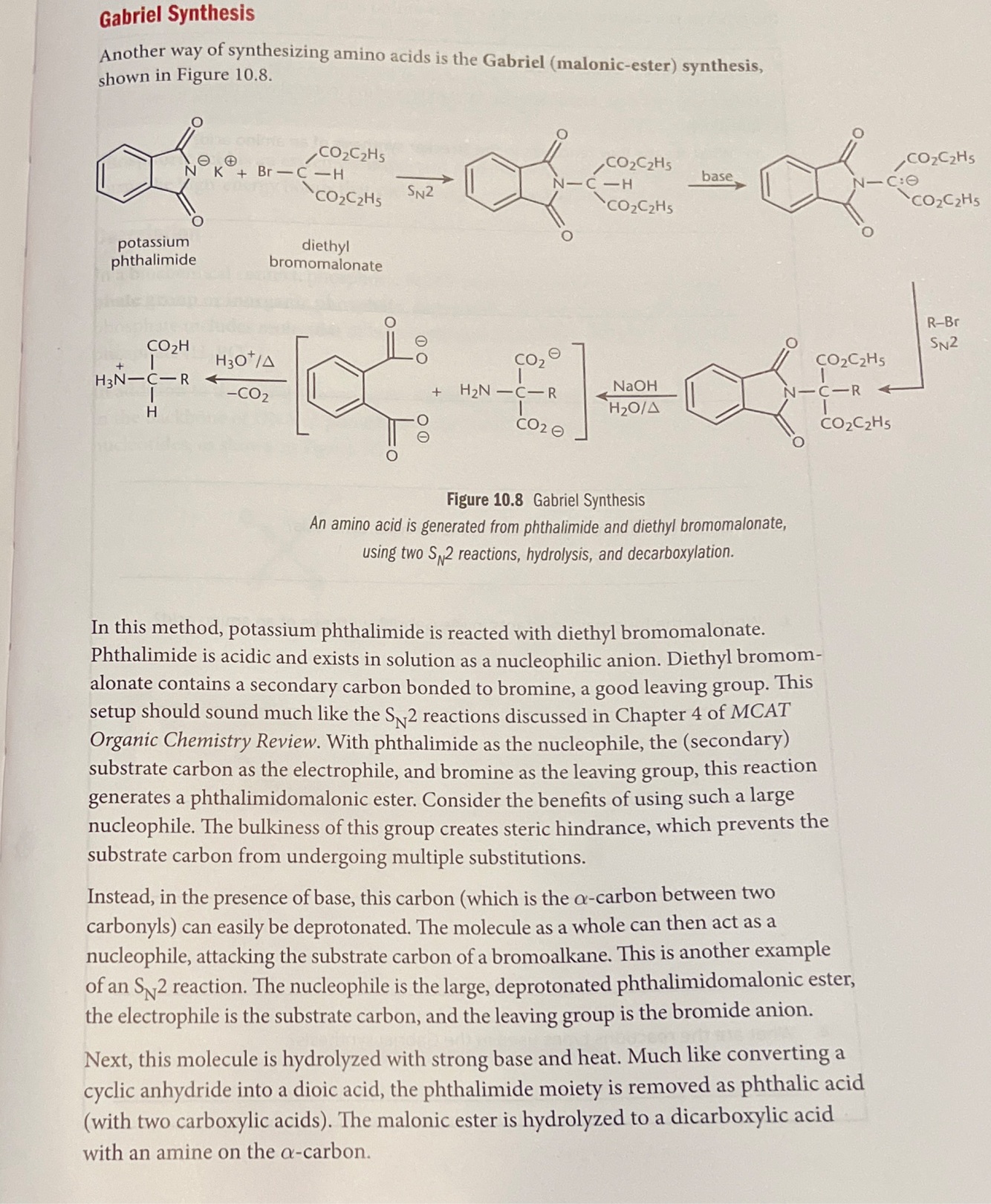
Gabriel synthesis
Final step: the dicarboxylic acid can be decarboxylated with acid and heat. Loss of carbon dioxide results in the amino acid. Both Gabriel and strecker start with a planar molecule, so makes a racemic mixture of L and D amino acids
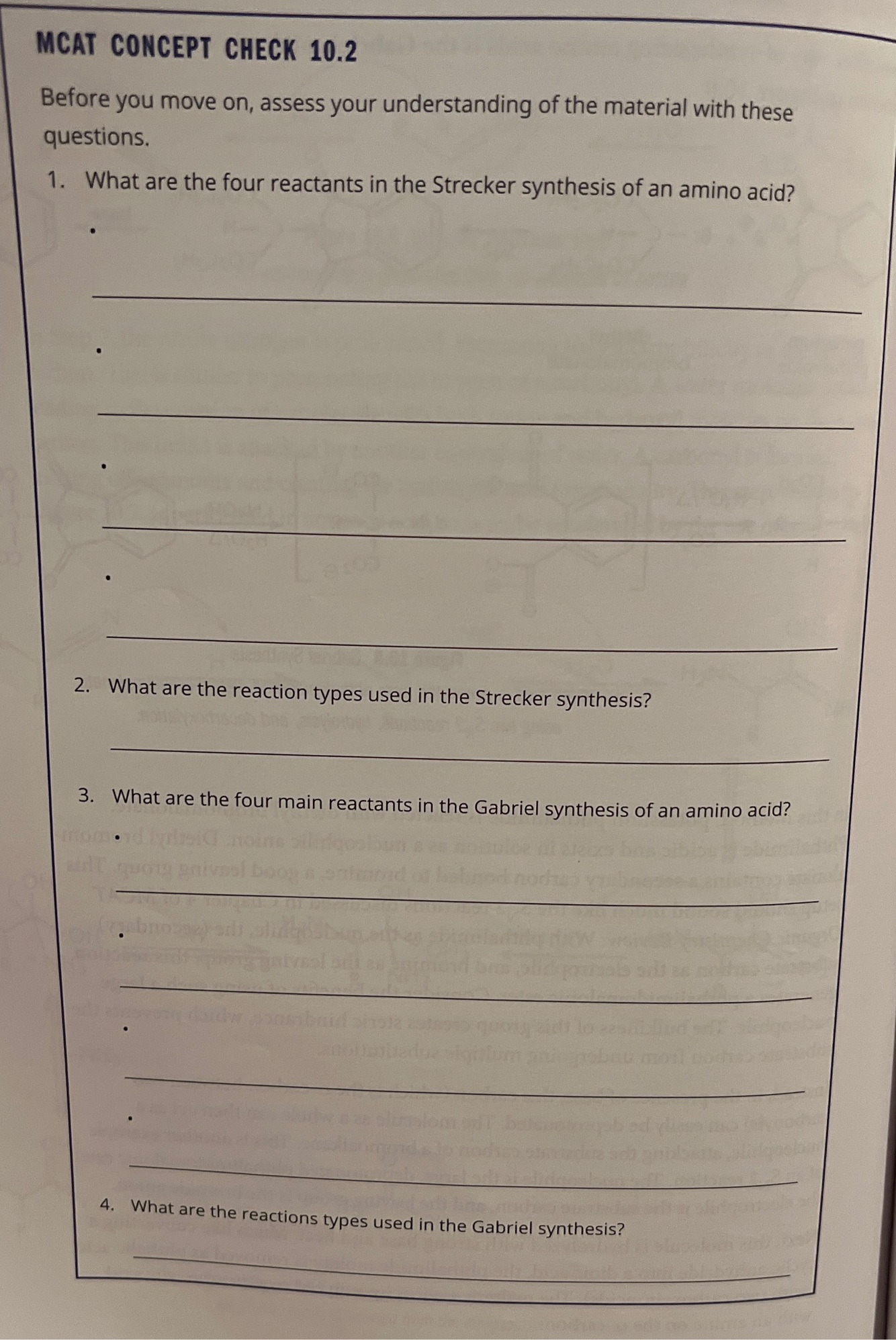
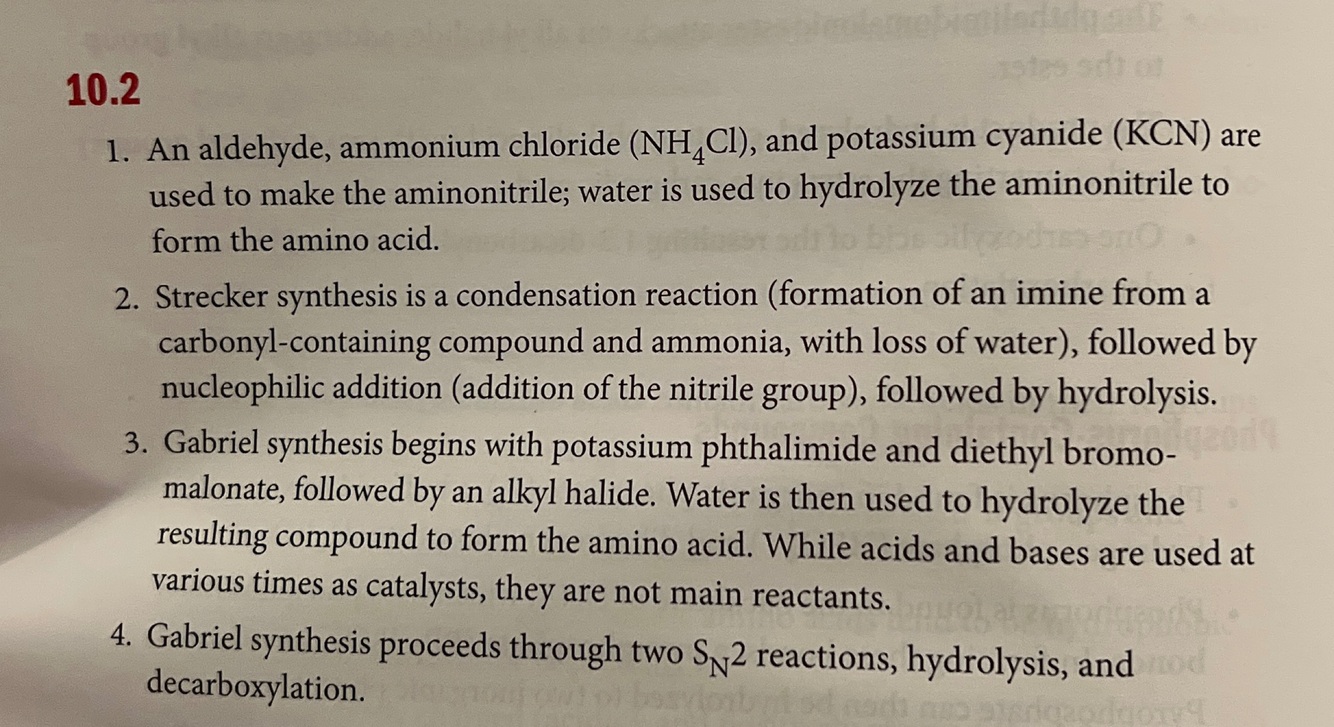
Concept check 10.2
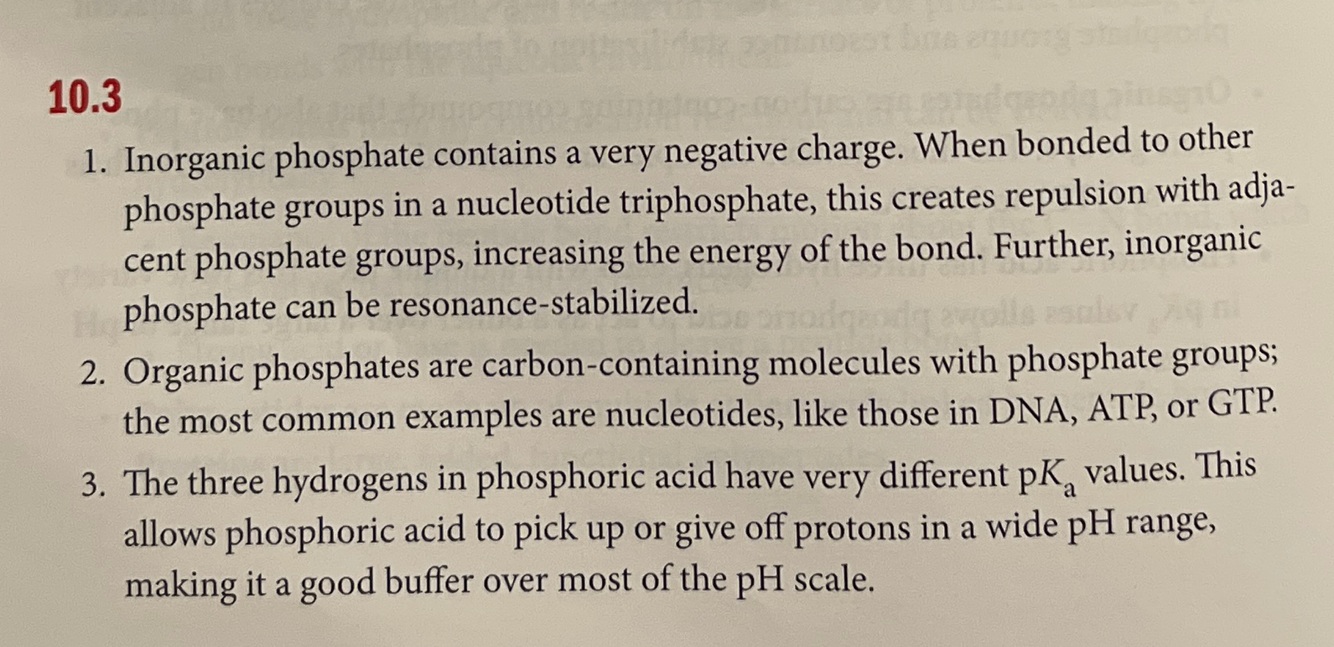
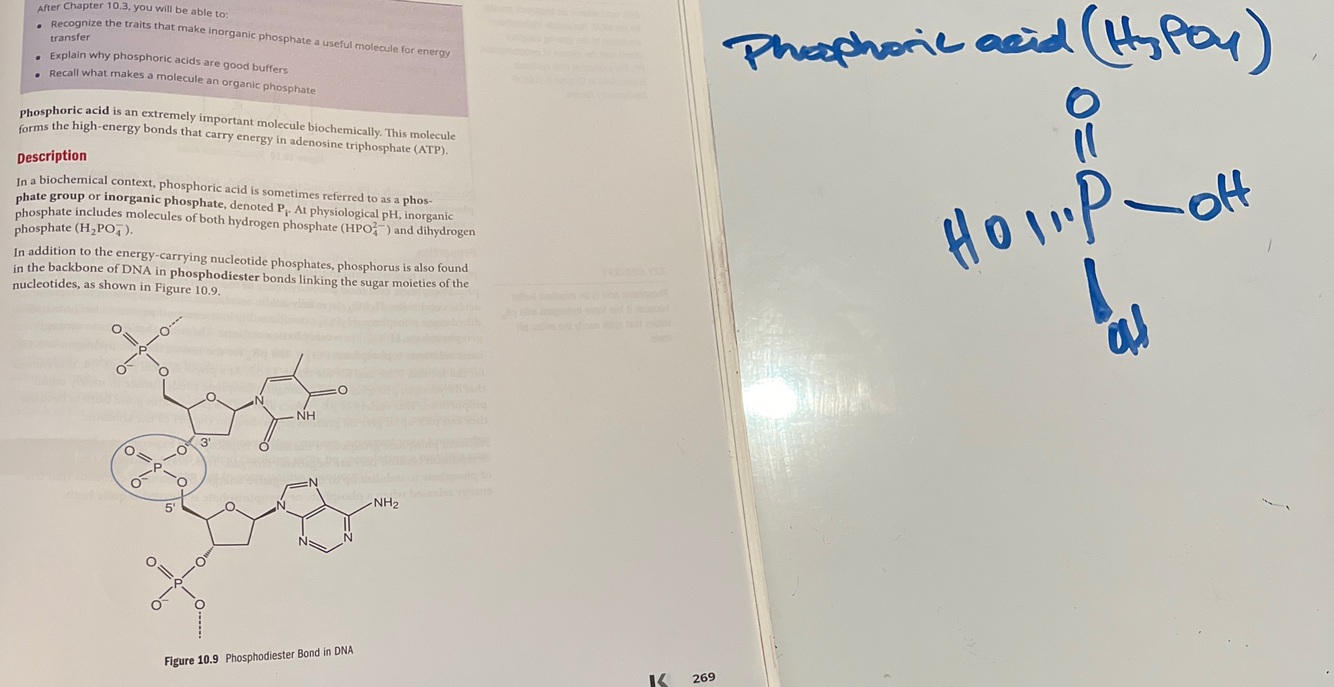
What is phosphoric acid? Why is are important? Where will we find phosphate group (inorganic phosphate)?
In biochemical context, phosphoric acid is sometimes referred to as a phosphate group, or inorganic phosphate, denoted Pi. We find it in ATP and DNA
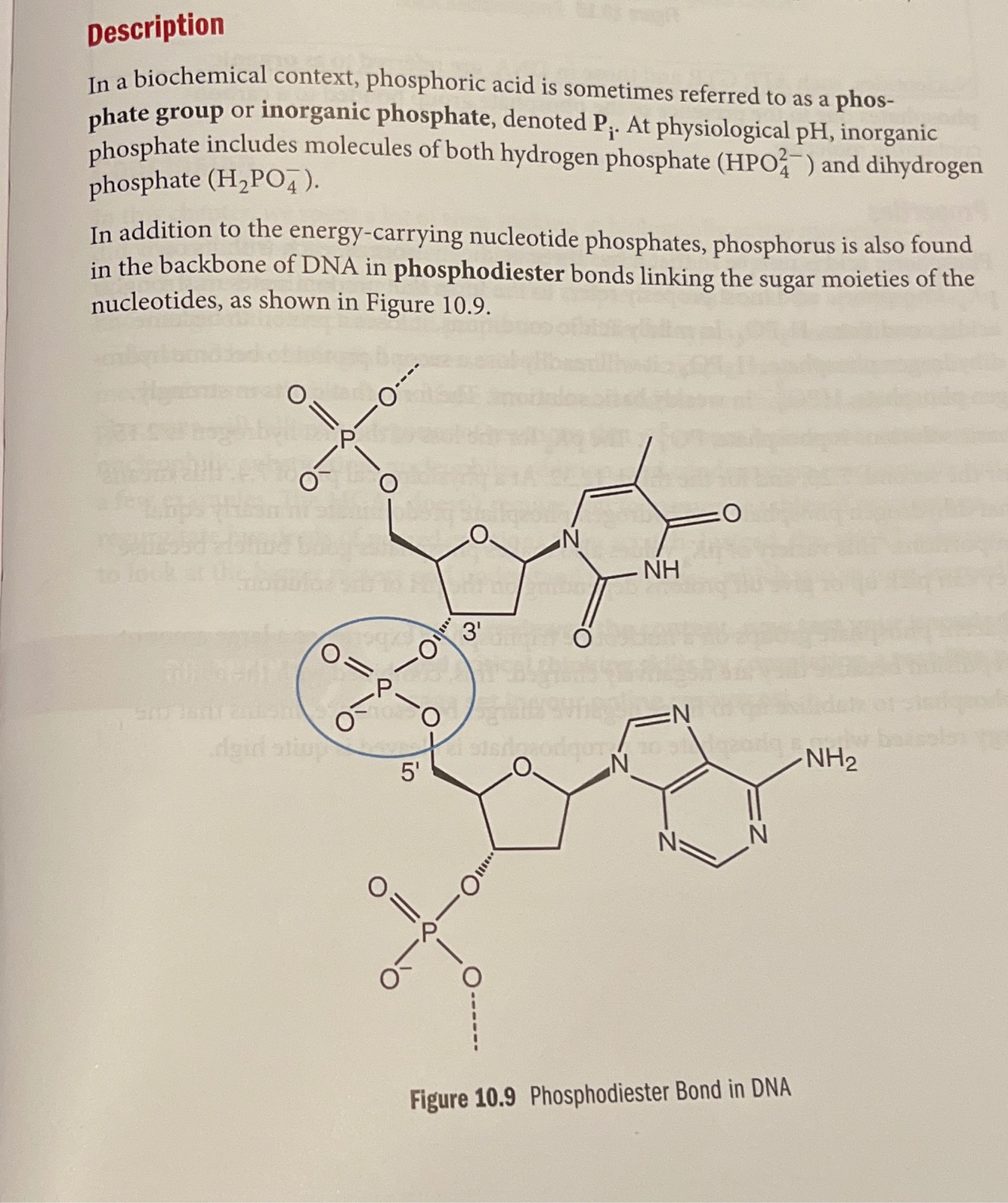
What are the binds that link DNA?
Phosphodiester bonds. Wow this makes so much sense.
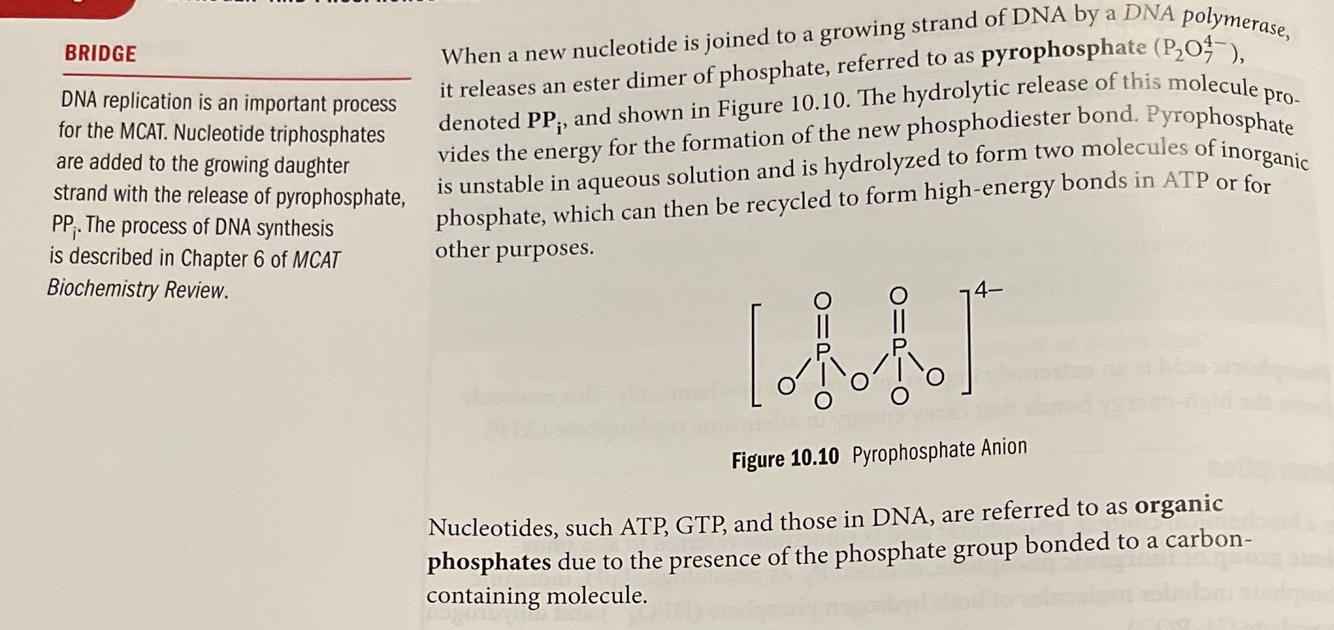
Enzyme that catalyzes DNA formation (phosphodiester bonds)? Product of this reaction? Why are ATP, GTP, DNA referred to as organic phosphates?
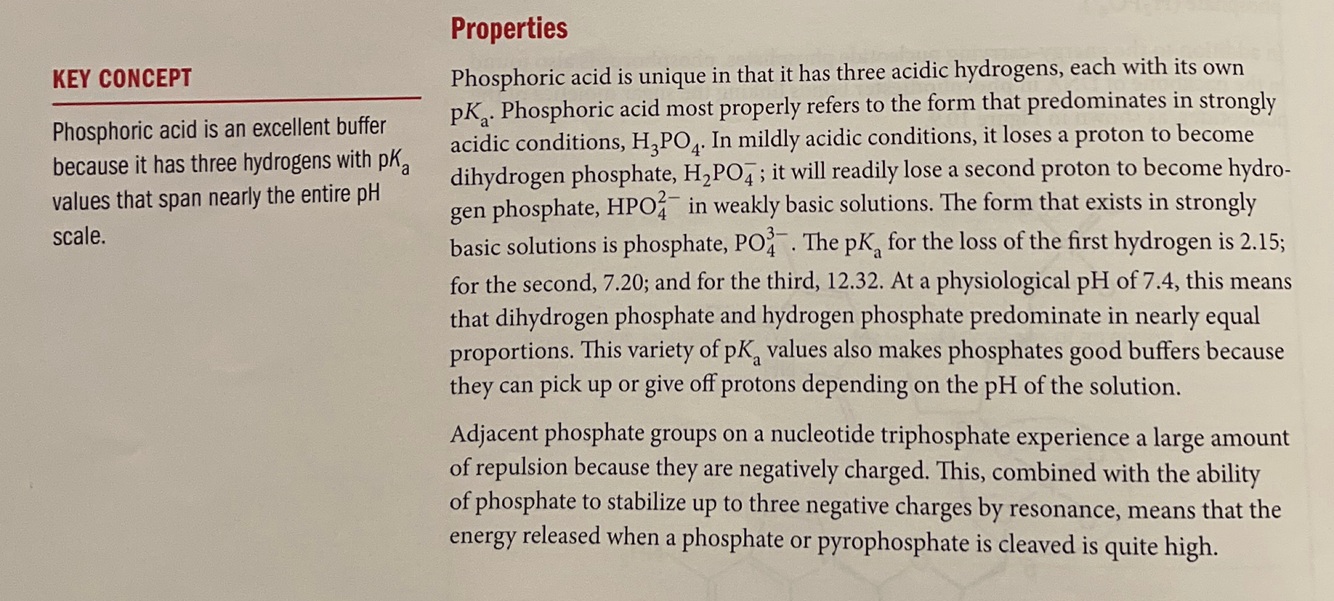
Talk about the pKa of phosphoric acid and its reactivity.
Concept check 10.3