6.6 Hormones and Homeostasis
No description yet. This curated deck is ready for daily study.
Card preview (7)
Homeostasis
Homeostasis is the maintenance of a constant internal environment within physiological tolerance limits * A disease ensues if a factor deviates from its normal range Physiological processes are regulated by negative feedback * An effect is antagonistic (opposite) to the stimulus * This means the detected change is reversed
Endocrine system
The endocrine system releases chemical messengers called hormones into the blood to act on distant target cells * Hormones only act on the cells with a specific receptor The endocrine system works in tandem with the nervous system to maintain physiological balance (homeostasis) * Hormones initiate slower responses (longer durations)
Thermoregulation
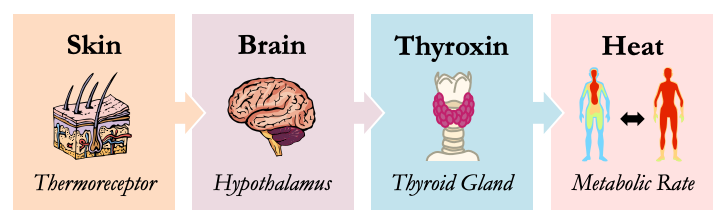
Body temperature is regulated by the hormone thyroxin * Thermoreceptors (skin) send signals to the hypothalamus * Thyroxin is released from the thyroid gland when body temperature is low and increases metabolism (generates heat) Thyroxin production requires iodine and a deficiency will result in goitre (enlargement of the thyroid gland)
Circadian Rhythms
Circadian rhythms are regulated by the hormone melatonin * Photoreceptors (eyes) send signals to the hypothalamus * Melatonin is secreted by the pineal gland (in the brain) * Melatonin release is inhibited by light (levels high at night) * High levels of melatonin promote sleep in diurnal animals Changing time zones can disrupt melatonin release (jet lag) * Melatonin supplements can recalibrate sleep patterns
Appetite Control
Appetite suppression is regulated by the hormone leptin * Adipose cells secrete leptin to suppress appetite (⇩ hunger) * Leptin binds to receptors located in the hypothalamus Over-eating causes more fat cells to be produced (obesity) * Over time, obese people become desensitized to leptin and therefore are more likely to continue to over-eat * Hence, leptin treatments for obese people are ineffective (obesity linked to leptin unresponsiveness – not a deficiency)
Blood Glucose Regulation
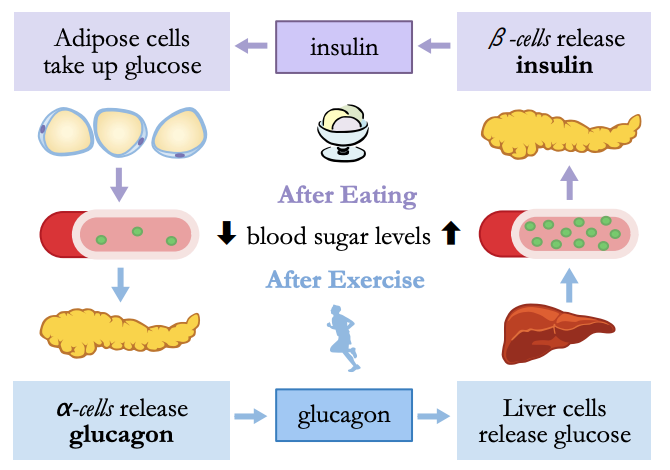
Blood sugar levels are regulated by insulin and glucagon * These hormones are secreted by cells in the pancreas Insulin is secreted by β-cells to lower blood sugar levels * Stimulates glucose uptake by the liver and adipose cells * Increases the rate of glucose metabolism (⇧ respiration) Glucagon is secreted by α-cells to raise blood sugar levels * Stimulates glycogen breakdown within the liver * Decreases the rate of glucose metabolism (⇩ respiration)
Diabetes
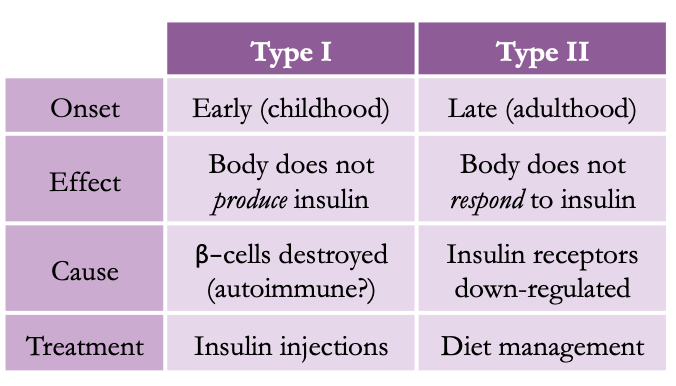
Diabetes is a disorder that prevents blood sugar regulation * It can be either type I (IDDM) or type II (NIDDM)